Recent Research
Non-Resident Fellow
Empirical development economics, economic reform, international migration, poverty, social policy and development.
Email:
Education: B.S., Brigham Young University; Ph.D., Massachusetts Institute of Technology
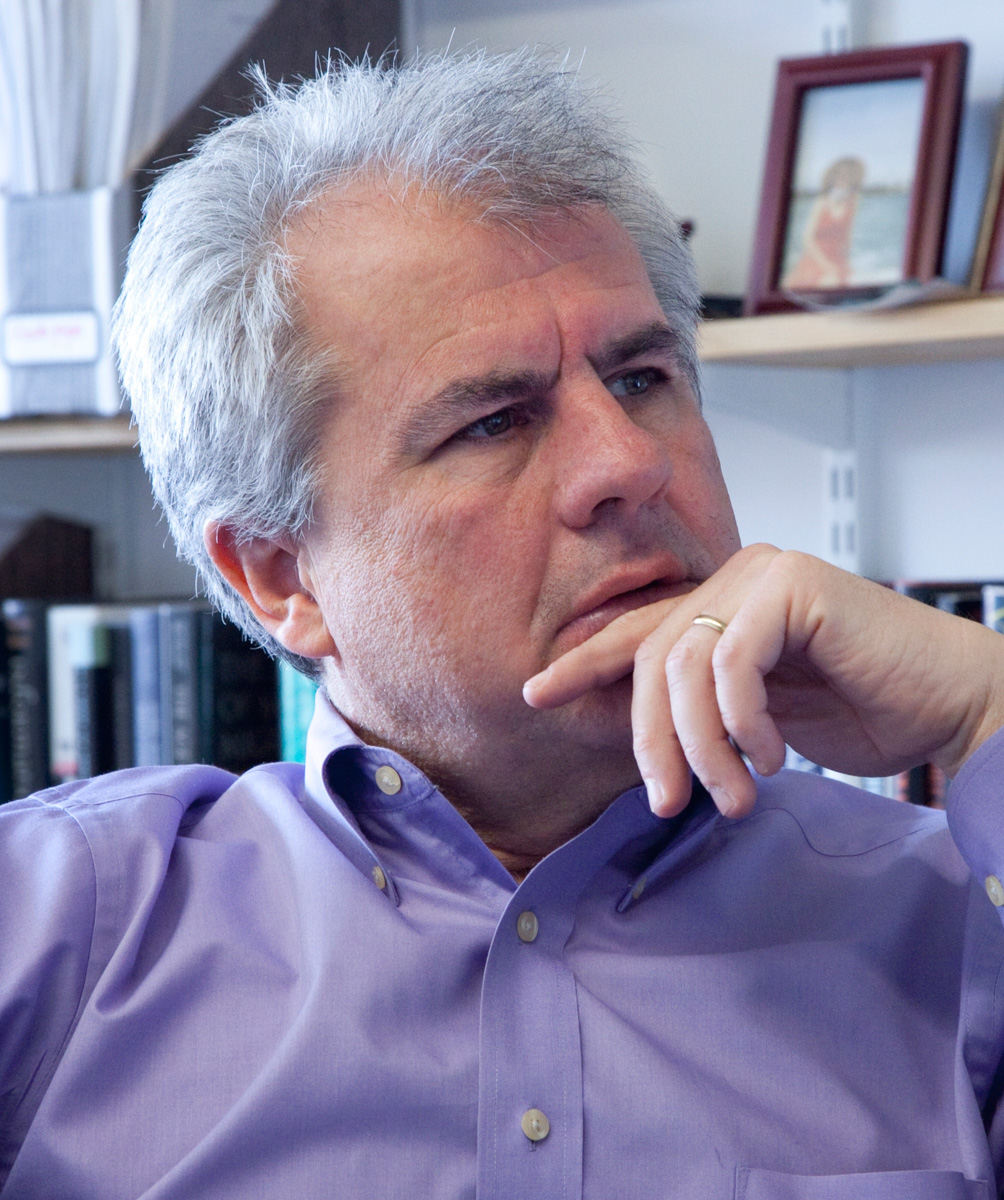
Lant Pritchett is a non-resident fellow at the Center for Global Development. He is professor of the Practice of International Development and faculty chair of the Masters in Public Policy in International Development program at Harvard's Kennedy School of Government. Prior to returning the Kennedy School, he was lead socio-economist in the social development group of the South Asia region of the World Bank, resident in Delhi, 2004–2007. From 1998-2000 he lived in Indonesia, working as a Principal Socio-Economist with the World Bank and prior to that spent a decade in the World Bank’s research group in various positions. He has been a team member on a number of prominent World Bank publications including: Economic Growth in the 1990s: Learning from a Decade of Reforms (2005), Making Services Work for Poor People (World Development Report 2004), Assessing Aid: What Works, What Doesn't and Why (with David Dollar, 1998); Infrastructure for Development (World Development Report 1994). He has also published over fifty journal articles and papers on a wide range of topics, including labor mobility, education, economic growth, poverty and vulnerability, social capital, health, safety net programs, participatory project approaches, population issues, and international trade. Originally from Idaho, Pritchett now lives in India with his wife and three children.
New
Popular
Working Papers Books Other CGD Pubs Events Selected Works
-
Development is easy, right? All poor countries have to do is mimic the things that work in rich countries and they’ll evolve into fully functional states. If only it were that simple. My guest this week is Lant Pritchett, a non-resident fellow at the Center for Global Development and chair of...
-
Economic growth is one aspect of development; state capability is another. This paper shows that many countries remain in “state capability traps” and suggests ways to sabotage persistent techniques of failure.
-
Efforts to decentralize educational systems often arouse fears that the quality of schooling will become less equal as a result. But what’s the evidence? CGD non-resident fellow Lant Pritchett and co-author Martina Viarengo show in a new CGD working paper that the supposedly greater equality of...
-
This video contains highlights from a recent event hosted at CGD, Beyond the Fence, where experts presented groundbreaking insights into the links between migration, remittances and prosperity.
-
Are your wages determined by what you know, or where you are? This paper estimates how the wages of workers in 42 developing countries would change if the same people could work in the United States. It uses a rich new database on over two million workers around the world. A worker from the...
-
Data on the average income of a resident of Ecuador is easy to find. But until now there has been no data on the average income of a person born in Ecuador, regardless of where she or he lives. In this paper, research fellow Michael Clemens and non-resident fellow Lant Pritchett introduce a new...
-
Increased labor mobility offers potentially huge gains for the developing and developed world, but migration is massively unpopular in rich countries. In this CGD Brief, non-resident fellow Lant Pritchett lays out a solution that is beneficial to poor people and potentially politically acceptable...
-
This controversial book argues that irresistible demographic forces for greater international labor mobility are being checked by immovable anti-immigration ideas of rich-country citizens. Pritchett proposes breaking the gridlock through policies that support development while also being...
-
The UN Millennium Development Goals (MDGs) seek to ensure that all children complete primary school by 2015. But school completion rates don't tell us how much--or how little--the kids actually learn. This new working paper co-authored by CGD non-resident fellow Lant Pritchett shows that even in...
-
This paper is part of the Copenhagen Consensus process, which aims to assess and evaluate the opportunities available to address the ten largest challenges facing the world. One of these ten challenges is the “lack of education.” This paper provides an analytical framework to evaluate the...
-
This controversial book argues that irresistible demographic forces for greater international labor mobility are being checked by immovable anti-immigration ideas of rich-country citizens. Pritchett proposes breaking the gridlock through policies that support development while also being...
-
Are your wages determined by what you know, or where you are? This paper estimates how the wages of workers in 42 developing countries would change if the same people could work in the United States. It uses a rich new database on over two million workers around the world. A worker from the...
-
Economic growth is one aspect of development; state capability is another. This paper shows that many countries remain in “state capability traps” and suggests ways to sabotage persistent techniques of failure.
-
Data on the average income of a resident of Ecuador is easy to find. But until now there has been no data on the average income of a person born in Ecuador, regardless of where she or he lives. In this paper, research fellow Michael Clemens and non-resident fellow Lant Pritchett introduce a new...
-
Ghost towns dot the West of the United States. These cities boomed for a period and then, for various reasons, fell into a process of decline and have shrunk to a small fraction of their former population. Are there ghost countries—countries that, if there were population mobility, would only...
-
The welfare of the poor turns in large measure not only on technocratic development "policies", but the effective delivery of key public services, core elements of which require thousands of face-to-face discretionary transactions ("practices") by service providers. This paper presents eight...
-
The UN Millennium Development Goals (MDGs) seek to ensure that all children complete primary school by 2015. But school completion rates don't tell us how much--or how little--the kids actually learn. This new working paper co-authored by CGD non-resident fellow Lant Pritchett shows that even in...
-
Increased labor mobility offers potentially huge gains for the developing and developed world, but migration is massively unpopular in rich countries. In this CGD Brief, non-resident fellow Lant Pritchett lays out a solution that is beneficial to poor people and potentially politically acceptable...
-
This paper is part of the Copenhagen Consensus process, which aims to assess and evaluate the opportunities available to address the ten largest challenges facing the world. One of these ten challenges is the “lack of education.” This paper provides an analytical framework to evaluate the...
-
Efforts to decentralize educational systems often arouse fears that the quality of schooling will become less equal as a result. But what’s the evidence? CGD non-resident fellow Lant Pritchett and co-author Martina Viarengo show in a new CGD working paper that the supposedly greater equality of...
-
Let Their People Come: Breaking the Gridlock on Global Labor Mobility
- Sep 12, 2006
This controversial book argues that irresistible demographic forces for greater international labor mobility are being checked by immovable anti-immigration ideas of rich-country citizens. Pritchett proposes breaking the gridlock through policies that support development while also being...
-
-
Let Their People Come: Breaking the Gridlock on Global Labor Mobility
- Sep 12, 2006
This controversial book argues that irresistible demographic forces for greater international labor mobility are being checked by immovable anti-immigration ideas of rich-country citizens. Pritchett proposes breaking the gridlock through policies that support development while also being...
|
|