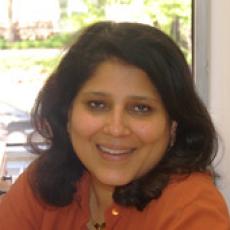
Nandini Oomman

Director, HIV/AIDS Monitor, and Senior Program Associate
Education:

Ph.D. Johns Hopkins University, School of Hygiene and Public Health, Baltimore, MD, USA; B.Sc. (Biochemistry) McGill University, Montreal. Canada.

Media Contact: Ben Edwards

Nandini Oomman joined the Center for Global Development in March 2006 as the director of the HIV/AIDS Monitor, which tracks the effectiveness of the three main aid responses to the epidemic: the Global Fund, the HIV/AIDS Africa MAP program of the World Bank, and the U.S. President’s Emergency Plan For AIDS Relief (PEPFAR). Nandini manages the initiative and oversees much of the research program that underpins it. She has more than 15 years of public health research, program and policy experience, with emphasis on population, reproductive health and HIV/AIDS.

Before receiving her doctorate from the Johns Hopkins University School of Public Health, Nandini managed an urban HIV/AIDS prevention program for commercial sex workers and college youth in Mumbai, India and led the technical development of an HIV/AIDS mass media campaign in the same city. In 1996, a post-doctoral fellowship took her to the Rockefeller Foundation where she managed technical assistance for a research grants program on improving reproductive health service delivery in Asia and Sub-Saharan Africa. From 2002-2004, Nandini worked as a specialist in population, reproductive health and HIV/AIDS issues at the World Bank.

Just before joining CGD, she consulted with private foundations in the US as an independent researcher. As part of this work, she examined issues of population and reproductive health assistance within the larger ODA landscape, for the Packard Foundation. She has published widely on issues concerning reproductive and women’s health including Achieving the Millennium Development Goal of Improving Maternal Health: Determinants, Interventions and Challenges and A Review of Population, Reproductive Health, and Adolescent Health & Development in Poverty Reduction Strategies, both for the World Bank.

Newest Popular CGD Publications Events Multimedia Selected Works
  • Beyond Gender as Usual: How HIV/AIDS Donors Can Do More for Women and Girls - Jul 1, 2009

    Today in sub-Saharan Africa, 61 percent of all people infected with HIV are women, and women age 15-24 are the most vulnerable to infection. Women and girls are at greater risk of HIV infection in part due to power imbalances between women and men that limit the social and economic choices that women have--including choices about marriage, work, and the conditions of their sexual relationships. To better fight HIV/AIDS and to more effectively prevent its spread, countries and their global HIV/AIDS partners must address the increased risks, vulnerabilities, and consequences of HIV infection that are due to gender inequalities. A new CGD HIV/AIDS Monitor report finds that while the three large and influential donors--the U.S. President's Emergency Plan for AIDS Relief (PEPFAR), the Global Fund to Fight AIDS, Tuberculosis and Malaria, and the World Bank's Africa Multi-Country AIDS Program (the MAP)--have made high-level commitments around gender, these commitments have not yet translated into concrete and systematic action on the ground--financially or programmatically--in Mozambique, Uganda and Zambia. Join us for our report launch, where the authors, country-level officials, and representatives from the three donors will discuss and respond to key findings and recommendations.

  • Why HIV/AIDS is Still Exceptional - Apr 20, 2009

    Please join us for a discussion with Dr. Alan Whiteside, where he will examine the origins of AIDS exceptionalism and how it has helped and hindered our response to the epidemic. Whiteside will ask if exceptionalism is still a useful concept in light of our current knowledge about the epidemic, the global financial crisis and changes in health governance. Nandini Oomman and Mead Over from the Center for Global Development will serve as discussants for what promises to be a fascinating conversation.

  • How are HIV/AIDS donors interacting with national health systems? - Aug 6, 2008

    Abstract: Health systems in Mozambique, Uganda and Zambia--as in other African countries--face major challenges that have hampered the provision of health services for decades. But in recent years they have received renewed attention, as large sums of AIDS money flow into the countries from global donors. Global AIDS donors, including the three biggest ones--PEPFAR, the Global Fund to Fight AIDS, Tuberculosis and Malaria, and the World Bank's Multi-Country HIV/AIDS Program for Africa--are engaged in a large-scale experiment with global health aid. As that experiment unfolds, participants and observers debate a key question: is AIDS money strengthening national health systems? Or is it weakening them by establishing heavily resourced systems focused on combating a single disease?

    A new paper from CGD's HIV/AIDS Monitor contributes to this debate by investigating how AIDS programs interact with three particular components of the health system: the health information system, the supply chain system, and human resources for health. The paper finds that all three donors have helped establish AIDS-specific systems and processes at the operational level that are distinct from those used for other health programs. Yet, these AIDS-specific processes use many of the same resources as the broader health system. The paper recommends ways for AIDS donors, given their interactions with country health systems, to seize the opportunity to expand their AIDS programs while strengthening country health systems.

  • Challenges in the Management of HIV in India - Mar 6, 2008

    The Center for Global Development invites you to a presentation by Dr. Suniti Solomon on the demand-side barriers to the scale up of HIV/AIDS treatment, prevention and care programs in India, with a focus on the issues of stigma and discrimination. Stigma and discrimination have been identified as major obstacles to scaling up HIV prevention services in all South Asian countries and by all national programs, development partners and community-based organizations. In 1986, Dr. Solomon and colleagues documented the first evidence of HIV infection in India, and subsequently set up the first voluntary testing and counseling center and AIDS research group in Chennai. In 1993, she founded YRG CARE, a non-profit organization offering HIV and sexuality education for adolescents and young adults, voluntary counseling and testing services, HIV clinic and inpatient services for people living with HIV, which also serves as a premier medical and behavioral research center. YRG CARE now provides health care for over 4,500 persons living with HIV and voluntary counseling and testing services to over 13,600 clients.

    Dr. Solomon is an advisor and principle investigator on various vaccine and microbicide development initiatives. As such, she is well-placed to address the many ways that persistent stigma and discrimination throughout the region have hampered efforts to prevent the spread of HIV infection, especially among vulnerable groups. A moderated discussion will follow to raise these issues within the contexts of the larger epidemic and prevention priorities in India, gender discrimination and access to HIV/AIDS programs, and the contrasting contexts of India and Africa.
  • Can Public-Private Partnerships Help Stop AIDS in Africa? Lessons from Botswana - Jun 6, 2007

    An innovative model for fighting HIV/AIDS in Africa is being piloted in Botswana through a public-private partnership involving the Government of Botswana, the Bill & Melinda Gates Foundation and Merck & Co., Inc. The partnership is intended to help Botswana achieve an "AIDS-Free Generation by 2016" by expanding prevention, supporting treatment, increasing counseling and testing, and empowering communities. How does this model differ from other approaches to fighting HIV/AIDS? Has it succeeded? Can lessons from Botswana be used to develop similar public-private partnerships elsewhere in Africa? How can donors support such partnerships? Please join us for a lively discussion of these and other important issues relevant to Botswana’s national AIDS program.

  • A European Perspective on the Future of Global AIDS Programs:
    A Conversation with Five AIDS Ambassadors
    - Jan 26, 2007

    Five European AIDS ambassadors will discuss lessons learned from global AIDS programs, and opportunities and challenges for European-U.S. collaboration. After their opening presentations, the ambassadors will join audience members in breakout groups on: 1) HIV prevention, 2) Gender and HIV/AIDS, 3) Donor harmonization and coordination, and 4) Intellectual property and access to medicines. The morning will close with a plenary session featuring highlights from the breakout sessions and a lively concluding discussion.

  • A New UN Agency for Women: Who Needs It? - Sep 7, 2006

    Gender inequality is a widely recognized problem across the world. Its effects can often be deadly, a fact most evident in the greater vulnerability of girls and women to HIV/AIDS. UN Special Envoy for HIV/AIDS in Africa, Stephen Lewis, will argue that a new UN agency for women is necessary to close the gender divide in global development. A lively discussion following his remarks will examine whether a new UN agency would indeed make a difference.

  • Beyond Gender as Usual (slidecast) - Jul 1, 2009
    At a recent launch event for a new report Beyond Gender as Usual: How HIV/AIDS Donors Can Do More for Women and Girls released by the Center for Global Development and the International Center for Research on Women, director of CGD's HIV/AIDS Monitor Nandini Oomman and HIV/AIDS scientist Kim Ashburn's present thier findings.
  • HIV/AIDS Monitor (Interview) - Aug 4, 2008
    In this video, CGD senior program associate and director of the HIV/AIDS Monitor Nandini Oomman describes her recent finding from the Seizing the Opportunity on AIDS and Health Systems report and outline Monitors future goals.
  • HIV/AIDS Research in Mozambique (Interview) - Jun 20, 2008
    CGD’s HIV/AIDS program works with principle investigators in Uganda, Tanzania, and Mozambique. In this video, Dirce Costa, CGD’s principle investigator in Mozambique describes her research.
  • HIV/AIDS Research in Zambia (Interview) - Jun 20, 2008
    CGD’s HIV/AIDS program works with principle investigators in Uganda, Tanzania, and Mozambique. In this video, Caesar Cheelo, CGD’s principle investigator in Zambia describes his research.
  • HIV/AIDS Research in Uganda (Interview) - Jun 20, 2008
    CGD’s HIV/AIDS program works with principle investigators in Uganda, Tanzania, and Mozambique. In this video, Freddie Ssengooba, CGD’s principle investigator in Uganda describes his research.
  • What Are Donors Doing with AIDS Money? (Event) - Oct 10, 2007
    Center for Global Development senior program associate and director of the HIV/AIDS Monitor Nandini Oomman discusses HIV/AIDS funding by the world's largest AIDS funders – PEPFAR, the Global Fund, and the World Bank.

Non-CGD Publications

Reports

Book Chapters

  • Oomman, N. & J. Gittelsohn. (2002) Qualitative Methods in Gynecological Morbidity Research, in Research Approaches to the Study of Reproductive tract Infections and Other Gynaecological Disorders (eds. Shireen J Jejeebhoy, Michael A Koenig and Christopher Elias). Cambridge University Press, Cambridge UK
  • Oomman, N. (2000) Gynecological Morbidity in India: A Decade of Research on Reproductive Tract Infections (RTIs) and other Gynaecological Morbidity in India: What we know and what we don’t know, In Readings in Women’s Reproductive Health in India, (eds. R. Ramasubban, & S. Jejeebhoy). Centre for Social and Technological Change, Rawat Publications, Mumbai, India.

Papers

  • Oomman N, & B. Ganatra. (2002) Sex Selection: The Systematic Elimination of Girls Reproductive Health Matters, 10 (19): 184-188

RSS
Recent Blog Posts

Multimedia

In the News

Topics