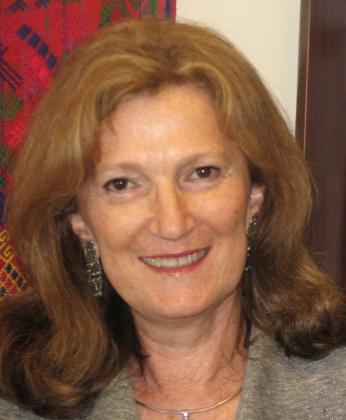
Senior Fellow Liliana Rojas-Suarez leads CGD’s research on Latin America, examining the impact of global economic trends, domestic financial regulations, regionalism, and rich-country regulatory frameworks. CGD President Nancy Birdsall, a former executive vice-president of the Inter-American Development Bank, is a major contributor to CGD’s work on the region.
The Latin American Shadow Financial Regulatory Committee

Since September 2004, CGD has hosted the meetings of the Latin American Shadow Financial Regulatory Committee, also known as the Comité Latino Americano de Asuntos Financieros or CLAAF. The group includes leading economists from the region and is chaired by Rojas-Suarez. It meets periodically to discuss regional financial issues and to make policy recommendations, which are made public in a statement summarizing the discussion.
Integration in the Americas
Former CGD visiting fellow Nancy Lee has worked on addressing constraints to growth and income convergence in the Western Hemisphere through regional integration. Her CGD Note and video suggest a fresh approach to regional integration in the form of a proposed regional investment agreement.
Publications
Growing Pains in Latin America: An Economic Growth Framework as Applied to Brazil, Colombia, Costa Rica, Mexico, and Peru -- In this CGD publication, senior fellow Liliana Rojas-Suarez and a task force of experts and country teams explore constraints to growth in the region as a whole and within countries. The book advances tangible, country-specific policy reforms that have a realistic chance of implementation. Growing Pains proposes reforms that are both meaningful and accessible to all who are interested in development in Latin America—from policies for public servant promotion in Peru to the structure of the antitrust regulatory body in Mexico to rules governing congressional procedures in Costa Rica.
Newest
Popular
Publications
Experts
Initiatives
Multimedia
-
This paper presents lessons derived from the 2008–09 financial crisis for Latin America and developing countries in other regions that might seek economic growth in the context of greater integration to the international capital markets.
-
This working paper examines the relationship between high inequality and liberalization of the financial sector in Latin America from 1975 to 2000. Using panel data, the authors find that increases in financial liberalization were associated with bank crises and other domestic and external shocks, and that higher schooling inequality reduces the impetus for liberalization brought on by bank crises.
-
The next U.S. president has a great opportunity to lead regional
economic integration in the Americas, to the benefit of both the
United States and Latin America. For the Americas, the high hopes of a decade ago for a
hemispheric trade agreement have faded, along with confidence
in the region’s ability to act collectively to address fundamental
economic challenges. The model for integration outlined here is a regional investment standards agreement—a collective effort to set common standards for key microeconomic policies affecting both domestic and foreign businesses.
-
In this CGD Essay, visiting fellow Nancy Lee provides the full details and policy recommendations for a strategy of regional investment integration in the Americas. The essay, excerpted from her chapter in the forthcoming White House and the World: A Global Development Agenda for the Next U.S. President, builds on a previously published CGD Note by specifying the scope of the proposed agreement, outlining its expected gains, and identifying the initial steps the United States could take to encourage a fresh agreement to be reached.
-
Unlike East Asia and Europe, Latin America lacks a shared integration strategy and continues to struggle with a burdensome investment climate. In this new CGD Note, visiting fellow Nancy Lee suggests a fresh approach to regional integration in the form of a proposed regional investment agreement. The idea is a collective effort to set common standards for reducing specific barriers to domestic and foreign investment. Beyond its benefits for growth, such an agreement could boost the incomes of the poor by helping small businesses trapped in the informal sector move into the more productive formal sector.
-
In an increasingly globalized world, inequality is an issue of rising concern, especially in Latin America, home to many of the world's most unequal societies. This new book, co-published by the Center for Global Development and the Inter-American Dialogue, describes the links between recent growth trends, changing patterns of inequality, and rising cynicism and frustration with the political leadership across the region. The authors, Nancy Birdsall, Augusto de la Torre, and Rachel Menezes, present a dozen economic policy tools to make life fairer for the great majority of people--without sacrificing economic growth.
Learn More
-
Shared growth—growth that helps to build a middle class—is now widely embraced as a central economic goal for developing countries. In this new working paper CGD president Nancy Birdsall reviews how macroeconomic policies shape incentives for inclusive growth, focusing on fiscal discipline; fair revenue and expenditure practices; and a business-friendly exchange rate. Relying heavily on the experience in Latin America and drawing lessons for other parts of the developing world, Birdsall argues that growth that strengthens the middle classes helps poor people, too.
Learn More
-
In this working paper CGD research fellow David Roodman explains how the four biggest developing countries -- Brazil, Russia, India and China, a group Goldman Sachs dubbed the "BRICs" -- stack up to their rich-country counterparts on the environment component of the annual Commitment to Development Index (CDI). He finds they generally perform well on greenhouse gas emissions, consumption of ozone-depleting substances, and tropical timber imports. Major weaknesses include low gas taxes, Amazon deforestation and heavy fossil fuel use.
-
While the threat of global warming is increasingly accepted, little attention has been paid to the likely impact at the country level, especially in the developing world. In this new book, Bill Cline, a joint senior fellow at CGD and the Peterson Institute for International Economics, provides the first ever estimates of the impact on agriculture by country, with a particular focus on the social and economic implications in China, India, Brazil, and the poor countries of the tropical belt in Africa and Latin America. His study shows that the long-term negative effects on world agriculture will be severe, and that developing countries will suffer first and worst.
-
For the past decade, U.S. attention to Latin America has focused mainly on promotion of free trade and opposition to narcotics trafficking and security threats. But there are signs that Washington is beginning to recognize the importance of helping the region tackle longstanding poverty and social inequality. Candidates at this weekend's Democratic presidential debate called for a robust foreign policy in Latin America and the Bush administration has recently shown a renewed interest in promoting development and improving Washington's image in the region. This new brief by CGD president Nancy Birdsall and Inter-American Dialogue president Peter Hakim sets forth a practical agenda for how the U.S. can help. Examples: buttress free trade agreements with aid programs that compensate losers; include land redistribution and alternative employment programs in the so-called "war against drugs."
-
While the threat of global warming is increasingly accepted, little attention has been paid to the likely impact at the country level, especially in the developing world. In this new book, Bill Cline, a joint senior fellow at CGD and the Peterson Institute for International Economics, provides the first ever estimates of the impact on agriculture by country, with a particular focus on the social and economic implications in China, India, Brazil, and the poor countries of the tropical belt in Africa and Latin America. His study shows that the long-term negative effects on world agriculture will be severe, and that developing countries will suffer first and worst.
-
This paper presents lessons derived from the 2008–09 financial crisis for Latin America and developing countries in other regions that might seek economic growth in the context of greater integration to the international capital markets.
-
Microfinance is a widely celebrated strategy for helping poor people in the developing world. Leading microfinance institutions, including the Nobel Peace Prize-winning Grameen Bank, reach millions of clients. CGD research fellow David Roodman and Uzma Qureshi analyze why some microfinance institutions succeed in covering costs, earning returns, attracting capital, and scaling up. They conclude that financial imperatives can explain much about how microfinance products are designed, for example, the common emphasis on group lending to women. Thus the business acumen of microfinance innovators is underappreciated. But more rigorous study is needed to understand when and where these design choices help clients.
-
Development refers to improvements in the conditions of people’s lives, such as health, education, and income. It occurs at different rates in different countries. The U.S. underwent its own version of development since the time it became an independent nation in 1776.
Learn more about Rich World, Poor World: A Guide to Global Development
-
In an increasingly globalized world, inequality is an issue of rising concern, especially in Latin America, home to many of the world's most unequal societies. This new book, co-published by the Center for Global Development and the Inter-American Dialogue, describes the links between recent growth trends, changing patterns of inequality, and rising cynicism and frustration with the political leadership across the region. The authors, Nancy Birdsall, Augusto de la Torre, and Rachel Menezes, present a dozen economic policy tools to make life fairer for the great majority of people--without sacrificing economic growth.
Learn More
-
Shared growth—growth that helps to build a middle class—is now widely embraced as a central economic goal for developing countries. In this new working paper CGD president Nancy Birdsall reviews how macroeconomic policies shape incentives for inclusive growth, focusing on fiscal discipline; fair revenue and expenditure practices; and a business-friendly exchange rate. Relying heavily on the experience in Latin America and drawing lessons for other parts of the developing world, Birdsall argues that growth that strengthens the middle classes helps poor people, too.
Learn More
-
Most studies of privatization look at what happens to companies. Reality Check, a new volume of case studies from Latin America, Asia, and the former Soviet Union, examines the impact on people. Surprise: privatization has often been a reasonably good thing, even for the poor. Read a Q&A with lead editor John Nellis.
Learn more
-
U.S. "development assistance" refers to the transfer of resources from the United States to developing countries and to some strategic allies. It is delivered in the form of money (via loans or grants), contributions of goods (such as food aid), and technical assistance.
Learn more about Rich World, Poor World: A Guide to Global Development
-
This working paper examines the relationship between high inequality and liberalization of the financial sector in Latin America from 1975 to 2000. Using panel data, the authors find that increases in financial liberalization were associated with bank crises and other domestic and external shocks, and that higher schooling inequality reduces the impetus for liberalization brought on by bank crises.
-
Agricultural market liberalization is the linchpin for a successful conclusion to the Doha Round of World Trade Organization (WTO) negotiations because these are the most protected markets remaining in most rich countries. But the implications for developing countries, especially the poorest, are more complex than the current debate suggests. In her new book, Delivering on Doha: Farm Trade and the Poor, Kimberly Ann Elliott, a joint senior fellow at CGD and the Peterson Institute for International Economics, examines the structure of agricultural support in rich countries and the challenges and opportunities for reviving and completing the Doha Round of trade negotiations.
-
Nancy Birdsall, President An internationally recognized expert on the impact of rich-country policies on poor people in developing countries, Nancy Birdsall is the author, co-author, or editor of more than a dozen books and over 100 articles in scholarly journals and monographs, published in English and Spanish. Her most recent book is Cash on Delivery: A New Approach to Foreign Aid.
-
William R. Cline, Senior Fellow William R. Cline is a senior fellow jointly at the Peter G. Peterson Institute for International Economics and the Center for Global Development. His research focuses on finance, capital flows, trade and development; currently he is investigating the differential impact of global warming on agriculture in rich and developing countries.
-
Ricardo Hausmann, Non-Resident Fellow Ricardo Hausmann is Professor of the Practice of Economic Development at Harvard University's Kennedy School of Government. Previously, he served as the first Chief Economist of the Inter-American Development Bank (1994-2000), where he created the Research Department.
-
Nora Lustig, Non-Resident Fellow Lustig is Samuel Z. Stone Professor of Latin American Economics at Tulane University and nonresident fellow at CGD and the Inter-American Dialogue. Previously she was Shapiro Visiting Professor of International Affairs at the Elliott School of International Affairs, George Washington University; Director of the Poverty Group at UNDP; President and Professor of the Department of Economics of the Universidad de las Americas, Puebla, Mexico; Senior Advisor and Chief of the Poverty and Inequality Unit at the Inter-American Development Bank; Senior Fellow at the Brookings Institution; and, Professor at the Center of Economic Studies of the Colegio de Mexico. Her research has focused on poverty and inequality, social policies and social protection with particular emphasis on Latin America.
-
Liliana Rojas-Suarez, Senior Fellow An expert on Latin America and on financial services and the development impact of global financial regulation, Liliana Rojas-Suarez combines Wall Street and multilateral development bank experience, having worked as chief economist for Latin America at Deutsche Bank, as principal economist at the Inter-American Development Bank, and in senior research roles at the IMF. Her commentary leads CGD’s extensive package of analysis on the development impact of the U.S. financial crisis.
-
Peter Timmer, Non-Resident Fellow Peter Timmer is a leading authority on agriculture and rural development. He has served as a professor at Stanford and Cornell, on three faculties at Harvard, and at the University of California–San Diego, where he was also the dean of the Graduate School of International Relations and Pacific Studies. A core advisor on the World Bank’s World Development Report 2008: Agriculture for Development, Timmer is working with several Asian governments on domestic policy responses to the crisis in the global rice market. He is also an advisor to the Bill and Melinda Gates Foundation on agricultural development issues.
-
-
Schooling Inequality, Crises, and Financial Liberalization in Latin America - Working Paper 165
- Mar 21, 2009
This working paper examines the relationship between high inequality and liberalization of the financial sector in Latin America from 1975 to 2000. Using panel data, the authors find that increases in financial liberalization were associated with bank crises and other domestic and external shocks, and that higher schooling inequality reduces the impetus for liberalization brought on by bank crises.
-
More Growth with More Income Equality in the Americas: Can Regional Cooperation Help? (White House and the World Policy Brief)
- Nov 4, 2008
The next U.S. president has a great opportunity to lead regional
economic integration in the Americas, to the benefit of both the
United States and Latin America. For the Americas, the high hopes of a decade ago for a
hemispheric trade agreement have faded, along with confidence
in the region’s ability to act collectively to address fundamental
economic challenges. The model for integration outlined here is a regional investment standards agreement—a collective effort to set common standards for key microeconomic policies affecting both domestic and foreign businesses.
-
Integration in the Americas: One Idea for Plan B (Note)
- Jun 3, 2008
Unlike East Asia and Europe, Latin America lacks a shared integration strategy and continues to struggle with a burdensome investment climate. In this new CGD Note, visiting fellow Nancy Lee suggests a fresh approach to regional integration in the form of a proposed regional investment agreement. The idea is a collective effort to set common standards for reducing specific barriers to domestic and foreign investment. Beyond its benefits for growth, such an agreement could boost the incomes of the poor by helping small businesses trapped in the informal sector move into the more productive formal sector.
-
Fair Growth: Economic Policies for Latin America's Poor and Middle-Income Majority
- Jan 17, 2008
In an increasingly globalized world, inequality is an issue of rising concern, especially in Latin America, home to many of the world's most unequal societies. This new book, co-published by the Center for Global Development and the Inter-American Dialogue, describes the links between recent growth trends, changing patterns of inequality, and rising cynicism and frustration with the political leadership across the region. The authors, Nancy Birdsall, Augusto de la Torre, and Rachel Menezes, present a dozen economic policy tools to make life fairer for the great majority of people--without sacrificing economic growth.
Learn More
-
Reflections on the Macro Foundations of the Middle Class in the Developing World - Working Paper 130
- Oct 24, 2007
Shared growth—growth that helps to build a middle class—is now widely embraced as a central economic goal for developing countries. In this new working paper CGD president Nancy Birdsall reviews how macroeconomic policies shape incentives for inclusive growth, focusing on fiscal discipline; fair revenue and expenditure practices; and a business-friendly exchange rate. Relying heavily on the experience in Latin America and drawing lessons for other parts of the developing world, Birdsall argues that growth that strengthens the middle classes helps poor people, too.
Learn More
-
How Do the BRICs Stack Up? Adding Brazil, Russia, India, and China to the Environment Component of the Commitment to Development Index - Working Paper 128
- Oct 10, 2007
In this working paper CGD research fellow David Roodman explains how the four biggest developing countries -- Brazil, Russia, India and China, a group Goldman Sachs dubbed the "BRICs" -- stack up to their rich-country counterparts on the environment component of the annual Commitment to Development Index (CDI). He finds they generally perform well on greenhouse gas emissions, consumption of ozone-depleting substances, and tropical timber imports. Major weaknesses include low gas taxes, Amazon deforestation and heavy fossil fuel use.
-
Global Warming and Agriculture: Impact Estimates by Country
- Sep 12, 2007
While the threat of global warming is increasingly accepted, little attention has been paid to the likely impact at the country level, especially in the developing world. In this new book, Bill Cline, a joint senior fellow at CGD and the Peterson Institute for International Economics, provides the first ever estimates of the impact on agriculture by country, with a particular focus on the social and economic implications in China, India, Brazil, and the poor countries of the tropical belt in Africa and Latin America. His study shows that the long-term negative effects on world agriculture will be severe, and that developing countries will suffer first and worst.
-
Poverty and Inequality in Latin America: How the U.S. Can Really Help
- Sep 10, 2007
For the past decade, U.S. attention to Latin America has focused mainly on promotion of free trade and opposition to narcotics trafficking and security threats. But there are signs that Washington is beginning to recognize the importance of helping the region tackle longstanding poverty and social inequality. Candidates at this weekend's Democratic presidential debate called for a robust foreign policy in Latin America and the Bush administration has recently shown a renewed interest in promoting development and improving Washington's image in the region. This new brief by CGD president Nancy Birdsall and Inter-American Dialogue president Peter Hakim sets forth a practical agenda for how the U.S. can help. Examples: buttress free trade agreements with aid programs that compensate losers; include land redistribution and alternative employment programs in the so-called "war against drugs."
-
A White House Focus on Social Justice in Latin America?
- Jul 9, 2007
A White House conference on social justice in Latin America this week may signal a shift to U.S. engagement with the region that goes beyond security, free trade, and anti-narcotics efforts. CGD president Nancy Birdsall and Peter Hakim, president of the Inter-American Dialogue, suggest seven ways that the U.S. could more effectively support Latin American efforts to address persistent inequality--starting with a more effective approach on trade and drugs.
There are no initiatives related to this topic.
-
From the Los Angeles Times: Nancy Birdsall's Op-ed on the transition at the Inter American Development Bank.
-
This article by Nancy Birdsall and Rachel Menezes appeared in the July-September edition of Foreign Affairs Espanol.
There are no multimedia items related to this topic.
|
|