


Population:
23,369,558Land Mass:236,040 sq km
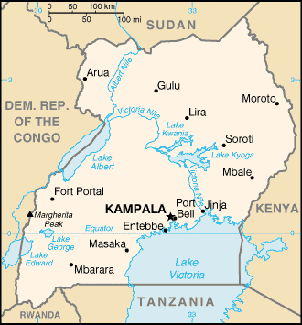
Location:Eastern Africa
GDP Per Capita: $1,100
Adult HIV/AIDS Prevalence Rate: 5.4%
Number of People Living with HIV/AIDS: 940,000
Why study aid effectiveness in Uganda?
To date, the scale-up of HIV/AIDS programs, especially ARV therapy, in Uganda has been notable for its achievements -- Uganda was the only country in Africa to meet its WHO 3 by 5 targets and the country had met or exceeded many of its 2008 PEPFAR targets by the end of 2005. This comes despite difficulty in implementing some donor-funded programs, including the 2005 suspension of the country’s Global Fund grants.
Uganda, however, has seen rapid roll out in an emergency manner. Unlike in some other countries, the response in Uganda is not particularly well coordinated, with many donor-funded systems seemingly operating side by side--using different procurement mechanisms, different procedures and different products. PEPFAR is by far the largest donor in the country, having allocated approximately $283 million in FY2008. The Global Fund has three active HIV/AIDS grants in the country, although the future of these grants is uncertain as the government has not taken the necessary steps to assure financial accountability for Global Fund money. The World Bank MAP has concluded a five-year, $50 million project; Uganda did not request a second MAP project. Moving from early successes to recent challenges, Uganda represents an important environment in which to learn how donor actions interact with national priorities and approaches.
Local Research Partner: Makerere University School of Public Health
 Makerere University School of Public Health has extensive experience working with multilateral, bilateral and private sector donors on varied research projects. IPH/HPPM collaborated with the London School of Hygiene and Tropical Medicine on the Global Fund Tracking Study (pdf) and has completed many studies on health economics and health systems, addressing questions regarding aid effectiveness, health financing, supply markets, human capacity and basic service provision. The HIV/AIDS Monitor fits well within the long-term priorities of the School, which include work on aid effectiveness of health projects, especially as it relates to decentralization and the global initiatives. Freddie Ssengooba, a well-respected health economist, serves as the Principal Investigator for the HIV/AIDS Monitor project.
For more information: