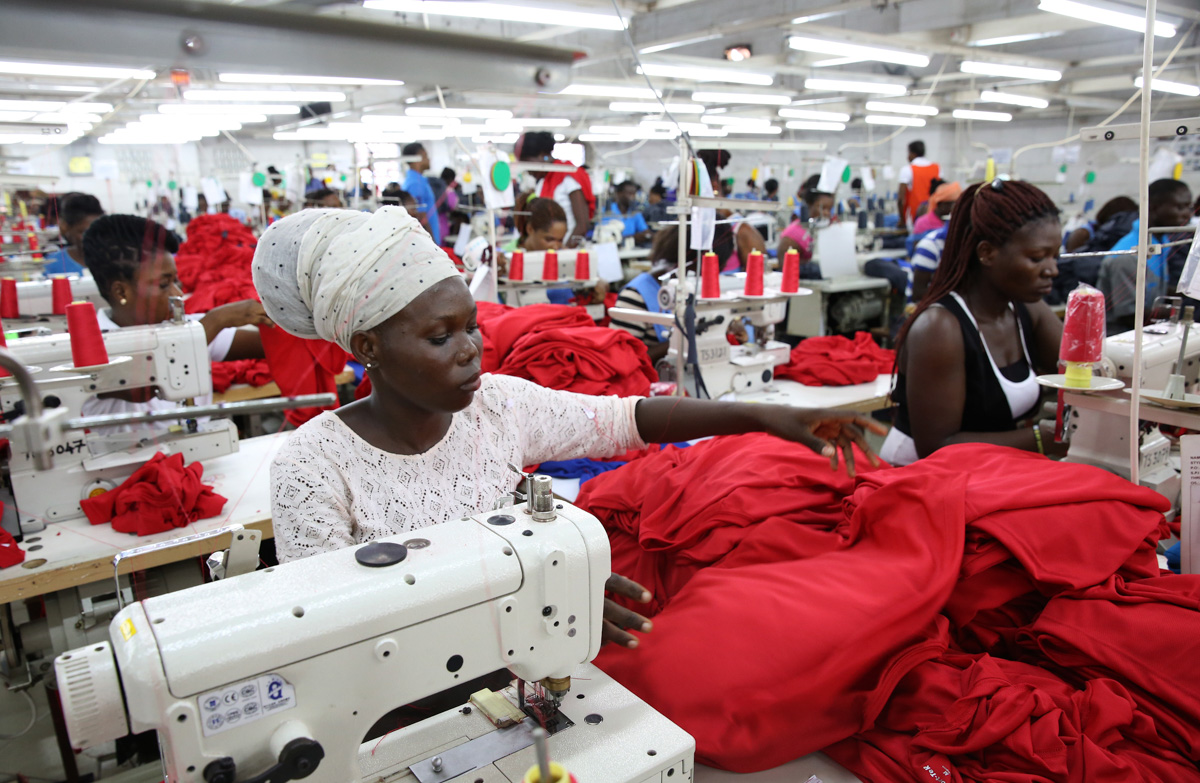
CGD works to reduce the enormous and growing gaps between the richest and poorest countries and to increase the recognition of the social and economic costs of extreme inequality within countries. The Center’s extensive work in these and related areas—including the inequality dimensions of such issues as global health, education, trade, and migration, among others—contributes to reducing poverty and inequality worldwide.
CGD president Nancy Birdsall leads CGD’s work on the causes and effects of inequality. Her extensive work in this area includes the popular syllabus: What to Read: Inequality and Development in a Globalizing World.
CGD also co-hosts the Globalization and Inequality Group (GLIG), an invitation-only forum jointly chaired by Birdsall and Carol Graham, a senior fellow at the Brookings Institution. The forum meets about four times a year.
Key Resources:
- Fair Growth: Economic Policies for Latin America’s Poor and Middle-Income Majority, 01/17/2008, Nancy Birdsall, Agusto de la Torre, Rachel Menezes
- Reflections on the Macro Foundations of the Middle Class in the Developing World – Working Paper 130, 10/24/2007, Nancy Birdsall
- Income Distribution: Effects on Growth and Development – Working Paper 118, 04/16/2007, Nancy Birdsall
- Stormy Days on an Open Field: Asymmetries in the Global Economy- Working Paper 81 02/16/2006, Nancy Birdsall
- The World is not Flat: Inequality and Injustice in our Global Economy (WIDER lecture)10/31/2005 Nancy Birdsall
- Asymmetric Globalization: Global Markets Require Good Global Politics - Working Paper 12, 10/18/2002, Nancy Birdsall
Newest
Popular
Publications
Experts
Initiatives
Multimedia
-
In this working paper, the authors investigate the relation between class (measured by the position in the income distribution), values, and political orientations using comparable values surveys for six Latin American countries.
-
In developing countries where elections are costly and accountability mechanisms weak, politicians often turn to illicit means of financing campaigns. This paper examines one such channel of illicit campaign finance: India’s real estate sector. Politicians and builders allegedly engage in a quid...
-
Poverty and well-being are multidimensional. Nobody questions that deprivations and achievements go beyond income. There is, however, sharp disagreement on whether the various dimensions of poverty and well-being can be aggregated into a single, multidimensional index in a meaningful
way. Is...
-
Subjective-well-being (SWB) polls help to illustrate some
of the absurdities of taking income per capita as our measure of the ultimate good. Polls do not capture a be-all and end-all measure of the good. Considerable caution is required in the use of such polls for policymaking.
-
This paper analyses the case of the International Labour Organization’s Better Factories Cambodia (BFC) project as a transnational instrument to create the institutional space for industrial relations in Cambodia. Based on the principle of social dialogue among the social partners as well as with...
-
New research shows that inequality in Latin America is falling. In this paper, the authors summarize recent findings, analyze the affect of different regimes, and investigate the relationship between inequality and changes in the size of the middle class in the region. They conclude with some...
-
Most of the world’s poor no longer live in low-income countries. An estimated 960 million poor people—a new bottom billion—live in middle-income countries, a result of the graduation of several populous countries from low-income status. That is good news, but it has repercussions. Donors will...
-
Paul Collier’s 2007 book, The Bottom Billion: Why the Poorest Countries are Failing and What Can Be Done About It, changed the way we think about poverty and development. Collier argued that the majority of the 5-billion people in the "developing world" live in countries with sustained high...
-
For the first time, the elderly, urban populations, and women of reduced fertility outnumber their counterparts. Joel E. Cohen discusses how changing demographic trends will require a heavier focus on primary and secondary education, reproductive health and demographically sensitive urban planning.
-
There are 49 countries in the world that the United Nations classifies as Least Developed Countries (LDCs). How does a country wind up on the list, and how is the international community working to help these countries develop? My guest this week is Debapriya Bhattacharya, currently a Special...
-
While the threat of global warming is increasingly accepted, little attention has been paid to the likely impact at the country level, especially in the developing world. In this new book, Bill Cline, a joint senior fellow at CGD and the Peterson Institute for International Economics, provides...
-
This controversial book argues that irresistible demographic forces for greater international labor mobility are being checked by immovable anti-immigration ideas of rich-country citizens. Pritchett proposes breaking the gridlock through policies that support development while also being...
-
In developing countries where elections are costly and accountability mechanisms weak, politicians often turn to illicit means of financing campaigns. This paper examines one such channel of illicit campaign finance: India’s real estate sector. Politicians and builders allegedly engage in a quid...
-
Most of the world’s poor no longer live in low-income countries. An estimated 960 million poor people—a new bottom billion—live in middle-income countries, a result of the graduation of several populous countries from low-income status. That is good news, but it has repercussions. Donors will...
-
The wellbeing of adolescent girls in developing countries shapes global economic and social prosperity -- yet girls' needs often are consigned to the margins of development policies and programs. This new report describes why and how to provide adolescent girls in developing countries a full and...
-
Given all the other pressing worries, why was education among the issues that G8 leaders discussed at the St. Petersburg Summit? Education and the Developing World, a CGD Rich World/Poor World Brief, explains why investing in education is not just the right thing to do, it's the smart thing to do....
-
In this working paper, the authors investigate the relation between class (measured by the position in the income distribution), values, and political orientations using comparable values surveys for six Latin American countries.
-
New research shows that inequality in Latin America is falling. In this paper, the authors summarize recent findings, analyze the affect of different regimes, and investigate the relationship between inequality and changes in the size of the middle class in the region. They conclude with some...
-
*REVISED Version September 2004
The Millennium Development Goals (MDGs) are unlikely to be met by 2015, even if huge increases in development assistance materialize. The rates of progress required by many of the goals are at the edges of or beyond historical precedent. Many countries making...
-
Girls' education is widely recognized as crucial to development. Yet there has been surprisingly little hardheaded analysis about what is keeping girls out of school, and how to overcome these barriers. In Inexcusable Absence, Maureen Lewis and Marlaine Lockheed present new research showing that...
-
Abhijit Banerjee, Non-Resident Fellow He is currently the Ford Foundation International Professor of Economics at the Massachusetts Institute of Technology. In 2003 he founded the Abdul Latif Jameel Poverty Action Lab (J-PAL), along with Esther Duflo and Sendhil Mullainathan and remains one of the directors of the lab. In 2009 J-PAL...
-
Nancy Birdsall, President An internationally recognized expert on the impact of rich-country policies on poor people in developing countries, Nancy Birdsall is the author, co-author, or editor of more than a dozen books and over 100 articles in scholarly journals and monographs, published in English and Spanish. She is the...
-
Michael Clemens, Senior Fellow Michael Clemens leads CGD's Migration and Development initiative. His research focuses on the effects of international migration on people from and in developing countries. He also serves as CGD’s research manager, directing the Center’s engagement with the academic research community.
-
William R. Cline, Senior Fellow Emeritus William R. Cline is a senior fellow emeritus at the Center for Global Development and a senior fellow at the Peter G. Peterson Institute for International Economics. His research focused on finance, capital flows, trade and development; currently he is investigating the differential impact of...
-
Ricardo Hausmann, Non-Resident Fellow Ricardo Hausmann is Professor of the Practice of Economic Development at Harvard University's Kennedy School of Government. Previously, he served as the first Chief Economist of the Inter-American Development Bank (1994-2000), where he created the Research Department.
-
Ethan Kapstein, Visiting Fellow Ethan Kapstein is a visiting fellow at CGD and Paul Dubrule Professor of Sustainable Development at INSEAD. Prior to this, Kapstein was Stassen Professor of International Peace at the Humphrey Institute of Public Affairs and Dept. of Political Science at the University of Minnesota (1996-2003). He...
-
Michael Kremer, Non-Resident Fellow Michael Kremer is the Gates Professor of Developing Societies in the department of economics at Harvard University, senior fellow at the Brookings Institution, and non-resident fellow at the Center for Global Development. Kremer’s recent research examines education and health in developing...
-
Carol J. Lancaster, Non-Resident Fellow Carol Lancaster is the dean of the Edmund A. Walsh School of Foreign Service at Georgetown University. Before joining the Georgetown faculty in 1996, Professor Lancaster served three years as Deputy Administrator of the U.S. Agency for International Development.
-
Nora Lustig, Non-Resident Fellow Nora Lustig is the Samuel Z. Stone Professor of Latin American Economics at Tulane University. Her research focuses on poverty and inequality, social policies, and social protection with particular emphasis on Latin America. Her latest publication is Working Paper 263, "Scholars Who Became...
-
Lant Pritchett, Non-Resident Fellow Lant Pritchett is professor of the practice of international development and Harvard's Kennedy School of Government. Before returning the Kennedy School, he was lead socio-economist in the social development group of the South Asia region of the World Bank, resident in Delhi, 2004–2007.
-
Steve Radelet, Former Senior Fellow Steve Radelet works on issues related to foreign aid, developing country debt, economic growth, and trade between rich and poor countries. He also leads CGD's Modernizing U.S. Foreign Assistance and MCA Monitor initiatives.
-
David Roodman, Senior Fellow David Roodman's research focuses on microfinance, debt relief, and climate change. His book Due Diligence: An Impertinent Inquiry into Microfinance is available now.
-
Sarah Jane Staats, Director of Policy Outreach Sarah Jane Staats is responsible for engaging the development policy community, especially the administration, senior staff in the U.S. Congress, and policy experts in leading development advocacy NGOs, in the Center's research and other programs. This week on the Global Prosperity Wonkcast, she...
-
Peter Timmer, Non-Resident Fellow Peter Timmer is a leading authority on agriculture and rural development. He has served as a professor at Stanford and Cornell, on three faculties at Harvard, and at the University of California–San Diego, where he was also the dean of the Graduate School of International Relations and Pacific...
-
Nicolas van de Walle, Non-Resident Fellow Nicolas van de Walle is a Professor in the Department of Government at Cornell and a nonresident Fellow at the Center for Global Development. He is the author of Overcoming Stagnation in Aid-Dependent Countries.
-
-
-
-
Bentham from the Crypt Once More: Politicians in Pursuit of Happiness
- Jun 14, 2011
Subjective-well-being (SWB) polls help to illustrate some
of the absurdities of taking income per capita as our measure of the ultimate good. Polls do not capture a be-all and end-all measure of the good. Considerable caution is required in the use of such polls for policymaking.
-
-
-
-
Beyond Population: Everyone Counts in Development - Working Paper 220
- Jul 26, 2010
For the first time, the elderly, urban populations, and women of reduced fertility outnumber their counterparts. Joel E. Cohen discusses how changing demographic trends will require a heavier focus on primary and secondary education, reproductive health and demographically sensitive urban planning.
-
-
Young Democracies in the Balance: Lessons for the International Community
- Jan 17, 2008
Why do new democracies sometimes fail? This CGD brief by visiting fellow Ethan Kapstein explores the underlying reasons for frequent backsliding in the world's fledgling democracies and offers the international community recommendations for helping them stay on track toward political stability....
-
-
Girls Count: A Global Investment & Action Agenda
- Jan 14, 2008
The wellbeing of adolescent girls in developing countries shapes global economic and social prosperity -- yet girls' needs often are consigned to the margins of development policies and programs. This new report describes why and how to provide adolescent girls in developing countries a full and...
-
-
Global Warming and Agriculture: Impact Estimates by Country
- Sep 12, 2007
While the threat of global warming is increasingly accepted, little attention has been paid to the likely impact at the country level, especially in the developing world. In this new book, Bill Cline, a joint senior fellow at CGD and the Peterson Institute for International Economics, provides...
-
Helping the Bottom Billion: Is There a Third Way in the Development Debate?
- Sep 10, 2007
Paul Collier's new book, The Bottom Billion: Why the Poorest Countries Are Failing and What Can Be Done About It, argues that many developing countries are doing just fine and that the real development challenge is the 58 countries that are economically stagnant and caught in one or more "traps":...
-
Poverty and Inequality in Latin America: How the U.S. Can Really Help
- Sep 10, 2007
For the past decade, U.S. attention to Latin America has focused mainly on promotion of free trade and opposition to narcotics trafficking and security threats. But there are signs that Washington is beginning to recognize the importance of helping the region tackle longstanding poverty and social...
-
Trade Policy for Development: Reforming U.S. Trade Preferences
- Sep 4, 2007
By any measure, the United States is one of the most open economies in the world—importing more than $1 trillion worth of goods duty-free in 2006 alone. Yet poor nations still pay much higher U.S. tariffs than rich countries—an average of 15 percent on a quarter of their imports,...
-
A White House Focus on Social Justice in Latin America?
- Jul 9, 2007
A White House conference on social justice in Latin America this week may signal a shift to U.S. engagement with the region that goes beyond security, free trade, and anti-narcotics efforts. CGD president Nancy Birdsall and Peter Hakim, president of the Inter-American Dialogue, suggest seven ways...
-
-
Income Distribution: Effects on Growth and Development - Working Paper 118
- Apr 16, 2007
In this new working paper, CGD president Nancy Birdsall reviews a large body of work, primarily of economists, that shows that high levels of inequality in developing countries are likely to inhibit growth. She argues that high income inequality can discourage the evolution of the economic and...
-
-
-
A Better Way Forward on Trade and Labor Standards
- Mar 29, 2007
Core labor standards--an end to forced and child labor, nondiscrimination, and respect for workers' right to organize--are important for sharing the benefits of globalization. But how to enforce them remains contentious. In this CGD Note, senior fellow Kimberly Elliott says that U.S. policy should...
-
African Development: Making Sense of the Issues and Actors
- Mar 5, 2007
Bill Easterly calls Moss' new introduction to Africa "compulsively readable and accessible" and "a masterpiece of clear thinking." Each chapter is organized around three fundamental questions: Where are we now? How did we get to this point? What are the current debates? CGD's package of materials...
-
-
Let Their People Come: Breaking the Gridlock on Global Labor Mobility
- Sep 12, 2006
This controversial book argues that irresistible demographic forces for greater international labor mobility are being checked by immovable anti-immigration ideas of rich-country citizens. Pritchett proposes breaking the gridlock through policies that support development while also being...
-
Why Global Development Matters for the U.S.
- Jun 15, 2006
Development refers to improvements in the conditions of people’s lives, such as health, education, and income. It occurs at different rates in different countries. The U.S. underwent its own version of development since the time it became an independent nation in 1776.
Learn more about Rich...
-
Education and the Developing World
- Jun 12, 2006
Given all the other pressing worries, why was education among the issues that G8 leaders discussed at the St. Petersburg Summit? Education and the Developing World, a CGD Rich World/Poor World Brief, explains why investing in education is not just the right thing to do, it's the smart thing to do....
-
-
-
U.S. Pledges of Aid to Africa: Let's Do the Numbers
- Jul 19, 2005
Before the G-8 Summit, President Bush said that U.S. aid to Africa had tripled since he took office and would double again by 2010. CGD’s Steve Radelet and Bilal Siddiqi find that total U.S. aid to the region has doubled, but not tripled, since 2000, continuing an upward trend that began in 1996....
-
-
Making Markets for Vaccines: Ideas to Action
- Apr 7, 2005
Making Markets for Vaccines: Ideas to Action presents the proposal from theory to practice, by showing how a commitment can be consistent with ordinary legal and budgetary principles. A draft contract term sheet is included, highlighting the key elements of a credible guarantee.
-
Big Sugar and the Political Economy of US Agricultural Policy
- Apr 1, 2005
Sugar is a prototypical case of a policy that favors the few at the expense of the many. Thanks to a government policy that supports prices by sharply restricting imports, a small number of American sugar cane and beet growers are enriched at the expense of US consumers and of more efficient...
-
Gold for Debt: What's New and What Next?
- Apr 1, 2005
This new CGD Note by Center for Global Development President Nancy Birdsall and Institute for International Economics Senior Fellow John Williamson argues that sale of a portion of IMF gold makes sense as a way to create a more transparent institution and use a global resource for debt relief for...
-
Overcoming Stagnation in Aid-Dependent Countries
- Mar 31, 2005
In this book, Nicolas van de Walle identifies 26 countries that are extremely poor and grew little if at all in the 1990s. His sample excludes North Korea and countries where civil war explains some of their failure to grow (Afghanistan, Sierra Leone, Sudan, Tajikistan and others). The 26 countries...
-
No Child Left Behind-Anywhere
- Mar 3, 2005
"No Child Left Behind" could move from a national program to a global mission if several current policies and initiatives converge: the Education for All Fast Track Initiative, the U.S. Millennium
Challenge Account, and the renewed declarations of the Bush administration, supported by U.S. public...
-
On the Road to Universal Primary Education
- Feb 28, 2005
Education is an end in itself, a human right, and a vital part of the capacity of individuals to lead lives they value. It gives people in developing countries the skills they need to improve their own lives and to help transform their societies. Women and men with better education earn more...
-
Primary Health Care in Practice: Is It Effective? - Working Paper 55
- Feb 9, 2005
Primary health care is accepted as the model for delivering basic health care to low income populations in developing countries. Using El Salvador as a case study, the paper draws on three data sets and a qualitative survey to assess health care access and utilization across public and private...
-
Toward a New Social Contract in Latin America
- Dec 28, 2004
his policy brief proposes a new job-based social contract, geared to the aspirations of the region’s vast majority of near-poor “middle” households, whose participation is key to achieving growth and strengthening democracy.
-
-
Underfunded Regionalism in the Developing World - Working Paper Number 49
- Nov 23, 2004
This paper argues that regional public goods in developing countries are under-funded despite their potentially high rates of return compared to traditional country-focused investments. In Africa the under-funding of regional public goods is primarily a political and institutional challenge to be...
-
-
-
-
An Index of Donor Performance - Working Paper 42
- Jun 22, 2004
The Commitment to Development Index of the Center for Global Development rates 21 rich countries on the “development-friendliness” of their policies. It is revised and updated annually. In the 2004 edition, the component on foreign assistance combines quantitative and qualitative measures of...
-
Trade Policy and Global Poverty
- Jun 1, 2004
Trade Policy and Global Poverty by William Cline examines how changes in trade policies in the United States and other industrial countries could help reduce poverty in developing countries. Cline first reviews the extent of global poverty and its relationship to trade and growth. He then examines...
-
Trading Up: Labor Standards, Development, and CAFTA
- May 28, 2004
This brief examines the potential positive synergies between globalization, development, and labor standards. It argues that certain core labor standards can be applied globally without undermining comparative advantage, and that doing so would be good for development. The issues are also examined...
-
-
-
-
-
-
-
-
-
-
Economic Policy and Wage Differentials in Latin America - Working Paper 29
- Jul 29, 2003
This paper applies a new approach to the estimation of the impact of policy, both the levels and the changes, on wage differentials using a new high-quality data set on wage differentials by schooling level for 18 Latin American countries for the period 1977–1998. The results indicate that...
-
The Other War: Global Poverty and the Millennium Challenge Account
- Jun 1, 2003
This book tackles head on the tension between foreign policy and development goals that chronically afflicts U.S. foreign assistance; the danger of being dismissed as one more instance of the United States going it alone instead of buttressing international cooperation; and the risk of exacerbating...
-
-
-
-
Why it Matters Who Runs the IMF and the World Bank - Working Paper 22
- Jan 1, 2003
In this paper I set out the economic logic for why good global economic governance matters for reducing poverty and inequality and argue that a step towards better global governance would be better representation of developing countries in global and regional financial institutions.
-
-
Low Investment is Not the Constraint on African Development - Working Paper 13
- Oct 23, 2002
While many analysts decry the lack of sufficient investment in Africa, we find no evidence that private and public investment are productive, either in Africa as a whole (unless Botswana is included in the sample), or in the manufacturing sector in Tanzania. In this restricted sense, inadequate...
-
-
-
Financial Crises and Poverty in Emerging Market Economies - Working Paper 8
- Jun 1, 2002
This study examines the impact of the principal financial crises in emerging markets in recent years on the incidence of poverty in the countries in question. The growth impact is first identified by comparing average per capita growth in the two years prior to the crisis to that in the crisis year...
-
-
-
Delivering on Debt Relief
- Apr 1, 2002
Over the last several years, the United States and other major donor countries have supported a historic initiative to write down the official debts of a group of heavily indebted poor countries, or HIPCs. Donor countries had two primary goals in supporting debt relief: to reduce countries' debt...
-
-
Washington Contentious: Economic Policies for Social Equity in Latin America
- Jan 1, 2001
At the end of the 1990s the future of Latin America seemed grim in the face of four devastating problems—slow and unsteady economic growth, persistent poverty, social injustice, and personal insecurity. For 10 years Latin America had pursued—with considerable vigor—the 10 economic policies...
-
Girls Count: A Global Investment and Action Agenda
The agenda describes why and how to provide adolescent girls in developing countries a full and equal chance in life. It offers targeted recommendations for national and local governments, donor agencies, civil society, and the private sector.
-
From the World Policy Journal
By Todd Moss and Alicia Bannon
-
From the Financial Times
-
From the Democrat and Chronicle (Rochester, NY)
-
From the Washington QuarterlySpring 2003
-
From Global Agenda Magazine
-
From the Financial Times Comment and Analysis
|
|