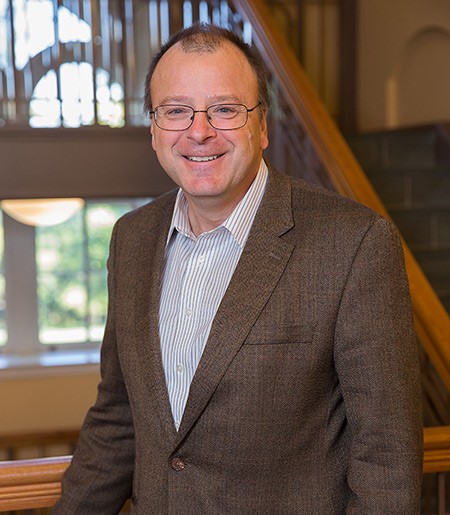

Nicolas van de Walle

Non-Resident Fellow
Democratization Issues, Politics of Economic Reform, Aid Effectiveness, Africa
Email:
Education: Ph.D. Princeton University, 1990
Media Contact: Catherine An

Nicolas van de Walle is a non-resident fellow at the Center for Global Development and is the John S. Knight Professor of International Studies and the Director of the Mario Einaudi Center for International Studies at Cornell University. He has published widely on democratization issues as well as on the politics of economic reform and on the effectiveness of foreign aid, with a special focus on Africa. In addition, van de Walle has worked extensively as a consultant for a variety of international and multilateral organizations, including the World Bank, USAID, and UNDP. His latest book is a CGD publication Overcoming Stagnation in Aid-Dependent Countries.

New Popular Working Papers Books Other CGD Pubs Selected Works
  • This class will survey both the major policy issues in the developing world today and the political economy literature. The class seeks to inform students of the historical and contemporary dynamics of economic development, with a focus on political issues.

  • Does foreign aid help develop public institutions and state capacity in developing countries? In this Working Paper, the authors suggest that despite recent calls for increased aid to poor countries by the international community, there may be an "aid-institutions paradox." While donor intentions...

  • In this book, Nicolas van de Walle identifies 26 countries that are extremely poor and grew little if at all in the 1990s. His sample excludes North Korea and countries where civil war explains some of their failure to grow (Afghanistan, Sierra Leone, Sudan, Tajikistan and others). The 26 countries...

  • Traditional economic theory predicts that capital mobility and international trade will push the world's national economies to one income level. As poorer nations race ahead, richer ones should slow down. Eventually, theory says, national economies would reach equilibrium. The reality of the last...

  • Recent discussions surrounding the Millennium Challenge Account (MCA) proposal suggest that it seeks to address two somewhat distinct goals in the general area of foreign aid: increasing aid volume and making aid more selective. This brief comment seeks to clarify the nature of these goals and...

  • Overcoming Stagnation in Aid-Dependent Countries - Mar 31, 2005

    In this book, Nicolas van de Walle identifies 26 countries that are extremely poor and grew little if at all in the 1990s. His sample excludes North Korea and countries where civil war explains some of their failure to grow (Afghanistan, Sierra Leone, Sudan, Tajikistan and others). The 26 countries...

  • The Political Economy of Development, Cornell University (Syllabus) - Apr 14, 2010

    This class will survey both the major policy issues in the developing world today and the political economy literature. The class seeks to inform students of the historical and contemporary dynamics of economic development, with a focus on political issues.

  • Overcoming Stagnation in Aid-Dependent Countries - Mar 31, 2005

    In this book, Nicolas van de Walle identifies 26 countries that are extremely poor and grew little if at all in the 1990s. His sample excludes North Korea and countries where civil war explains some of their failure to grow (Afghanistan, Sierra Leone, Sudan, Tajikistan and others). The 26 countries...

  • Overcoming Stagnation in Aid-Dependent Countries - Brief - Mar 23, 2005

    Traditional economic theory predicts that capital mobility and international trade will push the world's national economies to one income level. As poorer nations race ahead, richer ones should slow down. Eventually, theory says, national economies would reach equilibrium. The reality of the last...

  • A Comment on the MCA Proposals - Jan 9, 2003

    Recent discussions surrounding the Millennium Challenge Account (MCA) proposal suggest that it seeks to address two somewhat distinct goals in the general area of foreign aid: increasing aid volume and making aid more selective. This brief comment seeks to clarify the nature of these goals and...

There are no related events.

Topics