Rethinking U.S. Foreign Assistance
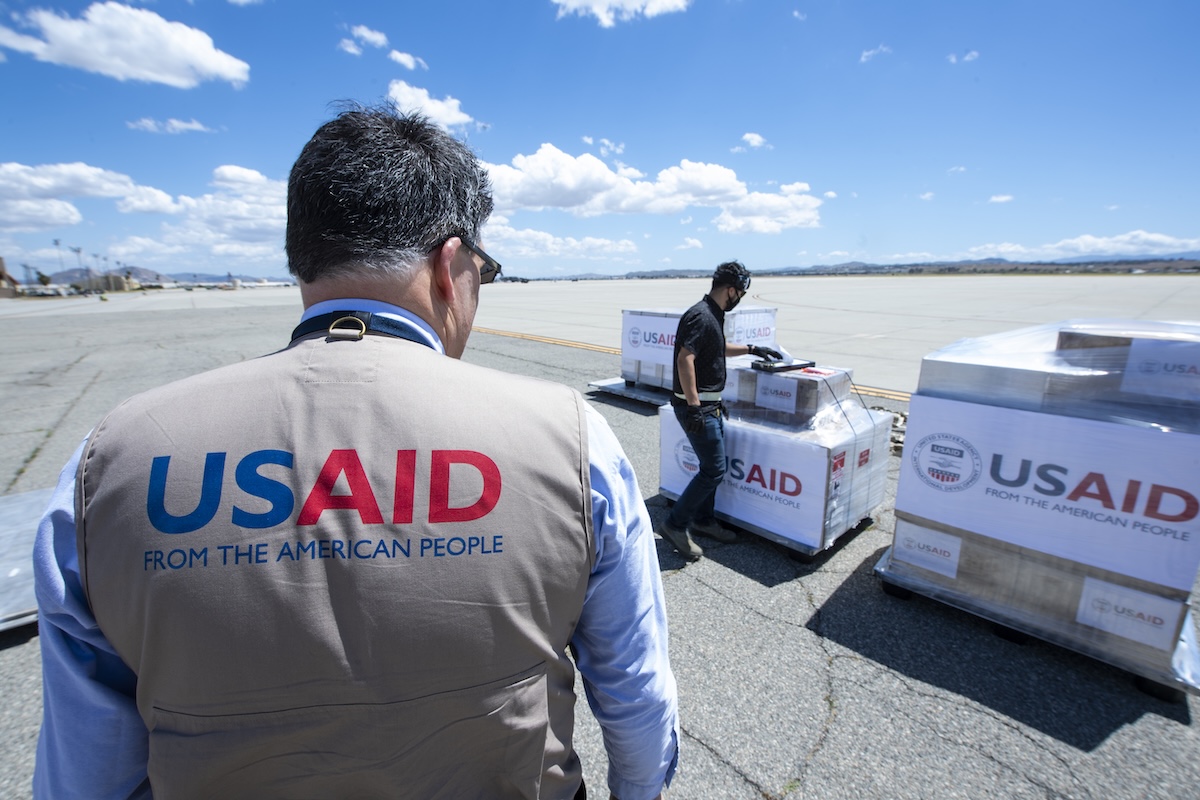
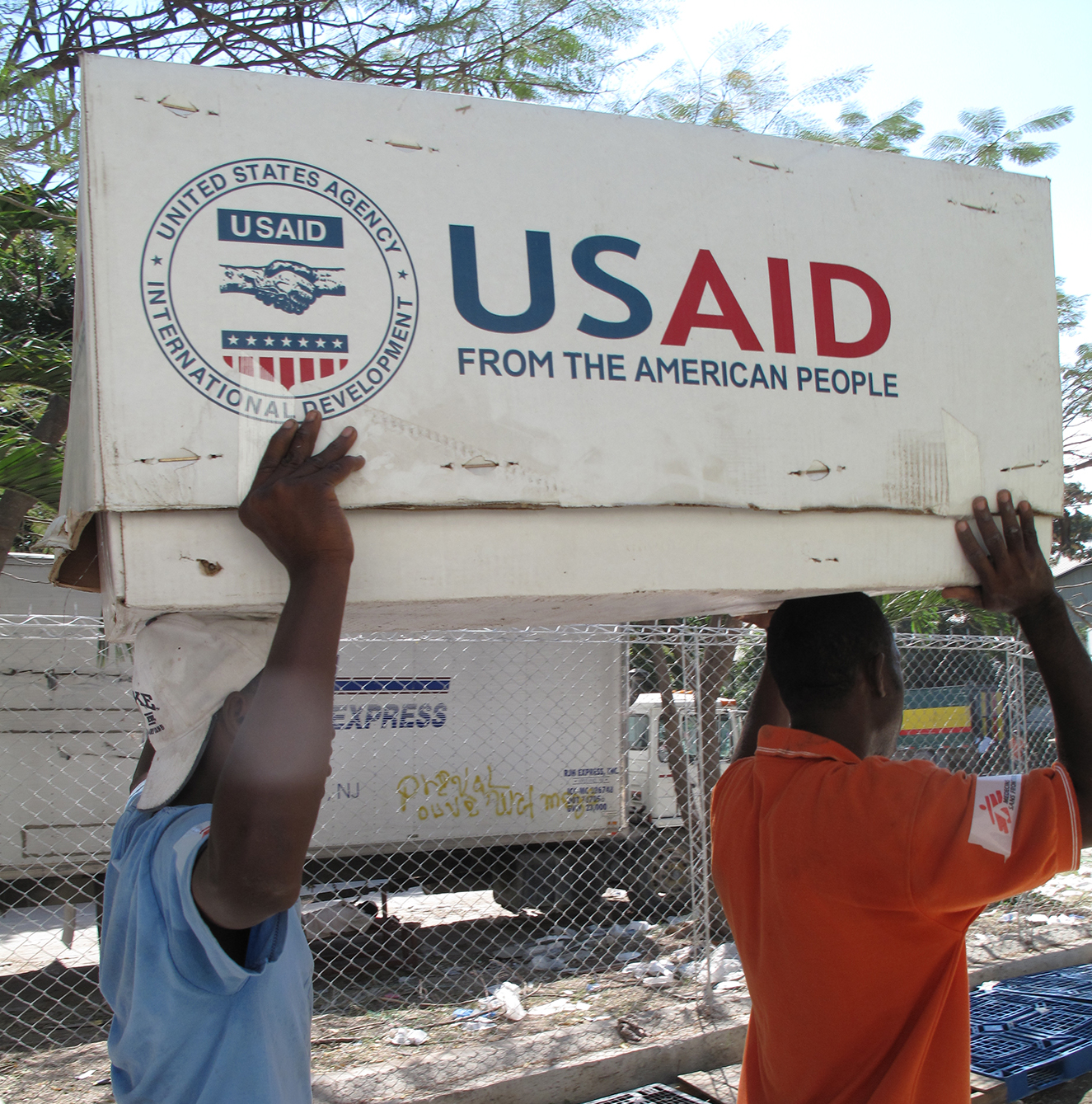
Strong and effective U.S. foreign assistance programs are crucial components of a U.S. global development policy. They are also vital to U.S. national interests, enhancing global stability, expanding economic opportunities and promoting American values. The history of U.S. foreign assistance has shown important successes. But the U.S. foreign assistance apparatus, designed during the Cold War era, has grown out-of-date to meet the challenges of the 21st century. The mission, mandate and organizational structure must be rebuilt and revitalized. Recent studies and reviews by the Obama administration and nongovernmental stakeholders have given greater momentum to redesigning U.S. assistance in ways that make it more effective. Translating principles into action will be difficult and possibly fraught with setbacks. The Rethinking U.S. Foreign Assistance program tracks the progress being made to create a coordinated and coherent system that can meet development challenges and objectives.
CGD has been an active participant in a broad-based effort to situate development as a key component in promoting global stability and to strengthen U.S. assistance programs, including through the Modernizing Foreign Assistance Network (MFAN). As part of this ongoing effort, the Center's Rethinking U.S. Foreign Assistance program aims to:
- Create a one-stop-shop for information, dialogue and analysis on U.S. foreign assistance innovations and reform.
- Provide CGD expert opinion on how to reform the mission, mandate and organizational structure of U.S. foreign assistance.
- Contribute to the ongoing effort to elevate global development and U.S. foreign assistance as a critical national interest priority.
Connie Veillette joined CGD as the program director in September 2010. She was previously a senior staffer for Sen. Richard Lugar (R-Ind) on the Senate Foreign Relations Committee, where her portfolio included oversight of foreign assistance and USAID, and aid reform issues.
Follow @ConnieVeillette and @RethinkCGD on twitter.
Newest
Popular
Experts
Publications
Events
Multimedia
Selected Works
-
The Modernizing Foreign Assistance Network invites you to:
A Blueprint for Engagement Amid Austerity: A Bipartisan Approach to Reorienting the International Affairs Budget
Featuring report co-authors:
John Norris, Executive Director of the Sustainable Security and Peacebuilding Initiative,...
-
In this report, John Norris of the Center for American Progress and Connie Veillette of the Center for Global Development identify four flagship reforms that would help U.S. foreign affairs institutions to better reflect national interests and reduce ineffective spending.
-
The U.S. political environment has changed significantly since 2007 when President Obama promised to double U.S. foreign assistance. As the 2012 election cycle presses on, cutting the budget and reducing the deficit are on the minds of many. What does this mean for U.S. foreign assistance? ...
-
The international affairs portion of the president’s FY2013 budget will likely generate concern among aid advocates over cuts to health and humanitarian assistance.
-
As the Global Health Initiative moves into its third year of implementation, Nandini Oomman and Rachel Silverman summarize the current status of this major development initiative, highlight the challenges for the GHI, and propose specific recommendations for a way forward.
-
This report of the Rethinking U.S. Foreign Assistance Program summarizes the rationale for continued U.S. investment in global health, looks into the evolution of the Global Health Initiative, and recommends a re-boot for the whole enterprise.
-
On December 15th the Millennium Challenge Corporation (MCC), an innovative U.S. aid agency, is set to announce which countries will receive its unique development assistance. Casey Dunning, policy analyst at CGD and my guest on this week’s Wonkcast, provides insight and recommendations on...
-
This report takes a look at the Obama administration's FY2012 budget request and congressional reaction to gauge the potential for implementing foreign aid reforms as spelled out in the administration's policy documents.
-
Ben Leo testified before the House Subcommittee on International Monetary Policy and Trade on July 27, 2011 about the importance of multilateral development banks to the United States and the greater world.
-
To inform the Millennium Challenge Corporation’s review of its country selection process, the MCA Monitor has conducted a parallel review and offers five key recommendations.
-
The international affairs portion of the president’s FY2013 budget will likely generate concern among aid advocates over cuts to health and humanitarian assistance.
-
In this report, John Norris of the Center for American Progress and Connie Veillette of the Center for Global Development identify four flagship reforms that would help U.S. foreign affairs institutions to better reflect national interests and reduce ineffective spending.
-
This report of the Rethinking U.S. Foreign Assistance Program summarizes the rationale for continued U.S. investment in global health, looks into the evolution of the Global Health Initiative, and recommends a re-boot for the whole enterprise.
-
As the Global Health Initiative moves into its third year of implementation, Nandini Oomman and Rachel Silverman summarize the current status of this major development initiative, highlight the challenges for the GHI, and propose specific recommendations for a way forward.
-
Controversies about aid effectiveness go back decades. This new working paper by CGD senior fellow Steven Radelet provides an introduction and overview of the basic concepts, data and key debates about foreign aid. It explores the range of views on the relationship between foreign aid and economic...
-
Director of the Center for Public Leadership at the John F. Kennedy School of Government at Harvard University, editor-at-large at U.S. News & World Report, and a senior political analyst for CNN, David Gergen joined CGD president Nancy Birdsall, and CGD senior fellows who authored essays in our...
-
This brief details how the new Congress could save more than $500 million annually by eliminating unnecessary regulations currently in place that are incredibly wasteful, anticompetitive, and make it harder to carry out effective development programs abroad.
-
Development refers to improvements in the conditions of people’s lives, such as health, education, and income. It occurs at different rates in different countries. The U.S. underwent its own version of development since the time it became an independent nation in 1776.
Learn more about Rich...
-
This report takes a look at the Obama administration's FY2012 budget request and congressional reaction to gauge the potential for implementing foreign aid reforms as spelled out in the administration's policy documents.
-
In this paper, part of the Innovations in Aid series, Jean-Michel Severino and Olivier Ray describe shifts in the objectives of overseas development assistance (ODA) over time and conclude that it is time to put the concept itself to bed—in favor of what they propose should be called “Global...
-
Sarah Jane Staats, Director of Rethinking U.S. Foreign Assistance Program Sarah Jane Staats is director of CGD’s Rethinking U.S. Foreign Assistance Initiative, a one-stop shop for information and policy analysis on the mission, mandate, and organizational structure of U.S. foreign aid and global development policy. Staats has written on aid effectiveness, the U.S....
-
-
-
GHI Mid-Term Review and a Way Forward
- Jan 30, 2012
As the Global Health Initiative moves into its third year of implementation, Nandini Oomman and Rachel Silverman summarize the current status of this major development initiative, highlight the challenges for the GHI, and propose specific recommendations for a way forward.
-
-
-
-
-
-
-
Aid for a Purpose: Show Me the Goal, Then Show Me the Money
- Mar 2, 2011
In this paper, Connie Veillette presents the problems that beset the existing process for budgeting and resource allocation, and argue that the process is backwards. Instead of using baseline budgets and existing resources to dictate objectives, policymakers should clearly define and articulate the...
-
Dambisa Moyo's (Serious) Challenge to the Development Business
- Apr 21, 2009
Senior fellow Todd Moss considers the future of foreign aid in light of Dambiso Moyo’s book, Dead Aid, which argues that Western aid to Africa has brought more harm than help. The relevant question today, he argues, is not whether aid is good or bad, but rather how aid can be made to work better...
-
-
-
-
-
-
What's Behind the Recent Declines in U.S. Foreign Assistance?
- Dec 8, 2008
Total U.S. development assistance has fallen 22 percent since 2005 from $27.9 billion to $21.8 billion in 2007. In real terms, this was the smallest amount since 2002, excluding assistance to Iraq, Afghanistan, and HIV/AIDS programs. Senior fellow Steve Radelet and his coauthors examine the...
-
-
New Day, New Way: U.S. Foreign Assistance for the 21st Century
- Jun 10, 2008
New Day, New Way: U.S. Foreign Assistance for the 21st Century calls on the next American president, Congress, policymakers and the American people to overhaul how the U.S. helps poor people in developing countries. Among the recommended steps: a new national foreign assistance strategy and a new...
-
-
-
-
U.S. Assistance to Africa and the World: What Do the Numbers Say?
- Feb 19, 2008
With President Bush's trip to Africa making headlines this week, CGD senior fellow Steve Radelet and research assistant Sami Bazzi offer a close look at the latest U.S. foreign assistance numbers. Bottom line: although America's aid has more than doubled since 2000, the new money went mostly to...
-
-
PEPFAR Reauthorization: Improving Transparency in U.S. Funding for HIV/AIDS
- Nov 12, 2007
The President's Emergency Plan for AIDS Relief (PEPFAR) provides more than $5 billion per year to prevent and treat HIV/AIDS. Exactly how is that money spent? Donors, recipients, and even PEPFAR staff are often left guessing, because much of the extensive data the U.S. government collects on the...
-
Foreign Assistance Reforms: Successes, Failures, and Next Steps - Testimony for the Senate Foreign Relations Subcommittee on International Development, Foreign Assistance, Economic Affairs, and International Environmental Protection
- Jun 13, 2007
On Tuesday, June 12, 2007, Steve Radelet testified before the Senate Foreign Relations Subcommittee on International Development, Foreign Assistance, Economic Affairs, and International Environmental Protection on "Foreign Aid Reform: Successes, Failures, and Next Steps."
-
-
U.S. Foreign Aid Reform: Will It Fix What Is Broken?
- Sep 29, 2006
In U.S. Foreign Aid Reform: Will It Fix What Is Broken? CGD research fellow Stewart Patrick says the U.S. foreign aid regime is broken, and it is not clear that the Bush administration's reform plan will fix it. Patrick proposes a total overhaul of the 1961 Foreign Assistance Act and the creation...
-
-
A Primer on Foreign Aid - Working Paper 92
- Jul 24, 2006
Controversies about aid effectiveness go back decades. This new working paper by CGD senior fellow Steven Radelet provides an introduction and overview of the basic concepts, data and key debates about foreign aid. It explores the range of views on the relationship between foreign aid and economic...
-
U.S. Assistance for Global Development
- Jun 15, 2006
U.S. "development assistance" refers to the transfer of resources from the United States to developing countries and to some strategic allies. It is delivered in the form of money (via loans or grants), contributions of goods (such as food aid), and technical assistance.
Learn more about Rich...
-
Why Global Development Matters for the U.S.
- Jun 15, 2006
Development refers to improvements in the conditions of people’s lives, such as health, education, and income. It occurs at different rates in different countries. The U.S. underwent its own version of development since the time it became an independent nation in 1776.
Learn more about Rich...
-
Reforming U.S. Development Policy
- Jan 12, 2006
As the Bush Administration prepares to announce the reorganization of U.S. foreign assistance, Nancy Birdsall, Stewart Patrick and Milan Vaishnav argue in a new essay that making a dent in global poverty will require that the U.S. address four flaws: low volume and poor quality of aid; incoherence...
-
-
On the Brink, Weak States and US National Security
- Jun 8, 2004
A Report of the Commission for Weak States and US National Security
Terrorists training at bases in Afghanistan and Somalia. Transnational crime networks putting down roots in Myanmar/Burma and Central Asia. Poverty, disease, and humanitarian emergencies overwhelming governments in Haiti and...
-
The Surprise Party: An Analysis of US ODA Flows to Africa - Working Paper 30
- Jul 30, 2003
Conventional wisdom about US foreign policy toward Africa contains two popular assumptions. First, Democrats are widely considered the party most inclined to care about Africa and the most willing to spend resources on assistance to the continent. Second, the end of the Cold War was widely thought...
-
The Other War: Global Poverty and the Millennium Challenge Account
- Jun 1, 2003
This book tackles head on the tension between foreign policy and development goals that chronically afflicts U.S. foreign assistance; the danger of being dismissed as one more instance of the United States going it alone instead of buttressing international cooperation; and the risk of exacerbating...
-
-
-
-
Congressional Hearing: USAID in the 21st Century
- Apr 1, 2009
USAID IN THE 21ST CENTURY HEARING before the COMMITTEE ON FOREIGN RELATIONS UNITED STATES SENATE ONE HUNDRED ELEVENTH CONGRESS FIRST SESSION
Wednesday, April 1, 2009
Time: 9:30 A.M.
Place: 419 Dirksen Senate Building
-
New Day, New Way: U.S. Foreign Assistance for the 21st Century
- Jun 10, 2008
U.S. engagement with the world has been affected by new foreign policy, national security, and economic challenges. These global challenges have stretched the bounds of both civilian and military involvement in development. The current system of foreign assistance has proven to be inflexible and...
-
Strengthening U.S. Foreign Assistance: Proposals for a More Effective Strategy
- Mar 3, 2008
The SAIS International Development Program and the SAIS Center for International Business and Public Policy will host a discussion by two leading critics of the HELP Commission Report on U.S. foreign assistance that was submitted to the President and Congress in December 2007. Leo Hindery, Vice...
-
U.S. Foreign Assistance in Our National Interest
- Feb 1, 2008
In her first major speech since being confirmed by Congress, USAID Administrator and Director of Foreign Assistance Henrietta Holsman Fore will deliver a keynote speech on the importance of elevating global development and reforming U.S. foreign assistance to meet our foreign policy and national...
-
Foreign Aid: Diplomacy, Development, Domestic Politics
- Dec 5, 2006
Why do governments give foreign aid? How have those purposes changed over the past half century? Why do they differ from donor government to donor government? What difference do donor intentions make to the size and impact of foreign aid? Carol Lancaster's new book on foreign aid explores these...
-
Reorganizing U.S. Development Assistance: For Better or Worse? A Debate
- Mar 17, 2006
CGD Senior Fellow Steve Radelet moderated a debate between Andrew Natsios, until recently Administrator of USAID in the Bush Administration, and Carol Lancaster, former Deputy Administrator of USAID in the Clinton Administration, about the recently announced reorganization of U.S. foreign aid.
-
Foreign Assistance for Foreign Policy: An Overarching Strategy
- Mar 30, 2004
The past two years have seen the creation of two major foreign assistance programs, the Millennium Challenge Account (MCA) and the Emergency Plan for HIV/AIDS, as well as a proliferation of small Presidential aid initiatives. But does the U.S. have an overarching strategy that guides these...
Other CGD Work on U.S. Foreign Aid Reform
|
|