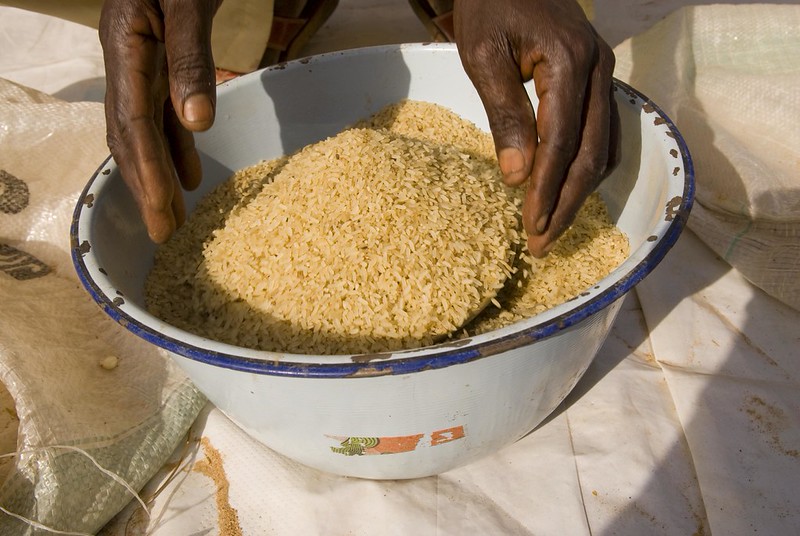
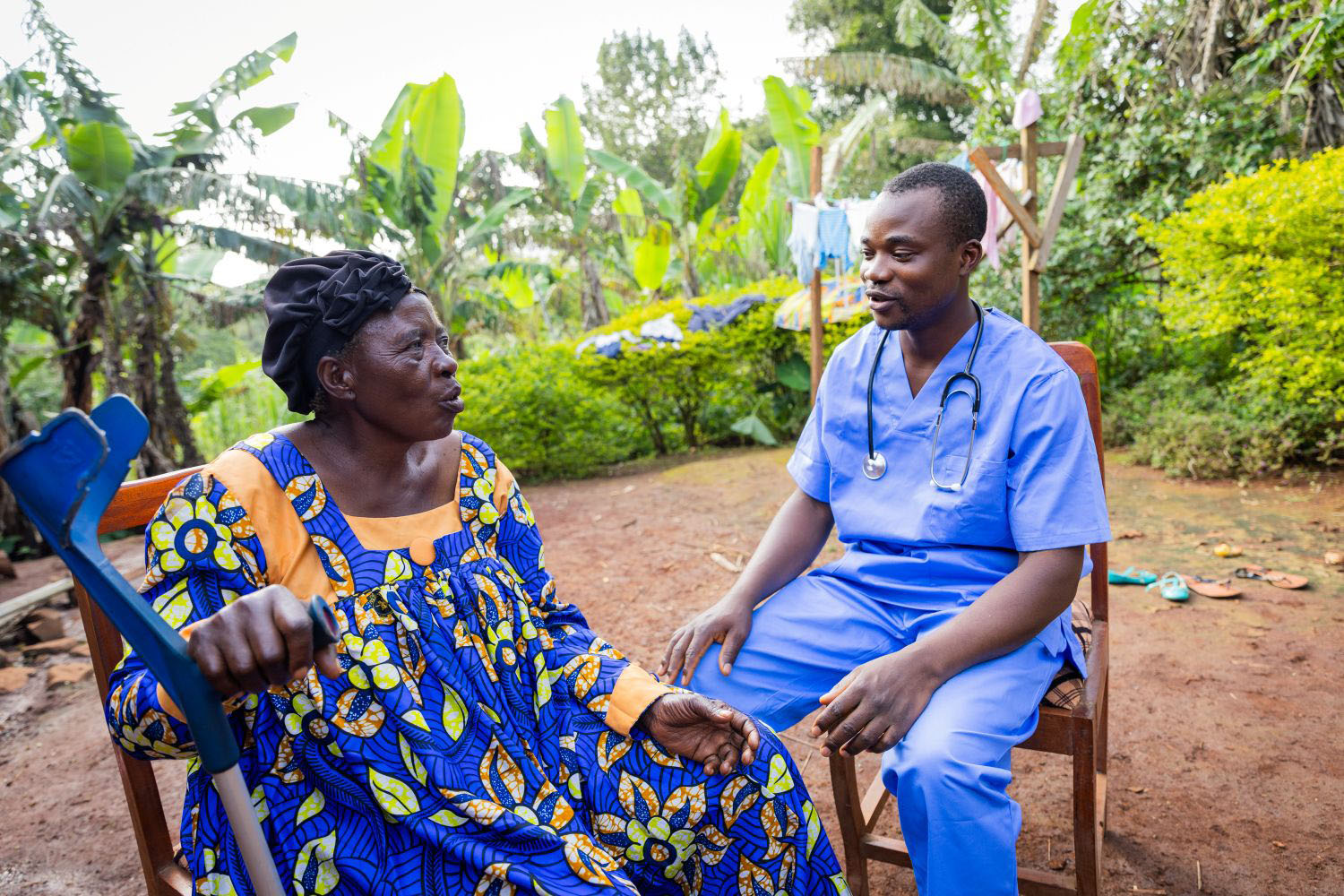
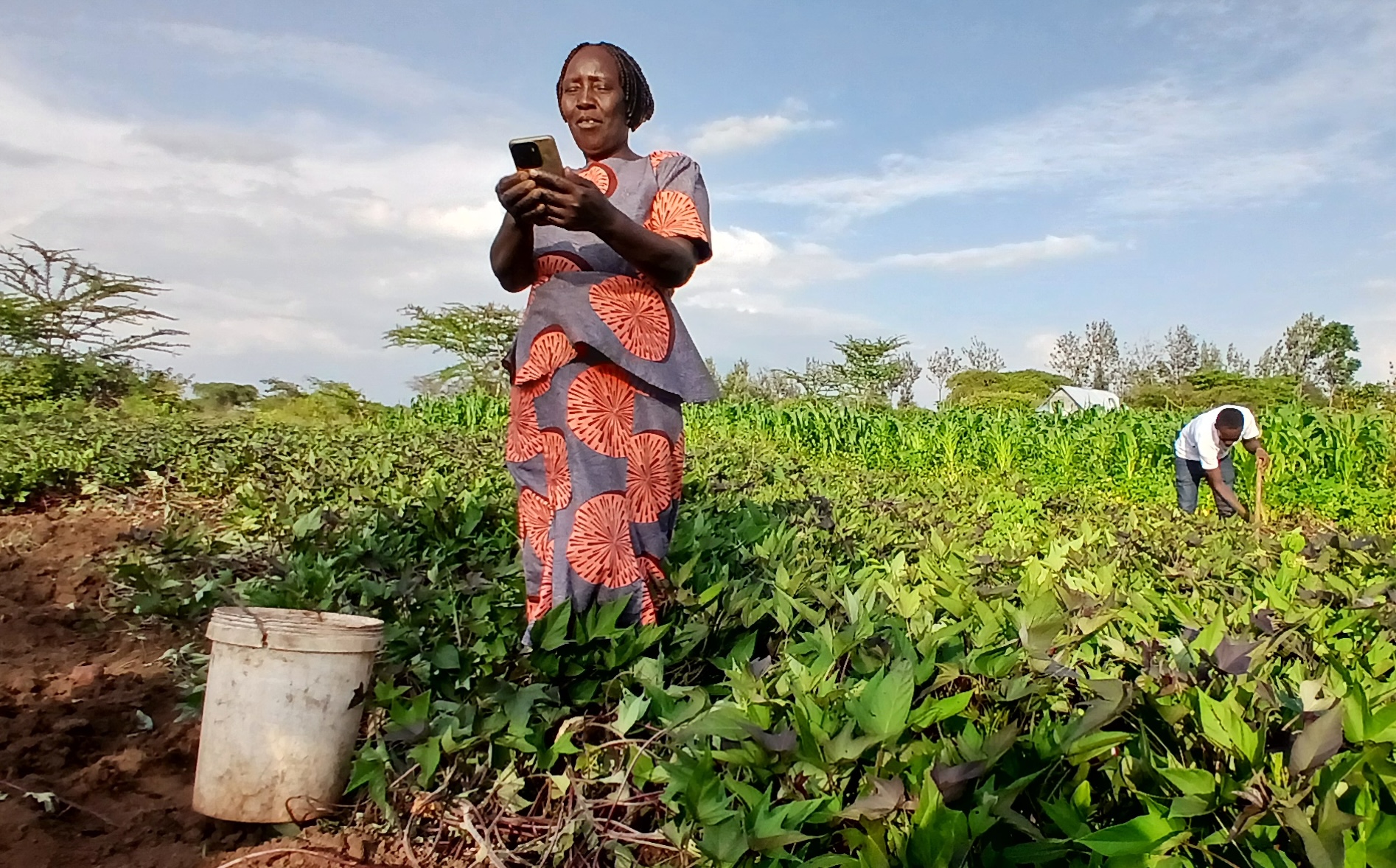
More than a billion people in developing countries suffer from chronic hunger. Long a neglected topic, the role of agriculture in promoting pro-poor growth is attracting renewed attention in the United States and internationally. CGD’s work in this area focuses on how rich countries’ agricultural policies and practices impact people and economic development in the poor world.
Three out of four people in the developing world live in rural areas and depend on agriculture to support themselves and their families. Yet, since development traditionally involves moving people from subsistence farming into higher-productivity activities in manufacturing and services, governments and donors have neglected agriculture for decades. The spike in food prices in 2007–08, coupled with the consequent increases in hunger and poverty, returned food security issues to the policy agenda.
Senior fellow Kimberly Elliott, author of Delivering on Doha: Farm Trade and the Poor, focuses on how rich countries' agricultural policies and practices affect poor people in the developing world. Non-resident fellow Peter Timmer has written extensively on the role of agriculture and food security in the economic development process. Non-resident fellow Jenny Aker conducts research on food aid in the Sahel and on the importance of mobile phones on food prices.
CGD research on food and agriculture analyzes several other topics:
- Trade policies and farm subsidies that protect rich-country agricultural producers from competition at the expense of developing countries
- The effect of biofuels production on poor people, including through food prices.
- The impact of rich-world consumption of "fair trade" agricultural products, such as coffee and chocolate, on poor people and on development.

Newest
Popular
Publications
Experts
Initiatives
Multimedia
-
Agriculture can serve as an important engine for economic growth in developing countries, yet yields in these countries have lagged far behind those in developed countries for decades. One potential mechanism for increasing yields is the use of improved agricultural technologies, such
as...
-
It’s not often that the United Nations sees fit to officially declare a food crisis a famine. That’s a testament to the severity of the ongoing suffering in Somalia, a disaster of biblical proportions that has already claimed the lives of tens of thousands. But evidence abounds that famines...
-
This paper addresses the response to historically high rice prices in 2008 first by presenting a historical review of trends in the West African rice sector and, second, by assessing the effect of world rice prices on domestic prices, primarily at the consumer level.
-
Using panel data from Mozambique collected in 2007 and 2008, the authors explore the impact of the food crisis on the welfare of households living with HIV/AIDS. While HIV households have not suffered more from the crisis than others, infected people who experienced a negative income shock also...
-
Scarce resources. Climate change. Population growth. Rising food prices. Feeding the world’s hungry will require a giant leap in agricultural innovation. In a new working paper, senior fellow Kimberly Elliott explores how advance market commitments could pull the private sector into producing for...
-
The World Food Programme has world-class logistics, but its ability to manage financial risk is extremely limited. The WFP should consider implementing a targeted hedging pilot strategy for increased predictability. Greater commitments of untied cash from donors and support for the proposed Food...
-
This paper addresses two important economic issues for Africa: the contribution of national borders and ethnicity to market segmentation and integration between and within countries.
-
This brief summarizes the findings of the CGD Global Trade Preference Reform Working Group and its recommendations to make preference programs better promote prosperity and stability in the world's poorest countries.
-
The CGD Working Group on Global Trade Preference Reform shows how changes to trade preference programs could greatly benefit those living in the poorest countires at very little cost to preference-giving countries.
-
Much like 2008, the world rice market seems destined for another price shock, with very aggressive buyin techniques by the Philippines fueling the run-up in prices.
-
While the threat of global warming is increasingly accepted, little attention has been paid to the likely impact at the country level, especially in the developing world. In this new book, Bill Cline, a joint senior fellow at CGD and the Peterson Institute for International Economics, provides...
-
Agriculture can serve as an important engine for economic growth in developing countries, yet yields in these countries have lagged far behind those in developed countries for decades. One potential mechanism for increasing yields is the use of improved agricultural technologies, such
as...
-
The CGD Working Group on Global Trade Preference Reform shows how changes to trade preference programs could greatly benefit those living in the poorest countires at very little cost to preference-giving countries.
-
Agricultural market liberalization is the linchpin for a successful conclusion to the Doha Round of World Trade Organization (WTO) negotiations because these are the most protected markets remaining in most rich countries. But the implications for developing countries, especially the poorest, are...
-
After two decades of neglect, interest in agriculture is on the rise. This new working paper by one of the leading thinkers in rural development argues that the reach and efficiency of rural infrastructure, coupled with effective investment in agricultural research and extension, hold the key to...
-
This paper addresses the response to historically high rice prices in 2008 first by presenting a historical review of trends in the West African rice sector and, second, by assessing the effect of world rice prices on domestic prices, primarily at the consumer level.
-
Scarce resources. Climate change. Population growth. Rising food prices. Feeding the world’s hungry will require a giant leap in agricultural innovation. In a new working paper, senior fellow Kimberly Elliott explores how advance market commitments could pull the private sector into producing for...
-
This paper reviews research on the impact of rice prices on the poor, on real wages in rural and urban areas, and on the broader macroeconomic consequences for investments in labor-intensive manufacturing.
-
This CGD Brief, based on Global Warming and Agriculture: Impact Estimates by Country, by senior fellow William Cline, explores the implications of global warming for world agriculture, with special attention to China, India, Brazil, and the poor countries of the tropical belt in Africa and Latin...
-
This brief summarizes the findings of the CGD Global Trade Preference Reform Working Group and its recommendations to make preference programs better promote prosperity and stability in the world's poorest countries.
-
Jenny Aker, Non-Resident Fellow Jenny C. Aker is an assistant professor of economics at Tufts University. Her current research focuses on the impact of information (and information technology) on development outcomes, especially in agricultural markets and literacy; the impact of information and education on civic education; and...
-
Kimberly Ann Elliott, Senior Fellow Kimberly Ann Elliott is an expert on economic sanctions, trade policy, and globalization, including the role of trade in development policy. She is the author or co-author of numerous books, articles, and reports, including most recently Open Markets for the Poorest Countries: Trade Preferences...
-
Nora Lustig, Non-Resident Fellow Nora Lustig is the Samuel Z. Stone Professor of Latin American Economics at Tulane University. Her research focuses on poverty and inequality, social policies, and social protection with particular emphasis on Latin America. Her latest publication is Working Paper 263, "Scholars Who Became...
-
Peter Timmer, Non-Resident Fellow Peter Timmer is a leading authority on agriculture and rural development. He has served as a professor at Stanford and Cornell, on three faculties at Harvard, and at the University of California–San Diego, where he was also the dean of the Graduate School of International Relations and Pacific...
-
-
-
-
Pulling Agricultural Innovation and the Market Together - Working Paper 215
- Jun 21, 2010
Scarce resources. Climate change. Population growth. Rising food prices. Feeding the world’s hungry will require a giant leap in agricultural innovation. In a new working paper, senior fellow Kimberly Elliott explores how advance market commitments could pull the private sector into producing for...
-
-
-
-
-
-
-
-
-
-
-
How Can We Avoid Another Food Crisis in Niger? (Essay)
- Sep 16, 2008
In this essay, CGD post-doctoral fellow Jenny Aker analyzes the performance of grain markets in Niger during its 2005 food crisis, when an estimated 2.4 million people were affected by severe food shortages, to find ways to avoid future crises. She finds that local grain markets are highly...
-
-
Biofuels and the Food Price Crisis: A Survey of the Issues - Working Paper 151
- Aug 11, 2008
While the precise contribution of biofuels to surging food prices is difficult to know, policies promoting production of the current generation of biofuels are not achieving their stated objectives of increased energy independence or reduced greenhouse gas emissions. Reaching the congressionally...
-
-
-
Global Warming and Agriculture: Impact Estimates by Country
- Sep 12, 2007
While the threat of global warming is increasingly accepted, little attention has been paid to the likely impact at the country level, especially in the developing world. In this new book, Bill Cline, a joint senior fellow at CGD and the Peterson Institute for International Economics, provides...
-
Agriculture and the Doha Round
- Jan 22, 2007
In this CGD/ Peterson Institute Brief, CGD senior fellow Kimberly Elliott argues that agriculture liberalization is crucial to the successful completion of the Doha Round of multilateral trade negotiations, since it is the sector with the highest remaining barriers in rich countries and the...
-
Delivering on Doha: Farm Trade and the Poor
- Dec 5, 2006
Agricultural market liberalization is the linchpin for a successful conclusion to the Doha Round of World Trade Organization (WTO) negotiations because these are the most protected markets remaining in most rich countries. But the implications for developing countries, especially the poorest, are...
-
Food Aid: Doing Well by Doing Good
- Dec 12, 2005
Are we doing well by doing good?
This CGD Note by C. Peter Timmer explores the alliance between US farmers, processors and shippers that forms the political foundation of the US food aid program. The Note outlines the current winners and losers of US food aid, and argues that surprisingly, the...
-
Agriculture and Pro-Poor Growth: An Asian Perspective - Working Paper 63
- Jul 21, 2005
After two decades of neglect, interest in agriculture is on the rise. This new working paper by one of the leading thinkers in rural development argues that the reach and efficiency of rural infrastructure, coupled with effective investment in agricultural research and extension, hold the key to...
-
-
There are no initiatives related to this topic.
There are no opinions related to this topic.
|
|