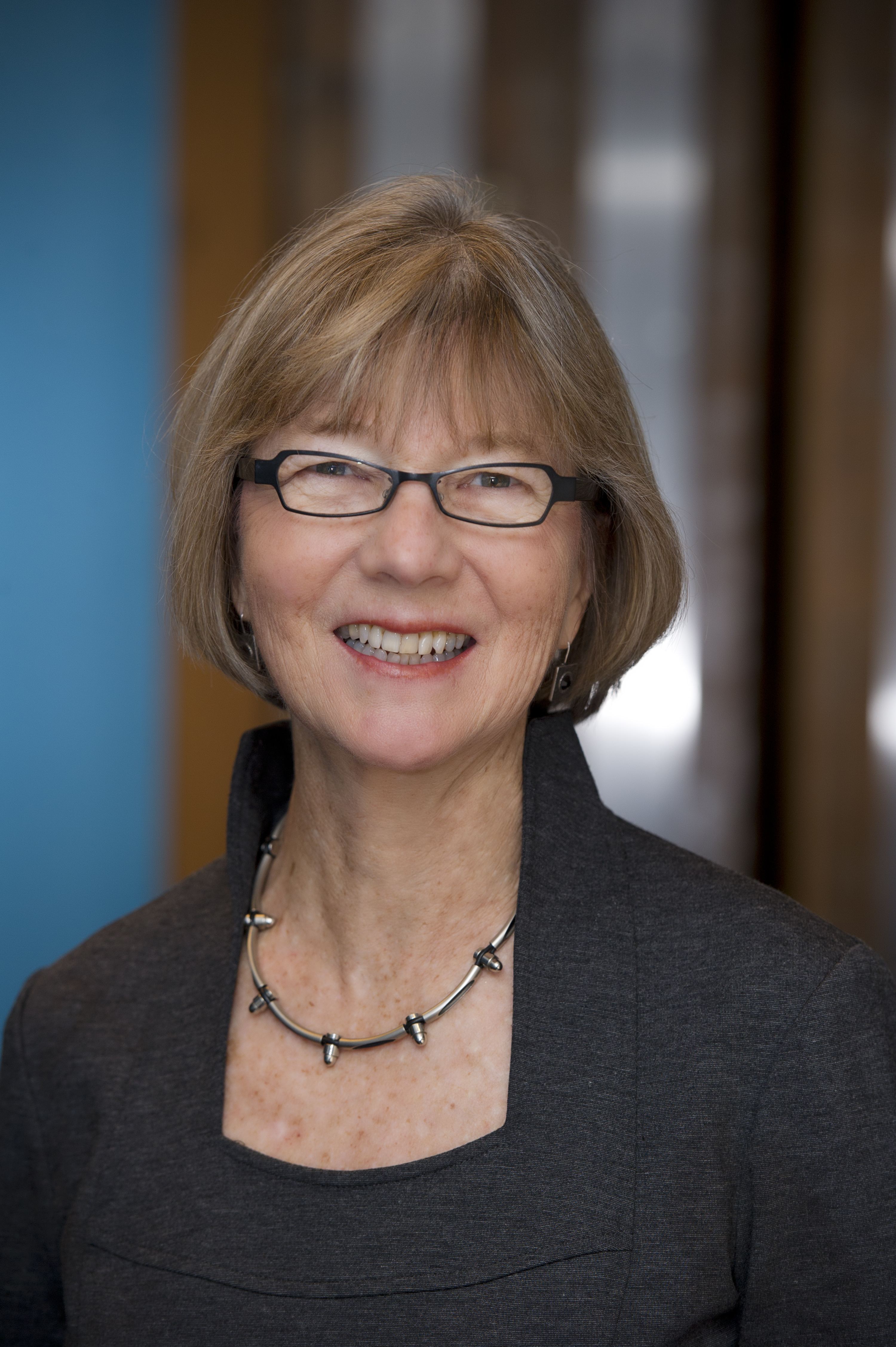
President
Education: Ph.D., Yale University, 1979; M.A., Johns Hopkins School of Advanced International Studies, 1969; B.A., Newton College of the Sacred Heart, 1967
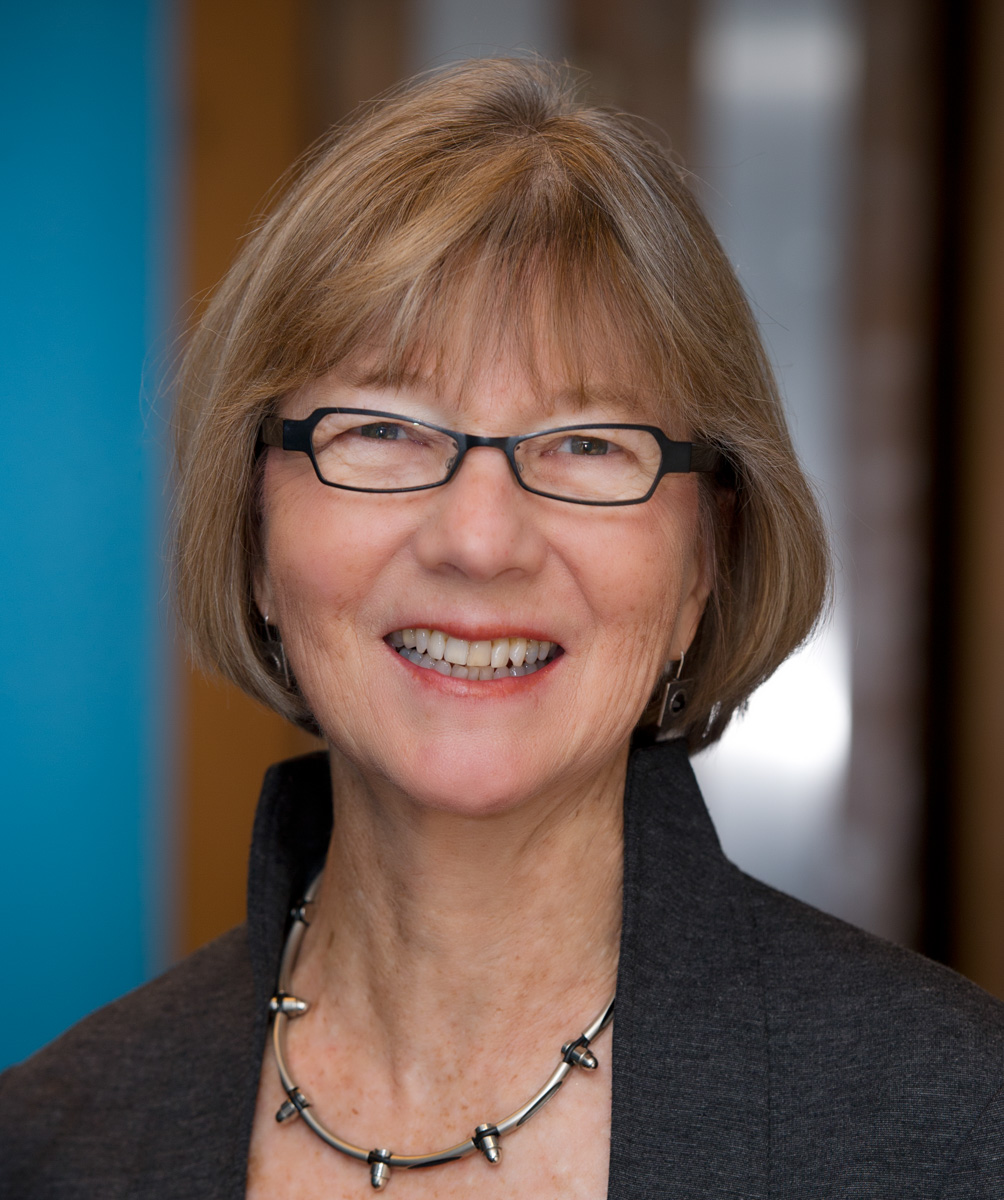
Nancy Birdsall is the Center for Global Development's founding president. From 1993 to 1998, she was executive vice president of the Inter-American Development Bank, the largest of the regional development banks, where she oversaw a $30 billion public and private loan portfolio. Before that she worked 14 years in research, policy, and management positions at the World Bank, including as director of the Policy Research Department.
She is the author, co-author, or editor of more than a dozen books and over 100 articles in scholarly journals and monographs. Shorter pieces of her writing have appeared in dozens of U.S. and Latin American newspapers and periodicals. Nancy received her Ph.D. from Yale University and her M.A. from Johns Hopkins School of Advanced International Studies. Prior to launching the Center, she served for three years as Senior Associate and Director of the Economic Reform Project at the Carnegie Endowment for International Peace where her work focused on globalization, inequality and the reform of the international financial institutions.

Inequality and Development in a Globalizing World - A Syllabus (pdf, 225KB)
Newest
Popular
CGD Publications
Events
Multimedia
Selected Works
-
Nancy Birdsall testifies before the House Financial Services Subcommittee on International Monetary Policy and Trade on rebuilding Haiti's competitiveness and private sector. March 16, 2010.
-
This working paper re-releases a 2005 CGD analysis of failed World Bank aid to Pakistan in the 1990s and identifies the lessons that are relevant today, as aid to Pakistan surges again.
-
Cash on Delivery (COD) Aid proposes serious reform to make aid work well by forcing accountability, aligning the objectives of funders and recipients, and sharing information about what works.
-
Can aid donors find a better way to deliver aid? My guest this week is Nancy Birdsall, president of the Center for Global Development. Along with William Savedoff and Ayah Mahgoub, Nancy is working on a potential new way of disbursing foreign assistance called Cash on Delivery Aid. COD Aid seeks to devise simple, results-based contracts that reward developing countries for making progress towards previously agreed goals—such as increased primary school completion rates, vaccination coverage, or access to clean water.
In the podcast, Nancy explains that the traditional mode of giving aid, in which donors often take an active role in prescribing which actions recipient governments should take, can undermine incentives for governments to identify problems and design and implement locally appropriate solutions. "We have to create a system in which outside resources actually help the developing country governments find out what works in their particular setting," says Nancy.
-
With the Copenhagen climate talks finally underway, a CGD survey of 500 development and climate aficionados in 88 countries finds unexpected agreement about what should be done—and important differences between respondents from developed and developing countries about how an agreement should be financed and managed. Jan von der Goltz and CGD president Nancy Birdsall examine the survey results to shed light on some of the ingredients of a successful climate agreement.
-
On Friday, November 6, 2009, the Center for Global Development hosted the Washington launch and discussion of this important report, with President Zedillo presenting the key recommendations. A panel discussion, moderated by CGD vice president Lawrence MacDonald, followed with CGD president Nancy Birdsall, Foreign Policy editor-in-chief Moisés Naím, and Arvind Subramanian, joint senior fellow with CGD and Peterson Institute.
-
The paper proposes a new narrative on climate equity that emphasize basic energy needs and the equality of access to energy opportunities rather than emissions. It advocates abandoning the setting of emissions targets and instead developing a framework where all countries contribute to maximizing technology creation and diffusion.
-
On September 10, 2009 CGD president Nancy Birdsall gave a keynote speech titled "The Crisis Next Time: U.S. Leadership at the Pittsburgh G-20 and Beyond." Tim Adams, managing director of The Lindsey Group and former Under Secretary for International Affairs at Treasury, and Francis Fukuyama, director of the International Development Program at the Paul H. Nitze School of Advanced International Studies at the Johns Hopkins University, served as discussants. CGD's vice president of communications and policy outreach, Lawrence MacDonald, moderated the discussion.
-
CGD president Nancy Birdsall testifies before the House Foreign Affairs Subcommittee on Terrorism, Nonproliferation and Trade as Congress considers how best to support the spirit of the G-20 commitments and global economic recovery.
-
CGD president Nancy Birdsall testifies before the House Financial Services Subcommittee on International Monetary Policy and Trade about the implications of the recent G-20 meeting in London. She reiterates the need for the United States to support the IMF and push for its reform.
-
Cash on Delivery (COD) Aid proposes serious reform to make aid work well by forcing accountability, aligning the objectives of funders and recipients, and sharing information about what works.
-
The White House and the World: A Global Development Agenda for the Next U.S. President shows how modest changes in U.S. policies could greatly improve the lives of poor people in developing countries, thus fostering greater stability, security, and prosperity globally and at home. Center for Global Development experts offer fresh perspectives and practical advice on trade policy, migration, foreign aid, climate change and more. In an introductory essay, CGD President Nancy Birdsall explains why and how the next U.S. president must lead in the creation of a better, safer world.
-
Each year billions of dollars are spent on thousands of programs to improve health, education and other social sector outcomes in the developing world. But very few programs benefit from studies that could determine whether or not they actually made a difference. This absence of evidence is an urgent problem: it not only wastes money but denies poor people crucial support to improve their lives.
-
Critics allege that the World Bank is deeply flawed. Yet the world needs a strong World Bank to help manage development and the related global challenges of the 21st century. Do the Bank's shortcomings put its future at risk? If so, can the Bank be rescued? Rescuing the World Bank, a new book that includes a CGD working group report and selected essays edited by CGD president Nancy Birdsall, offers timely perspectives on challenges that are crucial to the Bank’s future success. Learn more
-
In an increasingly globalized world, inequality is an issue of rising concern, especially in Latin America, home to many of the world's most unequal societies. This new book, co-published by the Center for Global Development and the Inter-American Dialogue, describes the links between recent growth trends, changing patterns of inequality, and rising cynicism and frustration with the political leadership across the region. The authors, Nancy Birdsall, Augusto de la Torre, and Rachel Menezes, present a dozen economic policy tools to make life fairer for the great majority of people--without sacrificing economic growth.
Learn More
-
This working paper re-releases a 2005 CGD analysis of failed World Bank aid to Pakistan in the 1990s and identifies the lessons that are relevant today, as aid to Pakistan surges again.
-
Director of the Center for Public Leadership at the John F. Kennedy School of Government at Harvard University, editor-at-large at U.S. News & World Report, and a senior political analyst for CNN, David Gergen joined CGD president Nancy Birdsall, and CGD senior fellows who authored essays in our recent book, The White House and the World: A Global Development Agenda for the Next U.S. President, for a lively discussion of the prospects for improved U.S. development policy under President Barack Obama.
-
Nancy Birdsall testifies before the House Financial Services Subcommittee on International Monetary Policy and Trade on rebuilding Haiti's competitiveness and private sector. March 16, 2010.
-
With the Copenhagen climate talks finally underway, a CGD survey of 500 development and climate aficionados in 88 countries finds unexpected agreement about what should be done—and important differences between respondents from developed and developing countries about how an agreement should be financed and managed. Jan von der Goltz and CGD president Nancy Birdsall examine the survey results to shed light on some of the ingredients of a successful climate agreement.
-
Given all the other pressing worries, why was education among the issues that G8 leaders discussed at the St. Petersburg Summit? Education and the Developing World, a CGD Rich World/Poor World Brief, explains why investing in education is not just the right thing to do, it's the smart thing to do.
Learn more about Rich World, Poor World: A Guide to Global Development
-
-
-
Cash on Delivery: A New Approach to Foreign Aid
- Mar 16, 2010
Cash on Delivery (COD) Aid proposes serious reform to make aid work well by forcing accountability, aligning the objectives of funders and recipients, and sharing information about what works.
-
It's One Climate Policy World Out There--Almost - Working Paper 195
- Dec 7, 2009
With the Copenhagen climate talks finally underway, a CGD survey of 500 development and climate aficionados in 88 countries finds unexpected agreement about what should be done—and important differences between respondents from developed and developing countries about how an agreement should be financed and managed. Jan von der Goltz and CGD president Nancy Birdsall examine the survey results to shed light on some of the ingredients of a successful climate agreement.
-
-
-
-
Schooling Inequality, Crises, and Financial Liberalization in Latin America - Working Paper 165
- Mar 21, 2009
This working paper examines the relationship between high inequality and liberalization of the financial sector in Latin America from 1975 to 2000. Using panel data, the authors find that increases in financial liberalization were associated with bank crises and other domestic and external shocks, and that higher schooling inequality reduces the impetus for liberalization brought on by bank crises.
-
How to Unlock the $1 Trillion that Developing Countries Urgently Need to Cope with the Crisis
- Feb 17, 2009
Five billion people in developing countries are innocent victims of the global economic crisis. How well they cope will be crucial to sustained global recovery. In this CGD Note, Nancy Birdsall estimates that developing countries may need $1 trillion for bank rescues, for fiscal stimulus, and to maintain their minimal social safety nets over the next couple of years. She then explains how these funds could be unlocked from existing resources.
-
The Age of Turbulence and Poor Countries: The Case for MDB Help with Risk Management
- Nov 17, 2008
The global financial crisis and economic slowdown are subjecting poor countries to increased financial, price, and output volatility. How can the multilateral development banks help? A new CGD brief by visiting fellow Nancy Lee, non-resident fellow Guillermo Perry, and CGD president Nancy Birdsall makes the case for a broad range of new and expanded activities to help developing countries manage risk.
READ THE BRIEF
-
Cash on Delivery: A New Approach to Foreign Aid
- Mar 23, 2010
Donor countries have committed to major increases in development assistance but doubts remain over how effective this aid is. At this launch of their new book, authors Nancy Birdsall, William Savedoff, and Ayah Mahgoub present Cash on Delivery Aid, an approach that links aid directly to outcomes in ways that promote accountability and strengthen local institutions. It builds on existing initiatives that strive to disburse aid against results, but it takes the idea further by linking payments more directly to a single specific outcome; giving the recipient country full authority to achieve progress however it sees fit and without interference of any kind from donors; and assuring that the recipient country's progress is transparent and visible to its own citizens. These features could rebalance accountability, reduce transaction costs, and encourage local innovation and learning. Please join us, along with our panelists, to discuss this new approach to aid.
-
A New Way to Promote Economic Growth: Charter Cities
- Mar 15, 2010
CGD non-resident fellow Paul Romer is a professor at Stanford University and is one of the leading growth economists of our time. He will discuss his idea for a profoundly new way to reduce poverty in the developing world: chartering new cities to create centers of growth and prosperity within developing countries. These cities let people voluntarily move to a place with rules that provide security, economic opportunity, and improved quality of life. Charter cities give leaders more options for improving governance and investors more opportunities to finance socially beneficial infrastructure projects. They also harness the forces that have been among the most successful at reducing poverty in developing countries over the past few decades.
-
The 2009 Commitment to Development Ideas in Action Award
- Feb 5, 2010
Please join us in honoring Diego Hidalgo Schnur, the 2009 winner of the Commitment to Development Ideas in Action Award, sponsored jointly by the Center for Global Development (CGD) and Foreign Policy magazine. Hidalgo’s career reflects his resolute dedication to helping the world’s poorest people. He is the founder or key sponsor of numerous organizations committed to promoting development and democracy across the globe. These include: Development Assistance Research Associates (DARA), which produces the Humanitarian Response Index; the Foundation for Research and Investment for the Development of Africa (FRIDA), an NGO that promotes cooperation and development projects in the continent’s poorest countries; and the Toledo International Centre for Peace (CITpax), a Spanish think tank. Hidalgo also serves as president of the Fundación par alas Relaciones Internacionales y el Diálogo Exterior, (FRIDE), a Madrid-based think tank that provides innovative ideas on Europe's role in the international arena. The award, bestowed annually since 2003, honors an individual or organization that has made a significant contribution to changing attitudes and policies towards the developing world.
-
British Development Policy and the Conservative Party
- Dec 3, 2009
Andrew Mitchell, MP, UK Shadow Minister for International Development, will be speaking about the UK Conservative Party's development policy and plans, including the main elements of the "green paper" issued recently. One World Conservatism lays out the Tory strategy for fighting global poverty and how the UK aid regime may change if the Conservative Party wins next year's elections.
-
Financing Forest Conservation to Combat Global Warming: Keys to Success at Copenhagen
- Nov 18, 2009
Forest clearing in developing countries is an enormous contributor to global warming, accounting for about 15% of annual greenhouse gas emissions. The Bali Action Plan seeks ways to reward countries for reducing these emissions--an agenda known as REDD (Reducing Emissions from Deforestation and Forest Degradation). Effective implementation of REDD is an intense topic of discussion in the negotiations leading up to Copenhagen. Many observers envision financial flows in the billions of dollars per year, and substantial pilot efforts are already being sponsored by UN-REDD, the World Bank's Forest Carbon Partnership Facility (FCPF), and the Norwegian International Climate and Forest Initiative.
-
Zedillo Commission Report on World Bank Governance
- Nov 6, 2009
The World Bank recently released the long-awaited report of a high-level commission on World Bank governance headed by former Mexican president Ernesto Zedillo. The report, requested by World Bank president Robert Zoellick, offers a comprehensive blueprint for modernizing the bank. The Center for Global Development is hosting a Washington launch and discussion of this important report, with President Zedillo presenting the key recommendations. A panel discussion, moderated by CGD vice president Lawrence MacDonald, will follow with CGD president Nancy Birdsall, Foreign Policy editor-in-chief Moisés Naím, and Arvind Subramanian, joint senior fellow with CGD and Peterson Institute.
-
The G-20 and Global Development
- Sep 23, 2009
Decisions made at the G-20 Summit in Pittsburgh will have far-reaching implications for billions of people around the world. But a billion people who live in the world’s smallest and poorest countries have no representative at the table. And hundreds of millions of other desperately poor people who live in the emerging powers have little assurance that their concerns will be represented.
A panel discussion at the University of Pittsburgh on the eve of the Summit aims to address this problem. Participants in the panel—current and former senior officials, plus leading experts and advocates for global poverty reduction—will offer a variety of perspectives on the G-20 response to the global economic crisis and the challenges ahead, with a focus on the well-being of the world’s poor.
-
Helping Low-Income Countries Cope with the Global Financial Crisis
- Sep 17, 2009
The global financial crisis that originated in the developed economies has hit low-income countries hard. As they were coping with the food and fuel price shocks of 2008, the crisis caused a sharp decline in world trade, falling commodity prices, and dropping remittances. In response, the IMF has undertaken a series of reforms aimed at supporting these countries. This initiative culminated in July with the announcement of significant new resources for low-income countries, interest rate relief on all concessional loans through 2011, and new concessional lending instruments designed to better meet the diverse needs of those nations.
On September 17th, the Center for Global Development will host IMF Managing Director Dominique Strauss-Kahn for a speech titled “Helping Low-Income Countries Cope with the Global Financial Crisis.” The event, which will be moderated by CGD President Nancy Birdsall, will provide an opportunity to discuss the outlook for the developing world before both the September 24-25 G-20 Summit in Pittsburgh and the IMF Annual Meetings in Istanbul next month.
-
The Crisis Next Time: U.S. Leadership at the Pittsburgh G-20 and Beyond
- Sep 10, 2009
CGD Event Special Notice: Collective action by the world’s largest economies coordinated through G-20 summits in Washington and London has gone a long way to avert a global economic crisis. But the G-20 is not yet an adequate forum for addressing urgent global problems, and other crises threaten. Will the third G-20 summit, to be held in Pittsburgh later this month, rise to these challenges? How can U.S. leadership make a difference?
CGD president Nancy Birdsall will address these questions--and offer practical policy suggestions--in a talk titled "The Crisis Next Time: U.S. Leadership at the Pittsburgh G-20 and Beyond." Francis Fukuyama, director of the International Development Program at the Paul H. Nitze School of Advanced International Studies at the Johns Hopkins University, and David Lane, president and CEO of ONE, will kick off the discussion that will follow.
-
Congressional Hearing: Foreign Policy Implications of U.S. Efforts to Address the International Financial Crisis: TARP, TALF and the G-20 Plan
- Jun 10, 2009
SUBCOMMITTEE HEARING NOTICE
Committee on Foreign Affairs
Subcommittee on Terrorism, Nonproliferation and Trade
U.S. House of Representatives
Washington, D.C. 20515-0128
Brad J. Sherman (D-CA), Chairman
June 3, 2009
TO: MEMBERS OF THE COMMITTEE ON FOREIGN AFFAIRS
You are respectfully requested to attend an OPEN hearing of the Subcommittee on Terrorism, Nonproliferation and Trade, to be held in Room 2172 of the Rayburn House Office Building:
DATE: Wednesday, June 10, 2009
TIME: 1:00 p.m.
SUBJECT: Foreign Policy Implications of U.S. Efforts to Address the International Financial Crisis: TARP, TALF and the G-20 Plan
WITNESSES: Nancy Birdsall, Ph.D.
President
Center for Global Development
Mr. Kevin L. Kearns
President
United States Business and Industry Council
Mr. Roger Robinson, Jr.
President and Chief Executive Officer
Conflict Securities Advisory Group
(Former Senior Director of International Economic Affairs at the National Security Council)
Damon Silvers, Esq.
Associate General Counsel
American Federation of Labor and Congress of Industrial Organizations
(Deputy Chair of the Congressional Oversight Panel)
The Honorable Terry Miller
Director
Center for International Trade and Economics
The Heritage Foundation
(Former Ambassador to the United Nations Economic and Social Council)
NOTE: Witnesses may be added.
Non-CGD Publications
Books
- Population Matters: Demographic Change, Economic Growth and Poverty in the Developing World, edited with Allen C. Kelleyand Steven W. Sinding (Oxford University Press, 2001)
- New Markets, New Opportunities? Economic and Social Mobility in a Changing World with Carol Graham (Brookings and Carnegie Endowment for International Peace, 1999)
- Distributive Justice and Economic Development with Andres Solimano and Eduardo Aninat (University of Michigan Press, 1999)
- Beyond Tradeoffs: Market Reforms and Equitable Growth in Latin America with Carol Graham and Richard H. Sabot (1998)
Papers and Articles
- Education and the MDGS: Realizing the Millennium Compact, by Nancy Birdsall and Milan Vaishnav. Reprinted by permission of the Columbia Journal of International Affairs (Spring 2005). Copyright 2005, The Trustees of Columbia University in the City of New York.
- The World Bank of the Future: Victim, Villain, Global Credit Union? Carnegie Endowment for International Peace. October 2000
- Stuck In The Tunnel: Is Globalization Muddling The Middle Class? by Nancy Birdsall, Carol Graham, and Stefano Pettinato, The Brookings Institution Center on Social and Economic Dynamics, Working Paper No. 14, August 2000
- Education: the Peoples Asset
The Brookings Institution Center on Social and Economic Dynamics Working Paper Number 5. September 1999.
- Putting Education to Work in Egypt, by Nancy Birdsall and Lesley O'Connell. Prepared for Conference, Growth Beyond Stabilization: Prospects for Egypt,
sponsored by The Egyptian Center for Economic Studies in collaboration with the Center for Institutional Reform and the Informal Sector, University of Maryland; the Harvard Institute for International Development, and the US Agency for International Development, February 3-4, 1999, Cairo, Egypt. March 1999.
Contributions to Edited Volumes
- "América Latina y la Globalización: Prebisch Tenía Razón," in Raul Prebisch: El poder, los Principios y la Ética del Desarrollo edited by Edgar J. Dosman. (IADB, 2006)
- "Intergenerational Mobility in Latin America: Deeper Markets and Better Schools Make a Difference," with Jere R. Behrman and Miguel Szekely, in New Markets, New Opportunities? Economic and Social Mobility in a Changing World (1999)
- "The U.S. and the Social Challenge in Latin America: The New Agenda Needs New Instruments," with Nora Lustig and Lesley O'Connell, in The Search for Common Ground: U.S. National Interests and the Western Hemisphere in a New Century (W.W. Norton & Company, Inc., 1999)
- "Deep Integration and Trade Agreements: Good for Developing Countries?" with Robert Z. Lawrence in Global Public Goods: International Cooperation in the 21st Century (Oxford University Press, 1999)
- "No Tradeoff: Efficient Growth Via More Equal Human Capital Accumulation in Latin America," in Beyond Trade-Offs: Market Reforms and Equitable Growth in Latin America (1998)
Articles:
- "How to Help Poor Countries," with Dani Rodrick and Arvind Subramanian in Foreign Affairs, July/August 2005
- "That Silly Inequality Debate," in Foreign Policy, May/June 2002
- "Education in Latin America: Demand and Distribution are Factors that Matter," with Juan Luis Londoño and Lesley O'Connell in CEPAL Review 66, December 1998
- "Life is Unfair: Inequality in the World," in Foreign Policy, Summer 1998
- "Public Spending on Higher Education in Developing Countries: Too Much or Too Little?" in Economics of Education Review, 1996
|
|