

World Health Day is coming up on April 7 and this year's theme instructs: "invest in health, build a safer future." Fortunately, to figure out how to make "investments" in health turn into actual improvements in health, the world is not starting from scratch. Far from it. In fact, insights and inspiration toward this end are to be found in large-scale, enduring successes in global health--efforts that have transformed a combination of money, political will, technical excellence, effective management and solid evidence into better health for many millions of people around the world.
That's what we found out--and documented--in Millions Saved: Proven Successes in Global Health, published in November 2004. The book, produced by the What Works Working Group, included 17 of these large-scale global health successes along with a summary of the common features across the cases that appeared to be associated with the success.
Over the past couple of years, I've been happily surprised to see that Millions Saved has been of interest to a very broad readership--from leading figures in the policy world, to journalists looking for positive stories in an often too-bleak landscape, to students in the 60 or so international health courses that use the text. That interest gave us impetus to refresh and expand the book, updating all of the chapters and adding three new, quite remarkable cases. As in the original, the new cases were selected by working group members, who applied strict criteria related to scale, duration, cost-effectiveness, importance and impact. The new cases are:
- Reducing child mortality through Vitamin A in Nepal: Capitalizing on the discovery that vitamin A supplementation could save children's lives, the government of Nepal began the National Vitamin A Program in 1995 that has averted nearly 200,000 child deaths.
- Preventing neural tube defects in Chile: Through a successful partnership between the flour industry and the national government, Chile began fortifying wheat flour with folic acid in 2002. This intervention has prevented life-threatening neural tube defects in infants and saved the health system millions of dollars in treatment costs.
- Treating cataracts in India: An intensified cataract surgery program implemented in seven Indian states from 1994 to 2001, which was catalyzed by technical and operational innovations developed by a nongovernmental organization, saved more than 300,000 people per year from a lifetime of blindness.
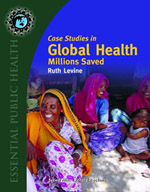
And I am delighted to report that all 20 cases, plus the summary chapter and discussion questions, can be found in Cases in Global Health: Millions Saved, just issued by Jones and Bartlett Publishers. The book is intended as a companion to the new textbook, Essentials of Global Health by Richard Skolnik, which also includes short write-ups of the cases. Together or separately, the new books should be valuable resources to students and many others.
Getting a chance to learn about all of these major successes through writing this book has been a genuine privilege, and has provided a daily dose of optimism. As Bill Foege said two years ago about Millions Saved, "These accounts show why it is difficult, despite all of the problems, to find fatalists and pessimists in the ranks of global health workers."
Topics
DISCLAIMER & PERMISSIONS
CGD's publications reflect the views of the authors, drawing on prior research and experience in their areas of expertise. CGD is a nonpartisan, independent organization and does not take institutional positions. You may use and disseminate CGD's publications under these conditions.