

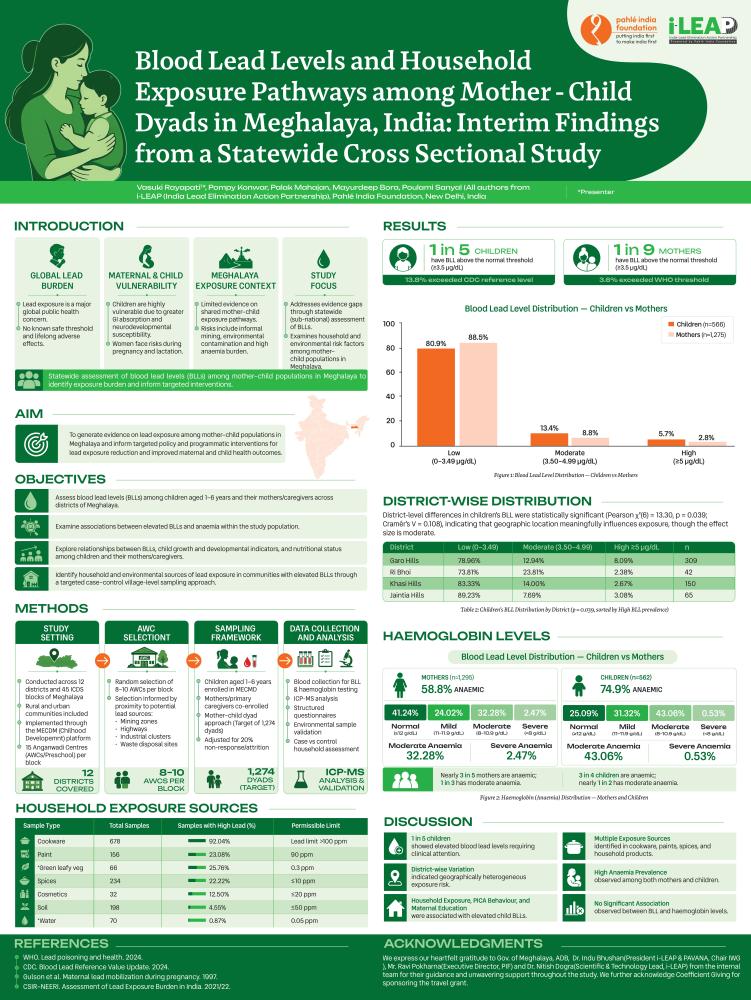
- Rayapati V1, Konwar P1, Mahajan P1, Bora M1, and Sanyal P1. Blood Lead Levels and Household Exposure Pathways among Mother-Child Dyads in Meghalaya, India: Interim Findings from a Statewide Cross-Sectional Study. 1. i-LEAP (India Lead Elimination Action Partnership), Pahlé India Foundation, New Delhi, India.
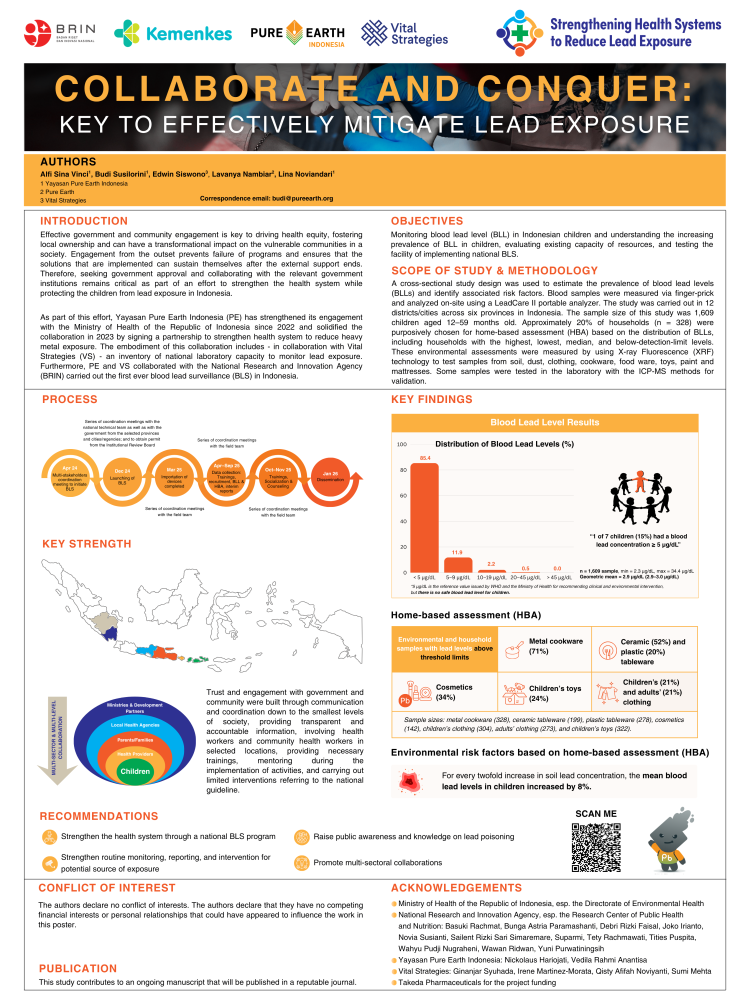
- A. S. Vinci1, B. Susilorini1, E. Siswono3, L. Nambiar2, and L. Noviandari1. Collaborate and Conquer: Key to Effectively Mitigate Lead Exposure. 1. Yayasan Pure Earth India, 2. Pure Earth, 3. Vital Strategies.
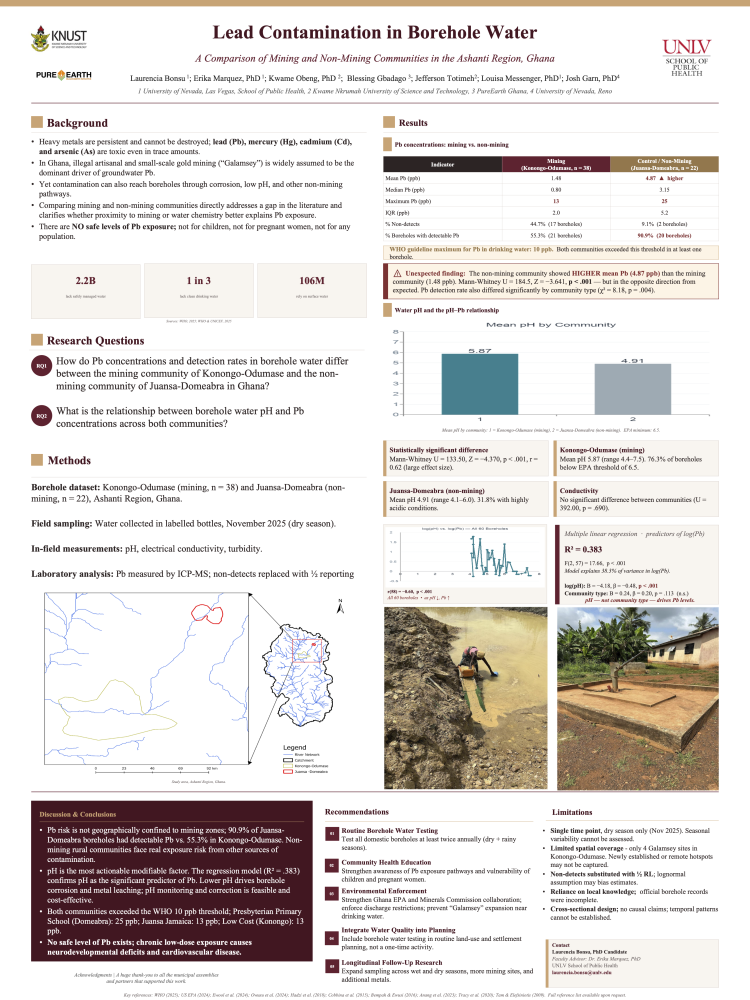
- Laurencia Bonsu1*, Erika Marquez1, Kwame Obeng2, Blessing Gbadago3, Jefferson Totimeh2, Louisa Messenger1, and Josh Garn4. Lead Contamination in Borehole Water. 1. University of Nevada, Las Vegas, School of Public Health, 2. Kwame Nkrumah University of Science and Technology, 3. Pure Earth Ghana, 4. University of Nevada, Reno.
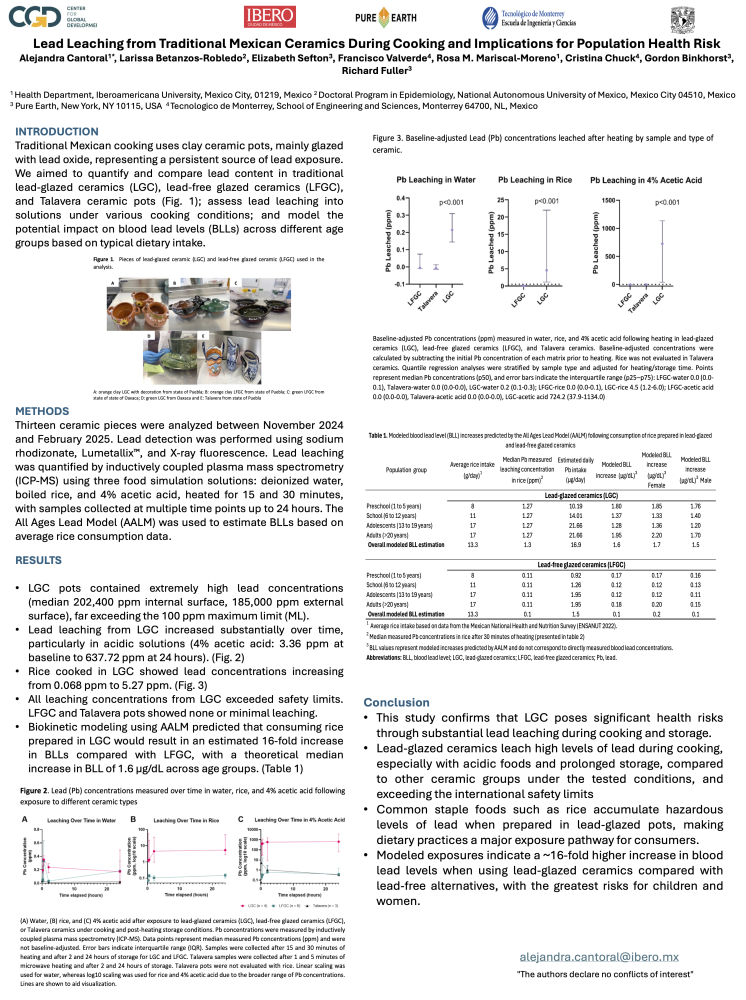
- Alejandra Cantoral1*, Larissa Betanzos-Robledo2, Elizabeth Sefton3, Francisco Valverde4, Rosa M. Mariscal-Moreno1, Cristina Chuck4, Gordon Binkhorst3, and Richard Fuller3. Lead Leaching from Traditional Mexican Ceramics During Cooking and Implications for Population Health Risk. 1. Health Department, Iberoamericana University, Mexico City, 01219, Mexico, 2. Doctoral Program in Epidemiology, National Autonomous University of Mexico, Mexico City, 04510, Mexico, 3. Pure Earth, New York, NY, USA, 4. Tecnologico de Monterrey, School of Engineering and Sciences, Monterrey, NL, Mexico.
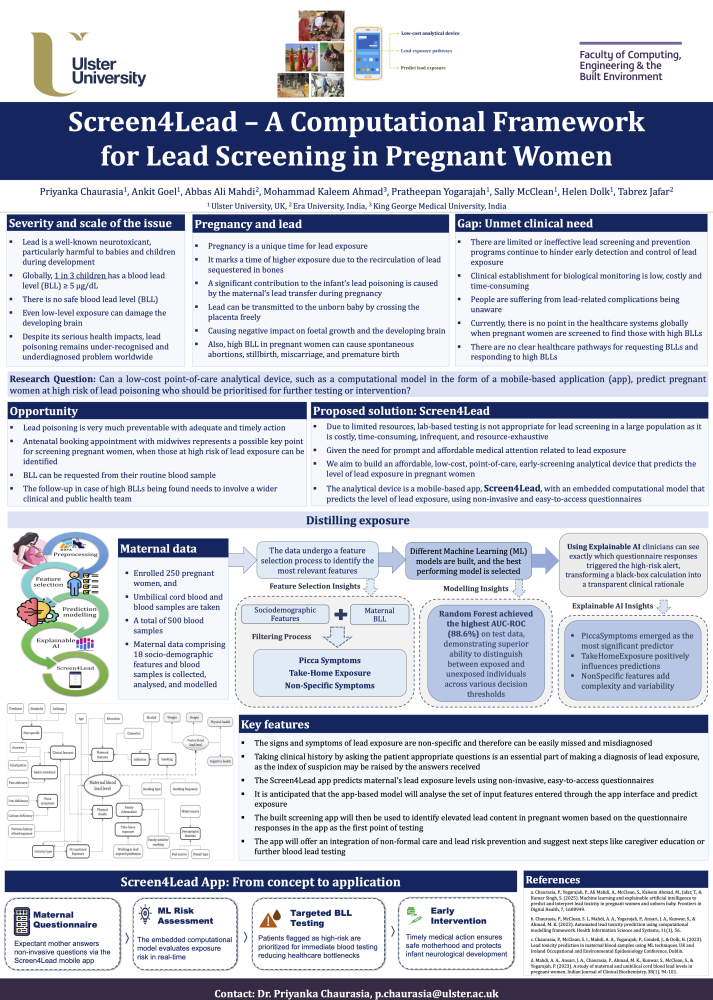
- Priyanka Chaurasia1, Ankit Goel1, Abbas Ali Mahdi2, Mohammad Kaleem Ahmad3, Pratheepan Yogarajah1, Sally McClean1, Helen Dolk1, and Tabrez Jafar2. Screen4Lead: A Computational Framework for Lead Screening in Pregnant Women. 1. Ulster University, UK, 2. Era University, India, 3. King George Medical University, India.
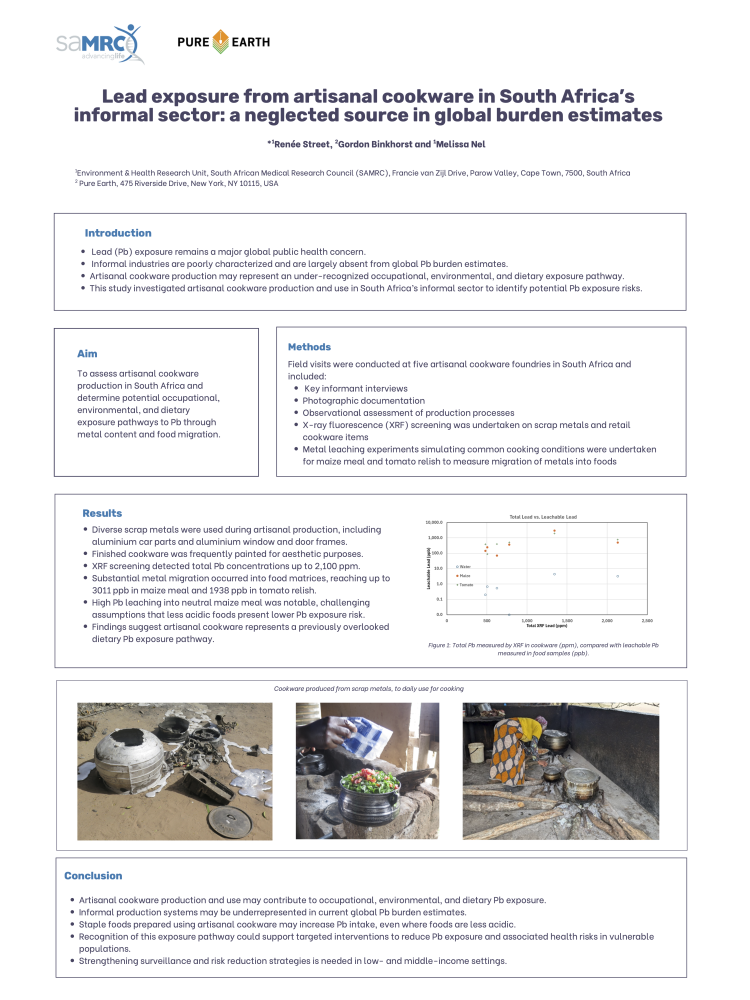
- Renée Street1*, Gordon Binkhorst2, and Melissa Nel1. Lead exposure from artisanal cookware in South Africa's informal sector: A neglected source in global burden estimates. 1. Environment & Health Research Unit, South African Medical Research Council (SAMRC), Cape Town, South Africa, 2. Pure Earth, New York, NY, USA.
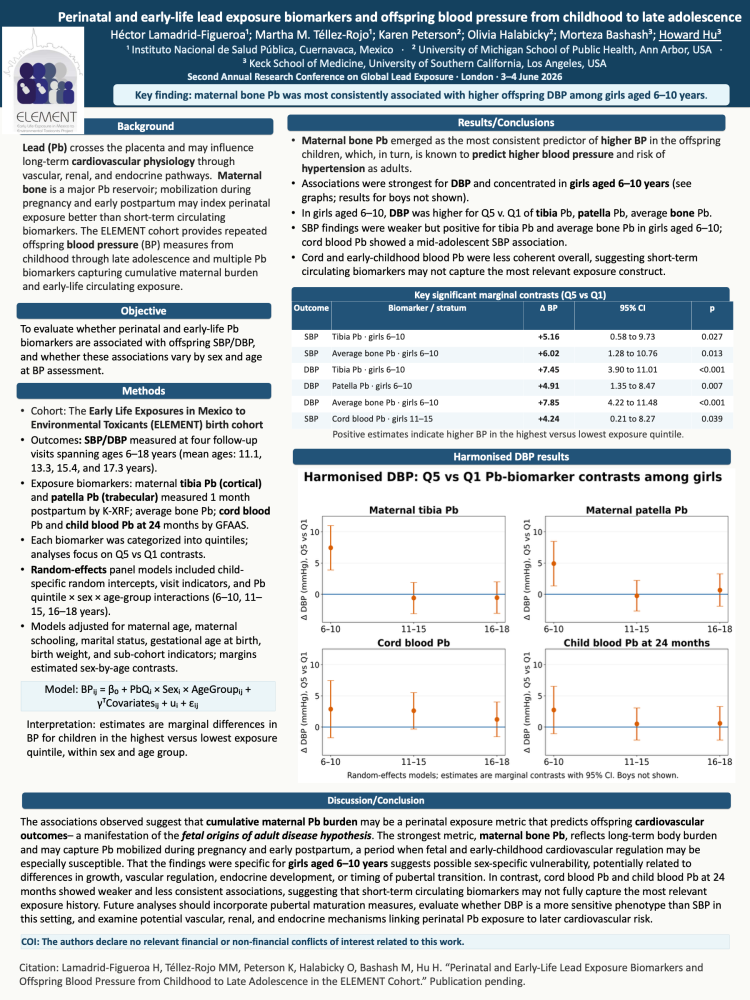
- Héctor Lamadrid-Figueroa1, Martha M. Téllez-Rojo1, Karen Peterson2, Olivia Halabicky2, Morteza Bashash3, and Howard Hu3. Perinatal and early-life lead exposure biomarkers and offspring blood pressure from childhood to late adolescence. 1. Instituto Nacional de Salud Pública, Cuernavaca, Mexico, 2. University of Michigan School of Public Health, Ann Arbor, USA, 3. Keck School of Medicine, University of Southern California, Los Angeles, USA.
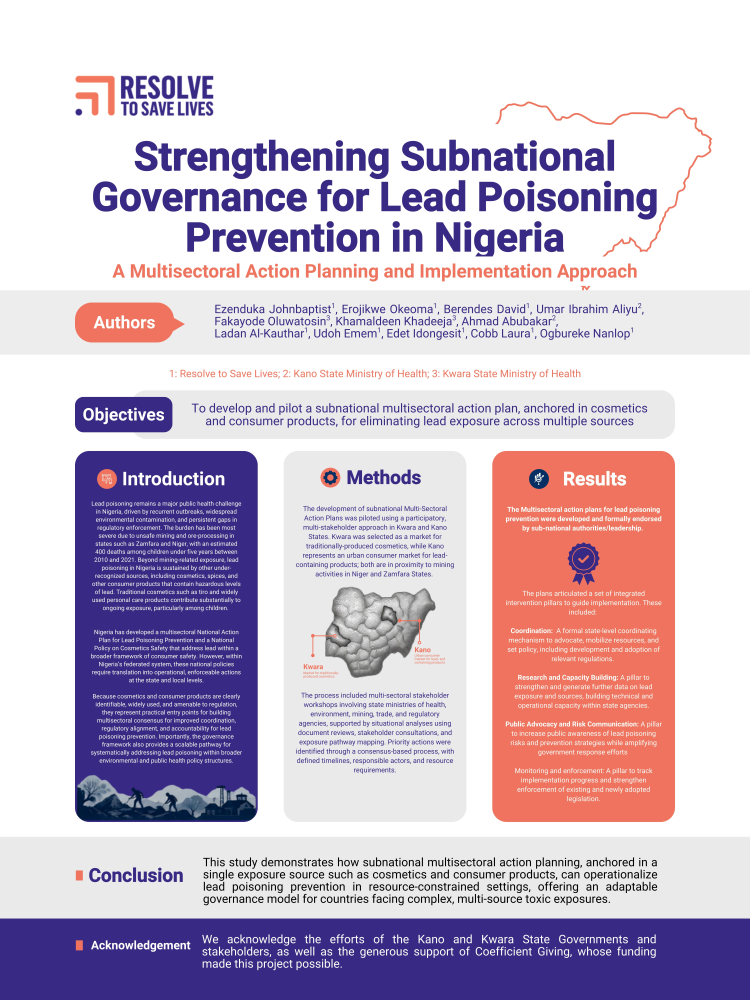
- J. Ezenduka1, O. Erojikwe1, D. Berendes1, I. A. Umar2, O. Fakayode3, K. Khamaldeen3, A. Ahmad2, A.-K. Ladan1, E. Udoh1, I. Edet1, L. Cobb1, and N. Ogbureke1. Strengthening subnational governance for lead poisoning prevention in Nigeria: A multisectoral action planning and implementation approach. 1. Resolve to Save Lives, 2. Kano State Ministry of Health, 3. Kwara State Ministry of Health.
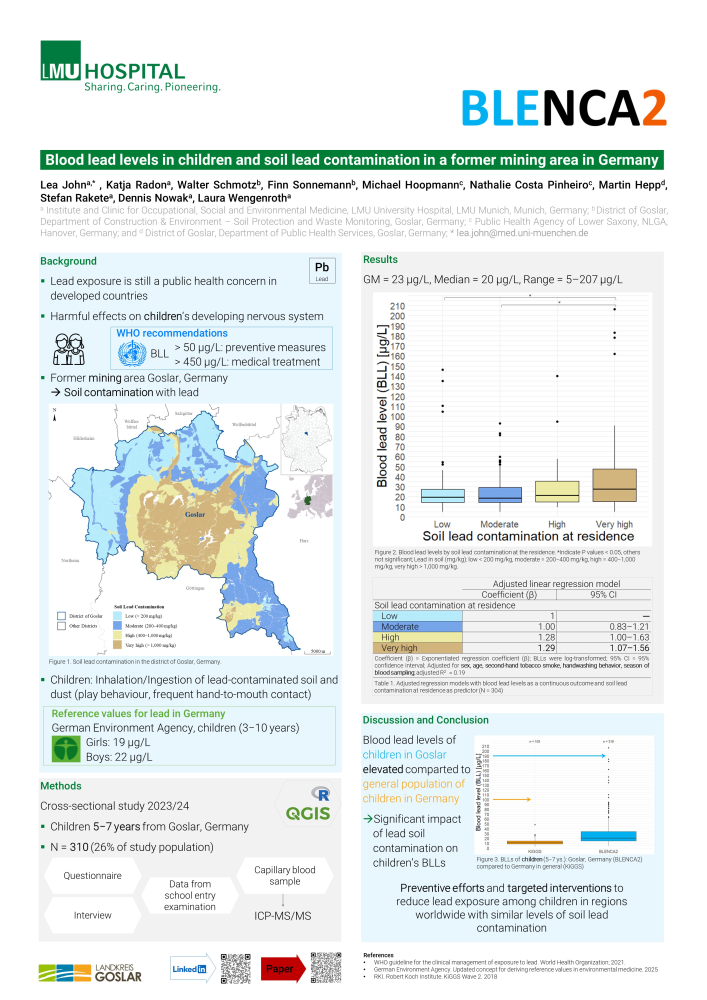
- Lea John1*, Katja Radon1, Walter Schmotz2, Finn Sonnemann2, Michael Hoopmann3, Nathalie Costa Pinheiro3, Martin Hepp4, Stefan Rakete1, Dennis Nowak1, and Laura Wengenroth1. Blood lead levels in children and soil lead contamination in a former mining area in Germany. 1. Institute and Clinic for Occupational, Social and Environmental Medicine, LMU University Hospital, LMU Munich, Munich, Germany, 2. District of Goslar, Department of Construction & Environment - Soil Protection and Waste Monitoring, Goslar, Germany, 3. Public Health Agency of Lower Saxony, NLGA, Hanover, Germany, 4. District of Goslar, Department of Public Health Services, Goslar, Germany.
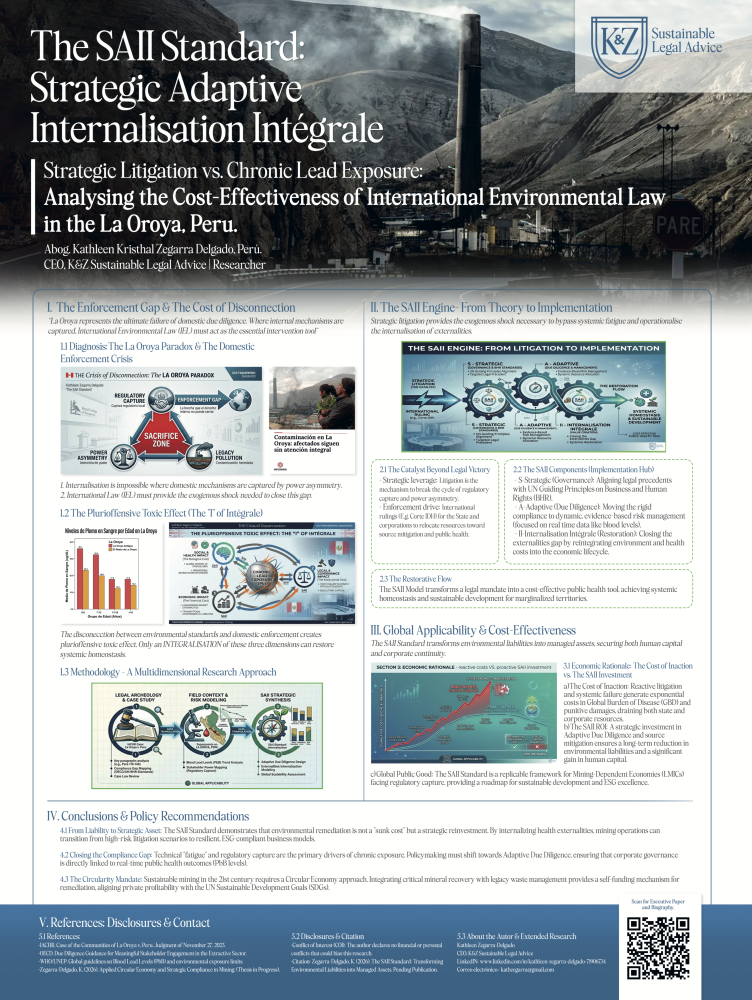
- Kathleen Kristhal Zegarra Delgado. The SAII Standard: Strategic Adaptive Internalisation Intégrale - Strategic Litigation vs. Chronic Lead Exposure: Analysing the Cost-Effectiveness of International Environmental Law in La Oroya, Peru.
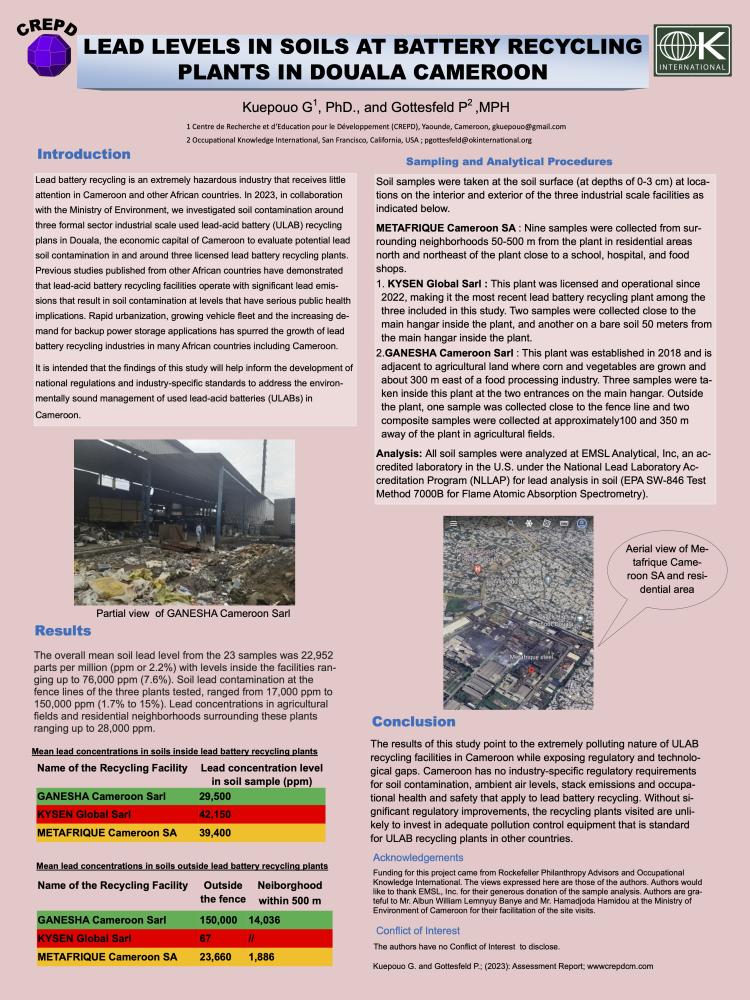
- G. Kuepouo1 and P. Gottesfeld2. Lead Levels in Soils at Battery Recycling Plants in Douala, Cameroon. 1. Centre de Recherche et d'Education pour le Développement (CREPD), Yaounde, Cameroon, 2. Occupational Knowledge International, San Francisco, CA, USA.
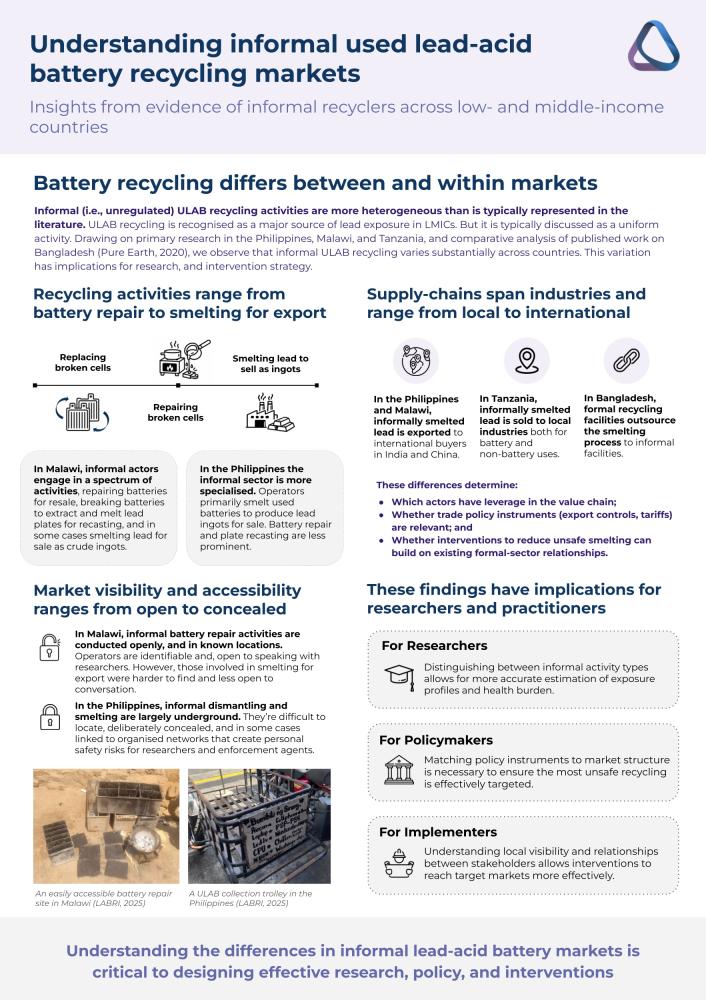
- Micaella Rogers1 and Tom Daniels1. Understanding Informal Used Lead-Acid Battery Recycling Markets. 1. Lead-Acid Battery Recycling Initiative (LABRI).
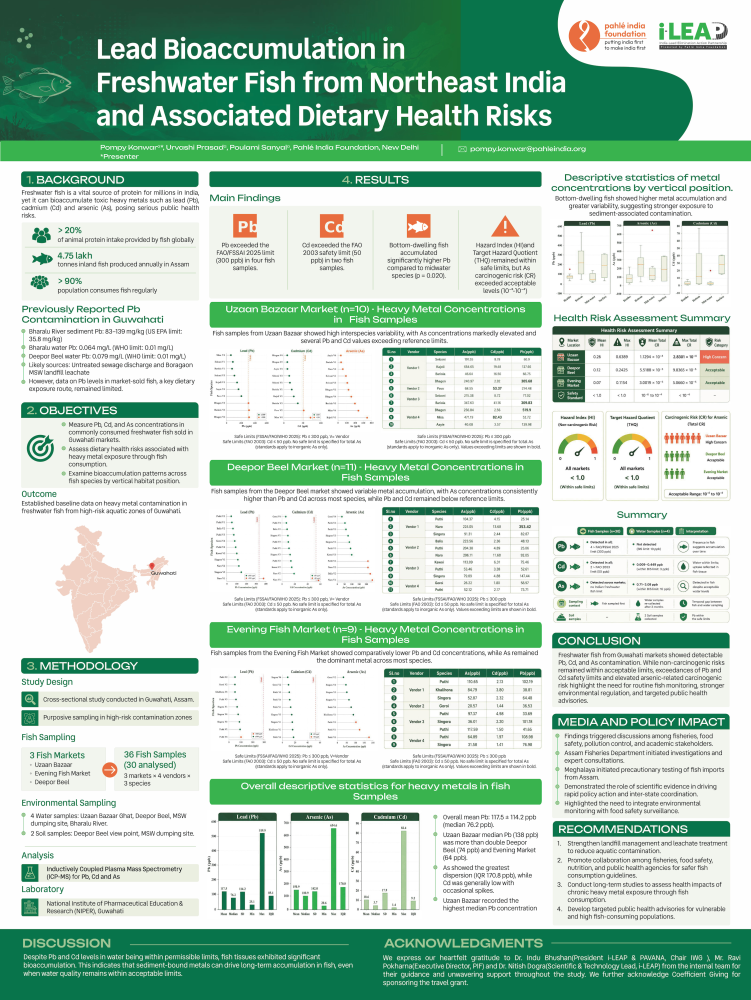
- Konwar P1, Prasad U1, and Sanyal P1. Lead Bioaccumulation in Freshwater Fish from Northeast India and Associated Dietary Health Risks. 1. Pahlé India Foundation, India.
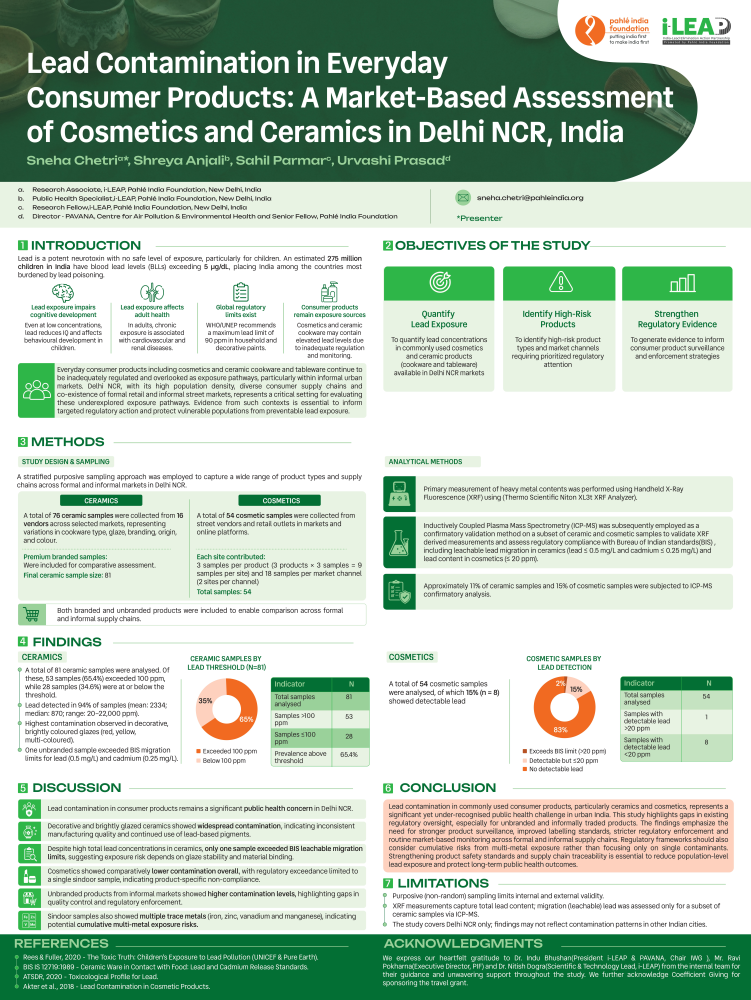
- Chetri S1, Anjali S1, Parmar S1, and Prasad U1. Lead Contamination in Everyday Consumer Products: A Market-Based Assessment of Cosmetics and Ceramics in Delhi NCR, India. 1. i-LEAP (India Lead Elimination Action Partnership), Pahlé India Foundation, India.
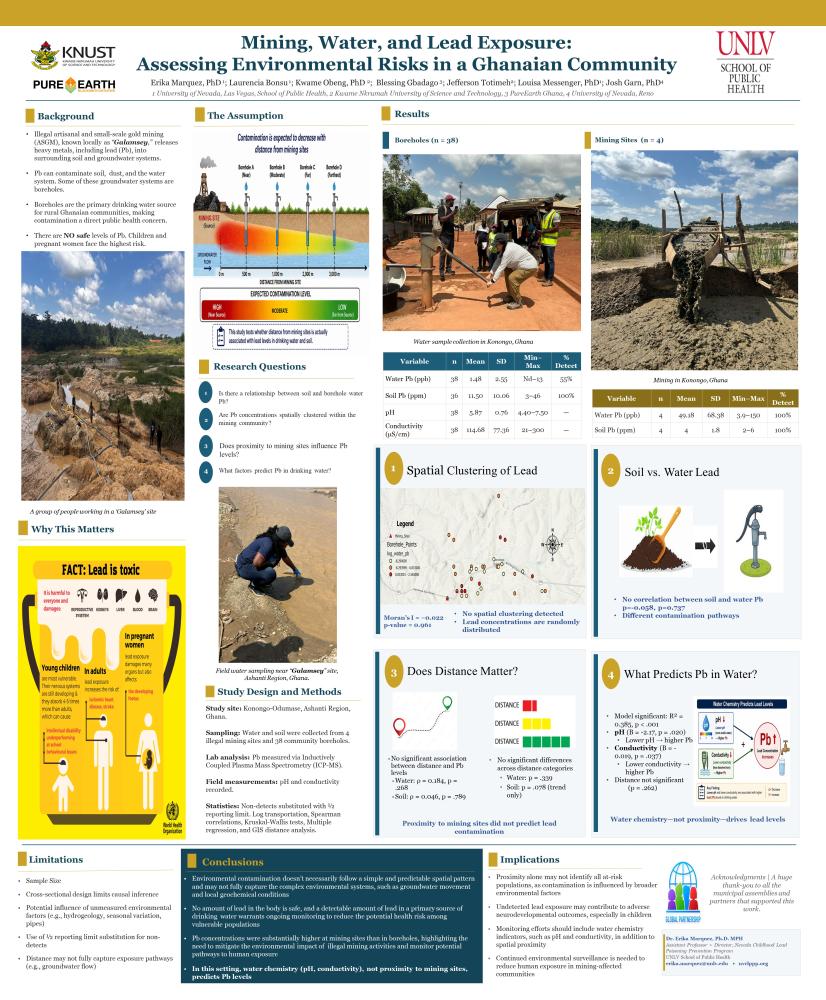
- Erika Marquez1, Laurencia Bonsu1, Kwame Obeng2, Jefferson Totimeh2, Blessing Gbadago3, Louisa Messenger1, and Josh Garn4. Mining, water, and lead exposure: Assessing environmental risks in a Ghanaian community. 1. University of Nevada, Las Vegas, School of Public Health, 2. Kwame Nkrumah University of Science and Technology, 3. Pure Earth Ghana, 4. University of Nevada, Reno.
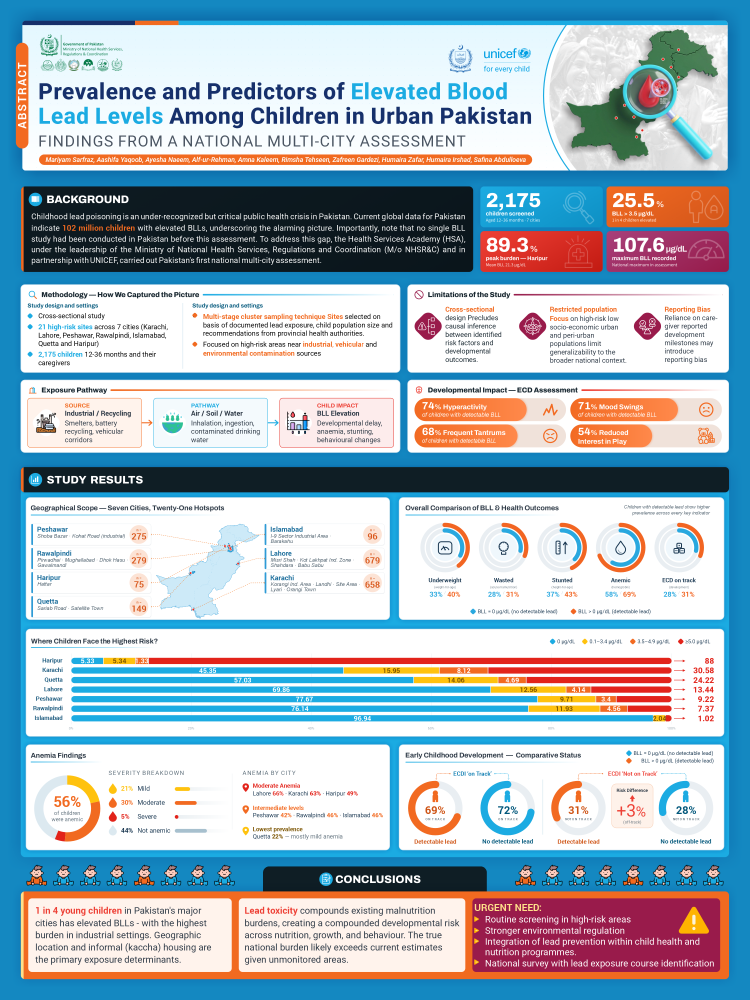
- Mariyam Sarfraz, Aashifa Yaqoob, Ayesha Naeem, Alf-ur-Rehman, Amna Kaleem, Rimsha Tehseen, Zafreen Gardezi, Humaira Zafar, Humaira Irshad, and Safina Abdulloeva. Prevalence and Predictors of Elevated Blood Lead Levels Among Children in Urban Pakistan: Findings from a National Multi-City Assessment.
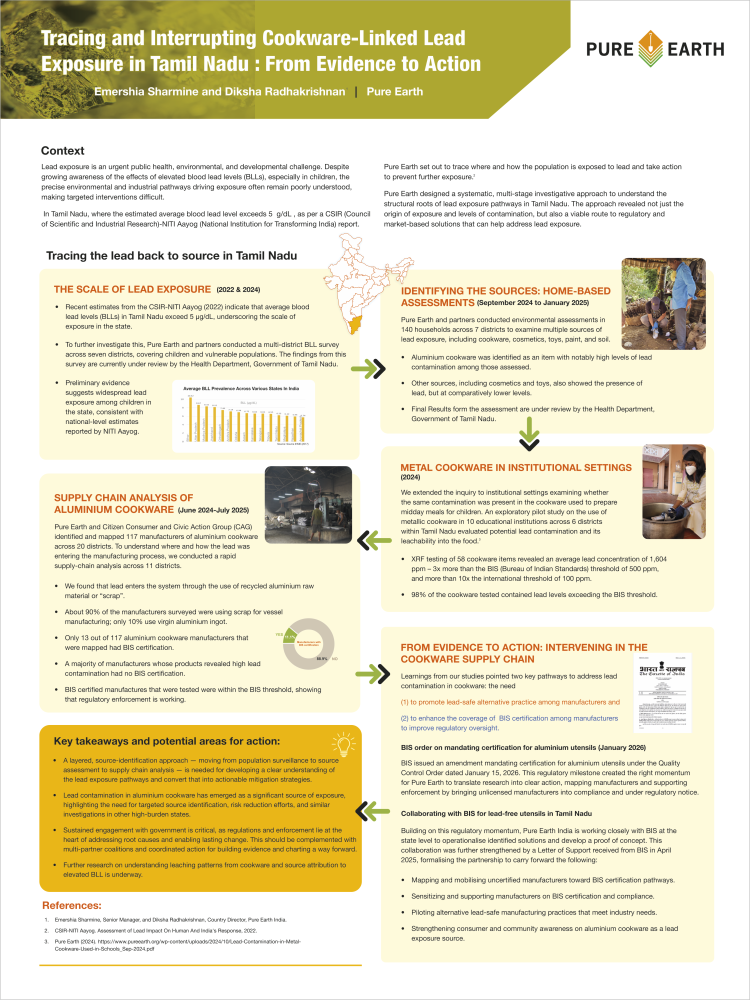
- Emershia Sharmine1 and Diksha Radhakrishnan1. Tracing and Interrupting Cookware-Linked Lead Exposure in Tamil Nadu: From Evidence to Action. 1. Pure Earth India.
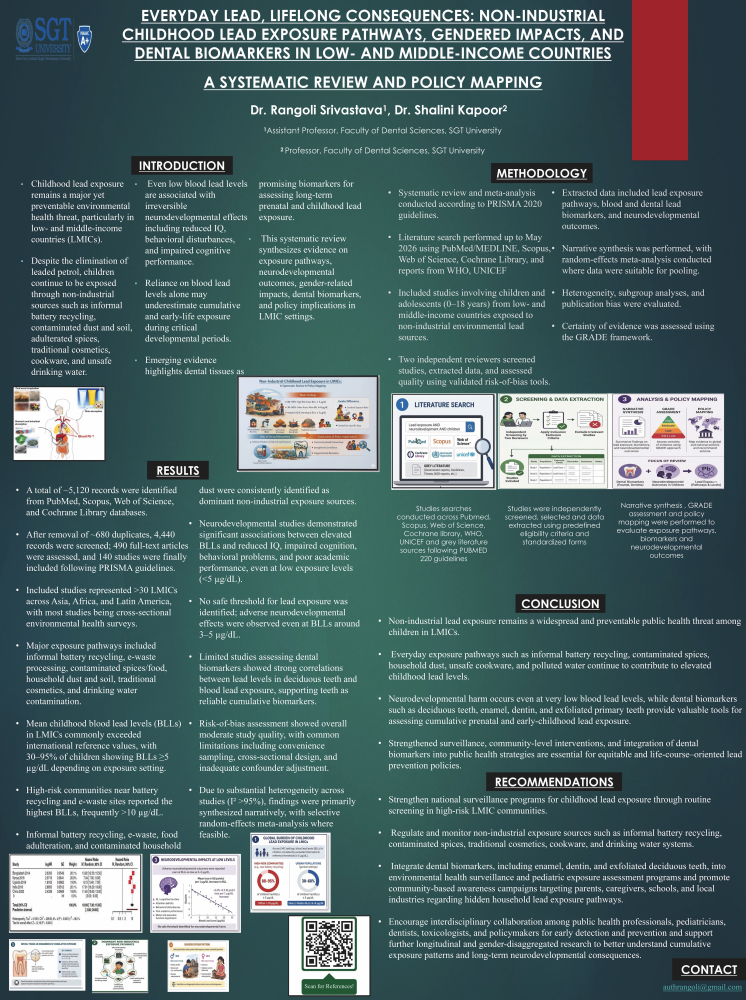
- Rangoli Srivastava1 and Shalini Kapoor1. Everyday Lead, Lifelong Consequences: Non-Industrial Childhood Lead Exposure Pathways, Gendered Impacts, and Dental Biomarkers in Low- and Middle-Income Countries: A Systematic Review and Policy Mapping. 1. SGT University.
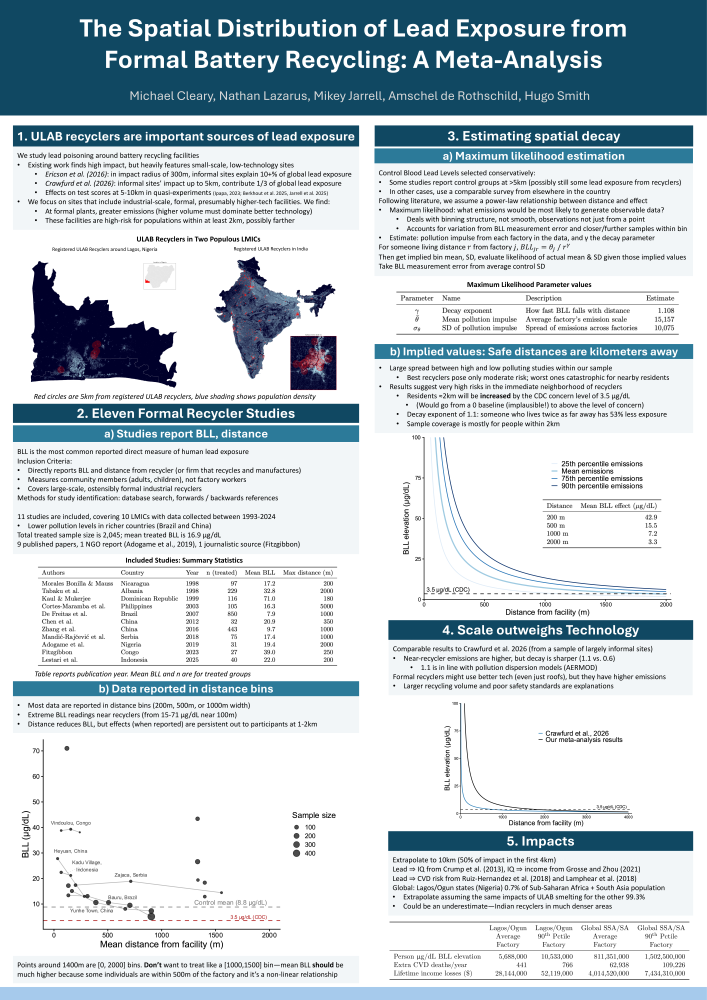
- Michael Cleary, Nathan Lazarus, Mikey Jarrell, Amschel de Rothschild, Hugo Smith. The Spatial Distribution of Lead Exposure from Formal Battery Recycling: A Meta-Analysis
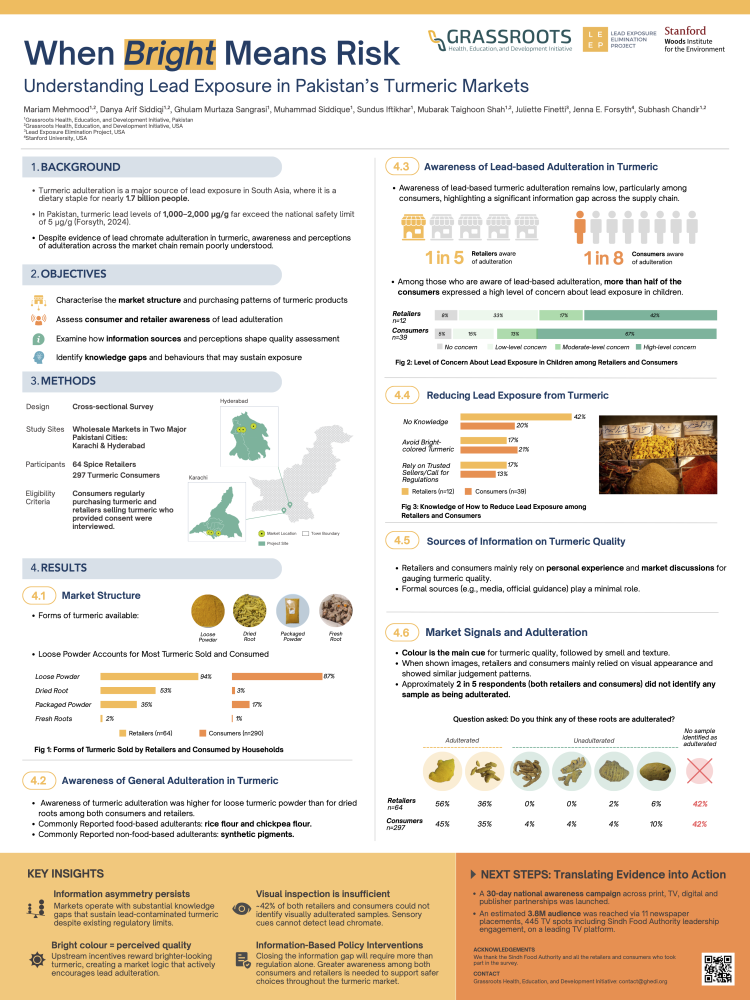
- M. Mehmood1,2, D. A. Siddiqi1,2, G. M. Sangrasi1, M. Siddique1, S. Iftikhar1, M. T. Shah1,2, J. Finetti3, J. E. Forsyth4, and S. Chandir1,2. When bright means risk: Understanding lead exposure in Pakistan's turmeric markets. 1. Grassroots Health, Education, and Development Initiative, Pakistan, 2. Grassroots Health, Education, and Development Initiative, USA, 3. Lead Exposure Elimination Project, USA, 4. Stanford University, USA.
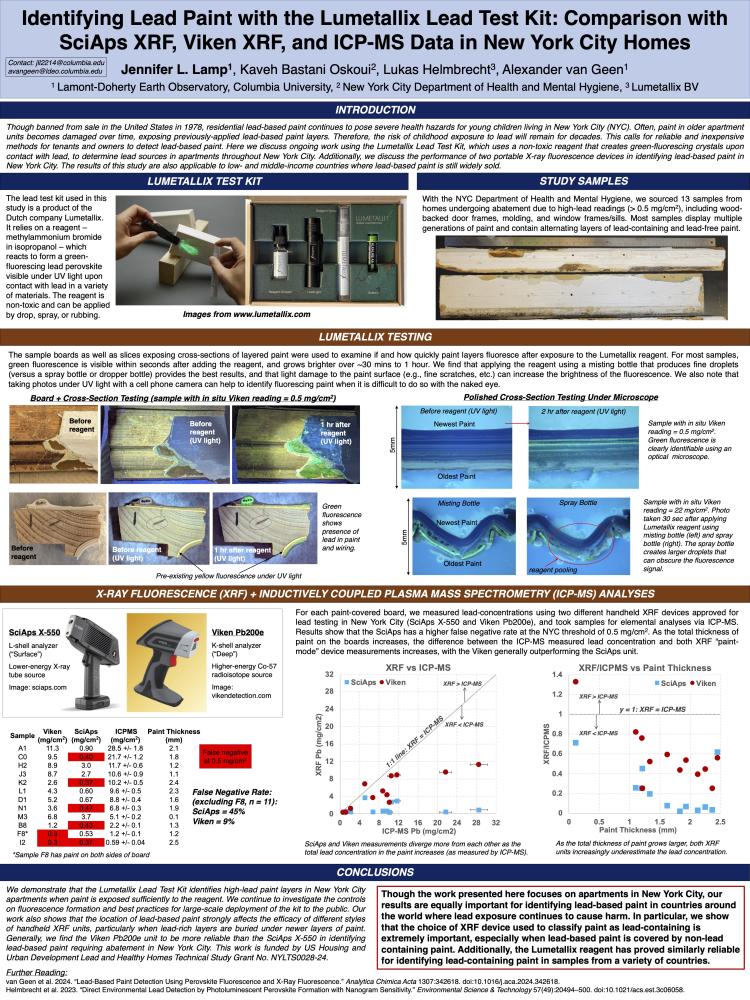
- Lamp JL¹, Bastani Oskoui K², Helmbrecht L³, and van Geen A¹. Identifying Lead Paint with the Lumetallix Lead Test Kit: Comparison with SciAps XRF, Viken XRF, and ICP-MS Data in New York City Homes. ¹ Lamont-Doherty Earth Observatory, Columbia University; ² New York City Department of Health and Mental Hygiene; ³ Lumetallix BV.
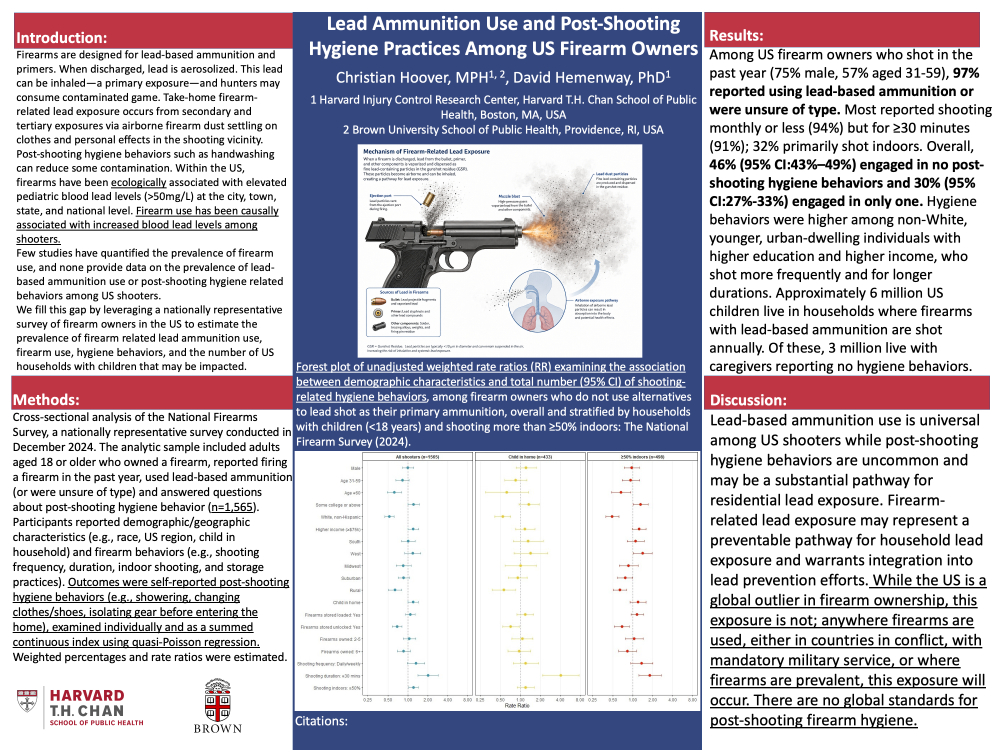
- Christian Hoover1,2 and David Hemenway1. Lead Ammunition Use and Post-Shooting Hygiene Practices Among US Firearm Owners. 1. Harvard Injury Control Research Center, Harvard T.H. Chan School of Public Health, Boston, MA, USA, 2. Brown University School of Public Health, Providence, RI, USA.