Recommended
CGD NOTE
Malawi’s Journey Towards Transformation

ESSAY
Technology in the Service of Development: The NADRA Story
BOOK
Preface
Pakistan is a leader in the application of identification systems and technology to a range of development issues. Its National Database and Registration Authority (NADRA) has become a central player in many areas and has been internationally recognized for its expertise, including winning many awards for excellence. Tariq Malik has served two terms as Chairman of NADRA, and this paper follows up on his November 2014 CGD essay: “Technology in the Service of Development: The NADRA Story.” Following the use of NADRA’s database and technology to help election tribunals investigate vote-rigging complaints, pressure from the ruling party and threats to his life and family forced Malik to resign from his position in 2014 and to leave the country. In June 2021 he was selected to a second term as Chairman, a position he occupied until his resignation in June 2023, citing the increasing difficulty of working in a polarized political environment. NADRA is now perhaps the only civilian identity authority in the world led by an active military officer.
In Malik’s reflection, NADRA’s experience exemplifies the transformative potential of digital public infrastructure (DPI) in advancing inclusive development, governance and service delivery. A wide-ranging list includes strengthening NADRA’s governance and capacity for enhanced service delivery; reaching out to include women and other under-served groups; better targeting and delivery of poverty and emergency relief; broadened financial inclusion, strengthening tax compliance by engaging multiple sources of data; enhancing electoral integrity; innovating to mitigate the risk of biometric failure, and making other improvements in government efficiency. However, its journey also reveals systemic political barriers that can arise when technology threatens entrenched power structures: resistance to technocratic governance and risk of institutional capture; elite pushback against transparency; lack of political will to act on tax-related information and the revelation that “proxy prisoners” serve jail sentences for the elite; and continuing resistance to the use of technology to correct voter rolls. These barriers can limit its application and reduce efficiency and governance-related benefits to less than those that are theoretically possible.
Malik draws several policy lessons from NADRA’s experience, for Pakistan, for other countries and also for global practitioners seeking to enhance the contribution of DPI, including digital identification (ID) systems. Technology must be framed in a political context: it is important to anticipate pushback when DPI disrupts rent-seeking opportunities and threatens established privileges of the elite. Coalitions should be sought, for example, with the media and judiciary, to sustain efforts to expose opacity (for example, voter roll audits) and to strengthen citizen agency. Laws should seek to insulate the governance and management of the ID system from electoral cycles. De-politicization could also be supported by the establishment of a multi-stakeholder DPI council, with interest in efficient and effective service delivery.
In November 2009 Tariq Malik was awarded the ID Outstanding Achievement Award at the Global Summit on Automatic Identification in Milan. He received one of the highest awards in IT, Sitara-e-Imtiaz (Star of Excellence), from the president of Pakistan in 2013 for innovative citizen-centric ICT application and services rendered for the state of Pakistan.
Alan Gelb
Senior Fellow Emeritus
Center for Global Development
Background to my second term
In the winter of 2020, while I was working as chief technical advisor to the United Nations Development Programme in New York, the government of Pakistan asked UNDP for assistance in developing a portfolio of digital interventions to improve governance. I had served as chairman of NADRA from 2012 to 2014, and deputy chairman before that, so I became the natural choice to lead the mission.
My return to Pakistan was bittersweet. I was eager to see friends and family, but I had left in 2014 with a bad taste in my mouth. In response to widespread allegations of fraud in the 2013 general elections, an election tribunal had sought NADRA’s help in verifying the votes. After biometric data (fingerprints) and simple mathematical calculations exposed irregularities, all hell broke loose. Instances such as when a man voted from a women-designated polling station 310 times became headlines. My family and I received threats, and when I chose my values over anything else, I was terminated in the middle of the night. I was restored to my position by the Islamabad High Court, but I resigned as it was impossible to work independently after the government captured the institution. I moved on to positions at the World Bank and UNDP leading work on digital ID for development.
Leading the UNDP mission to Pakistan was an honor. My team conducted a digital maturity assessment of the country, meeting with 15 government ministries, departments and agencies, and over 50 stakeholders from the government, private sector, and development community. When we met with Prime Minister Imran Khan, he insisted that I chair the meeting. I was overwhelmed. He remembered why I had to resign from NADRA years earlier.
The UNDP mission recommended five key digital interventions:
- accelerating NADRA's digital registration to achieve universal coverage
- developing a digital ID stack to extend the digital infrastructure of Pakistan, which includes a digital payments system and more
- introducing a One-Window Portal for integrated social protection services
- digitizing the Police Investigation Manual and establishing a national emergency helpline with the National Police Bureau
- developing the Pakistan Business Portal with the Board of Investment, an online platform for ease of doing business within the country.
The prime minister of Pakistan and UNDP committed to accelerating Pakistan’s Digital Transformation Agenda. Our meetings with key stakeholders, including the Prime Minister, President, ICT Minister, and influential public and private sector leaders, generated significant momentum for Digital Public Infrastructure (DPI). This effort mobilized international institutions and development partners, such as the World Bank, UNDP, and the EU, who were presented with a vision to establish a DPI basket fund for Pakistan, modeled after Malawi’s successful example. The collaboration led to the conception of the World Bank’s Digital Economy Enhancement Project (DEEP), which prioritizes a government-wide enterprise architecture and the integration of databases via e-government portals.
When the position of NADRA Chairman became vacant again in 2021, I felt compelled by duty to reapply. After competing against 109 global candidates, I was reappointed in June 2021. Over the next 22 months, I led 45 transformative projects that impacted millions of Pakistanis nationwide. This period, though marked by a politically charged environment and intense challenges, solidified NADRA’s critical role in public service.
In this essay, I reflect on my time at NADRA, focusing first on efforts to improve NADRA’s functioning, including its governance, technical capacity, and commitment to inclusion, and turning next to the application of NADRA’s technology to improve the services delivery and improve lives in Pakistan. I conclude with observations about the political constraints and blowback that NADRA’s successes sometimes met, and the need to anticipate and mitigate such barriers to the effective use of DPI.
Improving NADRA’S governance and technical capacity
In the seven years since I had last led NADRA, it had degenerated from a financially self-reliant organization that made a profit into a loss-making organization.
Data Warehouse—which hosts the data of millions of citizens—had become a mere relational database. It hadn’t seen an upgrade in years. Data storage in servers was overflowing, and services were choking. Data security and privacy protection were in jeopardy. The Information Security department that I set up in 2012 had a severe shortage of skilled staff. NADRA’s international business had secured only one project since I left in 2014, and it was in severe loss. On the operations side, NADRA appeared to be trapped in a bureaucratic labyrinth and outdated algorithms. Innovation was nowhere to be found, and most shockingly, bias was pervasive. The very institution responsible for empowering citizens seemed stuck in a time warp of male chauvinistic norms. I witnessed divorced women struggle to just remove their ex-husband's name from their ID cards—this wasn't just an isolated incident.
This wasn't the legacy I envisioned for NADRA. So, while my first stint in NADRA was more of laying the foundation of Digital ID, my second two-year tenure was about rescuing NADRA, and reigniting its spark. My return to NADRA had to be more than just a second term. The challenge was to reset, restart, and refocus.
Executing service design methodology
A first priority was to put NADRA’s house in order. To help the government introduce good governance in various ministries, departments, and agencies, it was important to build the capacity of NADRA. My second focus was on citizen-centric inclusive digital transformation anchored in the constitution of Pakistan. Instead of passively informing the public after a solution has been designed, why not make service design a two-way street? The first step in doing this was to look at the organization through the public eye. The second was to codevelop citizen-centric solutions with citizens
I strongly believe that citizen participation and engagement are key to building trust and accountability in service delivery. In 2021, NADRA introduced three key departments to execute a service design methodology, centered around my strategy of co-developing with people and society:
- The Inclusive Registration Department developed a targeted approach to register vulnerable and marginalized groups, including women and children. By recognizing the specific needs of marginalized groups, NADRA aimed to ensure that no one was left behind in the digital registration process.
- The Public Engagement Department serves as a civic switchboard, collecting data on the quality of digital public goods and services, policies, and standard operating procedures. This data helps in monitoring the effectiveness of the infrastructure and identifying areas that require improvement. Moreover, it fosters transparency and accountability by giving citizens a voice in the quality of services they receive.
- The Strategic Reform Unit reviews policies and standard operating procedures for algorithmic or policy biases and take corrective actions. This proactive approach ensures that the digital public infrastructure is not only inclusive but also respects the rights of individuals. It helps identify and rectify potential issues before they harm marginalized communities or violate citizens' rights.
Tools to repair trust deficit
Investing in digital public infrastructure enables data-informed policy. Real-time data can reveal secrets to those who are willing and able to listen. Public engagement tools can establish fact-based relations with the public and reduce a trust deficit between state and people. NADRA engaged all mediums: print and electronic media, social media, AI-based chats, public forums called ‘Khuli-Kechehri’ (open meetings), e-meetings (called e-Katchehri), and social media spaces. A National Centralized Complaint Management System was rolled out, allowing citizens to lodge complaints. The aim was to enable NADRA’s management to promptly and efficiently respond to the queries and complaints from people using its services domestically and abroad.
Figure 1. Citizen engagement using digital tools
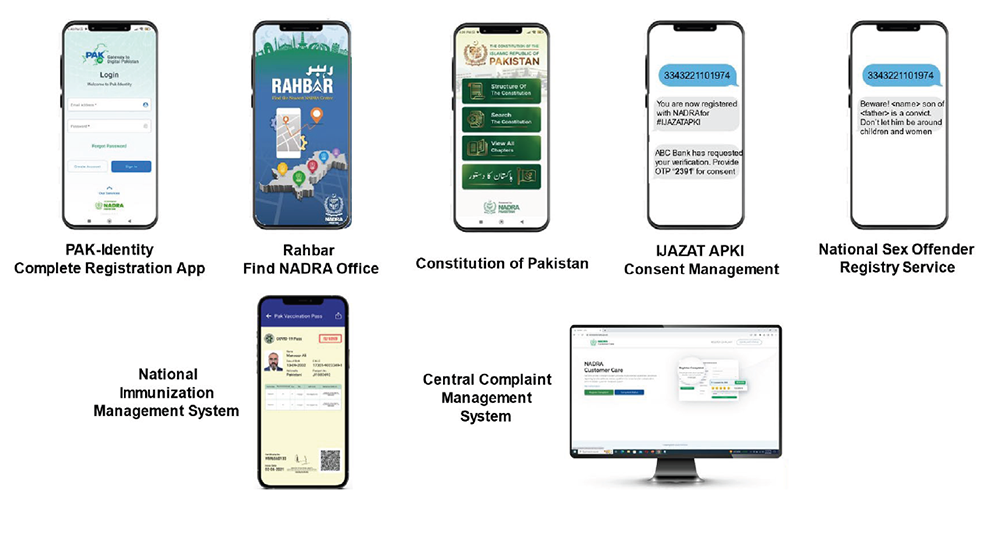
The National Centralized Complaint Management System will escalate a complaint if it is not resolved in a given timeframe. There is also a super escalation feature that escalates the complaint directly to the NADRA chairman. Citizens can register complaints by using multiple channels (online, X, Instagram, Facebook, mobile app etc.), and these complaints will then be logged into the system for centralized monitoring, action, and resolution. The system is equipped with features to make the experience user-friendly, such as status tracking via unique registration number, escalation level, through receipt of closure.
Improving real-time feedback
To enhance the performance of the National Registration Centers (NRCs), we leveraged technology and data analytics to conduct real-time monitoring from our headquarters operation room. Queuing and processing are monitored live, and interventions are made accordingly to improve service delivery at all levels. In the data we gathered, three main issues were prominent: accessibility, inclusivity, and lack of innovation. All 804 NRCs in the country were connected, and each transaction in the processes of registering and receiving a national ID was automated. The daily data on processing approximately 150,000 people is consolidated for weekly review. NADRA used "mystery customers/shoppers" to assess the quality of services to citizens. This approach led to the identification of gaps in service delivery and the implementation of new training programs. As a result, NADRA achieved an impressive 92 percent customer satisfaction rate in user surveys.
The data revealed interesting results. We learned that women-managed registration centers had better customer service and no corruption. We also learned that policy changes were not being properly conveyed to the customer-facing staff. In 2022, we took another step towards citizen-centric service with the launch of the 'Rahbar' app (see Figure 1). This app provided real-time information on nearby NADRA centers, including wait times and queue lengths, empowering citizens to make informed decisions about visiting nearby offices and saving them time and effort.
The results of NADRA's transformation have been impressive:
- NADRA achieved an estimated 97 percent adult coverage, meaning that the vast majority of the adult population was successfully registered in the digital infrastructure.
- NADRA registered almost 7 million new women within just two years, reducing gender disparities in digital registration (see Figure 2).
- NADRA's efforts extended to registering millions of people with disabilities and individuals of different faiths. This ensured that government services could reach them at the district level, addressing disabilities and promoting religious inclusivity. Four million people of different faiths were registered.
- NADRA removed barriers and middlemen to facilitate the registration of transgender people, resulting in a surge in registration among the transgender population.
Figure 2. Cumulative fresh women registrations, June 2021-June 2023

Measures were taken to remove algorithmic and procedural biases. The policy of women choosing their own last name was introduced. Transgender people were provided with the option to register with gender ‘X’ for identification. Joint camps to register people with disabilities were organized with the Department of Social Welfare and civil society organizations. And when procedural and algorithmic barriers were dismantled, over 3 million minors with single mothers were registered, and over 2 million with single fathers.
We used the same tools of public engagement to design and test new public digital goods and platforms.
From transparency to accountability through citizen engagement
Citizen engagement tools and platforms were used for social audits of citizen services and to combat corruption and fraud. All C-level staff, director generals, and directors were required to declare if they had any private business interests to avoid any conflict of interest. We rolled out a whistleblower system. All RFPs and bids were listed on the organization's website with evaluation criteria and award of contracts. All registration centers and mobile registration vans were connected with sophisticated systems and employee logins and their actions were monitored for data or privacy breaches. An alert system was developed, and although it took time to make 23,000 employees accountable, we started to identify the bad apples within the organization. The contracts of various director generals, directors, and managers were terminated due to nonperformance. Over 500 inquiries were opened, and more than 325 employees were let go. We developed digital courses on data security and privacy policies, including ethical use of data, and required that all employees pass these courses. When citizen engagement tools revealed misuses of authority, I ensured that swift action against employees was taken. Later, I learned that most of these culprits were connected to Pakistan’s political, bureaucratic, and state security institution elites.
Removing opportunities for corruption is as important as cracking down on corruption when it does occur. We introduced digital solutions like making all NADRA office services available on a mobile phone as self-service, and empowering applicants to receive SMS messaging tracking the status of their application as it moved through the identity lifecycle (enrollment, identity proofing, authentication, approval, printing, and dispatch).
Reward and recognition system
Reducing corruption requires a reward and recognition system. High-performing employees were recognized with monetary incentives such as bonuses and performance allowances. To encourage employees to master new technologies, we offered incentives to achieve internationally recognized certifications. High-achieving technical staff were sent for international training in artificial intelligence, machine learning, and big data analytics. When possible, we looked to promote our own staff instead of hiring from outside. I wrote to the leaders of 156 universities and requested that they encourage their high achievers to apply for jobs at NADRA. Previously, political appointments were common in NADRA. I changed that and replaced it with competitive hiring. We developed a digital platform to give equal opportunity to everyone who could apply with an online test, followed by an interview.
Implementing standards
ISO 27001 is an internationally recognized standard for information security management systems. Earning this certification signifies that NADRA’s internal processes for managing information security meet the highest global standards. The certification process involved a rigorous third-party audit, confirming that our ID card printing, networks, communications, infrastructure, and information security departments all adhere to best practices. Achieving ISO 27001 certification demonstrated that NADRA has defined and put in place the best practices for information security processes and reduced the risk of security breaches.
AI experimentation to mitigate biometric failure
Fingerprints, often the primary verification method, fade and become difficult to read with age. This created immense frustration for elderly citizens trying to access bank accounts or other essential services. Women and men working in farm fields, and some medical patients faced the same issue.
We tackled this challenge head-on with “Tasdeeq Service,” a groundbreaking AI-powered service. Tasdeeq uses personal data stored securely in NADRA’s database to generate random personalized questions. These seemingly simple questions, crafted by AI, based on the personal data stored in the system (name of child, age of mother, and questions on information stored in the database but not on the card) can serve as a secure and reliable alternative to fingerprint verification. The response to Tasdeeq has been overwhelmingly positive. Banks and other institutions are readily implementing it, significantly improving the digital experience for our senior population.
NADRA also upgraded its biometric system in 2022 with the enablement of new feature sets that included enhancing capacity performance and IRIS, an iris-scanning biometric verification system.
Leveraging NADRA’S technology to deliver services: The (sometimes rocky) path to reforming Pakistan’s governance
In my first meeting with the prime minister after taking charge of NADRA, I sought to understand his priorities and to let him know that I wanted the meaningful use of digital technologies that empower people. I was interested in deploying inclusive digital public infrastructure anchored in human rights, upon which we could roll out digital public goods. The value of digital public infrastructure, he explained, was to reform governance of Pakistan.
After being in the job for 100 days, I presented the prime minister with a two-year strategic roadmap – a Digital Transformation Journey (Figure 3) that involved two elements: digitization (archiving old manual records) and digitalization (automating and reforming the processes of various ministries, departments, and agencies). He approved.
Figure 3. Pakistan’s digital transformation journey
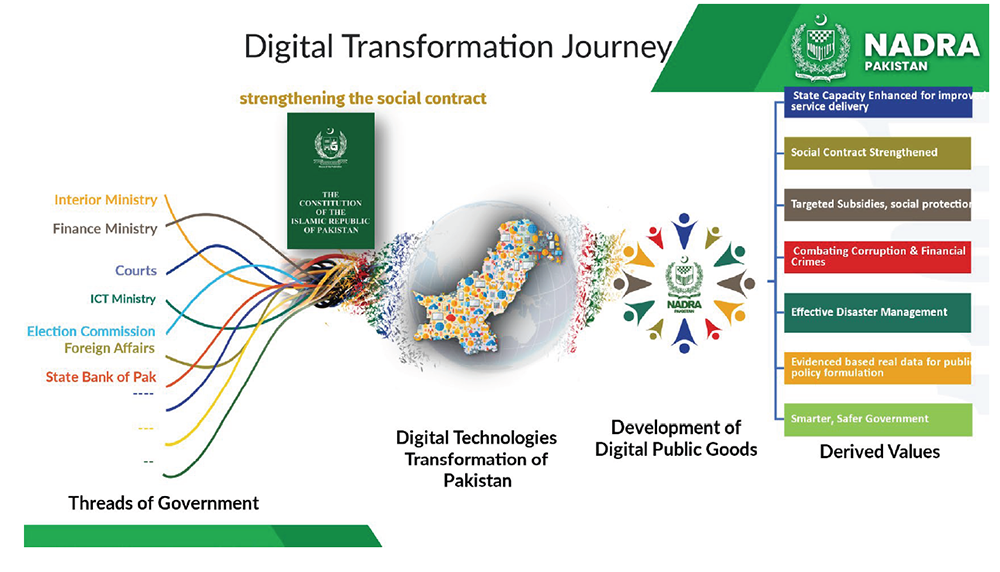
This digital transformation was to be the digital dividend of Pakistan’s ID stack, which integrated the core foundational ID system with multiple sectoral linkages. The prime minister appreciated that this would help to reform governance and strengthen the social contract between state and society. I, in turn, explained that the reform would also elicit blowback from middlemen, rent-seekers, bureaucrats, well-entrenched vested interest, powerful institutions, and all beneficiaries of a rotted political power brokerage system. I predicted that these interests would force him to force me out of NADRA before my statutory term expired.
Figure 4. Pakistan’s ID Stack
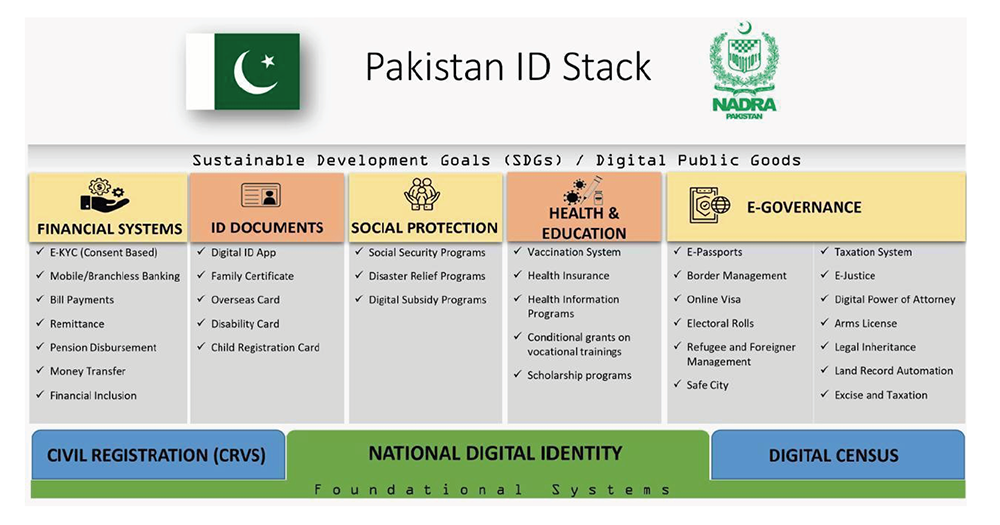
Forty-five key initiatives were defined as breakthrough projects which were implemented using agile project management. Some of the critical digital interventions are described below.
Digital registration office with contactless biometrics in mobile
For many Pakistanis, especially those living in remote areas, obtaining essential identification documents has been a challenge. Traveling long distances to reach NADRA offices and enduring lengthy queues meant the process was often inconvenient and inaccessible. I recognized that this lack of accessibility hindered inclusion and participation. In late 2021, we launched the Pak-ID mobile app, which allowed users to capture fingerprints, photo and documents digitally using their smartphone sensors for fingerprints and facial recognition and authentication, coupled with AI-powered document recognition system. This eliminated the need for specialized equipment or physical paperwork. This innovative service has potential for banks to onboard customers and verify transactions and can be used in social protection and health initiatives. Institutions can remotely verify customer identities using smartphone cameras and including through facial recognition.[i]
Digital platform with sandbox for entrepreneurs
The digital landscape in Pakistan presented a significant challenge for entrepreneurs and online businesses. The lack of a secure and reliable platform for identity authentication hindered innovation and limited the potential for growth. Recognizing this problem, I set out to create a solution that would empower entrepreneurs and revolutionize Pakistan's digital ecosystem, called 'Nishan Pakistan'. It aimed to provide a digital sandbox for entrepreneurs, enabling them to leverage NADRA's robust digital identity infrastructure for their benefit.
Nishan Pakistan serves as a safe and controlled environment where entrepreneurs can experiment with NADRA's application programming interface (API) stack. This API stack provides a set of building blocks that businesses can use to conduct online biometric verification securely and reliably, leveraging NADRA's data-sharing capabilities. Any business that requires identity authentication middleware can download sandbox and test their digital product and integrate middleware into their product.
Nishan Pakistan goes beyond convenience for businesses; it is a catalyst for economic growth. By fostering 'market-creating innovation,' Nishan Pakistan can ignite Pakistan's economic engine, translating into jobs, increased profits, and a stronger foundation for public services and social progress.
Digital payments and financial inclusion with public-private partnership
Digital payment systems are a key building block of Digital Public Infrastructure. One of the key initiatives I immediately undertook was the deployment of point-of-sale (POS) terminals at NADRA centers across the country in partnership with banks. This move allowed citizens to pay for services through debit and credit cards and use a secure mode of transaction. To further enhance financial inclusion, NADRA collaborated with telecommunication companies to enable citizens to pay fees for ID card processing and other identity documents through mobile money services like JazzCash or EasyPaisa. By providing alternative digital payment methods, we aimed to make transactions more convenient and secure for the approximately 23 million mobile wallet customers in Pakistan.
During my previous tenure, we had digitalized the utility bill collection system (mainly electricity and gas), integrating it with foundational ID to serve as a bill payment aggregator. We expanded and reformed the system to include other billing transactions, achieving an annual turnover of $3.5 billion and generating over 17,000 self-employment opportunities through its integration with all major digital payment platforms. NADRA partnered with a payment gateway called ‘1Link’ to integrate its platform with the e-Sahulat franchise network, a bill payment platform developed by NADRA. This collaboration resulted in a robust e-payment network, enabling fund transfers, cash-in/cash-out, and various payment options through more than 17,000 e-Sahulat outlets.
To further enhance financial inclusion, NADRA partnered with a private group named Virtual Remittance Gateway to launch the ASAAN Mobile Account (in Urdu, “Asaan” means “easy”). NADRA’s role is to ensure backend know-your-customer verification. Through ASAAN, Pakistanis have established over 10.6 million banking accounts in the last two years using the innovative onboarding system that combines biometrically validated, identity-linked SIM cards and USSD codes; 40 percent of these accounts are owned by women.
Another innovation was the Roshan Digital Account (RDA), an initiative with the State Bank of Pakistan to help Pakistan attract much-needed foreign exchange. Powered by seamless KYC at the back end by NADRA, RDA allows overseas Pakistanis to remotely open and operate bank accounts, facilitating easy investment in financial instruments such as stocks, real estate, and government securities. This initiative aims to boost foreign remittances, attract investment, and strengthen Pakistan's foreign exchange reserves. By encouraging formal channels for remittances and enabling investment in key sectors, RDA has the potential to stimulate economic growth, enhance liquidity in financial markets, and contribute to the development of Pakistan's real estate sector. RDA is poised to play a crucial role in Pakistan's economic development by mobilizing foreign savings and fostering investment in the country's economy. Foreign exchange inflows through RDA were recorded at $7.035 billion by the end of November 2023.
Consensus on digital census
Pakistan’s census system has long been plagued by various issues, including the marginalization and exclusion of certain groups, such as women and the transgender community. This exclusion has led to a dearth of accurate data and a failure to address the unique challenges and needs of these populations. The Statistics Bureau of Pakistan and NADRA convinced the cabinet, stakeholders, and all provinces of the benefits of a digital census, such as accurate data, transparent process, self-enumeration portal and saving future costs among others. The solution included the deployment of an Android-based house-listing and enumeration application, developed by NADRA, and synchronized with GPS and GIS. This allowed for seamless data synchronization and real-time monitoring of the census process. In addition, NADRA provided data services for a centralized repository of census data and established a call center to address queries and provide technical support.
The 2023 digital census initiative in Pakistan revolutionized data collection, ensuring accuracy and inclusivity while addressing trust issues by engaging women and the transgender community through a user-friendly web portal. The resulting data became a cornerstone for evidence-based policymaking, aiding economic growth planning, equity reduction, and enhancing service delivery and governance. Its innovative features, including customized dashboards and geo-tagged structures, empower decision-makers with socio-economic data for efficient resource allocation.
eJustice is access to justice
Pakistani courts face a huge case backlog. Over 2.3 million pending cases, most at district level, point to systemic delays, often delaying justice by years and contributing to Pakistan’s low ranking on measures of the rule of law. Technology can ease the problem in some areas. In addition to individual records, NADRA stores family trees in its citizens registry and assigns a unique ID to each family. An unexpected death in a family may raise questions about succession of property, and the process to obtain a succession certificate was cumbersome, marred with lengthy process of litigation. We sat down with teams of lawyers and digitalized the process as per the religious laws of Muslims, Christians, Hindus, Sikhs, and others. The platform was developed to facilitate the distribution of inherited property to legal owners as per the digital family tree stored in the system. Over 10 months, this resulted in 53,000 letters of administration and succession certificates issued and property cases resolved without going to court. In 40 percent of cases, women became property owners (inherited property) and the platform reduced case-loads in lower courts by 30 percent.
NADRA also developed an eCourt system and helped the Supreme Court of Pakistan to launch it for remote video conference-based hearings. Additionally, we implemented biometric verification for witness protection and identity authentication of the applicant in various high courts, reducing the number of fake witness cases. Working closely with Supreme Court, we not only digitized (archived old records of litigation) but started to digitalize (automate) process and procedures. NADRA developed a web-portal where various digital searchable repositories were stitched together to help the legal community and the public perform online case searches, judgement searches, cause lists, roster of sittings, decisions and much more. Especially for overseas Pakistanis, power of attorney could be processed remotely, without visiting the embassy. Applications such as these were developed through the lens of citizen needs; they were not simply modeled after any other country.
The digitization of Supreme Court records and the rollout of digital succession certificates marked the first steps toward a more accessible judiciary, but the real transformation lay in modernizing archaic court procedures. Inspired by the idea that "Court is not a place, it's a service," the Chief Justice of the Islamabad High Court formed a committee to drive change—but I could feel the heat of resistance from elites who had long exploited the sluggish legal system. Their opposition revealed an uncomfortable truth: prolonged litigation was not just a bureaucratic failure but a tool of harassment, political victimization, and financial exhaustion, with some cases lingering for decades by design. Digitalization threatened their ability to weaponize delays, shifting power from those who manipulated the system to those who sought justice. The backlash only underscored how much the old system served the powerful—and how urgently it needed to change. This is an ongoing crisis.
Digital national sex offender registry
Pakistan’s National Sex Offenders Registry (NSOR) aims to establish a comprehensive database to track individuals convicted of sexual offenses, thereby enhancing public safety and aiding law enforcement in preventing repeat crimes. The initiative gained momentum following high-profile cases like the rape and murder of Zainab Ansari in Kasur, Punjab in 2018. The establishment of NSOR required robust legal provisions to mandate NADRA to create and maintain it, ensure data protection, and facilitate international treaties for sharing criminal records of deportees. The registry will be integrated with the Zainab Alert, Response and Recovery Act (ZARRA) framework, focusing on perpetrators rather than victims. NADRA developed the platform to include decentralized data entry at provincial and district levels, community verification services, and a management information system for government decision-making. We also developed an app to warn the public if a convicted sex offender applies to a job that could pose a risk to women and children. The legal framework and rules are being worked out.
Digitalizing social protection
During my second term as NADRA Chairman, I reengaged deeply with the Benazir Income Support Program (BISP)—Pakistan’s flagship social protection initiative—having helped shape its foundational design during my earlier tenure. This experience allowed me to further strengthen its systems, ensuring smooth delivery of critical aid to millions of vulnerable citizens. Through the strategic use of NADRA’s identity data coupled with digital technology, BISP has significantly improved its service delivery to cater to the needs of its target population. Central to its operations is the National Socio-Economic Registry (NSER), updated in 2021 through a comprehensive door-to-door survey. This registry is the cornerstone of BISP’s identification and enrollment process for eligible families but updating it through large household surveys every 5-10 years risks seriously outdated information on many individuals and families.
We upgraded the social registry from a digitized but static database to a dynamic, real-time validation system. This transformation made the registry shock-responsive, allowing for immediate updates to household demographics. Eligible households could now easily update and correct their information through permanent registration centers and mobile registration drives. Self-reported changes can be cross-checked against NADRA’s national ID database and sometimes other government records such as tax, land, or utility records. In addition to these cross-checks, BISP local offices are alerted to ground-check information in cases of drastic variation in the self-reported data and frequently check the authenticity and quality of data. Biometric fingerprint scans verify the identity of the person submitting the update, helping to minimize errors or false claims. This not only saves significant resources but also enhances transparency, accountability, and data accuracy while ensuring that those previously missed have another opportunity for inclusion. For example, over 400,000 households have been newly registered—especially in flood-affected districts—enhancing the registry’s ability to respond to emergencies. This demonstrates how minimal data exchange, a key pillar of Digital Public Infrastructure (DPI), can drive better service delivery: collaboration with NADRA has enabled BISP to establish a more robust operating ecosystem, facilitating BISP’s transition to digital payments and strengthening its capacity to assess welfare status by supplementing NSER survey data with information from administrative databases. BISP has also moved towards real-time biometric verification at the point of payment, integrated with NADRA. This enables greater control over the use of funds by the beneficiaries, but at the same time shows that further steps are needed to facilitate and automate the transactions.
Broadening the tax base: Continued efforts to secure a digitalization dividend
Good governance is impossible without adequate state capacity to collect revenues. During my first term as chairman, NADRA helped the Federal Bureau of Revenue (FBR) to use digital data for a study in which we estimated that if the 3.5 million richest tax evaders were brought into the tax net in 2013, Pakistan would have collected at least US $3.5 billion – more than three times its ask to the IMF for a loan at that time.
Prime Minister Imran Khan asked me to pick up where I left off in 2013 and to build a digital network for the exchange and analysis of data between NADRA and the FBR, with the goal of broadening Pakistan’s tax base. Despite resistance from rent-seekers within the system, we carried out this initiative, also engaging artificial intelligence. NADRA assisted the FBR in identifying a total tax gap of PKR 1.5 trillion in 2022 and calculated that 43 million individuals should be paying direct income tax. Based on our analysis, we advised the FBR that while the ambitious target was PKR 1.5 trillion, a more realistic starting point would be to collect taxes from 11.97 million individuals who each owed PKR 35,000 or more in direct taxes. This would have yielded PKR 526 billion—approximately $2.6 billion. The collaboration between NADRA and the FBR was supported by a presidential ordinance that enabled data sharing for the purpose of broadening the tax base.
The project was successfully completed, but following a vote of no confidence in Imran Khan and the formation of a new government, it became clear that the political will to implement it was lacking. Pakistan’s tax debate requires broader participation—from citizens, civil society, and policymakers—not just tax specialists and economists. Under the country’s inequitable tax system, the poor effectively subsidize the rich. Although our initiative focused solely on direct taxes, artificial intelligence and advanced data analytics could just as effectively be applied to sectors like real estate, agriculture, and retail—if the political will exists. Unfortunately, instead of building on the completed project, the new government found it easier to return to the IMF for another loan (with a major component on tax reform!) than to pursue meaningful reform. They chose to outsource the initiative to a private company, effectively reinventing the wheel. Curiously, this time, there was no public concern raised about data privacy or security.
Online visa application
The visa application process in Pakistan was a major hurdle for both tourists and those seeking to enter the country for business or other purposes. The old system was cumbersome, reliant on paper forms, and inaccessible on mobile devices. This not only discouraged potential visitors but also created a negative image of Pakistan as a welcoming destination.
After looking at solutions developed by European countries, NADRA developed and hosted the automated online visa application. The visa sponsors or invitees of Pakistani origin had their identity authenticated using NADRA’s API. The upgraded Online Visa System (OVS) revolutionized the way people applied for visas to Pakistan: the new system eliminated the need for paper forms and allowed applicants to submit their applications electronically on any device, including smartphones and tablets. This not only simplified the process but also significantly reduced processing times by 50 percent.
The impact of the upgraded OVS was immediate and substantial. Visa approvals skyrocketed to 94 percent, showcasing a more welcoming approach. Over 600,000 applications poured in from a staggering 180 countries. This surge not only boosted tourism but also facilitated foreign investment and economic activity within Pakistan. Beyond convenience, the upgraded OVS prioritized robust security measures to protect both Pakistan and its visitors. The system ensured a streamlined and secure gateway for international travel with a proper digital record. It helped to address the problem of visitors overstaying on their visa, as the system alerted relevant authorities to take action. At the same time, the digitalization of work processes led to resistance from rent-seekers. After I left NADRA the “single document policy” was introduced in October 2023 and some manual processes were reportedly added. Rent-seekers returned: investigations are ongoing.
Using digital technology to identify unknowns
News reports painted a grim picture: unidentified bodies piling up, families left without answers, loved ones lost in the system. It became clear that NADRA, with its vast database and biometric technology, could play a crucial role in solving this heartbreaking problem.
NADRA provided the Edhi Foundation with fingerprint scanners to capture vital biometric data from unidentified bodies. Thousands of bodies were identified by matching their photos or fingerprints, offering a sense of solace and closure to the families. Recognizing NADRA’s potential to help Pakistan’s most vulnerable populations, we partnered with organizations like the Chhipa Welfare Association to extend our reach. Using facial recognition and fingerprint technology, we were able to identify hundreds of people who were homeless, mentally disabled, or living with dementia or Parkinson’s disease, reconnecting them with loved ones or providing vital support services.
Privacy by design and data security by default
More ancient than data protection is the concept of privacy. I felt that Pakistani citizens deserved more control over their personal data. Stories of identity theft and concerns about unauthorized access to personal information painted a picture of a system where people were passive participants in their own digital lives. Citizens needed a way to manage how their data was shared.
The “Ijazat Aap Ki” service—which means “your permission” in Urdu— was designed as a user-friendly solution to this problem (Figure 1). The concept was simple: a system where citizens received an SMS notification with one-time password seeking their consent before any verification was performed using their Computerized National Identity Card data. This seemingly small step empowers the citizens by allowing them to see who and which agency or government department has accessed their personal information and to hold them accountable. This platform was perhaps too much for the government. The State Bank of Pakistan requested that we delay the rollout of the Ijazat Apki service, citing that banks, financial institutions, businesses, and government agencies were unprepared for the level of accountability it would introduce. Similarly, our proposal to anonymize personal data for identity authentication met with strong resistance. When we established a compliance department within NADRA and asserted its role as a regulatory authority, we informed all organizations using NADRA’s identity authentication services that their data practices would be subject to ethical oversight and audit. With the auditing software we implemented, we were, in effect, policing the police on the ethical use of personal data—and that triggered a storm of pushback. Whether this resistance stemmed from a deeper alignment between state surveillance and surveillance capitalism or was simply a reflection of the lack of political will to reform, I could not say.
I pushed to introduce a culture of protecting personal data and safeguarding citizen privacy. We developed special trainings for employees, and I personally communicated on information security policies in bi-monthly emails to 23,000 employees across the world. We implemented a zero-tolerance policy on breach of privacy. I opened more than 500 inquiries in which over 325 employees were terminated after implementation of a comprehensive information security policy. An auditing software was implemented that tracked every transaction in the life cycle of ID card processing or accessing the information. This helped us to hone in on the cases where we found employees accessing a citizen’s personal information: The powerful elephants were using NADRA’s middle-tier management and employees to settle their scores. We took swift action against culprits. However, those elephants still roam free -- I had to face considerable political pressure on terminations. Still, I did not budge and ended up annoying some powerful actors who seemed to be patrons of the staff who were complicit in such data breaches.
Using ID for health initiatives
During the COVID-19 pandemic, the Ehsaas Emergency Cash Program (built on the BISP registry of social protection) was a critical government intervention to support vulnerable populations. Utilizing fingerprint biometric authentication by NADRA, this program disbursed emergency cash to approximately 15 million families, benefiting a significant portion of the population. This initiative aimed to mitigate the economic impact of the pandemic, particularly for daily wage workers and other marginalized groups who were severely affected by lockdown measures and economic disruptions (Dawn) (McKinsey & Company).
The Ehsaas Emergency Cash Program relied heavily on digital infrastructure, including an SMS-based request system and real-time biometric verification, to ensure efficient and secure distribution of funds. Despite facing challenges such as connectivity issues and digital literacy, the program managed to overcome these obstacles through continuous adjustments and extensive coordination with banks and local authorities (McKinsey & Company).
A crucial initiative was undertaken in collaboration with the United Nations Office on Drugs and Crime (UNODC) to address the healthcare challenges faced by prisoners, particularly those living with HIV and hepatitis C. Their treatment was often hindered due to the lack of national IDs, a prerequisite for registration at government anti-retroviral therapy (ART) centers. We waived NADRA registration fees for affected prisoners and deployed mobile registration vans to register them. The initiative established a collaborative mechanism that could serve as a model for future healthcare initiatives in prisons, thereby reducing disease transmission and improving health conditions in prisons.
One of the core strengths of NADRA's eHealth initiative lies in its robust data system. Citizens' CNICs (Computerized National Identity Cards) served as a unique identifier for online registration for COVID-19 vaccines and other vaccinations. This ensured not only eligibility but also prevented duplicate registrations, streamlining the entire process. The secure infrastructure of NADRA also played a vital role in managing and storing vaccination data safely. This centralized system included details like the type of vaccine administered, the date, and recipient information. This allowed health authorities to effectively track vaccination progress and identify areas where more resources might be needed. Furthermore, NADRA's communication network played a crucial role in sending SMS alerts to registered individuals. These alerts served as appointment confirmations and vaccination reminders, ensuring that people didn't miss their scheduled appointments.
The reach of NADRA's eHealth initiatives extended beyond data management. We partnered with Shifa International Hospital to implement an ID verification system for organ donations for transplant procedures. This system aimed to ensure transparency and fairness in organ allocation and transplantation processes. Prior to this collaboration, the process was lengthy and cumbersome, creating vulnerabilities for illegal organ trafficking. Our system utilized biometric verification to authenticate both patients and donors, streamlining the verification process and deterring illegal practices.
Digitalizing electoral rolls
NADRA has contributed significantly to the development of computerized electoral rolls (CERS) by leveraging its extensive citizen registry and database. This initiative aimed to create a transparent, accurate, and credible electoral system in Pakistan. By using the national registry, NADRA ensured that the electoral rolls were updated and included all eligible voters, thereby reducing the instances of duplicate, outdated, or fraudulent entries. NADRA's contribution was the integration of biometric verification into the electoral roll system. Each voter was registered using their CNIC, which is linked to their biometric data, including fingerprints. This integration not only helped in accurately identifying voters but also played a vital role in preventing electoral fraud such as impersonation and multiple voting. When we reconciled the electoral rolls of 80 million voters in 2008 with NADRA’s citizen registry, we discovered that a shocking 37 million entries were suspicious (invalid, duplicate/multiple, fraudulent etc.: see “Technology in the Service of Development: The NADRA Story”.) These suspicious entries were removed. Furthermore, 36 million people who possessed unique IDs (CNIC) but were missing from the voters list were supplemented to the final voters list after verification. Mostly women and people belonging to minorities and marginalized group gained the right to vote. In 2010-11, all political parties were convinced to use the NADRA database as the single source for generating electoral rolls, avoiding the hassle, cost and time to reregister voters for each election.
Realizing the benefits of this approach, Parliament approved legislation enshrining it into law. Since then, when NADRA issues a national ID card, the consent of the new applicant (voter) is recorded in terms of which address s/he wants to register and when the card is issued, the Election Commission of Pakistan (ECP) is intimated. ECP does its own due diligence and hence both institutions benefit in ensuring to maintain quality of the data. This helped the Election Commission of Pakistan (ECP) to come up with a voters list underpinning ‘one person, one vote” sans inclusion or exclusion errors. The 2013 voters list was 86.18 million, the 2018 voters list surged to 105.95 million, and the 2024 elections had approximately. 124 million voters.
Despite the availability of a robust CERS, the ECP proceeded with a costly and outdated door-to-door voter enumeration in compliance with archaic legal requirements—a decision made before I joined NADRA in 2021. Instead of advocating for legal reform, the focus remained on fulfilling procedural obligations, leading to the hiring of hundreds of thousands of teachers and the expenditure of billions of rupees. The outcome was alarming: approximately four million voters were marked as deceased and removed from the electoral rolls. Recognizing the risk of mass disenfranchisement, we intervened and requested a review of the data. To my astonishment, data analytics revealed that many of those declared dead had recently renewed passports, received COVID vaccinations, benefited from BISP grants, renewed their national IDs, opened bank accounts, and conducted other transactions—clear evidence that they were, in fact, alive.
Further scrutiny exposed another discrepancy: 300,000 individuals officially recorded as deceased in NADRA’s system (due to succession certificate processing or registered deaths) were inexplicably included in the new voters list. The ECP resisted this revelation, prompting me to conduct a random verification via NADRA’s call center. To drive the point home, I identified sitting MPs and senators incorrectly marked as deceased. Only then was the gravity of the issue acknowledged, leading to necessary corrections in the voter list.
Disaster management
In September 2022, Sindh province faced unprecedented devastation due to torrential rains and floods. Thirty million people were displaced. The widespread destruction impacted millions, including NADRA’s operations. Before we could assist the government, we had to get our own house in order -- our challenges included damaged NADRA offices, disrupted operations, and personal hardships of employees. We swiftly rehabilitated 54 offices, securing technical systems and resuming operations in partially damaged buildings. Recognizing the constraints of physical offices, we deployed additional mobile registration vans to flood-affected tehsils, enabling citizens to get replacement digital ID’s using their biometric attributes for in-kind and/or cash transfers as disaster relief quickly. NADRA database proved helpful for the effective targeting of priority, disaster-hit, areas for quick deployment of resources.
Enhancing physical infrastructure for digital public infrastructure
In September 2022, NADRA unveiled a revolutionary initiative designed to simplify the process of obtaining a CNIC (Computerized National Identity Card)—the NADRA Biker Service. The Biker Service is a unique home-based service that caters to all types of ID documents. It enabled people with disabilities to process ID documents at their homes. Bringing government services to the homes of citizens rather than expecting them to come to government offices was my mission. Imagine a NADRA representative arriving at your doorstep, equipped to handle the entire process. This eliminates the need for citizens to visit crowded NADRA centers, saving them valuable time and effort.
The Biker Service prioritizes inclusivity. Because of age, disability, illness, or other challenges, not everyone is able to visit NADRA centers. The Biker Service addresses this by bringing NADRA directly to them. The service caters, in particular, to women. Female registration officers, equipped with scooters, are available to register women applicants in the privacy of their homes. The Biker Service is part of a larger vision at NADRA – to create a seamless and hassle-free registration process for all citizens. During 2021-23 period, we added 135 new state-of art- NADRA offices to ensure each district and tehsil (sub-district administrative unit) has at least one NADRA office. Pakistan has over 170 districts and 590 tehsils; NADRA has 804 offices. This initiative complements our existing network of NADRA registration centers, mobile registration vans, and the Pak-ID mobile app.
Conclusion: Navigating the political context for digital public infrastructure
The approval of the World Bank’s DEEP Project in January 2023 marked a milestone for Pakistan’s digital transformation, driven by NADRA’s rapid innovations. NADRA’s governance and technical capacity had been strengthened, including: the implementation of a new service design methodology, tools to repair the trust deficit, improved real-time performance feedback, strengthened citizen engagement and an emphasis on competitive recruitment and recognizing excellence. The Tasdeeq Service offered a new way to mitigate the difficult problem of biometric failure, using AI to generate questions to enable citizens to verify their identity in an alternative way. Many of these innovations can be relevant for other countries.
Even though some initiatives are still in process, NADRA’s DPI stack has delivered measurable impact across sectors:
Social protection
- Enabling dynamic registries: Real-time updates to the National Socio-Economic Registry (NSER) saved $50M in door-to-door surveys and improved targeting for 15M flood-affected families (2022).
- Gender inclusion: dismantling algorithmic biases (e.g., optional last names, gender "X" classification): registered 700 million women and transgender individuals, as well as millions of minors with single mothers or fathers
Financial inclusion
- ASAAN accounts: NADRA provides backend KYC leveraging biometric SIM verification: 10.6 million accounts in 2 years, 40 percent owned by women.
- Roshan Digital Accounts: NADRA KYC: attracted $7B in remittances (2021–23).
Governance efficiency
- eJustice: Use of NADRA’s digital family tree database resolved 53,000 property cases, reducing court backlogs by 30 percent, and leading to the further digitization of legacy case data.
- Digital census: GPS-enabled enumeration cut costs by 60 percent compared with manual methods.
Yet these technical advances and new service applications also intensified political scrutiny. As NADRA’s revenue base expanded many-fold and its public profile grew, bureaucratic ambitions and attempts to capture a resource-generating organization escalated. Disinformation campaigns were weaponized to undermine progress and justify overreach under the guise of national security. The ulterior motive of scrutiny of innovative digital public goods and procurements aimed at establishing a DPI in good faith was to create doubt and uncertainty to capture the institution. Such challenges reflect a global tension: while digital ID systems hold immense potential for social protection and service delivery, their implementation often clashes with entrenched power structures resistant to transparency, rent-seekers, and elites seeking to preserve their privileges.
This can be true everywhere, not just in Pakistan. But it is patently obvious in the Pakistani case. For example, there was little follow-up to the “proxy prisoner” scandal, where the rich hired the poor to serve time for them (see “Technology in the Service of Development: The NADRA Story”). As was also the case during my first term as Chairman, political barriers arose in a number of important areas:
Election integrity
- Voter roll manipulation: In 2023, 4 million living citizens were wrongly marked "deceased" in electoral rolls; NADRA’s intervention exposed institutional reluctance to correct errors.
Tax evasion
- AI-driven enforcement: Identified 11.97 million potential taxpayers (with potential for additional PKR 526 billion fiscal revenue), but post-2022 government outsourced the project to a private firm, stalling progress.
Privacy backlash
- Citizen empowerment: Ijazat Aap Ki (consent-based data sharing) was blocked by banks and state agencies fearing accountability.
- Surveillance pressures: Audits revealed 325 employees illegally accessing citizen data—many linked to political/security elites.
In addition, pressure grew to capture the organization. After my resignation, the hastily introduced Rule 7A allowed the prime minister to appoint NADRA’s Chairman directly, bypassing competitive processes. An active-duty general now leads NADRA—a global anomaly for civilian ID agencies
Drawing on my professional experience, biometric-based interventions can be organized into a six-part typology—each reflecting distinct reform objectives and the varying forms of political resistance they provoke (Table1). These interventions range from efforts to reduce transaction costs and expand access, to more contentious attempts at tax enforcement and institutional accountability. Each intervention produces both beneficiaries and losers.
Table 1. A typology of biometric-based interventions and the intensity of political resistance
| Intervention type | Primary beneficiaries | Primary opponents | Intensity of resistance |
|---|---|---|---|
| Transaction cost reduction | General public, businesses | Middlemen, rent-seekers | Low |
| Social protection | Marginalized groups, state | Local bureaucrats | Low-moderate |
| Meritocratic reforms | Institution, public trust | Political/security elites | High |
| Tax administration | State revenue, equity | Tax-evading elites | Extreme |
| Transparency & rights | Citizens, civil society | Security agencies, political elites | Moderate-high |
| Electoral integrity and safeguards | Democracy, opposition parties | Ruling parties, election officials | High |
Source: Author's construction
The first category includes interventions aimed at reducing transaction costs and improving access. Examples include the eKYC system, the PAK-ID biometric mobile app for registration and on-boarding, the eVisa platform, and digital succession certificates. These initiatives are designed to streamline services and expand access, particularly for underserved populations. They faced minimal resistance due to their broad public benefit, though some local pushback did emerge from intermediaries whose roles were rendered obsolete.
The second category targets social protection, with interventions such as the dynamic NSER and biometric-enabled Ehsaas/BISP Emergency Cash. These reforms enjoyed relative public and political support, as they improved targeting, reduced fiscal leakage, and generated political capital for ruling parties. Some resistance came from lower-level bureaucrats reluctant to cede control, but this was generally manageable.
The third category comprises reforms promoting meritocracy—such as merit-based hiring and whistleblower protections—as well as the identification of proxy prisoners. These initiatives challenged entrenched elite privileges and provoked strong backlash from political and security institutions.
Even greater resistance was faced by the fourth category, which sought to broaden the tax base through data-driven approaches, including NADRA-FBR integration for detecting tax evasion. These reforms threatened powerful elites and were swiftly abandoned or delayed following political transitions.
The fifth category focuses on enhancing transparency and citizen data rights. Key initiatives included consent-based data sharing, audits of ministries, departments and agencies (MDAs) using citizens’ data, and corrections to flawed voter rolls. These reforms faced more complex and layered resistance, particularly from security agencies, political actors, and corporate interests wary of losing control over data access and public accountability.
The final category centers on safeguarding electoral integrity through biometric verification and voter roll cleanups. These interventions encountered high-stakes resistance from ruling parties and an election commission hesitant to relinquish discretion.
This six-part typology highlights a critical insight: reforms that deliver diffuse, system-wide benefits tend to face lower resistance, whereas those that threaten concentrated elite interests often encounter strong, coordinated pushback. In such a politicized environment, even technically sound innovations require support from multi-stakeholder coalitions, robust legal safeguards, and sustained civic engagement to endure political cycles and institutional inertia. Though rooted in technocratic ambition, biometric systems must ultimately adapt to—and operate within—a deeply political landscape.
Policy implications
NADRA’s experience shows both the potential benefits that can be gained from the innovative deployment of DPI and the political limitations to its use in certain critical applications. Every country is different, but policy lessons can be found for Pakistan and for the wider community of global practitioners.
For Pakistan, it is, first, important to depoliticize the governance of DPIs, including the ID agency. The pre-2023 rules should be restored, mandating transparent appointment processes for management and staff. Military leadership of civilian agencies should be banned. Second, citizen agency should be strengthened, including by scaling tools like Ijazat Aap Ki and providing legal backing for right-to-know laws. Audits should be mandated for algorithmic and process biases that discriminate against citizens based on gender, disability, or social status. Third, building DPI is a lengthy process requiring sustained focus. It is critical to insulate reforms from electoral cycles. A multi-stakeholder DPI council could be created, representing key using sectors, civil society and technical experts, to advocate for the wide range of interests that benefit from an inclusive, efficient, and trusted system. International partnerships, such as the World Bank’s DEEP project, can also help to lock in continuity.
Global practitioners can take away more general lessons. First, recognize that DPI in general and ID systems in particular operate in distinctive political contexts. It is important to anticipate the pushback that will follow when technology threatens privileges and disrupts ongoing rent-seeking activities (tax evasion, voter roll manipulation, proxy prisoners and resistance to reform the Justice system) and, where possible, to develop strategies to mitigate this. One such step can be to build coalitions from the outset, with stakeholders with an interest in transparency and effectiveness—for example, with the media and the judiciary, to expose opacity in audits of voter rolls.
[i] The mobile app has also benefited customer security. In 2025, Pakistan moved all applications to the mobile app, shutting down access via the NADRA website because of fraudulent websites. Since its launch, there have been over 5 million downloads on Android.
Topics
CITATION
Malik, Tariq. 2025. Digital ID for Development and Smart Governance: Policy Lessons from My Second Spell with NADRA. Center for Global Development.DISCLAIMER & PERMISSIONS
CGD's publications reflect the views of the authors, drawing on prior research and experience in their areas of expertise. CGD is a nonpartisan, independent organization and does not take institutional positions. You may use and disseminate CGD's publications under these conditions.