Renault's plant in Tangier employs thousands of Moroccan workers and sources parts from hundreds of local suppliers. A bauxite concession in Guinea of equivalent capital value employs fewer people than a mid-sized garment factory. Both are considered foreign direct investment (FDI), and the G20 Compact with Africa (CwA) treats them as the same thing. That initiative, now eight years old, covers 15 African countries and just entered a second phase backed by €3.2 billion in fresh German money.
The 2017 Hamburg Leaders' Declaration that launched the CwA promised "decent employment particularly for women and youth" and a private sector that supports "sustainable growth and employment creation." However, the most rigorous empirical evidence of what happened next—an IMF working paper released shortly before the November 2025 Johannesburg summit—did not address this. The paper focuses on aggregate FDI as a share of GDP and finds that the CwA cannot be shown to have caused more of it. Although CwA countries did attract more investment than non-members, they were already doing so before the initiative began. The CwA, in other words, recruited countries that were already doing well on the dimensions it wanted to improve.
A useful finding — but it is focused only on one of the big challenges the CwA’s founding documents hoped would be addressed. The questions about jobs and sustainable growth await answers.
Where the money goes
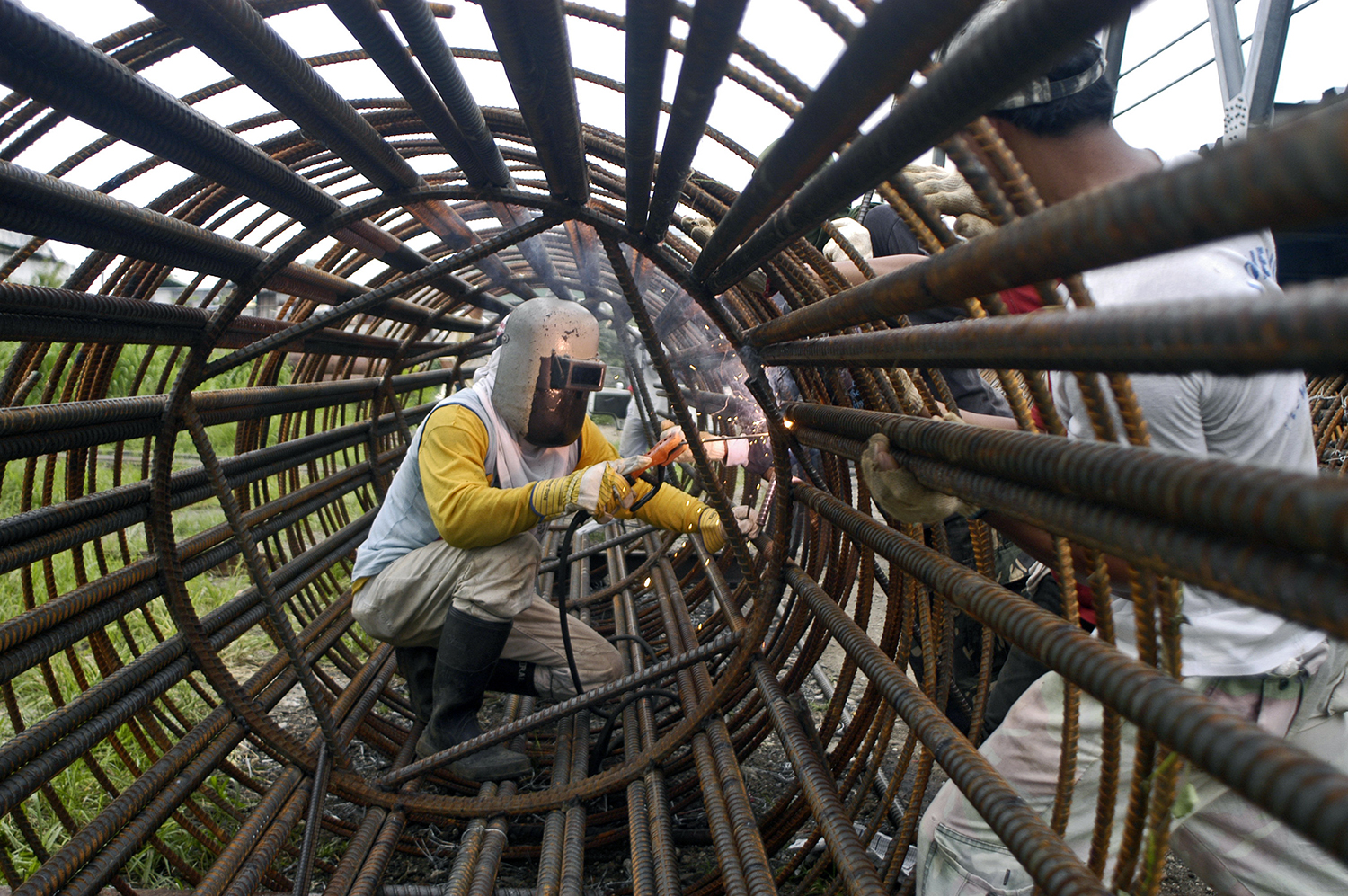
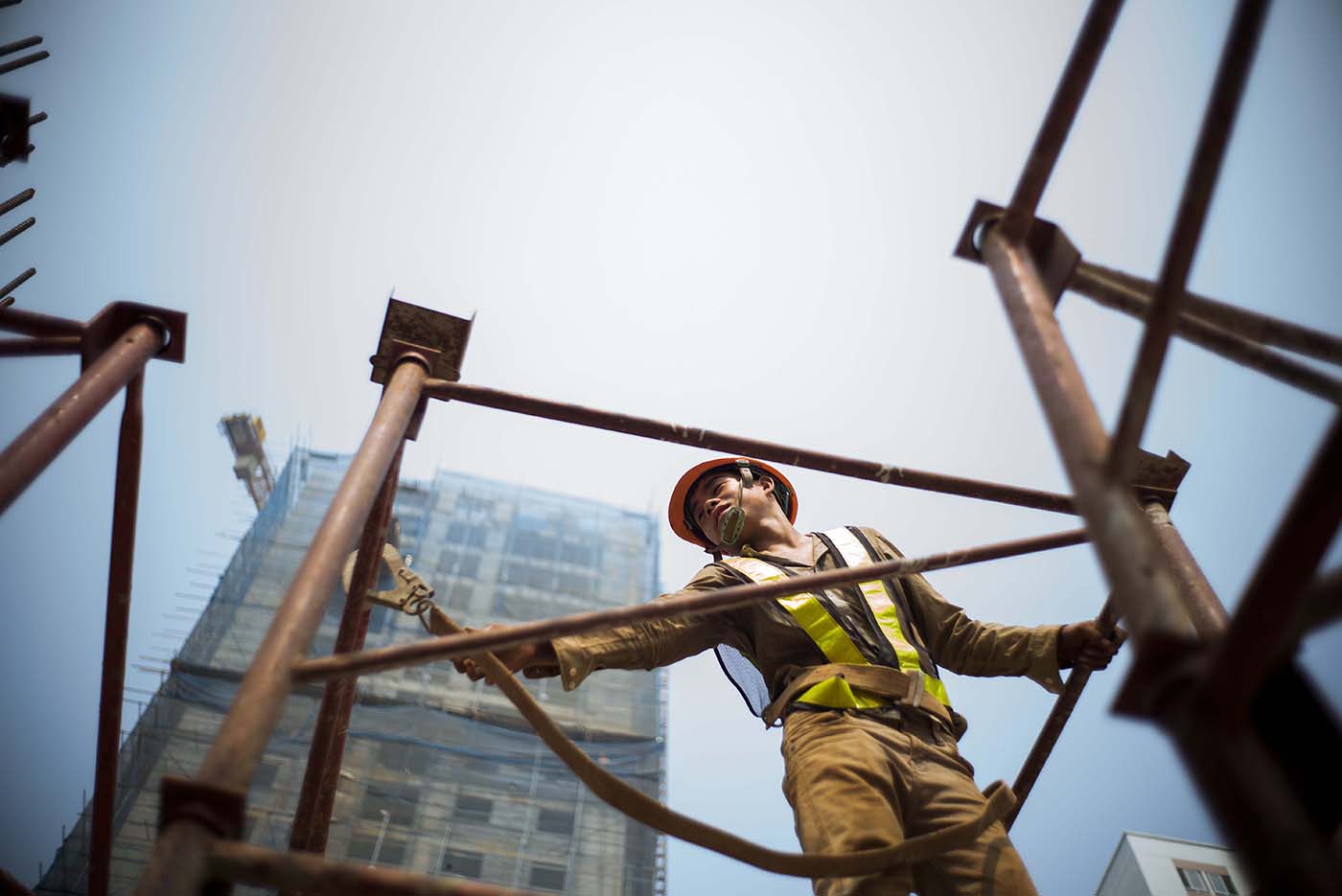
Not all FDI is equal when it comes to job creation. A dollar of FDI in Guinean bauxite and a dollar in a Moroccan auto plant create a different number of jobs. In the project-level data on new manufacturing projects (“greenfield’ projects) that covers the continent, manufacturing generates close to 250 jobs per $10 million invested, plus the jobs at suppliers. Capital-intensive extractives like mining yield the lowest employment return of any sector, because the projects are huge in dollar terms but thin in headcount.
The IMF evaluation aggregates all of this into a single number. If you are concerned about how many jobs investment actually generates, that number says almost nothing.
Who creates those jobs?
Lakemann and co-authors, analyzing 11,233 greenfield FDI projects across Africa, find that the average manufacturing project creates 634 jobs. The average mining project, 645. Even service-sector projects come in just above the 100-employee threshold the International Finance Corporation (IFC) uses to define "large." In other words, FDI is overwhelmingly a large-firm activity.
The World Bank's own Enterprise Surveys confirm this at the firm level. New weighted tabulations for the 15 African CwA members show foreign ownership rising steeply with size: 3.6 percent of small firms, 8.6 percent of medium firms, and 15.1 percent of large ones. These large firms account for 61.5 percent of formal employment among surveyed firms. Foreign-owned large firms alone account for about one-sixth of all large-firm employment—nearly a third once Egypt, where foreign ownership is unusually low, is set aside.
The IMF paper, then, tracks capital that flows overwhelmingly to and through large firms. Another study will have to answer whether those firms form, survive, or hire. CwA's own Phase 1 results reporting counts "firms reached" (about 1,600) and "people served" (13.5 million) without recording firm size, sector, or jobs per dollar—the detail that would reveal whether those headline numbers mean anything.
The 2-percent objection
Where there is country-level data to detect this, greenfield FDI accounts for about 1.9 percent of all jobs created in the African economies. Informal work absorbs the rest. Why anchor a monitoring framework on a channel that small?
While the channel is small, this is where an investment-facilitation compact can act. But this number understates the job-creation effect. Large firms anchor the supply chains, thicken the labor markets, and set the productivity standards that let smaller firms form and survive around them. Korea, Taiwan, later Vietnam and Bangladesh show us that this is the case. These economies built their large-firm sectors first and saw the supplier ecosystems grow around them. The reverse sequence has no precedent at scale. The goal is economy-wide formal employment, and a compact built on private investment can only reach it through the formation of large firms.
Three fixes
In a new CGD working paper, I show that the CwA evaluation omits the real driver of job creation: firm size. CwA’s Phase 2 institutional architecture is being put in place this year, so there is still time to get this right by introducing changes in three areas:
1. Decompose the monitoring. CwA Phase 2 should track FDI by sector, firm size, and employment intensity. The data already exist—UNCTAD has sectoral breakdowns, fDi Markets tracks greenfield projects with employment estimates, the World Bank Enterprise Surveys collect firm-size data every few years. CwA members only need to decide to use this data to monitor progress. A country receiving $500 million in extractive FDI that creates 200 formal jobs should show up differently from a country receiving $200 million in manufacturing FDI that creates 5,000.
2. Add threshold indicators to the reform benchmarks. A country can improve on every existing CwA benchmark — regulatory quality, business registration, infrastructure — without creating a single new large formal firm. This may be because the country sits below the financial depth, contract enforcement, or infrastructure reliability that large-firm investors require. These benchmarks move along a continuous scale. However, the constraints that matter behave more like thresholds: a country is either above the financial depth a large investor needs or below it. The benchmarks should record which thresholds a country has crossed.
3. Deploy instruments that address risk. Risk is the constraint that reform alone cannot resolve. Large-firm investors contemplating multi-year, multi-million-dollar commitments face risks that cannot be offset by other business environment constraints: contracts renegotiated under political pressure, regulatory frameworks that shift mid-investment, markets too thin to absorb shocks. Chile's Least Present Value of Revenue auctions offer a way to address this. In bidding for a highway concession, for example, competing concessionaires bid the lowest present value of toll revenue they will accept; the franchise ends when that amount is collected. The mechanism eliminated the contract renegotiations that plagued negotiated highway concessions. Substitute minimum support for minimum revenue as the bid variable, and the same logic applies directly to CwA countries, where renegotiation risk keeps investors away. This has yet to be tried inside the CwA.
The harder question
CwA's member countries joined because they believed a partnership with the G20 could attract foreign direct investment if reforms were implemented. They were right that reform matters. But an initiative that promises jobs while measuring only capital flows will keep producing evaluations that cannot tell us whether that new investment builds the formal economy it was meant to support.
Phase 2 has money and political backing. The question is whether it will measure the new jobs that CwA members said they cared about.