In June 2025, Green Horizons—a new global mobility platform—was established. It aims to connect 10,000 refugees and host community members with jobs critical to the green transition. In this blog, we share details of this much-needed platform and explain CGD’s role.
Refugees need a new approach
In the last 20 years, the number of refugees in low- and middle-income countries has increased by 215 percent, to just under 22 million. Sixty-six percent of these refugees have been displaced for five or more years, yet few have access to long-term solutions. Most hosting countries restrict refugees’ integration; voluntary return to countries of origin is increasing but remains limited; and resettlement to high-income countries is declining. For many, their skills and talent are going unused while they wait for a solution, leading some to contemplate dangerous journeys. In the absence of credible alternative pathways, the industries of people smuggling and trafficking thrive.
There is therefore a new interest in “complementary pathways”: providing refugees’ access to safe and regulated migration routes beyond traditional resettlement, such as work and study visas. Organizations such as Talent Beyond Boundaries, RefugePoint, and the International Rescue Committee have been experimenting with this for years. They have proven that such pathways can be beneficial, yet results remain small and programming somewhat ad-hoc. A paradigm shift is needed, toward an employer-led and demand-driven model that facilitates the training and migration of refugees and host community members to support growth industries in high-income countries. This needs to be done at sufficient scale to make unit costs viable, and to attract funding mechanisms that ensure efficient use of capital.
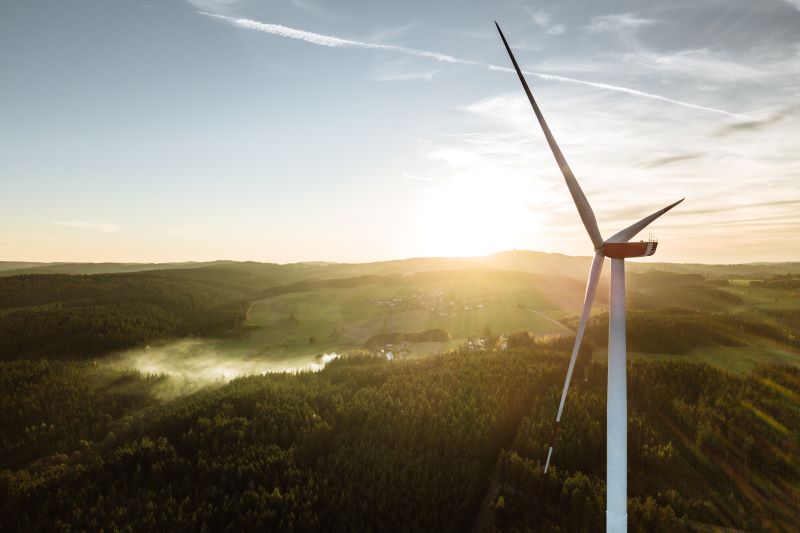
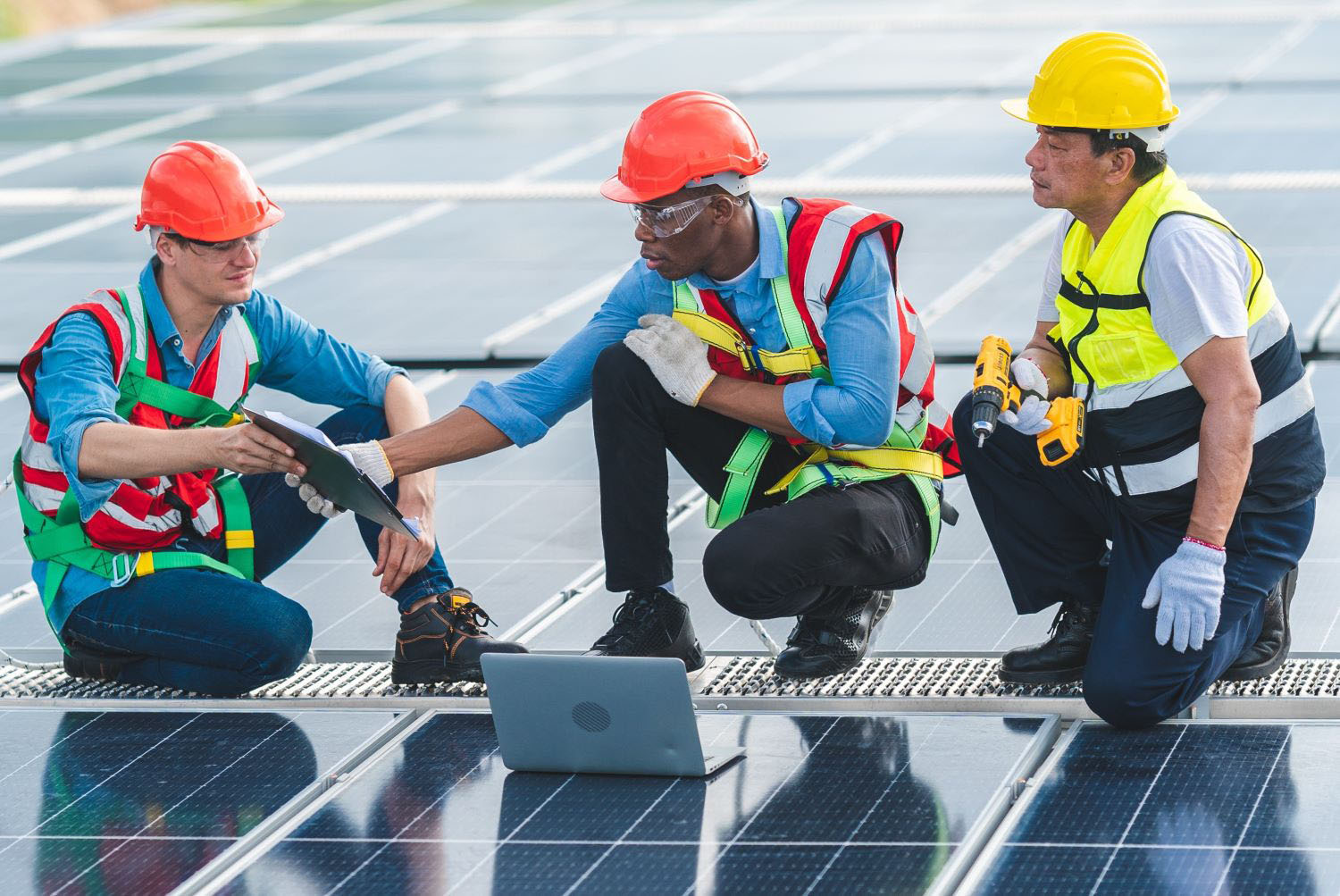
So where can this growth be seen? Largely, in roles necessary for the green transition, such as electrical technicians; plumbing and heating technicians; and construction workers. The International Energy Agency expects that there will be 14 million new green jobs by 2030. The Boston Consulting Group estimates that in core energy transition technologies such as solar, wind, and decentral generation, 7 million green jobs alone could remain unfilled, as domestic training pipelines remain insufficient. As a result, to meet net zero commitments by 2050, some skilled labour migration will be needed, with refugees and host community members playing a key role.
Green Horizons
For these reasons, actors from the private sector, government, experts in funding and the green transition, training providers, funders, and international organizations met at the Rockefeller Foundation’s Bellagio Centre in October 2024. This led to the launch of an ambitious coalition, as well as the development of a business plan and investment case developed over the following six months. This blog provides an update on the newly launched platform—Green Horizons—and outlines next steps.
The goal of the Green Horizons platform is to accelerate human progress by identifying, funding, and scaling labour mobility solutions for 10,000 refugees and host community members. The initial focus is on roles relevant to the green transition, including those in the building, clean energy, infrastructure, and artificial intelligence industries. There are three pathways to connect people to these jobs: (1) “hire-to-skill,” recruiting high school graduates into apprenticeships and traineeships; (2) “train-to-hire,” providing technical and vocational education and training to potential migrants; and (3) “hire-to-innovate,” enabling the mobility of highly skilled university graduates.
Green Horizons has already identified several promising project models which have the potential for scale, based on real results as well as known partners and mechanisms. For example, under the “hire-to-skill” track, the aim would be to enable 1,500 refugees per year to take advantage of apprenticeships in Germany, a route which has strong employer support and is open to migrant and displaced talent. As another example, under the “train-to-hire” track, 1,000 refugees per year could move to Italy and 5,00-1,000 per year to the UK to fill green-skilled shortage occupations.
To fund the different tracks, the platform is aiming to raise US$50 million over three years. Funding will be focused on delivering results, supporting the implementation of several larger scale, pre-designed, pathways which are connecting refugees and host community members with job opportunities.
More than 20 organizations have signed on to help shape the platform, including CGD. We will support Green Horizons in three ways:
- Designing and expanding partnerships that link training and mobility as part of the “train-to-hire” track. This builds on the Global Skill Partnership model we designed in 2012; similar proposals we made in 2019 concerning Rohingya refugees in Bangladesh; and our more recent work on “Linking Training and Migration for the Green Transition.”
- Aiming to collect data evaluating the impact of these pathways on refugees, their families and communities, and their employers, as well as other outcomes such as training quality and the achievement of green transition-related targets in countries of origin.
- Providing general support with convening and engagement, bringing the key organizations together to refine the structure of the Platform and key donors to support the innovative financial model.
Next steps
The Green Horizons platform is taking shape, with employers, funders, operators, and other stakeholders joining the effort. A preparatory conference will be held in early September to launch the strategy and allow potential funders and countries to ask questions about the approach. This will lead into a donor commitment conference in late October, which will aim to secure funding for the first round of mobility. Alongside, efforts are underway to research, consult, and design pathways which will help the platform reach its goals.
New partners are welcome! Whether you are a potential project partner, funder, or employer, please get in touch to learn more.