China’s relationship with multilateral development institutions, including the World Bank, is of great interest to US lawmakers. In particular, there is concern over the fact that the World Bank lends to China and sometimes finances Chinese contractors to work on projects in its member countries, even though China’s share of loans is smaller, and of contracting no bigger, than its global economic weight would suggest. But China’s economic size does suggest it should have a larger vote share at the institution—and reforming voting rules in a way that both strengthens the World Bank Group and addresses this injustice would be a great step forward.
Concerns over World Bank international contracting outcomes involve only a fraction of Bank financing. Policy-based lending doesn’t involve any contracting at all, and the majority of contracts financed under investment lending are won by firms in the recipient country. Of those won by contractors from another country, China wins a little under a quarter of all contracts. Add it all up and Chinese firms have been winning about $1.4 billion a year in World Bank financed contracts outside China.
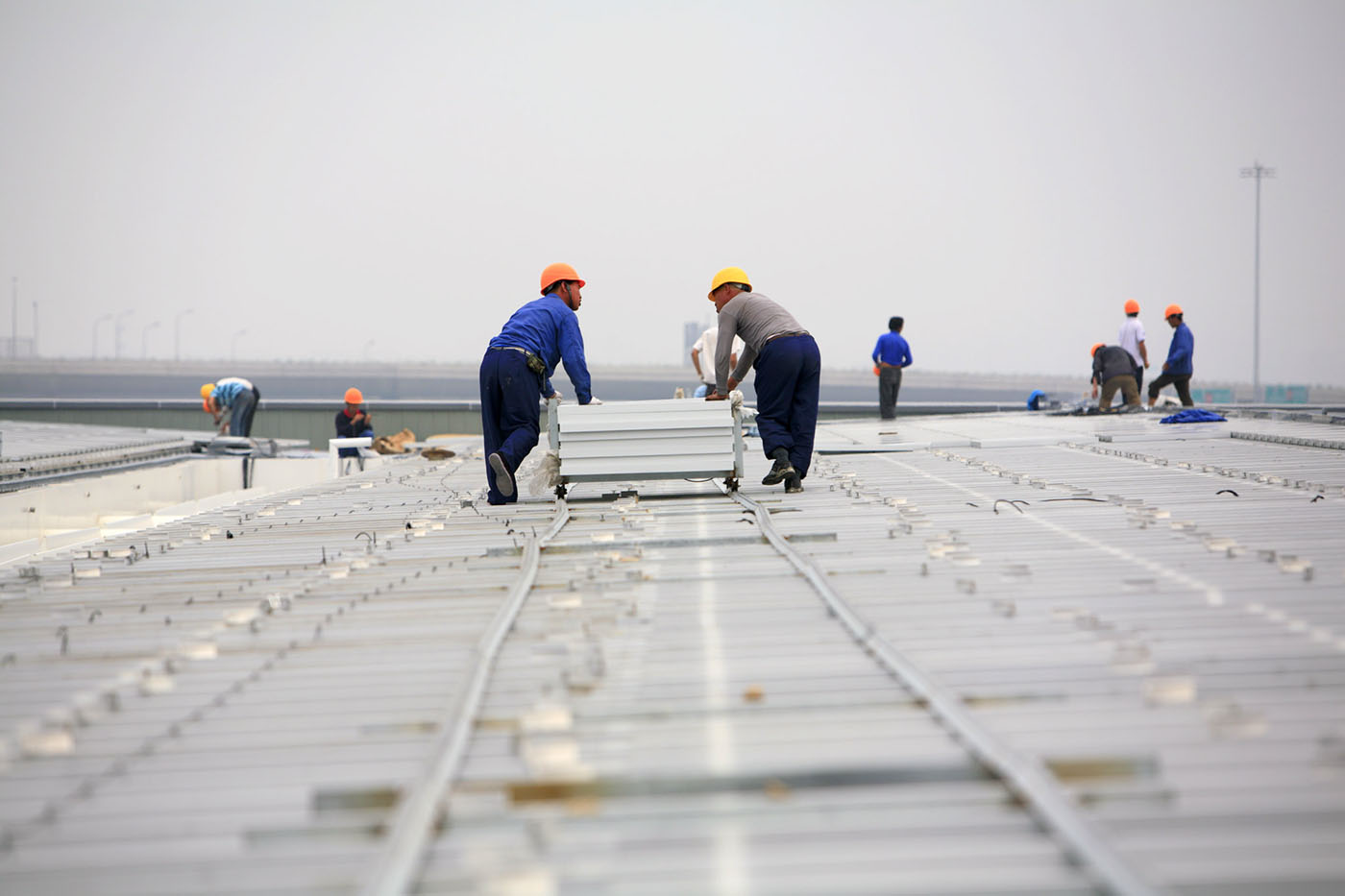
A lot of that is accounted for by civil works contracts and it largely reflects the fact that the Chinese construction industry is huge. China is responsible for 51 percent of global cement production, for example, and about 31 percent of global expenditures on construction. The industry is subsidized in China, and that may help account for its international competitiveness. On the other hand, there is no evidence that Chinese contractors working on World Bank financed projects deliver low quality goods, works, or services. And so, if China’s construction subsidies are doing anything, they are allowing the World Bank to deliver more development at a lower cost.
As much to the point, $1.4 billion is about 2 percent of World Bank lending across its two main arms (IBRD and IDA), a little more than enough to build one Lego factory in Virginia, about one quarter of the value of contracts involved in replacing the I-5 bridge between Oregon and Washington, or a little less than 0.0016 percent of annual global construction spending. It is simply a picayune issue in World Bank operations, let alone for the global construction industry.
Meanwhile, Chinese borrowing from the IBRD has been running at an average of about $930m a year in the period 2022–24. That borrowing matters to the World Bank—the IBRD makes money on safe loans and stays engaged in the world’s greatest development success story. But it really doesn’t matter to China. The country can borrow from the markets pretty much as cheaply as it can borrow from the World Bank. And $1 billion equals approximately 0.006 percent of China’s GNI. Furthermore China is hardly disproportionate in its share of IBRD lending—it accounts for about 45 percent of the GNI of IBRD-eligible countries, but only about 2.5 percent of recent IBRD loans. To be sure, China is bordering on IBRD graduation status and should stop borrowing soon, but once again the issue seems to have been inflated beyond any reasonable analysis of its significance.
If there’s a fair gripe to be had about China’s engagement with the World Bank it is that the country should have a larger shareholding at the IBRD under current policies. The institution has a “dynamic formula,” which is meant to guide apportionment of its shares and is largely based on the size of shareholding economies. In 2020, a review suggested China’s shareholding (and so votes) should be six percentage points higher based on the formula, or about twice its current shareholding, and China’s under-representation will have increased since then. The US should have somewhat higher shareholding as well (a little less than two percentage points larger), while a number of European countries alongside Saudi Arabia and Japan should have seen their vote share considerably decline.
For the sake of reduced friction with its largest shareholder, perhaps the Bank will stop lending to the country that should be its second-largest shareholder. But that friction is based more on domestic grandstanding in the US than it is any significant policy issue. Meanwhile, whatever the pressure, the World Bank should not step away from international competitive bidding as a tool to help guarantee cost-effective spending of its development finance.
And the Bank’s leadership should work to address by far the most egregious case of country bias in the institution’s structure and operations, around voting reform. I hope that happens in a way that encourages countries including China to be considerably more generous to the World Bank’s soft lending arm, IDA, by giving a lot more IBRD shares and voting power to countries that give more to IDA. That would be a win both for fair global governance and the global poor.