Recommended

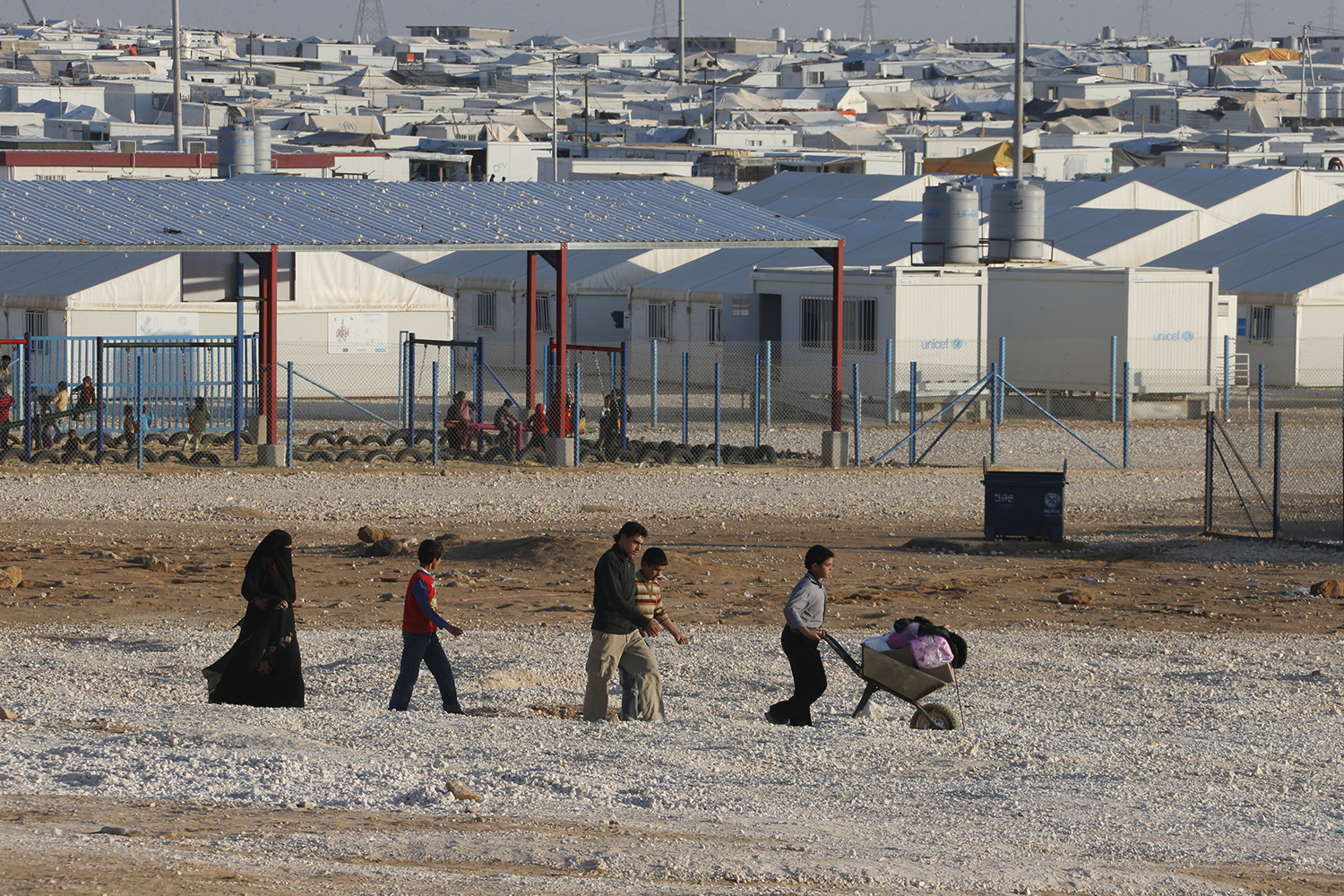
Kenya hosts around 870,000 refugees or asylum seekers, making it the 13th-largest refugee-hosting country globally, and the fifth largest in Africa. For decades, Kenya largely confined refugees to camps and restricted their ability to work and integrate. In recent years, under the Refugee Act 2021, it has offered expanded rights—freedom of movement, albeit circumscribed, right to work, the right to own property, and access to integration.
But a new crackdown on foreigners operating small businesses—announced by President Ruto in September—risks undermining that progress. Initially the ban was on all foreign traders, but was later downgraded to instead merely threaten deportation for traders without necessary paperwork. The move triggered angry responses from neighbouring nations and sporadic violence within Kenya, mostly directed at Burundians.
In this blog we assess refugees’ exposure to the crackdown, finding that the government must urgently clarify its expectations and procedures. As it stands, Kenya expects incoherently that refugees obtain self-reliance, but that they do not work.
Aid cuts and growing expectation of refugee “self-reliance”
Between 2024 and 2025, funding for the UNHCR’s work in Kenya fell by around 25 percent (from US$92 million to $69 million). Funding to the World Food Programme (WFP) fell by 35 percent. In response, alongside Kenya's Department of Refugee Services (DRS), these two agencies initiated a long-discussed policy of “Differentiated Assistance” in order to reduce the number of people receiving aid. This split refugee populations into four categories by assessed vulnerability.
- Category 1 (“most vulnerable”) would receive 60 percent of the pre-cut recommended Minimum Food Basket (a set of goods, or cash equivalent, chosen to meet minimum calorific needs);
- Category 2 (“limited means”) would receive 40 percent;
- Category 3 (“partially self-reliant") would receive 20 percent; and
- Category 4 (“fully self-reliant") would receive no support at all.
As of June 2026, over 23,000 refugee households were in Category 3, and over 7,000 in Category 4—roughly a quarter of all refugee households. At the same time, the ability of any refugee to be truly “self-reliant” was in freefall. In 2024, refugee employment in camps was just seven percent (in urban areas it was 37 percent). The loss of aid—which had accounted for 75 percent of total income for camp-based refugees—led to the collapse of camp-based economies, further reducing employment opportunities. Refugees have strongly protested the cuts to food supplies and the differentiated assistance policy.
Refugees’ access to the labour market
Kenya has embarked on major positive reforms to improve refugees’ rights. However, implementation lags far behind lofty goals; even de jure rights for refugees to access the labour market are somewhat hard to navigate. Section 28(5) of the Refugee Act 2021 gives a recognized refugee the right, individually or in a group, to take up "gainful employment or enterprise or to practice a profession or trade", provided they hold qualifications recognized by competent authorities in Kenya. To operationalize the law, the Kenyan government launched the Shirika plan to fanfare in 2025. Under the plan, Kenya’s two largest camps (Dadaab and Kakuma) were to become integrated settlements. In theory, this has now happened, alongside the lifting of movement restrictions and access to the Class M work permit.
In practice, a strict encampment policy is still in place; refugees remain legally restricted to “designated areas”. So far, the only areas designated are the camps themselves, where there is little work available (see Figure 1). Applying for a Class M permit requires refugees to travel to processing offices when they may not have the right to travel; to present documents they may have lost in flight, or to which they have no or delayed access (such as tax records); and (de facto) to have an employer, which is challenging given that work is most easily accessible via self-employment. The process can take up to two years.
Figure 1
Work in designated areas and reliance on international support are two of the three options envisaged for refugees by the government of Kenya. The third sees eligible refugees transition to a Class R permit under the East African Community’s Common Market Protocol. This would in principle give transitioners significantly expanded rights: free movement and the right to work, and rights of establishment (running a business in one’s own name) and residence. In theory, approximately 94 percent of refugees are eligible to make this transition (see Figure 2). In practice, however, they would need to voluntarily give up refugee status, along with any humanitarian assistance and the right to resettlement, and to surrender all documents acquired thanks to refugee status (such as a refugee identity card, a Class M permit if held, etc.).
Figure 2
It is unclear how the application process is sequenced, and whether there would be a risky limbo period in which applicants have neither refugee-related documents nor Class R permit. It is possible that refugees would first have to re-avail themselves of their nation’s protection to obtain a passport—losing refugee status—before they could even make an application. People who move out of refugee status would still be legally protected from being returned to danger under Section 29 of the 2021 Act. But it is unclear whether they could easily recover refugee status if they needed it in the future.
The September 2026 crackdown
On September 2, following a meeting with Kenyan traders protesting tax reforms, President Ruto announced that all foreigners operating small businesses would be obliged to close them within five days, framing it as a way of reserving opportunities for Kenyans. Sporadic anti-immigrant violence, harassment, and intimidation erupted, triggering warnings against worse to come from the National Commission on Human Rights, the African Commission on Human and Peoples’ Rights, and Amnesty, among others. Burundi responded with anger, and convened a meeting of the East African Community.
The government of Kenya rapidly recast its intervention as a crackdown on foreign workers working without permits. It called on workers to “present themselves to their respective high commissions or embassies for formal identity registration”, but without explaining what impact this would have on refugees: would this count as their re-availing themselves of national protection under section 5(a) of the 2021 Act? The government also apologised to Burundi, and set up a new Joint Task Team with Burundi, UNHCR, and the International Organisation for Migration (IOM) to coordinate regularisation and any returns of Burundian nationals.
Currently the crackdown is taking place primarily in Nairobi and Mombasa. Approximately 120,000 refugees and asylum seekers—14 percent of the total in Kenya—are located in Nairobi and other urban areas. Of these, per the World Bank, roughly 37 percent may be working, but only one percent has a work permit. They are thus highly vulnerable to the new crackdown, but (given massively reduced international support) have little choice but to try to work to survive.
To be regularised, they would have to obtain either Class M or Class R permits, overcoming all the difficulties outlined above. It is unlikely either would allow a refugee to safely obtain the right to work before the government’s 90-day registration window closes.
The government of Kenya must urgently clarify its expectations and processes
The government of Kenya’s Differentiated Assistance policy defines “self-reliant households”, receiving no support at all, as households “with members engaged in livelihood activities… These include traders [and] business owners”. Given that almost no refugees hold formal work permits, and that administrative opacity or lack of resourcing prevent willing refugees from obtaining them, there is a clear incoherency within Kenya’s approach: expecting that refugees support themselves, but not allowing them to do so.
The Government of Kenya must do the following:
- Clarify whether the crackdown on small traders applies to refugees. Refugees have come under attack following the crackdown, but President Ruto did not mention them himself. If refugees are included, the government must clarify their options. It should suspend the 90-day window for refugees until full clarification is provided, and extend the window for refugees to the time taken to process permits.
- Allow refugees to move outside of “designated areas”. Unless refugees can access employment opportunities, pushing for self-reliance is effectively meaningless.
- Reconsider and clarify requirements for Class M permits. Obtaining a permit is administratively near impossible for many refugees for a transition towards self-reliance to be possible, this must be addressed. The Government must also clarify whether refugees can apply for self-employment and, if so, the assessment criteria (currently they appear eligible, but in practice are usually refused).
- Publish a clear process for EAC-origin refugees to obtain Class R permits under section 28(8) of the Refugees Act 2021. It should specify when, if at all, refugee status must be relinquished, whether it can be held until the permit is issued, what happens if the application is refused, and how status can be reclaimed if needed. Without this, refugees risk giving up protection and documentation with no guarantee of a lawful alternative.
The new crackdown on foreign traders risks delivering a hammer blow to refugee self-reliance, at a time when ongoing cuts in support leave refugees more vulnerable than ever. The government of Kenya must urgently clarify how it intends refugees to be affected, and provide them with real options for accessing self-reliance.
Topics
DISCLAIMER & PERMISSIONS
CGD's publications reflect the views of the authors, drawing on prior research and experience in their areas of expertise. CGD is a nonpartisan, independent organization and does not take institutional positions. You may use and disseminate CGD's publications under these conditions.
Thumbnail image by: Melissa Peltenburg/ Adobe Stock