Recommended
Event
Bangkok 2026: What We’re Watching at the World Bank/IMF Annual Meetings
VIRTUAL
October 07, 2026 10:00—11:00 AM EDT | 3:00—4:00 PM BSTClemence Landers: Hello, and welcome to The CGD Podcast. I'm Clemence Landers. I'm a vice president and senior policy fellow at the Center for Global Development. Today, we wanted to share with you some of our thoughts on what to watch at next week's IMF/World Bank Annual Meetings.
We've just come out of an event that we held with Devex on the topic. I was joined by CGD President Rachel Glennerster; the managing director of the London office, Mikaela Gavas; my co-vice president and senior fellow Markus Goldstein; and Adva Saldinger of Devex. We talked about the many crises low-income countries are facing, resilience in a lot of emerging markets, we talked about AI, we talked about global health, we talked about debt, and we talked about the geopolitics that are shaping our times. Here are some of the highlights of our conversation.
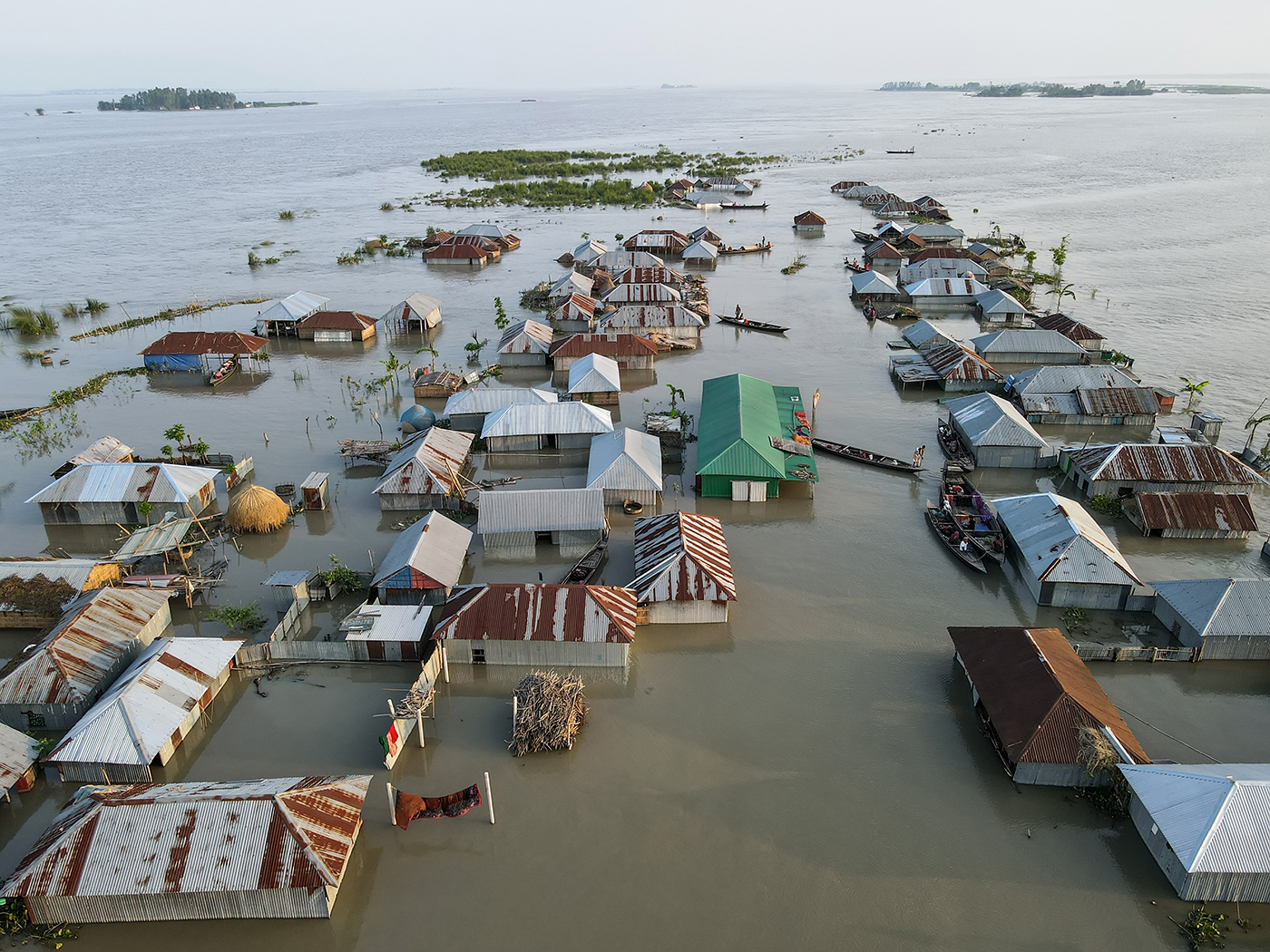
Adva Saldinger: Hello, everyone. My name's Adva Saldinger. I'm a senior reporter at Devex. Today, we're getting the insights from Center for Global Development experts on what we can expect next week at the World Bank and International Monetary Fund Annual Meetings, which this year are being held in Bangkok, which has been dealing with some significant flooding. We'll also paint a very clear picture of some of the climate impacts that countries are seeing.
Joining me for this conversation are Rachel Glennerster, the president of CGD; Clemence Landers, who's the vice president and senior fellow; Markus Goldstein, who's a vice president and senior fellow; and Mikaela Gavas, who's the managing director of CGD Europe and also a senior fellow. Thank you all for being with me today. Rachel, I thought I would go to you first for the backdrop that we come into with these meetings that are framing the conversations.
Rachel Glennerster: There's an economic backdrop, which is very much linked to a lot of politics. Now, the IMF and World Bank try and stay out of politics, but the wars and the Strait of Hormuz, Yemen, Sudan, Ukraine are having big impacts on the world economy. Inevitably, that politics intrudes into the economics when leading to higher food prices and higher oil and gas prices. It's interesting, last time at the spring meetings, people were talking a lot about increase in food prices, but there wasn't like a sign of that.
That leads into challenging fiscal environments for a number of countries, including rich countries and low- and middle-income countries. We've seen this big increase in yields in the US. We will be thinking about how much that feeds through into higher borrowing costs for low- and middle-income countries. At the moment, there's a bit of a divergence, with richer countries seeing big increases in borrowing costs, but less so for low- and middle-income countries. It hasn't fed through yet.
Then a big topic will be artificial intelligence, as it is in every meeting and dinner and lunch I have, but it's the subject of the World Development Report this time from the World Bank. The curtain-raiser speech from the head of the IMF was also talking about AI. How all the countries in the world can benefit from AI, I think, is going to be an important backdrop.
Adva Saldinger: We'll certainly get into more about AI, but, Rachel, there's a sense of being in crisis in recent weeks. How do institutions and systems need to adapt?
Rachel Glennerster: There's been the sense not just of crisis, but also of multilateralism falling apart and not being able to respond. I think what we don't say enough is that, actually, the international financial institutions are weathering these crises remarkably well compared to other multilaterals. This is an environment where China and Russia and the US and Iran and all of these actors, they may be at war with each other, but they sit down across the table, and the IMF and World Bank, and hammer out deals on a regular basis. That's the encouraging part of where we are.
Adva Saldinger: Clem, maybe I'll come to you next. What are the big issues that you think will come up?
Clemence Landers: I'm going to be most closely watching for what is on offer for the poorest countries. As Rachel laid out, we are in a time of crisis. A lot of countries have done just a very good job weathering the crisis. I think it's partially due to the fact that countries have become more reliant on their own domestic capital markets and less subject to a lot of the vagaries of international finance. There's also countries that are very exposed to the international system, that are very exposed to higher interest rates in the United States, that are very vulnerable. What I'll be looking for very closely is what's on offer for these countries.
Next year is the replenishment of the International Development Association. This is the World Bank's arm for the world's poorest countries. There's been a lot of quiet whispers among some of the biggest donors that they're just not going to be able to meet the commitment levels that they've sustained in the past. That could prove really tragic for a lot of the world's most vulnerable countries that are just heavily reliant on this instrument for financing.
This is at a time when China's pulling back, so net flows to China may be turning negative. A lot of countries are issuing Eurobonds now at 9%, 10%, so they're rolling over debt that they were issuing at much more affordable rates. What I'm going to be looking for is early indications of how much donors think they can contribute, but also the policy agenda around IDA. I think a lot of reform is needed, especially around focusing IDA on the most vulnerable countries that really rely on it as part of the global financial safety net.
Adva Saldinger: Clem, one of the things that we're also seeing, especially as there's this focus on private capital mobilization, is how does that then impact the poorest countries where it's the hardest to mobilize that capital, right? Is the offer from the World Bank different in those places, and how are they differentiating some of that? How does IDA then look to leverage the money it does get? What does it mean if it has to go to the capital markets to reach the top-line number that they're looking for? What does that mean in terms of the mix of loans versus grants that are provided to countries?
Clemence Landers: We talk a lot about countries' financing costs, but the other thing is IDA and IBRD's financing costs. IDA was just celebrating the fact that it did its first bond issuance in US markets, finally got an exemption from the Securities and Exchange Commission to issue, but it did issue at close to 5%, which is high. It's not an outlier relative to the other MDBs. It's just that the MDBs have to pay a lot more to finance themselves because we're in a higher interest rate environment, and they have to pass on those higher financing costs to their clients. We're really in a moment where the cost of capital is going to be really central to a lot of these conversations.
Adva Saldinger: Mikaela, did you want to weigh in?
Mikaela Gavas: There are two things that I'll be watching from a European shareholder perspective. First, it's really to see if Europe's multilateral commitment holds up as its aid shrinks and as it becomes a lot more self-interested. We know that EU aid, for example, is moving much more from grants to investment, from poverty reduction to strategic and commercial interest. At the same time, you've got European aid budgets that are being absorbed by Ukraine and the neighborhood.
European shareholders will want the bank to step up, but the question is whether European shareholders are looking to treat IDA specifically as a shock absorber for the aid that they cut elsewhere, or as just another budget to squeeze. Also, to see if the European shareholders push the bank and themselves, for that matter, to aim their scarce risk capital at low-income and fragile countries.
The bank reported a record $112 billion in private capital mobilized, but I think only about $3 billion of that actually goes to low-income countries. Europe actually has the same problem. The money in Europe goes where it's easiest to place, so that leaves the hard cases underserved. It's fragile and low-income countries, local currency finance, early-stage first-loss capital. All that gets the least. Those two things that I'll be watching.
Adva Saldinger: Mikaela, you talked about how, in Europe, a lot of the aid is more self-interested. I think we're seeing that from a lot of donors. Do you think that starts to then impact what they're asking for from the World Bank, from MDBs? Does that self-interest spill over into their demands from these institutions where they're key shareholders?
Mikaela Gavas: I think it does to a certain extent, although, to be honest, it shouldn't. The thing is, this is a real wake-up call for Europe. If Europe really wants climate, fragility, and the poorest to stay central, it's going to have to actually make that case itself and pay for it. You've got energy shocks, instability in the neighborhood, and, in Africa, migration pressures. They're hitting Europe directly. A bank that works well and on those issues is very much in Europe's own interest. Of course, Europe's credibility really depends on it matching its rhetoric with its own money and a coordinated voice. That's elusive at the moment.
Adva Saldinger: Markus, I wanted to turn to you and ask you a bit about what you're watching next week.
Markus Goldstein: I would follow Rachel, and I'm watching AI. I think the World Development Report was significantly different than the digital strategy that the bank unveiled end of June, early July. I want to see how that plays out. In particular, I'm watching how they're going to think about AI sovereignty investments. I'd like to see more on labor markets. I'm wondering if they're going to say anything about transformative AI. I think Kristalina's speech might be a nudge in that direction, so it'd be interesting to see.
And then, the other thing I'm watching is to pick up on this point of Rachel on increased prices that the countries are facing; futures are also up. I think markets expect this to persist. Then Clem's point that countries have weathered this so far with fiscal tightening, I think the question is whether we're reaching the limits. I think the bank's been building a response, and I'm wondering if they're going to be talking about that.
Adva Saldinger: Well, I can say that I've been asking the bank about their response. They announced some pretty significant commitments back in the spring, but I have not yet heard from them about the type of support that countries have asked for, but I'm pushing. I've actually been talking to other MDBs about their response to some of the shocks from the Iran crisis, specifically.
Markus, I'll come back to you. We can dig in a little bit more on AI. The bank has clearly made this a priority. It's one of the flagship events next week. I wouldn't be surprised if we might see some announcements on AI. I'd be curious what you see in terms of the discrepancies between the digital policy and the World Development Report, and what you think the bank could be doing on AI, and likewise, what maybe the IMF's role might be in this.
What we heard from Kristalina, her quote was, "Love it, hate it, or fear it, AI is here." It's rapidly becoming a key driver of countries' relative fortunes in the global economy, and that some economies may well be bypassed, given the way the system is growing today. That could widen global inequality, which we're already seeing.
Markus Goldstein: There's three things to focus on. The first is AI sovereignty. To me, sovereignty is a non-starter because they can hack you. They control the access to the antidote. The WDR strongly argues that thinking about AI sovereignty is a trap, and I totally agree with that argument. The question then is, how do we help countries think about agency in this world? There are some ideas in the WDR. I think they're a start. Diversifying the models you use is one of them. It's fast-moving, to be fair to the bank, but I would like to see a nice, proactive response instead of a reactive response.
On labor markets, the WDR makes a great point that this is a known unknown. What's going to be the labor impacts? Every prediction has been made. One of them is right, but we have no idea which one it is. Can we think about a concerted response to build resilient labor markets? You're seeing some arguments come out of social protection, but not a strong one in response to AI. Thinking about portable benefits, certifications, cash transfers to help people adjust, nimble job retraining, all of these elements. There is some action around this in Turkey from the bank, so I'd like to see more of that.
Then the last is more of a big bet, which would be there's a transformative potential here. We saw with the advent of cell phones, a leapfrogging happening in developing countries. Will we see an argument like that come from the bank? If you think about the Ministry of Agriculture, having data on ministry staffing, having data on ordering of pesticides, having pest detection data, all three of these kinds of data talking to each other, which is possible with AI, you could really have a transformative moment for government services and markets in these countries. There's a leapfrogging potential. Will we see a bold argument from the bank?
Adva Saldinger: The bank has talked a lot about small AI, and current models really are only very effective in a very limited number of languages. If you talk about how do you close that AI inequality gap that might open up, what do you think are some of the things that maybe the bank could do, and what do you think they mean by small AI in the big picture?
Markus Goldstein: Small AI has lots of potential. We think about it for applications. Maybe a tutoring program for students, or a supplement to the teacher. That could use a smaller local model. That totally makes sense. I think another hard discussion to have is, what is good enough? I think smaller AI creates a nice box for that discussion, so that's one. The language issue you raised is a real one. It's not a key performance indicator for the big models.
Looking at data from earlier this year, you could see Swahili accuracy bounce around. Swahili's one of the languages these models tend to be better at. I think the bank, particularly with the amount of data that it has helped countries collect, can serve a really nice coordinating function. From what I understand, there's discussions to this effect, so this isn't new. To help make sure these models are better-- I think it's going to be a long time until we-- I think it'll be longer until we get to languages that are spoken by a lot fewer people, but I think there's a huge gain to be made. The bank can be helping countries earn some returns on their data and also helping the AI companies expand their reach.
Rachel Glennerster: I think people focus on language, and that's important, but there's also many other ways in which AI is not focusing on the needs of low- and middle-income countries, and it won't because the financial incentives aren't there unless people are proactive, including the World Bank and other multilateral development banks and donors. Companies aren't going to focus on the diseases that are prevalent in low- and middle-income countries because there's a lot less money to be made there. Low- and middle-income countries are very good at driving down the price at which they buy treatments for tropical diseases. Diseases, crops are very different in different countries.
The challenges that kids face, the way that teachers work, all of these things are different. Languages are an example that people can get at quickly and understand that that's different, but there's a whole plethora. An area where it'd be really good for the bank to get involved is helping governments think about how to purchase AI, because the standard way in which governments run tenders to purchase things, it's just the cheapest possible bid, or maybe you look at quality, and then you look at a test that was run three years ago, by which point, that is not the best program anymore. There's a real risk that these big companies are going out there and offering lots of support to countries in the hope that they will lock them in so that they can only use their product in the future. There's a lot of thinking about the economics of procurement in this space that we really need to focus on.
Adva Saldinger: To your point, language is an easy one to get at, but the data that goes into these models is really important. Who's generating it, who owns it, who does it reflect, I think, is a key part of this. It could be an incredible tool, perhaps, to provide people access to things like health care or agricultural information, but it has to be built on the right data.
Rachel Glennerster: Yes, it's not just about the right data. The data might be there, but the financial incentive to work on it is not.
Adva Saldinger: I wanted to switch gears to the World Bank on climate. Obviously, in the past year, a lot of conversations and debates about the Climate Change Action Plan. We saw the bank drop its 45% target, but agreed to keep climate on the agenda, but without that target, and you saw the US really pushing strong for that target to go away. I'm curious, we're past that CCAP discussion, but what do you think this now means for what the bank does on climate, and where shareholders push it to go? Clem, did you want to weigh in?
Clemence Landers: This was an agreement that everyone could reluctantly agree to. The reality is dropping the climate finance target is symbolically very significant, but the World Bank is a demand-driven institution. I would be surprised if we saw really big changes in the composition of country demand for climate finance. In a way, it's the same in the United States now.
I was just reading. There's more installed solar capacity in Texas than in California. It's not because Texas has become full of green hippies. It's because the economics are there, and it makes economic sense. I think that's where most of the world is now. We'll be monitoring this very closely at CGD. In the past, we looked at the composition of World Bank climate finance and how it was reporting on the climate finance at a time when the bank was really moving towards really big aspirational targets. We found that there was actually quite a bit of greenwashing.
This was Scott Morris and others who released a paper a few years ago. I think it'll be interesting to do another round of that paper to see what this means and whether the opposite is happening, as a lot of projects that could be tagged as climate end up not being tagged to change a little bit the image of what the bank is financing. At the end of the day, I think the fundamental thing is this is a demand-driven institution. No shareholder alone can block a project. I would really be very surprised if we saw a really big shift in the composition of country financing.
Adva Saldinger: I was actually just speaking to someone from EBRD earlier today. They're seeing a real increase in demand for renewable energy projects in some countries, and part of their portfolio that's responding towards the conflict in the Middle East. Countries are accelerating their plans to diversify their energy mix that includes renewables that they have control over, which, Mikaela, it sounds like maybe that's not happening as much in Europe, but how do they protect themselves from these energy shocks?
I wanted to talk about private capital mobilization a little bit. We talked about numbers that the bank has been touting, this $112 billion. In a lot of my conversations, people are perhaps a little skeptical because they don't have a ton of information about how the bank got to those numbers. We also saw last week that the Task Force on Mobilization released a new methodology for how all the MDBs are going to report on mobilization and also broke it out into a number of different categories where they're going to count certain things in different buckets in terms of generation and catalyzation.
That new methodology is much more detailed than the prior methodology, but we're certainly seeing this direction of travel towards doing more private capital mobilization through securitizations and other vehicles. I'm curious what you think we might see on that next week, what questions you're asking in terms of the bank's approach to this. Clem, that's probably for you, but happy for others to weigh in as well.
Clemence Landers: It's a pretty eye-popping increase. I think the number grew by about three times in the past two or three years.
Adva Saldinger: I think it's four years.
Clemence Landers: Four years, sorry. Yes, since 2022. The numbers are very dramatic. I think we're all, at CGD, very eager to sink our teeth into the disaggregated data, which hasn't been released yet, but I think we'll have some more sophisticated analysis soon. We talk a lot about volumes, and volumes are important, but my colleagues, Nancy Lee and Sam Attridge, just released a really good note around the fact that, really, this isn't the sole metric of success. It's really the impact of this mobilized capital that we have to understand. What sectors are the investments going into, and what kinds of countries, right? It's much easier to mobilize private capital in established markets than it is in low-income countries.
You alluded to securitizations. I would say I've been very interested in the bank's guarantee platform and the real uptake on the guarantee side. We at CGD did a paper a couple of years ago around sovereign guarantees in the MDB system. There had been very few at the time, I think only about 10, but we did find that they helped lower countries' borrowing costs by about 300 basis points, which is pretty enormous.
Banga has really been pushing for more uptake on guarantees. There's always been a lot of pushback at the bank, which has been a very loan-based institution that lives and dies by its loan spreads. Guarantees are more complex and more risky, but Banga's really been pushing for more. We saw this innovative debt-for-health swap in Côte d'Ivoire that helped Côte d'Ivoire do a syndicated loan at a pretty affordable rate.
I do think these are both instruments that solve two problems. One is in terms of mobilizing at scale, but also lowering cost of capital at a time that capital's become very expensive. Then when you do a guarantee that's tied to an investment loan or a PforR, you also then direct the financing towards development. I think this is actually quite a promising avenue, and I've been really encouraged to see the bank president pushing on it.
Adva Saldinger: Certainly, that $112 billion number is built on the back of this new one World Bank guarantee platform that brought the guarantee operations from IFC and from IBRD and IDA into one central place so they can work together; they can stack different types of guarantees. In fact, I think they had a target that was $20 billion annual in guarantees by 2030.
As part of this, last year, they hit $25 billion, so they've already exceeded that target, and I think are accelerating guarantees, and then I think that how are these guarantees structured, what are the mechanisms they're using? Are they thinking about how they could use technical assistance stacked on a guarantee to ensure that it has long-term impact is something I talk about. I actually spoke to Sam Attridge, who you mentioned, just last week about how does the World Bank think about market building in this mobilization conversation, and not just bringing in the private sector on one-off deals, but in the bigger-picture approach, which I think is an interesting piece of this.
I wanted to switch gears to the World Bank. They made this big announcement on universal health coverage, and that was one of their big bets a couple of years ago. Curious about how that's moving along, and then does the bank see a role for itself in supporting countries to develop their own sustainable domestic funding for health challenges? I think that's probably particularly relevant in an environment where we see so many cuts to health budgets that used to come from aid money.
Rachel Glennerster: That is a big thing that the World Bank does is help countries think about tax revenues and what is the most effective way to raise taxes, and it may or may not make sense to hypothecate, i.e., say that a particular tax is for health, but it has long been the objective of the World Bank and IMF to help countries raise taxes effectively and to be able to cover the costs.
A long time ago, I worked in the IMF. A big part of what we were spending our time on was measuring how much taxes they were raising because the objective was eventually to not need support from donors. There's been a lot of interest in the health world about this, but economists and international financial institutions have been plugging away at thinking about this.
There's a lot of good research on how to improve tax raises, how to improve tax administration, and, for example, on property tax, which a lot of rich people manage to evade other taxes, but it's quite difficult to hide a big mansion. There's a lot of ways that governments can use technology, satellite, et cetera, with a combination of that plus human knowledge about which are the fancy parts of town to really get higher taxes. Sierra Leone's a country that's been doing that, a number of countries in West Africa. It does require political will to go after the rich and make sure that they pay.
In terms of universal health coverage, there's a lot of different ways, depending on a country's level of income, about what's the right way to get health coverage. It used to be that the World Bank automatically went to an insurance system, which any economist will tell you has a lot of problems. Health insurance is the classic example of moral hazard and asymmetric information, but it might be the right approach at different levels of income. Working that through with countries, it's very important and not defaulting to, "This is how rich countries do it, that's how we ought to do it in poor countries."
Adva Saldinger: Just to give a slightly shameless plug, I know one of my colleagues on our global health team is currently working on a story about that World Bank commitment to universal health coverage. We should have more information soon on where they are in the progress on that. I think one of the things that we find important is the World Bank has made quite a few of these big bets now: Mission 300, Water Forward, AgriConnect. I think it's important to see how is that actually changing perhaps the bank's lending behavior and posture, and where are they standing in terms of meeting those goals?
Rachel Glennerster: Although not all of these big bets should necessarily be thought through. The commitment to link everyone in Africa to the grid, I think it's much more important to link firms to reliable energy than for everybody to be on the grid because that will give people jobs, and jobs is what people care about.
Adva Saldinger: I think that's been a debate within M300, right? Is it targeting individual connections, or is it also looking at baseload power? At least from what I've heard, I think, internally, they are grappling with that and trying to look at making it not just about the individual connection. Clem, we haven't talked about debt. US Treasury has said that they want to see more action on debt. One of the questions we had was about perhaps what we might see from the bank and the IMF, so curious what you're looking out for on debt, and then how you're seeing the US administration influencing these institutions.
Clemence Landers: Debt has been top of agenda for six years. What I would say is the conversation has moved from trying to encourage countries to proactively restructure to one around liquidity. The international community created the Common Framework during COVID, which was supposed to bring in non-Paris Club creditors into a Paris Club-like process. It didn't work super well.
Zambia just completed its restructuring process, and it took about over three years. That acted as a real deterrent for a lot of other countries that maybe should have restructured. Right now, Senegal is going through what they're calling a compressed Common Framework. If Senegal can go through a restructuring rapidly, it will actually prove that the restructuring process is starting to work well, but they have international bondholders, and they have China and France as creditors. All of these creditors are going to have to be able to agree on something comparable in these restructuring agreements.
On liquidity, I wouldn't say we're in a period of illiquidity. I was just looking at some of the African bond issuances that have been three, four, five times oversubscribed. That doesn't suggest we're in a moment where there's a liquidity shortage, but we are in a moment where there's just been a big global repricing. A lot of countries that were financing themselves at pretty affordable rates are now trying to refinance their Eurobonds. Eurobonds have bullet repayments, so you have a moment where you have to do a rollover, and they're rolling over their debt at 8%, 9%. When you're in those rates, you often end up paying more in interest than you do in principal, so it's really expensive.
The task here is, how do we help countries deal with these rollovers in a way that doesn't break the bank? Also, it's not just the private markets. We have some forthcoming CGD research on the fact that because the IMF did so much during COVID, a lot of countries are now going to start having to repay a lot of money to the IMF and may find themselves paying the IMF more than they're getting from the fund.
The IMF is also potentially a suck on liquidity. On top of that, we also have a lot of bilateral creditors that are also themselves pulling back. Data on China is incomplete, but BRI is no longer as large as it was a few years ago. China may also be sucking in more money than it's putting out into the system. There's a real problem here, and this is where a lot of the conversations are focused is, how can we make sure net flows remain positive for the lowest-income countries?
It's hard to tell the private sector what to do, so that's where things like credit enhancements and guarantees may come in to help countries refinance at lower rates. In a perfect world, the G20 would make some sort of a commitment on a bilateral basis to keep net flows positive, but there's a lot of work towards that. My colleagues at CGD have some work around debt suspension clauses where some countries, if they're facing a shock, can activate a stoppage in their external debt repayments in order to be able to devote more of their repayments towards spending on the shock. There are a lot of really good elements of a solution here, but we do need a political bargain. I think this will be a big topic in Bangkok.
Adva Saldinger: In terms of the US influencing these institutions?
Clemence Landers: The US has had a lot of wins this year at the World Bank and the IMF. We mentioned climate. We mentioned procurement. Taking a step back, the US government took a bazooka to its own bilateral aid agency, but things have been pretty business as usual in these multilateral institutions, which has, in a way, been quite a blessing, especially given how important a role they play.
I wouldn't expect a huge amount of demands that the US is coming to Bangkok with. I think they have a lot of good amount of victory laps that they can do. I will say, in Bessent's speech last April, he really did call for a back-to-basics. Part of the back-to-basics was a focus on the poorest countries. I think this is actually a really welcome call. We have a paper that shows that half of IDA countries are now very significantly above the graduation threshold, and a lot of these countries also have Eurobonds and are creditworthy.
Shouldn't IDA be focused more on the poorest countries, especially in this moment of crisis? Similarly, when we look at IBRD, over the past couple of years, more and more IBRD lending is going to countries above the graduation threshold, too. Shouldn't IBRD be providing more to lower-middle-income countries that are creditworthy but need some liquidity? I think there are some elements of the Bessent agenda that could potentially be welcome if implemented at the institutions.
Adva Saldinger: Certainly, we've seen pressure from the US for the World Bank to actually graduate countries, and some of that targeted at the bank stopping to lend to China, but I think it's worthy of a broader conversation given increasingly limited resources. It's obviously going to be a big week, with everything from how are individual countries approaching health to the big geopolitics and philanthropy. Will countries be able to come to agreements on any of these things? Thank you all for sharing all your insights, and look forward to hearing more from you next week as we see all of this unfold.
Clemence Landers: Those were some of the highlights from the event that we just held on what to watch at the Annual Meetings next week. Covered a lot of different topics, ranging from AI to the cost of capital to debt. One broad observation that held throughout the discussions was really around the fact that the IMF and the World Bank are proving quite resilient and quite responsive to the turbulent times that we are facing. Despite a lot of geopolitical complexities, the institutions are still upholding a lot of the principles of multilateralism.
Thank you for listening, and CGD will be in Bangkok next week. We have an event on China and multilateral finance. We have another event on the IMF and low-income countries and a final event on the future of the MDB system that we're co-hosting with ICRIER. Thank you for tuning in, and come say hi next week in Bangkok.
Topics
DISCLAIMER & PERMISSIONS
CGD's publications reflect the views of the authors, drawing on prior research and experience in their areas of expertise. CGD is a nonpartisan, independent organization and does not take institutional positions. You may use and disseminate CGD's publications under these conditions.