
Recommended


BRIEF
Health Taxes and the IMF
Key messages
- Health taxes on alcohol, tobacco, and sugar-sweetened beverages (SSBs) offer a unique opportunity to reduce noncommunicable diseases (NCDs), expand public revenues, and increase financing for universal health coverage (UHC). They remain an underutilized policy for countries in Asia and the Pacific.
- Health taxes are at the intersection of the Asian Development Bank’s (ADB’s) health and domestic resource mobilization efforts, making them an ideal multisectoral agenda for the institution.
- From 2010 to 2025, 45 of the 1,179 ADB projects reviewed mentioned health taxes, and 24 went beyond a mention to technical assistance or a loan or grant measure on a health tax; however, this engagement has been opportunistic and lacked a clear strategy. There is a clear need for stronger institutional intent to move health taxes from a peripheral agenda of fiscal reform programs to a more deliberate and sustained priority across operations and partnerships in Asia and the Pacific.
- This must play to ADB’s comparative advantages: its country-level relationships and engagement, its regional convening platforms, and its combined health and fiscal expertise. Doing so will ensure ADB complements rather than duplicates substantial existing work by other partners such as the World Health Organization (WHO), the World Bank, and the Organisation for Economic Co-operation and Development (OECD).
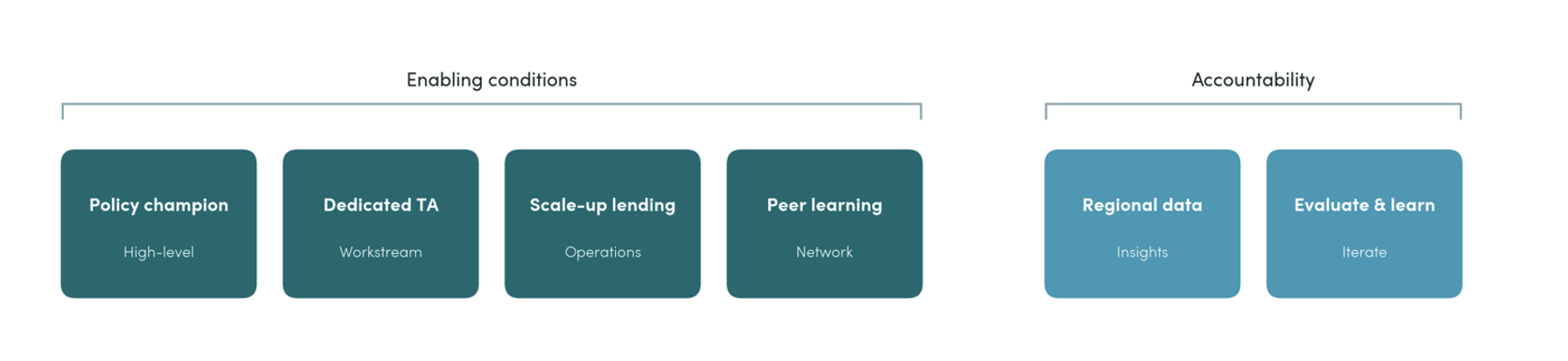
- ADB should scale up its health-tax engagement through six pillars: establish a high-level ADB policy champion, develop a dedicated technical assistance workstream, scale up inclusion in policy-based lending operations, set up a peer-learning network, develop regional data insights, and finally evaluate and learn from what works.
Health taxes are a vital policy tool for Asia and the Pacific
Asia and the Pacific faces a dual burden of disease—NCDs account for 75% of non-pandemic-related deaths globally,[1] while countries still grapple with the prevalence of communicable diseases as well. Tightening fiscal space in most low- and middle-income countries post-pandemic, with governments facing debt, constrained revenues, reductions in foreign assistance, and growing pressures to manage revenue efficiently while maintaining essential social services, means that the case for health taxes has never been stronger. Health taxes provide a solution with a dual dividend—a 50% increase in the price of tobacco, alcohol, and SSBs through excise taxes can save 50 million lives over 50 years and raise $3.7 trillion in revenue over five years, including $2.1 trillion in low- and middle-income countries.[2] Health taxes are also progressive when accounting for population-level health gains and reduced illness. Yet countries are still undertaxing these goods, missing an opportunity to reduce harmful behaviors, save lives, and increase public revenue.
While health taxes are politically challenging to implement due to industry pressure, a few countries in Asia are leading the way. The Philippines, under the Sin Tax Reform Act, was able to tap into the dual dividend, increasing revenue and soft-earmarking it for UHC efforts while tobacco prevalence rates fell. Thailand is another example in the region, where efforts have led to increased revenues tied to its health promotion fund. The evidence that health taxes work is clear—countries in Asia and the Pacific can benefit from better health-tax policies and implementation to generate simultaneous gains in population health and public revenue.
Health taxes are a strong strategic fit for ADB
ADB Strategy 2030[3] outlines ADB’s long-term corporate framework for Asia and the Pacific, built around foundational goals to eradicate extreme poverty and to develop a prosperous, inclusive, resilient, and sustainable region. There are seven operational priority areas: (1) addressing remaining poverty and reducing inequalities (through human capital, social protection, and job creation); (2) accelerating progress in gender equality; (3) tackling climate change, building climate and disaster resilience, and enhancing environmental sustainability; (4) making cities more livable; (5) promoting rural development and food security; (6) strengthening governance and institutional capacity; and (7) fostering regional cooperation and integration. Cross-cutting enablers include expanding private sector operations to one-third of total ADB operations, leveraging public-private partnerships, and deepening knowledge generation.
Within Operational Priority (OP) 1: Addressing Remaining Poverty and Reducing Inequalities, there is a strong emphasis on human development outcomes through expansion of health, education, and social protection programs, job creation, and reducing inequality in access to opportunities. Improvements in health outcomes are central to this OP and reflect the emphasis of ADB projects on expanding health infrastructure, supply chains, information and communication technology systems, and health financing mechanisms across ADB developing member countries (DMCs). Health taxes relate directly to the revenue mobilization and fiscal space efforts of OP1 and offer a meaningful and underused source of domestic revenue.[4] A growing body of evidence finds that health taxes are progressive when health and behavioral responses to consumption are taken into account.[5]
At the same time, Operational Priority 6: Strengthening Governance and Institutional Capacity also plays a central role through domestic resource mobilization, public financial management and macro-fiscal stability, strengthened government institutional capacity, and anticorruption and integrity improvements. This OP is a foundational enabler and focuses on good governance. Health taxes sit at the intersection of ADB’s OP1 and OP6, representing an opportunity to advance both priorities together—however, realizing this dual mandate requires public sector and health teams to work together instead of in parallel. On their own, neither operational priority can fully capture the potential of health taxes. Health taxes are a cross-cutting agenda, and ADB’s ability to deliver on this agenda depends on whether it can organize itself institutionally.
ADB has recognized the importance of health taxes—at the 54th ADB Annual Meeting in 2021, ADB launched the Asia Pacific Tax Hub (APTH), and the Asian Development Outlook 2022 highlighted the immense importance of corrective taxes on alcohol, tobacco, and SSBs as one of the essential strategic domestic resource mobilization levers countries can tap into for a dual dividend, with health and revenue benefits, signaling the importance of health taxes for domestic resource mobilization efforts. APTH is intended to be a platform for ADB DMCs on strategic policy dialogue and institutional capacity development; knowledge sharing with other partners and international institutions; and collaboration between development partners. While APTH has produced significant knowledge products and reports on tax administration and tax transparency, health taxes have not been an area of prominent focus, which represents an opportunity for more deliberate engagement moving forward.
ADB’s past and current engagement on health taxes
A companion Center for Global Development (CGD) working paper examined ADB’s engagement on health taxes from 2010 to 2025 across loans, technical assistance, and grant projects to assess the breadth and depth of this engagement.[6] Of the 1,179 ADB projects reviewed, 45 mention health taxes. Sixteen involve ADB technical assistance on a health tax, and 17 loans or grants incorporate a health-tax measure. Sixteen of those 17, and one further project, include a measurable health-tax commitment or indicator, but only eight have a health-tax-related indicator in their results frameworks, and only two of those, both in the Philippines’ Build Universal Health Care Program, set a health-outcome target (tobacco-use prevalence), which the program documents do not attribute to the tax. Weighted by depth (0.5 for a mention, 1 for technical assistance, 2.5 for a loan or grant measure, and 1 for a measurable commitment or indicator), the projects sum to an engagement index of 98.0, about half of it (50.0) in the Pacific. Tobacco and alcohol dominate: taxes on tobacco, alcohol, and SSBs are mentioned in 39, 36, and 14 projects, but ADB’s technical assistance or loan and grant measures cover them in only 17, 16, and 9. Engagement on SSB taxes is mostly bundled with tobacco and alcohol, through excise reforms, earmarking, or advisory work, although in Solomon Islands ADB supported a tax on sugar and sugary drinks on its own. SSB engagement rose from three projects approved in 2015–2019 to six in 2020–2025, but part of that increase reflects indicative commitments for later subprograms rather than implemented tax reforms, and the numbers are too small to establish a trend. Overall, the engagement has been largely opportunistic rather than strategic or deliberate. Our review found five main challenges. First, the countries where ADB has engaged on health taxes do not appear to be targeted to policy or pricing gaps where a strong need for reform may exist. Second, the review highlights opportunities to connect technical assistance more systematically with subsequent lending operations, using upstream analytical and policy support to inform financing decisions and implementation. Third, health and public sector teams work largely in parallel, since no projects demonstrated joint team leadership, and only 4 of the 45 projects had health and public sector specialists on the same team. Fourth, there is substantial regional variation, with more projects in the Pacific and far fewer in Central and West Asia and East Asia. Finally, while ADB has produced knowledge products on health taxes, there is a lack of institutional cross-team architecture to support multisectoral work. While the current portfolio does demonstrate that ADB can work, and has worked, on health taxes, ADB has not organized itself institutionally to do so consistently and strategically.
The health-tax partner landscape
There are several multilateral and bilateral partners already working in the health-tax space, including WHO, the World Bank, and the OECD. ADB’s engagement should exist within the broader ecosystem of partners, ensuring complementary functions.
Data surveillance. WHO reports on tobacco taxes every two years and, since 2023, has also published global reports on alcohol and SSB taxes, most recently in January 2026, for cross-country benchmarking, complemented by the World Bank’s Global SSB Tax Database, which covers tax design. The OECD complements WHO and World Bank efforts through the Revenue Statistics series and country-level modeling of revenue and health effects on a case-by-case basis at country request. ADB should therefore not seek to replicate the data that is already available, but there is a lack of focus on regional trends, particularly on tax implementation and impact, where ADB may have a comparative advantage in Asia and the Pacific.
Technical assistance and policy advice. The World Bank’s Global Tax Program (GTP) provided analytics, advisory services, and technical assistance in 70 countries in fiscal year 2024, as well as complementary funding to World Bank country teams. The World Bank focuses on entry points such as Public Finance Reviews and lending, and supports diagnostic and monitoring tools, including the International Monetary Fund–World Bank Tax Policy Assessment Framework, for countries to identify and track issues in policy and administration. Knowledge notes are also produced on implementation issues and country case studies. GTP, which is housed in the World Bank’s Fiscal Policy and Sustainable Growth Unit, coordinates its health tax work with the Bank’s Health, Nutrition and Population; Poverty; Governance; and Macroeconomics, Trade and Investment teams. WHO also provides technical and advisory support to countries seeking to adopt or revise health-tax measures and has spearheaded initiatives such as MPOWER and SAFER to help countries implement proven tobacco and alcohol control measures, including higher taxes. The OECD similarly provides country-level tax policy advice through its Tax Policy Reviews and country case studies. There is also a substantial ecosystem of technical assistance providers, such as universities and civil society organizations. Thus, ADB should seek to coordinate with and fund existing providers, so that its own technical assistance complements rather than duplicates theirs.
The World Bank’s experience also highlights that fiscal assessments and Public Finance Reviews provide a foundation for health-tax engagement and establish a strong evidence base for country engagement on lending operations. ADB’s country diagnostics and lending instruments could play a similar role.
Advocacy and country convening. WHO launched the “3 by 35” initiative to advocate for countries to raise real prices on tobacco, alcohol, and SSBs by at least 50% by 2035. Together, WHO and the World Bank are well placed to carry out global convening on this topic. There is a gap, however, in regional peer-to-peer learning and country convening at the ministerial level—apparent when evaluating the health-tax ecosystem—which ADB can help bridge. It is worthwhile to explore whether regional bodies such as the Association of Southeast Asian Nations (ASEAN) could play a larger role in the convening architecture and complement ADB’s existing platforms.
Building on ADB’s comparative advantage
There is a clear need for ADB to scale up engagement on health taxes in the region, while ensuring it focuses on its comparative advantage. ADB’s advantage lies in its regional knowledge sharing and country relationships, as well as various regional platforms such as the Central Asia Regional Economic Cooperation (CAREC), the South Asia Subregional Economic Cooperation (SASEC), and the Greater Mekong Subregion (GMS) programs that can be leveraged for knowledge generation, peer-to-peer learning, and coordination. Regional coordination on health-tax policies can limit cross-border leakages and illicit trade, which can address industry arguments used to resist tax rate increases and reform efforts—cooperation across neighboring countries on health-tax approaches and forums to share experiences are essential, and this is an area where ADB has a demonstrated advantage.
Importantly, ADB is not starting from scratch. It already has in-house expertise in health and fiscal policy, and platforms such as APTH and the Universal Health Coverage Practitioners and Experts Knowledge Exchange and Resources (UHC PEERS) network, both with significant but untapped potential in the health-tax space. To date, APTH involvement has been limited to knowledge products and research studies of selected countries, with less direct technical assistance and policy dialogue—a role it could take on more comprehensively across countries. UHC PEERS, on the other hand, offers a peer-learning architecture that can help countries envision linkages between excise revenue and health financing. APTH and UHC PEERS both have powerful convening forums and regional relationships and can bring together cross-country expertise, positioning them to collectively advance health-tax programs. Their full capacity for health taxes remains unrealized.
Key recommendations and strategies to increase impact
There are several approaches that ADB can take to leverage its comparative advantage across strategic areas for support. The six pillars (Figure 1) are complementary and mutually reinforcing, and not sequential; ADB can advance them in parallel, ensuring progress on all over time.
- Establish a high-level health-tax policy champion—Sectors Department 3, which houses both ADB’s Human and Social Development Sector Office and its Public Sector Management and Governance Sector Office—responsible for progress and multisectoral action between health and public sector management teams. Health taxes require coordination among health, economic, and tax authorities. Because both teams sit within the same department, there is a clear opportunity to strengthen institutional synergies. The companion CGD review of ADB’s engagement from 2010 to 2025 found no projects jointly led by the health and public sector teams. Formal collaboration channels could help ADB demonstrate multisectoral action and make better use of internal expertise. Other institutions’ experience—including the World Bank’s, where building a strong partnership between health and fiscal teams was initially a challenge but became a major asset—suggests that deliberately linking these two teams from the outset can help ADB accelerate progress and avoid the coordination challenges commonly cited for multisectoral agendas.
- Develop a dedicated technical assistance workstream, shared between APTH and UHC PEERS. It is critical to have staffing in both teams and to collaborate through a technical assistance framework. Although ADB is already engaging in technical assistance and lending on health taxes on an ad hoc, as-needed basis, there is scope for an organized system of engagement. A regional, multicountry technical assistance platform that produces and coordinates knowledge and capacity building can enhance and expand ADB’s existing health-tax engagement. As the World Bank has done with Public Finance Reviews, ADB can use its own fiscal diagnostics more deliberately as an analytical foundation to further engagement on health taxes.
- Scale up inclusion of health taxes in country lending operations. ADB’s instruments, such as policy-based loans (PBLs), tie funding to key reforms and can support policymakers at ministries of health and finance (MOH and MOF) to convene specialized forums with structured dialogue on fiscal tradeoffs, revenue pathways, and UHC financing linkages. ADB can help countries bridge the coordination challenges between MOH and MOF in connecting revenue to health financing needs and objectives. Existing operations show two routes for SSB taxes: including them in broader excise reforms or earmarking, as in Tonga’s 2016 excise increase and the Philippines’ earmarking of tobacco, alcohol, and sweetened-beverage excise revenue for universal health care, or supporting them on their own, as in Solomon Islands’ tax on sugar and sugary drinks. The review describes these routes but does not show their relative costs or benefits.
- Establish a Health Tax Peer Learning Network, convening finance and health ministry officials from across ADB DMCs annually for cross-country knowledge sharing and learning. Countries such as the Philippines, Thailand, and Indonesia can demonstrate their models to other regional countries that may be looking for strategies on public acceptability or health-tax design. ADB also has experience with convening forums through the UHC PEERS and APTH initiatives. Prominent advocates such as former ministers of health and finance who have experience implementing these taxes can also be mobilized to support policy engagement.
- Collaborate with partner organizations and research institutions on regional data collection and modeling. To generate regional specificity and strategic positioning, ADB should conduct a detailed regional assessment as a next step to inform implementation and prioritization of health taxes in the region. ADB could generate data and establish knowledge-sharing platforms, such as an Asia Pacific Health Tax Dashboard that tracks excise tax rates, structures, and tax shares of product prices across tobacco, alcohol, and SSBs for all ADB DMCs, updated periodically. The Pan American Health Organization (PAHO), for example, releases Americas-specific reports on SSBs, but there is no similar effort for Asia and the Pacific. This is a genuine data gap, and filling it can help ADB support regional monitoring and advocacy efforts. To avoid duplicating existing data collection, the dashboard should draw on WHO and World Bank datasets, complemented by ADB’s country-level knowledge and analysis of regional policy and implementation gaps. ADB is well placed to disseminate these modeling efforts to health and revenue authorities. Generating data and collecting information on consumption patterns, tax structures, informality levels, and industry dynamics in the region can help inform policy. ADB can also partner with research institutions to support modeling efforts to understand the effect of health-tax policies on consumption patterns and health outcomes, an effort that has not yet been undertaken systematically at the Asia-Pacific level.
- Evaluate and learn from past and existing engagement on health taxes for impact. PBLs have design and monitoring frameworks and completion reports, which are designed to track results but are often overlooked once the programs and loan disbursements are completed. For projects with health-tax interventions, such as those in the Pacific, where ADB has engaged more extensively than in other regions, there is scope to assess the impact on health outcomes and revenue generation. More rigorous evaluations can also inform future global discussions on health taxes—there is a paucity of knowledge on the evaluation of these reforms and a limited evidence base, especially where ADB has actively engaged in influencing policies on excise tax rates and structures.
Figure 1. Proposed six-pillar strategy for ADB on health taxes
Conclusion
ADB’s engagement on health taxes, while meaningful, has remained narrow in scope and uneven in depth across regions. The strategic areas outlined above represent a path forward that leverages ADB’s comparative advantages—its existing programmatic relationships, lending instruments, and regional presence—and builds on platforms such as APTH and UHC PEERS, which ADB has already established. The case for greater engagement is well established: health taxes offer a dual dividend by expanding fiscal space and improving health outcomes simultaneously, as NCDs are on the rise. There is a clear need for stronger institutional intent to move health taxes from a peripheral agenda of fiscal reform programs to a more deliberate and sustained priority across operations and partnerships in Asia and the Pacific.
References
ADB. 2018. Strategy 2030: Achieving a Prosperous, Inclusive, Resilient, and Sustainable Asia and the Pacific. Manila: ADB. https://www.adb.org/sites/default/files/institutional-document/435391/s…
ADB. 2021. “ADB Launches Tax Hub to Enhance Domestic Resource Mobilization and International Tax Cooperation.” News release, 3 May. Manila: ADB. https://www.adb.org/news/adb-launches-tax-hub-enhance-domestic-resource…
ADB. 2022. Asian Development Outlook 2022: Mobilizing Taxes for Development. Manila: ADB. https://www.adb.org/publications/asian-development-outlook-2022
Fuchs, Alan, Fernanda González Icaza, and Daniela Paz. 2019. Distributional Effects of Tobacco Taxation: A Comparative Analysis. Policy Research Working Paper 8805. Washington, DC: World Bank. https://doi.org/10.1596/1813-9450-8805
Nigam, Jayati, and Ainhoa Petri-Hidalgo. 2026. Health Taxes in the Asian Development Bank Portfolio: A 15-Year Review. CGD Working Paper. Washington, DC: Center for Global Development. https://www.cgdev.org/publication/health-taxes-asian-development-bank-p…
OECD. n.d. OECD Tax Policy Reviews. Paris: OECD Publishing. https://www.oecd.org/en/publications/oecd-tax-policy-reviews_de3719f2-e…
OECD. n.d. Revenue Statistics. Paris: OECD Publishing. https://www.oecd.org/en/publications/revenue-statistics_2522770x
PAHO. 2020. Sugar-Sweetened Beverage Taxation in the Region of the Americas. Washington, DC: Pan American Health Organization. https://iris.paho.org/items/7ac5d50c-974f-43fb-8298-5598df366dc8
Task Force on Fiscal Policy for Health. 2024. Health Taxes: A Compelling Policy for the Crises of Today. New York: Bloomberg Philanthropies. https://assets.bbhub.io/dotorg/sites/64/2024/09/Health-Taxes-A-Compelli…
WHO. 2025. “Noncommunicable Diseases.” Fact sheet, 25 September. Geneva: World Health Organization. https://www.who.int/news-room/fact-sheets/detail/noncommunicable-diseas…
WHO. 2025. “WHO Launches Bold Push to Raise Health Taxes and Save Millions of Lives.” News release, 2 July. Geneva: World Health Organization. https://www.who.int/news/item/02-07-2025-who-launches-bold-push-to-raise-health-taxes-and-save-millions-of-lives
WHO. 2026. “Cheaper Drinks Will See a Rise in Noncommunicable Diseases and Injuries.” News release, 13 January. https://www.who.int/news/item/13-01-2026-cheaper-drinks-will-see-a-rise-in-noncommunicable-diseases-and-injuries
WHO. n.d. MPOWER. Geneva: World Health Organization. https://www.who.int/initiatives/mpower
WHO. n.d. SAFER. Geneva: World Health Organization. https://www.who.int/initiatives/SAFER
World Bank. 2023. Unpacking the Empirics behind Health Tax Revenue. Global Tax Program Health Taxes Knowledge Note Series No. 4. Washington, DC: World Bank. https://openknowledge.worldbank.org/handle/10986/40634
World Bank. n.d. Global SSB Tax Database. Washington, DC: World Bank. https://ssbtax.worldbank.org
World Bank. n.d. Global Tax Program. Washington, DC: World Bank. https://www.worldbank.org/en/programs/the-global-tax-program
Our thanks to Ainhoa Petri-Hidalgo for her excellent research assistance and to Ceren Ozer for her helpful comments on an earlier draft of this brief.
[1] WHO. 2025. “Noncommunicable Diseases.” Fact sheet, 25 September. Geneva: World Health Organization.
[2] Task Force on Fiscal Policy for Health. 2024. Health Taxes: A Compelling Policy for the Crises of Today. New York: Bloomberg Philanthropies.
[3] ADB. 2018. Strategy 2030: Achieving a Prosperous, Inclusive, Resilient, and Sustainable Asia and the Pacific. Manila: ADB.
[4] In 2019, tobacco and alcohol excise taxes generated an average of 0.6% and 0.3% of GDP in revenue, respectively, underscoring their potential as a meaningful source of domestic revenue. See World Bank. 2023. Unpacking the Empirics behind Health Tax Revenue. Global Tax Program Health Taxes Knowledge Note Series No. 4. Washington, DC: World Bank.
[5] See, for example, Fuchs, Alan, Fernanda González Icaza, and Daniela Paz. 2019. Distributional Effects of Tobacco Taxation: A Comparative Analysis. Policy Research Working Paper 8805. Washington, DC: World Bank.
[6] Nigam, Jayati, and Ainhoa Petri-Hidalgo. 2026. Health Taxes in the Asian Development Bank Portfolio: A 15-Year Review. CGD Working Paper. Washington, DC: Center for Global Development.
Topics
CITATION
Nigam, Jayati, and Pete Baker. 2026. Asian Development Bank Health Tax Engagement: Looking Ahead. Center for Global Development.DISCLAIMER & PERMISSIONS
CGD's publications reflect the views of the authors, drawing on prior research and experience in their areas of expertise. CGD is a nonpartisan, independent organization and does not take institutional positions. You may use and disseminate CGD's publications under these conditions.