How do entrepreneurs learn whether they have what it takes to manage larger businesses? It's likely through experimentation. In this paper, Dean Karlan, Ryan Knight, and Christopher Udry develop a model to help understand the impediments to experimentation and the benefits to giving it a try.
The fact is that many microentrepreneurs attempt to grow their businesses but only a few succeed. Relaxing credit or managerial capital constraints can help some. Here, the authors present primary and secondary evidence to test the model.
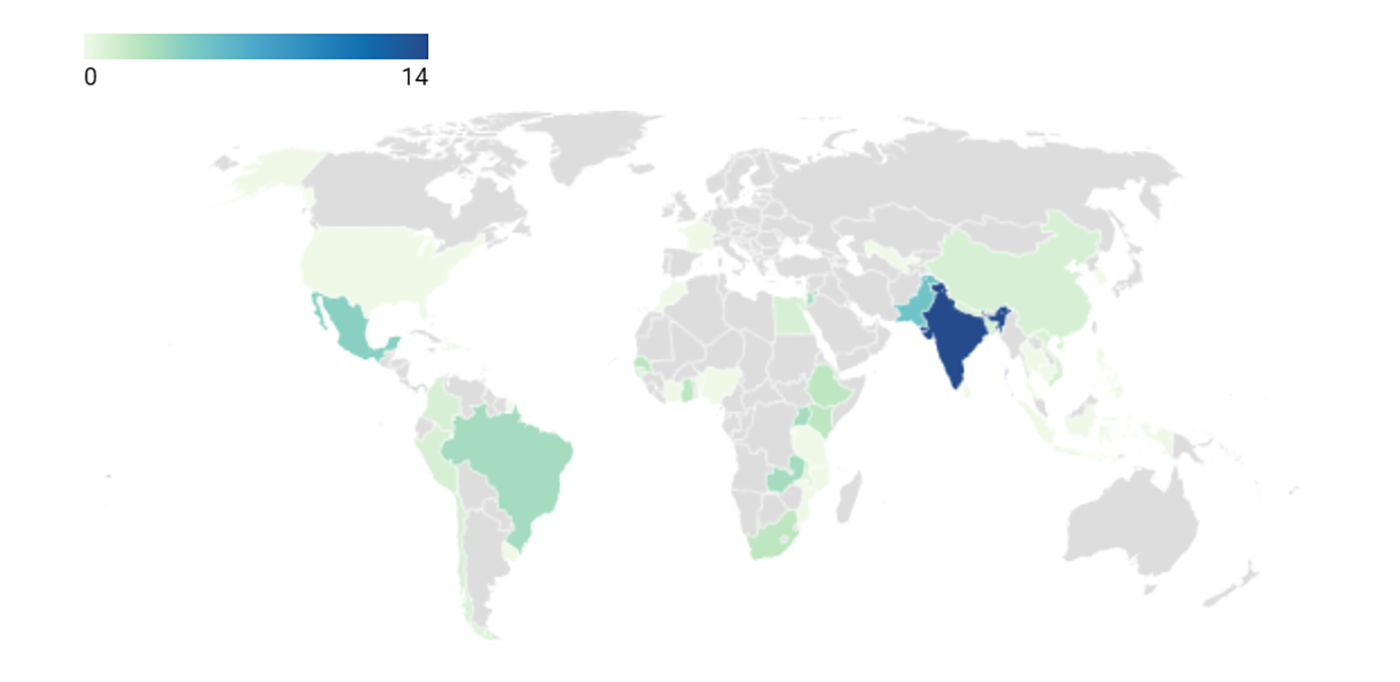
The primary source is from the authors' randomized control trial involving tailors in Ghana in which some were given cash grants, consulting services, or both, and some were not. The entrepreneurs invest the cash and take the advice, but both lead to lower profits on average and the business owners revert back to their prior operations. Some outliers do well, but the experiment lacks the statistical power to assign significance to the observations. The secondary evidence, a meta-analysis of 19 other experiments, provides mixed support for the theory.
Topics
CITATION
Karlan, Dean, Ryan Knight, and Christopher Udry. 2012. Hoping to Win, Expected to Lose: Theory and Lessons on Microenterprise Development - Working Paper 312. Center for Global Development.DISCLAIMER & PERMISSIONS
CGD's publications reflect the views of the authors, drawing on prior research and experience in their areas of expertise. CGD is a nonpartisan, independent organization and does not take institutional positions. You may use and disseminate CGD's publications under these conditions.