Recommended
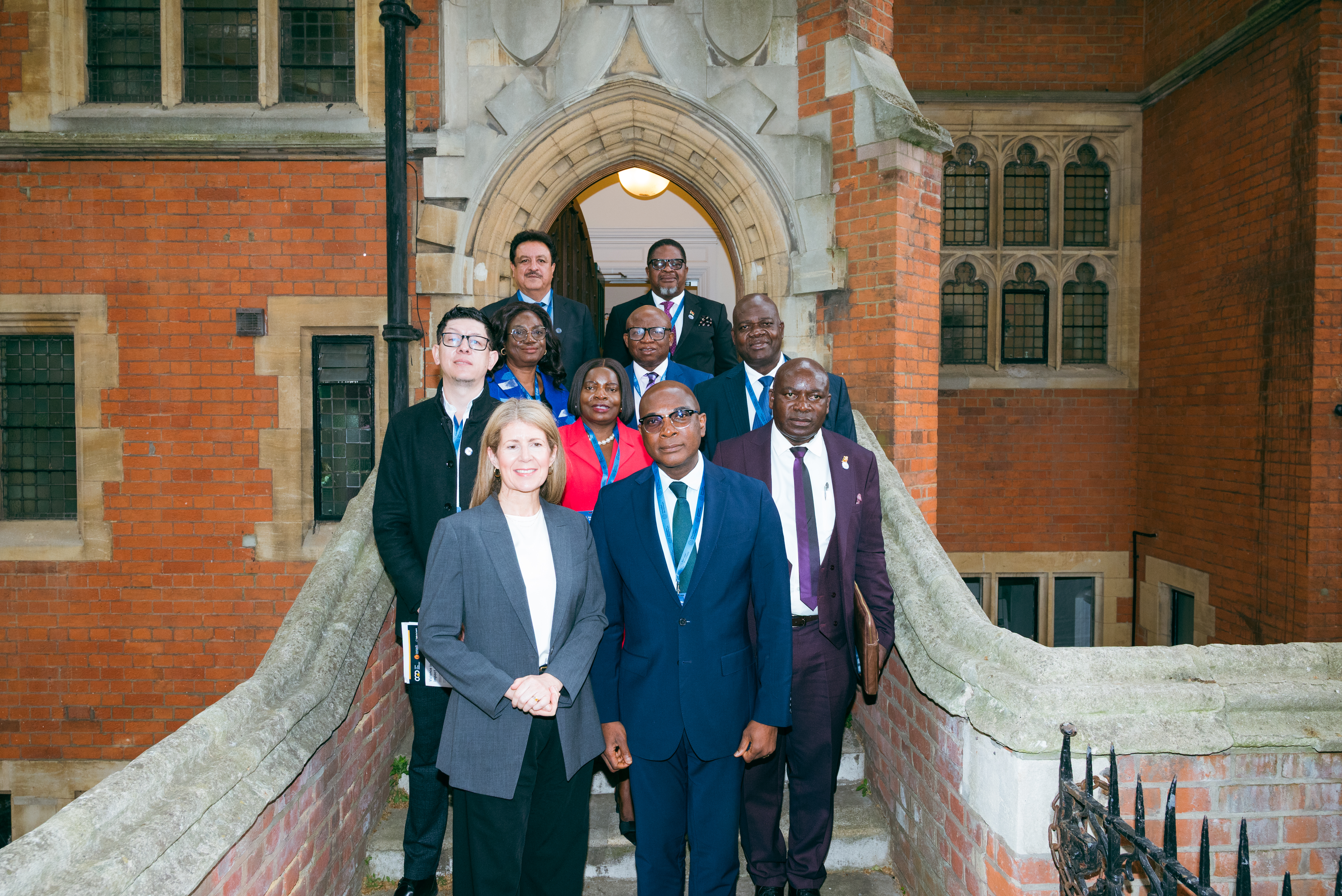
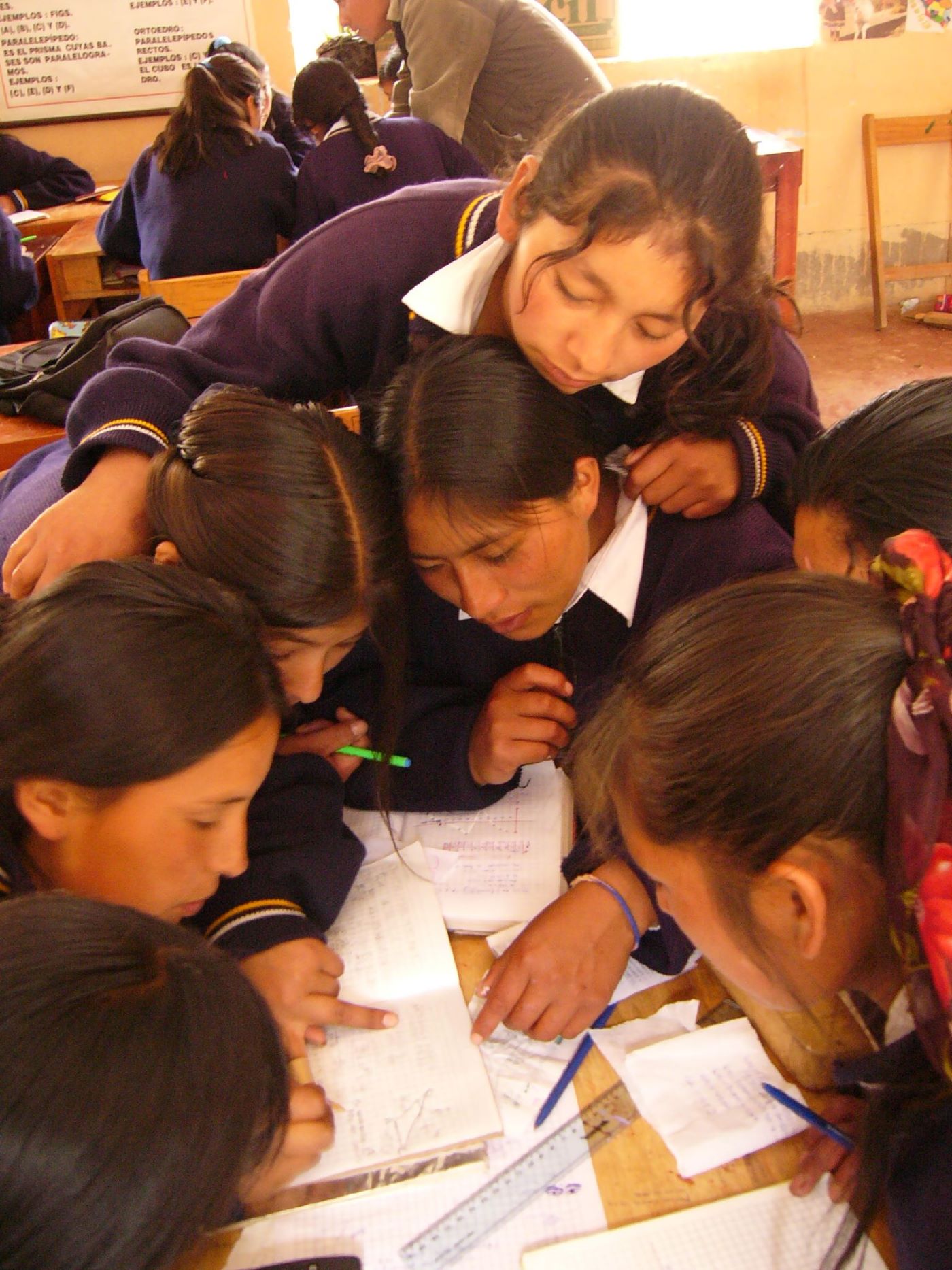
David Evans: Welcome to The CGD Podcast. I'm David Evans, Director of the Global Education and Child Well-Being Program here at the Center for Global Development. Today, we're talking about school-related violence, a problem that affects 115 million children globally, from corporal punishment and bullying to sexual violence in and around schools. We know it harms children's learning, mental health, and long-term life outcomes. We're recording this just after the 2026 Education World Forum in London, where education ministers from nine countries renewed their commitment to ending school violence.
This podcast episode asks, what do we actually know about school violence? How do we prevent it? What will it take to move from research to action? Joining me today are two experts who have been working at the intersection of research and practice on this issue. First, we have Gabriela Smarrelli, who is a research fellow here at the Center for Global Development, where she has been leading work on the depth of the problem and what we know about how to solve it. Welcome, Gabriela.
Gabriela Smarrelli: Thank you, Dave. Excited to be here.
David: Second, we have Dipak Naker, who is the co-founder and executive director of the Coalition for Good Schools. Earlier, he founded Raising Voices, a nonprofit that has been working for decades to prevent violence against women and children in Uganda. Dipak is a tireless practitioner who has been working to implement real change in schools in low and middle-income countries. Dipak, welcome.
Dipak Naker: Thank you, Dave.
David: This is a heavy topic, but I'm very glad to have you two to discuss it with. Let's jump right in. Gabriela, how big of a problem is school-related violence, and what does it look like?
Gabriela: It is definitely a big problem. When we look at the statistics, we see that around 115 million children have experienced violence in and around the schools. This includes different forms of violence, from bullying from peers, corporal punishment from teachers, sexual violence from peers or members of the school staff, and the numbers are alarming.
In terms of bullying, estimates from UNESCO show that a third of adolescents worldwide experience bullying. This includes physical and emotional bullying from peers. When we look into corporal punishment, we observe that 62 countries have not banned corporal punishment in schools yet, where corporal punishment has not been banned. One in two children have experienced corporal punishment from teachers. Sexual violence is also highly prevalent.
Data from the Violence Against Children survey shows that in Uganda, 26% of girls and 11% of boys have experienced sexual violence in the last 12 months. Of this violence, 19% and 32% of the violence, respectively, for girls and boys, is happening in the school setting. These are similar numbers that we see in other countries, including Haiti, where 19% of adolescent girls also report sexual violence in the last 12 months, and 15% of this is happening in schools.
Clearly, the problem is big, and it's happening both for boys and girls. Having said this, it's very likely that these numbers are underestimates. This is mainly because many children, when asked, might not disclose their experiences of abuse. Also, some populations, including children with disabilities, are not well-represented in these statistics. It's likely that this problem is more prevalent than what I have shared.
David: These numbers, even if they are underestimates, paint a pretty harrowing picture. Now, Dipak, you've been working on preventing school-related violence on the ground for many years. How common have you found violence in schools to be?
Dipak: In a place like Uganda, we were hard-pressed to find a single child who was able to say with hand on their heart that they'd never experienced corporal punishment in schools. One in five girls said that they had experienced sexual violence in and around schools. That is a huge number of children. Those are the children who are able and willing to speak. Because violence happens in the privacy of spaces or out of public imagination, a lot of it is not measured.
David: Are we seeing any changes? For example, Dipak, have you seen attitudes towards violence in schools shift over time, either amongst students or parents, school leaders, or even policymakers?
Dipak: Indeed. I've been working on preventing violence for more than 25 years. When we started, people were, in some ways, very dismissive of this problem. In places like Uganda, where I was working, people were like, "Look, this is just the way we do things. This is how we raise children. What's wrong with beating them? What's wrong with putting them in their place? Children should be quiet and obey, and not have agency," and things like that.
We no longer hear that. That is a result of tireless work of a large numbers of people, starting from global movements that have really started measuring and putting data on the table to on-the-ground civil society organizations that is engaging in a day-to-day conversation. In places like Uganda, we've had a national conversation happening over more than 15 years through national multimedia, radio, TV, newspaper, all sorts of places where we are not telling people what to think about the issue of violence, but just putting questions in people's minds that, "Look, is this the best way of raising our kids? Is this the best way of giving the best start that we could to our children?"
It's a process of reflection, in my opinion, that has brought people to the table a little bit and say, "You know what, we could do better." There's really an important group of people who are beginning to step up to the plate and addressing the problem. Those are people who are well-placed within governments and policymaking forums and spaces where they want to use their positions to change things in terms of how children experience schools and communities as well. Overall, I think it has been an effort that has happened at multiple levels, from global level to on-the-ground, that is slowly beginning to shift, but by no means are we anywhere near ending it.
David: This desire to change seems like a very first condition for us to actually see movement on this. Now, Gabriela, we've heard how prevalent this challenge is, and you mentioned that the data we have are likely deep underestimates, partly because people who've experienced violence don't report it for lots of reasons. Tell us a little bit about work you've done in Malawi that demonstrates this.
Gabriela: In Malawi, we wanted to explore why children might decide not to report or disclose their experiences of violence in and around the schools. In the context of surveys, many children might fear breaches of privacy that might result in retaliation, judgment, social exclusion, isolation, among different factors. We wanted to understand how big is this problem and how to use specific ways of collecting data to address this problem.
We designed a survey experiment where we varied the degree of privacy provided to the respondents, and we did this by changing the way in which we surveyed children. Some children were surveyed using a face-to-face method, and others were interviewed using an audio computer-assisted method. In this method, children received a tablet and a pair of headsets, and they would listen to the survey in privacy and respond directly in the tablet. The audio computer-assisted one would give slightly more privacy relative to a face-to-face method, where you interact more directly with an enumerator.
What we find was that disclosure of physical bullying and corporal punishment increased by 20% when surveyed using audio computer-assisted methods relative to face-to-face. We observed that in the case of sexual violence, the distinction was even bigger. For example, 14% of children reported experiencing sexual violence from teachers or peers when asked using face-to-face, and this more than doubled to 31% when using an ACASI method.
The key takeaway here is that the higher privacy provided by some survey methods, including ACASI, does matter for increasing disclosure. In a way, this is addressing some of the barriers to reporting that children face. Of course, we need more evidence to understand if this would apply in other contexts, but the key message here is that higher privacy contributed to having more accurate disclosure of a school-related violence in the context of Malawi.
What I have shared is mainly focused on the survey context, but of course, a big challenge is that when children experience these forms of violence, they don't necessarily speak about them after this happens. In fact, data already shows 50% of children aged 13 to 17 years old in Zimbabwe, Zambia, Uganda do not talk with anyone about their experiences of violence when they happen. How do we ensure children speak up when they experience these forms of violence?
Dipak: I just wanted to add to what Gabriela was saying, that children think of violence very differently from adults. For adults, it's an event, but for children, it's the context of their life. What that means is that when violence is happening to them and they can't make sense of it, they feel a sense of shame around it. They think that there is something wrong with me, and therefore don't want to talk about it. Children reveal when the conditions are right.
Privacy is one; trust is another. That if you have somebody sitting in front of you who builds a relationship of trust in a private space and then asks you, then you might find the courage to speak about it. That's why we have an underestimate of the amount of violence children are experiencing. Then the third part of it is that children are often not used to the language of violence. When you ask, "Have you ever experienced violence?" children are like, "What is that? I have experienced beating. I've experienced people treating me badly." Those are some of the reasons why we are not really, truly getting the true measure of the size of the problem.
David: I want to emphasize that both in the work that Gabriela described in Malawi and the work that Dipak's been involved with in Uganda, there are mechanisms in place to make sure that when children do disclose these experiences, that there is follow-up with those children to make sure that they're protected and that they get the support they need, which is absolutely crucial anytime we're asking young people about these kinds of adverse experiences.
Now, you've both been thinking about how to prevent and respond to school-related violence from different perspectives. In recent years, we've seen growing evidence of effective interventions. Let's start with what we don't know. Gabriela, a systematic review conducted by the Center for Global Development, looked at more than 100 evaluations of school violence interventions. If you had to identify the biggest gap, the thing we most need to know that we still do not, what would it be?
Gabriela: Most of the evidence that we see is focused on what works to prevent bullying from peers. It's mainly small-scale and short-term. This is still incredibly useful evidence because it's helping us to understand what works. We have a better understanding that tackling multiple drivers of violence and multiple actors is effective to reduce violence.
However, we lack understanding or more evidence on the effectiveness of interventions in relation to some specific forms of violence, such as corporal punishment and sexual violence, and on the mechanisms of change, which specific components are driving that change, and lastly, how to improve institutional response to violence. That is one of the biggest gaps we identified in our review, that only 5 of 40 papers that are in our main sample of rigorously assessed papers had components focused on having better mechanisms for reporting, referral pathways, or case management.
David: Having those referral pathways are so important so that children have trust, like Dipak highlighted earlier, that if they talk about violence, that something will happen in response to that. Now, Dipak, a lot of the studies that came up in this review are from high-income countries. A lot of them focus on bullying amongst students. Does this reflect a lack of activity in low and middle-income countries? What's actually happening on the ground?
Dipak: In many ways, it's a consequence of resources available to study. It's not that people are not doing things. It's just that often in Global South, resources don't exist to systematically measure children's experiences. We are beginning to develop some ideas in terms of what should we be routinely measuring and what kind of data governments should be collecting and making available on a regular basis. Often, there is competition for resources, whether we should be investing in teachers' salaries, whether we should be investing in building more classrooms and tinkering with curriculum, or measuring things in terms of how they're happening.
David: Dipak, your organization, the Coalition for Good Schools, works directly with schools on changing culture and practice. Can you tell us a little bit about what that looks like?
Dipak: When we started this work, we talked with more than 1,400 kids and around 1,100 adults. Our intention was just to listen, not come up with solutions, not tell people what to think or what to do, but what is the problem and how is it experienced in their personal lives. Three things came to the surface very quickly.
First, in many ways, because this wasn't seen as a problem, adults continued to think that they were doing the right thing when they were beating children. It wasn't that they were malicious or evil people. This is what they grew up with, and violence was normalized. Even children themselves came to believe that, "Look, when my father beats me, he cares about me. Then, when my mother shouts at me, she is showing care and love towards me."
The second thing we learned is that the lens through which you view and ask questions matters. In a place like Uganda, where the systems are not that strong, when we ask children, "Who commits violence against you?" number one on their list was adults beating them. When you look at the UNESCO data, where systems are strong, where expectations and consequences for adults are there, peer violence rises to the problem, but where systems are not strong, adults-to-child violence is a significant problem.
Then those are the two things that we need to bear in mind: that violence is normalized and that in many spaces where there isn't accountability, adult-to-child violence is a significant and major problem. Although peer violence is also a problem because children learn from adults, right? When they see adults treating children a certain way, it just becomes normal to treat each other with violence as well.
David: With all of that background, your organization has worked with others to develop the Good School Toolkit. Tell us a little bit about how you use that toolkit to tackle violence in schools.
Dipak: When we look at the spectrum of violence experienced by children, what we realize is that the most efficient entry points for addressing violence in children was through schools because schools are places where large numbers of children are gathered together, and adults have a duty of care towards children. What the school is supposed to be doing can be governed by policy that is issued by ministries of education and government in particular. We have mechanisms in place.
What we then quickly realized is that you can't just rain down ideas on people and expect them to act on them. You have to create a process in which people have a role to play. They are participants. There's a process in which they're co-imagining the solutions with you. The importance is not that you tell people prescriptively what to do, but you raise questions and put in place a process in which solutions emerge.
In the Good School Toolkit, for example, the entire process is led by teachers and students in schools. We just provide a process and then background support in terms of how this thing happens. What people do is they go through a process of this is not a problem, to it might be a problem, to it is a problem, to here's how we respond to it and who I will respond to. That's a process that takes time. It takes 18 months to implement the Good School Toolkit. It's organic. Starting from a laboratory of just 6 schools, it is now being implemented in more than 1,500.
Actually, the government made a commitment to take it to every school in Uganda. It is now co-owned as an intervention by the government of Uganda. It's not something that Raising Voices did, and it's owned by Raising Voices, but it's a collaborative intervention now that is being rolled out at scale. It isn't amenable to people just throwing solutions at people, but engaging in the messy work of going through the process. There's no magic bullet.
David: I just want to add that with all of that collaborative effort, the Good School Toolkit has been evaluated rigorously with a randomized controlled trial, which has demonstrated that it significantly reduces violence in schools. This is an effective approach in Uganda, and it's so exciting to see the government scaling that. Now, Gabriela, another key part of tackling school-related violence is making sure that systems are in place to respond to violence and to stop it from recurring. You've done some work with the government of Peru on this topic. Tell us what the government there has been doing to help respond to violence.
Gabriela: In Peru, the Ministry of Education has been implementing a series of actions that show the importance of improving institutional response in the school settings. In 2013, the government implemented a platform called SíseVe. That means yes, we see it, where students, teachers, family, peers could report cases of violence in and around the schools. This was something great in the country because it identified that cases of violence were happening across the country. However, a big challenge that the Ministry of Education identified is that it was not enough to have these cases being reported if the school didn't have the skills needed to actually respond and address these cases of violence.
A few years later, in 2017/18, Peru designed protocols that were very clear in explaining what were the referral pathways that the schools had to implement, depending on the forms of violence being reported. Again, having those protocols was not enough because these protocols were national, so the schools didn't have all the training that needed to know how to implement those protocols. As a result, in 2019, the Ministry of Education designed a technical assistance that had that specific objective: training the school leaders on these referral pathways on how to address cases of violence. The technical assistance also included other components related to positive discipline, school coexistence rules.
One of the key goals was ensuring that school leaders knew what to do when a case of violence was reported. I collaborated with the Ministry of Education to evaluate these technical assistance, and we find two main effects from this. The first one is that these technical assistance lead to an increase in reporting; the likelihood of reporting a case of violence increased by 15 percentage points. Very importantly, we find evidence that this is explained by a reduction in barriers to reporting. For example, taking remedial action to address these cases was reduced by 10 days, showing the importance of this type of training.
Another key outcome that we find is that in the schools that benefited from this intervention, children had a lower likelihood of switching to another school. This, in a way, was showing something has improved in the school environment, that children prefer to stay in the same school rather than shifting to another one. I think this is a really interesting example that shows how a country starts implementing different components of response systems to violence and provides technical assistance to ensure that the schools are aware of those to achieve the impacts that they are aiming to achieve. It would be great to see more evidence on how to improve systems of response similar to this one in other settings.
David: Also, the finding that children who have access to improved reporting and response protocols are less likely to transfer schools hearkens back to Dipak's point that for children who experience violence, it's not just an event, it's the context in which they live. Making schools safer means that children can feel safe staying in the same school, not interrupting their learning.
We've heard about two examples, very specific to Uganda and to Peru. Dipak, one of the things you highlighted was that this was not an intervention that was just implemented in Uganda without input, that it was co-developed, co-generated. If you were to provide some advice to practitioners or implementers who are trying to navigate this in other contexts where this hasn't been done, what's a piece of advice you would give to them?
Dipak: One of the overarching things that we've learned in multiple spaces is that people don't passionately act on things that they don't own as their issue as well. Any intervention that is likely to succeed in any measure has to be an intervention that people feel intuitive resonance to, and then they feel that this is my problem, and I have capabilities within me to respond to this issue. Whatever you are doing, whatever your intervention is, try to create those two preconditions. Then I think that your intervention stands a chance of success or at least making progress.
David: We've seen at least a couple of examples here of interventions that have been effective in this space. We could go on and on about examples in El Salvador, examples in Mozambique, and elsewhere that have been successful in reducing school-related violence. We find that policymakers often do not want to tackle or take a leading role in addressing school-related violence head-on.
Dipak, one uncomfortable issue for ministries of education is that teachers sometimes are the perpetrators of violence, whether that's corporal punishment or other types of violence like sexual violence against students. That's not something that ministries want to talk about. Why is this challenging for them to address, and how have you navigated this discomfort in Uganda?
Dipak: There are two broad reasons. First is that this is something that we have all grown up with in places like Uganda, so it's just normal. It's the way we do things. Then, as a policymaker, if you try to punish somebody for doing something that is happening rampantly all around you, you might find reluctance in doing that. Partly because you can't imagine what the alternative is. Then people shrug their shoulders and say, "Don't do that, but don't do it again," that kind of thing, rather than taking it seriously.
Then the second is structural, that a country like Uganda has invested money in training a teacher and offering them a position as teachers. When they commit this offense, what are you going to do with them? Are you going to eliminate from the workforce? Are you going to send them to another school where they might continue doing this? Are you going to, in some ways, be punitive? All those consequences are extensive and difficult, and they don't necessarily seem to solve the problem.
The only real solution is not to punish people for exercising what they've grown up with, but to give them alternatives, to convince them, inspire them to do something different rather than being punitive about what they're doing. What is much more helpful is to engage with them. "Let me understand why you're doing this, and here's an alternative. It's not easy, and here's a path towards doing it." That's where I think that a lot of persuasion is happening.
For example, in Uganda, we're working with teachers' training colleges and institutions right on the ground. There are no easy solutions. It takes time, and it takes engagement. Often, policymakers are like, they have a lot of things happening in their life, so they don't have time to spend time with it. Then the problem just festers.
David: Showing teachers a better way seems absolutely crucial. That said, I think we would all agree that there are certain types of violence and certain instances of violence where taking action to remove those teachers from the classroom or from the teacher workforce absolutely makes sense. Helping ministries figure out where that line is to make sure we protect children, but also help every teacher to be their best where we can, is a crucial balance to strike.
Another obstacle that I've seen, many ministers of education see this, and they say, "Wow, this is a terrible problem, but my principal job is to make sure children are passing exams and advancing and not dropping out of school." Many see this as a social protection issue, and they don't necessarily see it as an education issue. Do you see this changing?
Dipak: We tend to think of schools as a factory where we're processing children, and that the key function of a school is to teach children how to take tests. That inevitably, in some ways, limits what we are doing and how we do things.
If we shifted that framing to that a school is supposed to be like a garden, that we are cultivating children's possibilities, and that we are creating the fertile ground within which children can then emerge and grow and discover themselves, and that there's individuality in it, and it's an organic process rather than factory-like process, then, in some ways, we end up creating better schools.
This idea comes not from me, but it comes from Sir Ken Robinson's TED Talk and other places. If schools could change anything, it would be the operational framework. What is the purpose of that school? What are you doing? Are you like a factory, or are you like a garden? Schools that tend to think of themselves as a garden tend to produce much more creative thinkers, much more value-informed students who are civically responsible and think of actually investing not only in their schools, but in their community and their families as well.
David: Gabriela, we're recording this after the 2026 Education World Forum, during which CGD, together with the UK's Foreign, Commonwealth & Development Office, the Global Partnership for Education, UNICEF, and Safe to Learn hosted the Ministerial Taskforce to renew government commitments to end school violence. What was one takeaway from that conversation in terms of government commitment?
Gabriela: One of the key goals of this Ministerial Taskforce is to strengthen the education sector leadership and collective action in ending violence against children. This is the third time the Ministerial Taskforce meets. Despite the fact that ministries of education have changed over this period, that commitment to take action to address violence has remained strong.
Based on what the countries shared, they are all taking actions to try to move from commitment to concrete design of interventions or more investment on this topic. All of this is considering the specific challenges that countries leave, so it was good to also hear that strategies that are being implemented are accounting for the realities of each country, including challenges related to conflict, war, narco-traffic, among others. Definitely, countries are doing more.
David: It's great to hear that, and that's consistent with what Dipak mentioned earlier, that attitudes are indeed shifting on this issue. Gabriela, you've talked a lot about the evidence side of this. If you could wave a magic wand and change any one thing about school-related violence, what would it be?
Gabriela: I think I will use it to replicate the research that we have in different settings so that we have more understanding on what works on different settings. I would also generate evidence that allow us to identify which components work best to address this issue at a scale and over the long term.
David: Dipak?
Dipak: I think it's really important we recognize that violence against children is not just a problem in their personal domain, it's a problem in public domain as well. When children experience violence, it doesn't just affect them personally, but it affects how they learn, it affects what they become, it affects their imagination about who they will be in this world, and it will affect how they will behave in the world around. Learning outcomes too.
When a child is anxious and scared and fearful, they don't pick up the normal foundational skills that school is supposed to be providing, like reading, writing, and numeracy. The education sector definitely should own this problem just as well as the social sector. If education's role is to deliver citizens who are productive, who are fulfilled as individuals, then preventing violence should be one of the primary objectives of an education sector.
David: This is a massive issue, a bigger issue than the data suggests. Attitudes are changing, which is heartening, and there are concrete solutions in multiple countries. There is no excuse for inaction. Even as we continue to learn more and continue to expand that evidence base, every country and every ministry can take ownership and the time to act as now.
I want to thank you, Dipak and Gabriela, for joining me. Thank you to all of you for listening to The CGD Podcast. If you want to dig into any of the research or policy action that we talked about today, you'll find links in the show notes, and we'll see you next time.
Topics
DISCLAIMER & PERMISSIONS
CGD's publications reflect the views of the authors, drawing on prior research and experience in their areas of expertise. CGD is a nonpartisan, independent organization and does not take institutional positions. You may use and disseminate CGD's publications under these conditions.