Recommended
Project
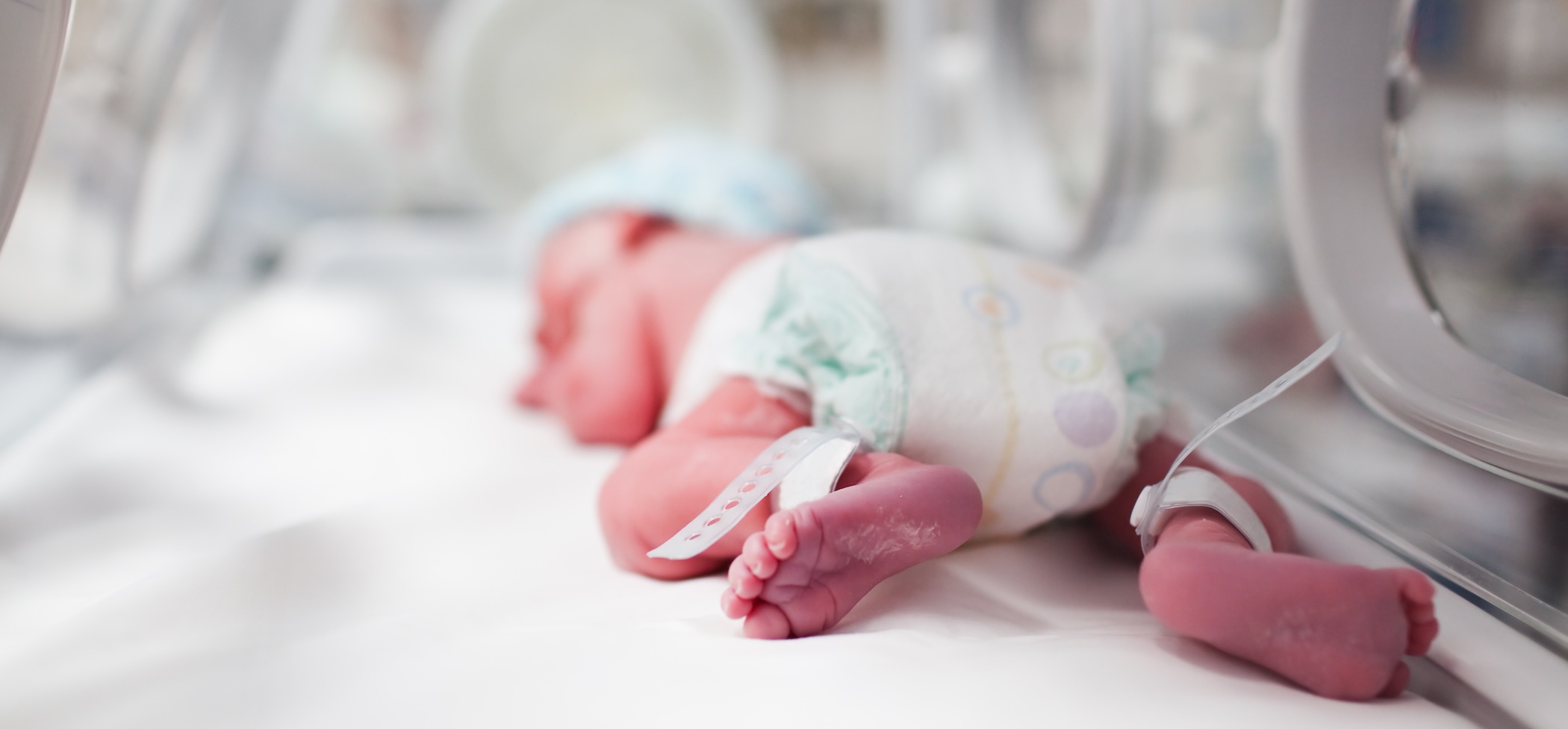
Rachel Glennerster: Hello, and welcome to the CGD Podcast. I'm Rachel Glennerster, president of the Center for Global Development, and today we're talking about an urgent but often overlooked newborn health crisis, neonatal sepsis. This is a dangerous bacterial infection that kills hundreds of thousands of babies each year, mostly in low and middle-income countries. Despite this, there's no widely adopted effective diagnostic for neonatal sepsis. As a result, many newborns die from misdiagnosis, while others receive unnecessary antibiotics, which both fuels antimicrobial resistance but also is really bad for the babies themselves.
Joining me to discuss this issue is Lord Jim O’Neill, who after a storied career in finance, where he coined the term BRICS amongst other things, he worked as a minister at the UK Treasury and then went on to chair the UK's review of antimicrobial resistance. He brings deep expertise in innovative approaches to tackling global health threats and is now chair of the NeoTest working group at CGD. Also, joining me is Dr. Akhil Bansal, a policy fellow at CGD's Global Health Policy Team. He's also a medical doctor and technical lead of the NeoTest working group, which we're going to find out a lot more about in this podcast. Thank you both for joining me.
Lord Jim O’Neill: Thanks, Rachel, and thanks for hosting us.
Rachel Glennerster: Jim, you've shared the UK's review on antimicrobial resistance. I wondered if you could tell us a bit about that. How big a problem did you conclude AMR is? And I think you also found that diagnostics could be really helpful in combating it, so maybe you could talk a little bit about diagnostics.
Lord Jim O’Neill: It's probably the most interesting thing I've ever done or been fortunate enough to lead. It's both an issue to do with humans, an issue to do with animals, an issue to do with fish, plants, and so on. As often said to people, it doesn't really distinguish between Black, whites, men, women, Shiite, Sunni. All 8 billion plus of us are in it together. It's one of those really few truly, truly global problems. I was pretty baffled when I was first asked to consider doing it because I didn't even know how to pronounce it, but we made an active decision to stick to what my background was as an economist who's had a lot of experience in finance.
We tried to think about it as an economic and finance issue, and we broke it down into a lot of demand forces and a lot of supply forces. I actually concluded that things that might permanently reduce the demand for antimicrobials, particularly antibiotics, and as I've again often said, stop treating them like sweets, anything that would do that would in my judgments as an economist be the most important interventions because from everything I've got to understand about these clever things, they adapt and change and even if we succeeded in the next 30 years, for example, creating a whole new series of antibiotics, if we didn't stop treating them like sweets, they will lose their power as well.
In this era where we all spend so much time both thinking about technology, being obsessed by our own use and everybody else's, why do we not find affordable state-of-the-art diagnostics to permanently reduce the unnecessary demand, and probably the 29 specific recommendations we made that was the most controversial in terms of what we said in our review because we tried to push through that every developed country should not be allowed to prescribe any kind of antibiotic without a credible diagnostic test, which of course has not taken up.
Rachel Glennerster: As an economist, could you speak to the magnitude of the problem? Is there a sense of what the economic costs of not doing anything about AMR is?
Lord Jim O’Neill: Of course, yes. What we did was try to re-estimate a world with no AMR and a world with AMR going down different various paths of resistance and spread, to take the difference between the two, and the two big numbers that came out of that. We deliberately chose 2050, which is what made the BRICS study so powerful. We concluded that if we don't do anything about it, what we thought were about 700,000 people dying every year from AMR-related problems back in 2014, which is the data year we had, could be 10 million by 2050.
Equally importantly, I thought in terms of trying to persuade policy makers about why they should focus on it, the lost economic opportunity would accumulate to something like a hundred-- let me get this right, $100 billion over that period. Sorry, $100 trillion. I said billion, but no, it was $100 trillion. It's huge, an enormous amount of money.
Rachel Glennerster: That's a lot of money. Thanks for setting the rationale of why we're worried about AMR. Akhil, if I could turn to you, that's the picture for AMR in general. This working group is looking specifically at neonatal sepsis. Could you just explain to listeners what that is and how big a problem it is?
Dr. Akhil Bansal: Yes. Thank you for having me on the podcast as well. Neonatal sepsis is a bloodstream infection in babies in their first 60 days of life. It's a bloodstream infection that results in a severe inflammatory response, which in turn can affect and damage the organs in the newborn. This is a very deadly condition. We know that mortality for babies who have sepsis if they're untreated is over 30%. We also know that treating it is time critical for every hour that goes on, where a baby is not treated, mortality goes up by a few percentage points.
Globally, neonatal sepsis is responsible for between 400,000 and 700,000 deaths a year. That's between 15% and 20% of all newborn deaths globally, and majority of that is concentrated in low resource, low and middle-income countries. That's where the vast majority of the cases are, and over 95% of the mortality is. Right now, diagnosis is based on signs and symptoms in the baby. Things like fast breathing, difficulty feeding, chest recessions, which is just the way the chest draws in and out, or a fever. Now, the issue with that as a way of diagnosing is that the presentation of neonatal sepsis is very non-specific.
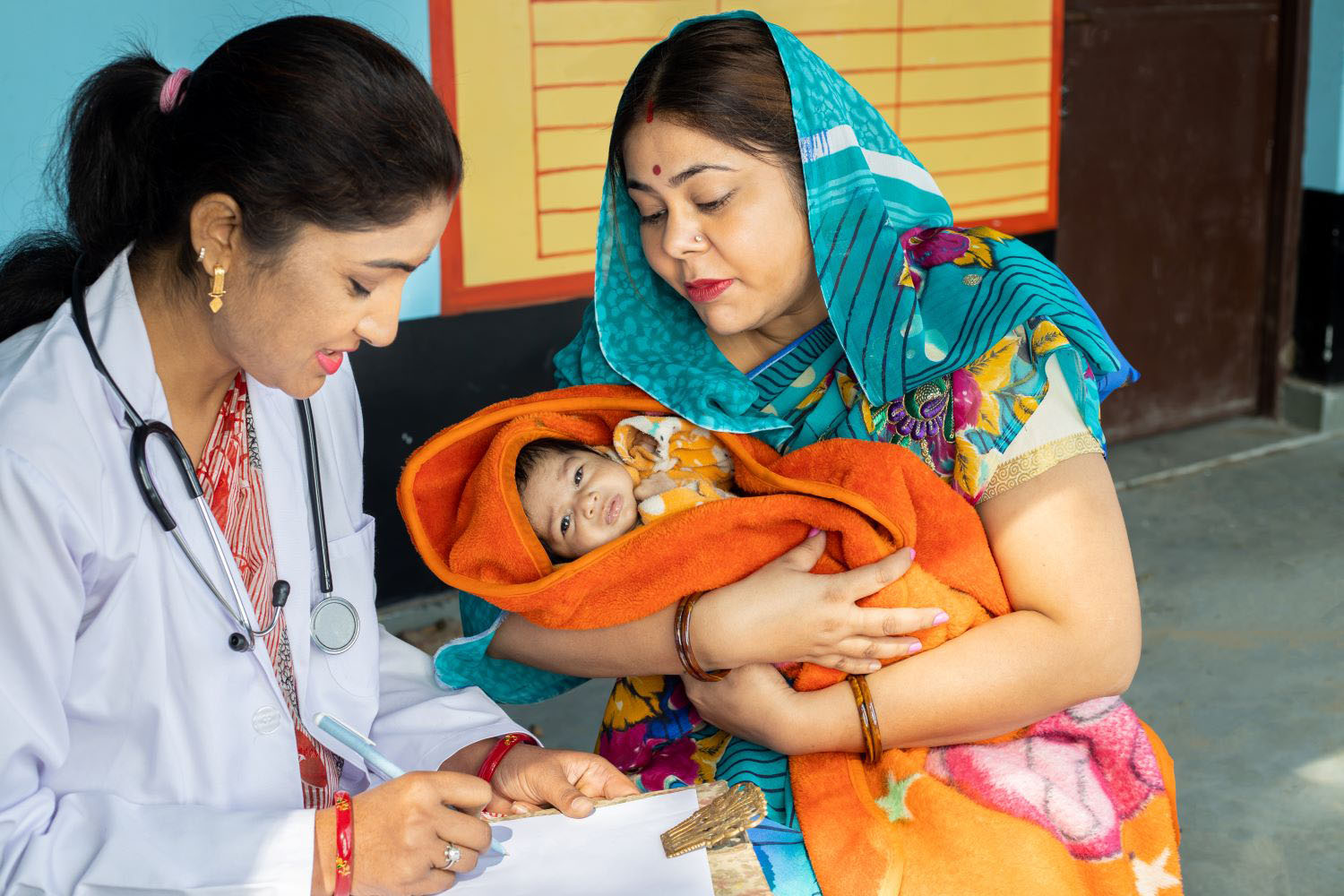
The symptoms in babies can be very ambiguous and subtle, and they can be very difficult to assess. Looking at something like fast breathing or chest recessions are very difficult to do unless you've been skilled and trained to know how to do it. As a result, because we don't have any diagnostic tool available, any of these tools or checklists of signs and symptoms are imperfect. We know this from the literature, they have a very limited sensitivity and specificity. In economic terms, this means that even if a healthcare worker perfectly and accurately tries to assess their symptoms, they're going to get a lot of both false positive cases.
That's where they're going to over and unnecessarily give antibiotics to babies. That drives AMR, and that's a huge issue with neonatal sepsis, where a significant burden of it is driven by antimicrobial resistance. On the other hand, you also do get type two errors, as well, or false negatives, where you miss cases of neonatal sepsis. You significantly delay the diagnosis as well.
Rachel Glennerster: Great, thanks. Jim, this is a big problem. Lots of kids are dying. Why aren't private firms working hard to invent a medical device, a diagnostic for this? We know that firms are working on medical devices all the time. Why is it that we need some special intervention? What's the market failure?
Lord Jim O’Neill: I don't think enough people who are trying to influence the whole AMR problem, myself included, have thought enough about diagnostics together with research for new drugs. At the core of it is the reality that society demands or has demanded that the price of antibiotics, in particular, and I'm pretty sure virtually all antimicrobials, is very affordable. To pharmaceutical companies, that means too low. Especially for many publicly traded pharmaceutical firms that have different product lines, spending time on researching for new antibiotics, which is pretty time-consuming and expensive business without being able to generate huge revenues, isn't very interesting and it won't meet the hurdle rates that they set from the CEO and CFO.
I say all of that because you have to put diagnostics into that context. I think most of the reasons why medical device interventions work pretty well in other areas is because they're linked to businesses where there are very large revenues generated by the combination of reasonably high prices and significant usage of whatever that particular thing is. Oncology being the classic example of the past 15, 20 years. I think the gap between that and many others has grown a lot.
The whole space of AMR is a very, very poor cousin when it comes to that. It's really the relative price, and whether it be the hospital setting or a GP setting or some other form of community setting, it's pretty hard to find a medical device or a diagnostic that can work as cheaply as just writing a prescription for an antibiotic at the core of it. It all boils down to that, really.
One thing I'm starting to think is that maybe one should really think about the relative price, and at least in the developed world, one could articulate the case for some higher price or new antibiotics, so long as the need was supported by the evidence from a rapid diagnostic. Therefore, the pharmaceutical companies would have to be committed themselves to either supporting others or being in the diagnostics business themself.
When I reflect on our own recommendations, we came up with our own version of advance market commitment for diagnostics and also what we call the market entry reward for new antibiotics. In that sense, it's a big market failure, but to some degree, as it relates to AMR, there just isn't a market, from what I know of, in most cases, anyhow.
Rachel Glennerster: Yes, there's a couple of problems, as you say, that the antibiotics are so cheap that a diagnostic that would allow you not to use them is not going to save anyone money. What it's really going to do is save the world, all those costs of antibiotics not working in the future, but that's not my problem when I am diagnosing it. It's this absolutely classic global public good market failure. Akhil, from your perspective as a doctor treating kids, do you want to add anything to that?
Dr. Akhil Bansal: Yes, I think what you both said is precisely correct that social value of reducing AMR just isn't taken into consideration on an individual case-by-case basis. I think the other factor that you have to consider, on top of that, the protections, both patent and market introduction, that we have for diagnostics are not as strong for therapeutics. We've seen this happen quite a lot with diagnostics. You look at the malaria rapid diagnostics or HIV tests, where a first firm spends a lot of time and effort thinking about how a test would work technologically, establishing regulatory pathways forward, thinking how it would integrate into clinical care. They've got a huge sunk cost there.
Once they've done all that work, it's actually not as hard for subsequent firms to piggyback off that and to undercut them on price. That's quite different from vaccines or antibiotics, which tend to be better protected under patents. For some of the diagnostic technologies, the underlying science of them is a lot more difficult to do that. In conjunction to this pressure to keep prices low and lower than antibiotics, as a firm, you're looking over your back and you're worried about the firms that are going to come up right behind you. That even blunts those commercial returns for firms even more.
Rachel Glennerster: That's really important a thing to add. We've talked quite a lot about the problem here, the magnitude of the problem. Let's turn to what possible solutions might be. Jim, you've just finished sharing this two-day working group looking at possible solutions. What are some of the things that you are starting to look at?
Lord Jim O’Neill: We suggested in our own review nine years ago, more broadly for the whole AMR space, what you've been so involved in yourself, Rachel, in the past, so-called advance market commitments, where you effectively help those that are prepared to at least try to come up with a diagnostic. That you are going to effectively underwrite all the downside in terms of money that they would spend on it. The commitment is that they do that for a price that they're going to be told it would be sold at, which is pretty different to the free market way of thinking.
When you think of all these complexities and the big market failure and the relative price issue, it pretty quickly leads you to that way of thinking. That's the core premise that Akhil and team had before we met. Then you get into some really, really tricky issues, which Akhil and team are now busy beavering away at. That relates to such rather important things as what would be the right price? Should it be based on the affordability of the countries that you really want to lead on using it, and therefore, immediately, their affordability?
Given the countries you think of, you naturally migrate to a very low price, but is that actually going to work for the diagnostic founder and those that might end up coming afterwards to somehow not only solve the immediate market failure, but to promote some more permanent existence of a commercial market going forward? Where do we go in terms of countries? At the core of that is obviously the perception of the scale of need versus the ability to pay and whether they have the regulatory capability of actually enforcing what they say they will do.
Rachel Glennerster: An advance market commitment would take the risk that no one would buy it, it would make sure the price compensates for all the hard work of doing the R&D and help solve the problem. I think that Akhil was talking about that somebody might copy you later because the price, in a sense, would go to whoever comes first. I think it's important to clarify, it wouldn't take away the risk that your R&D fails and you don't come up with a diagnostic. The benefit of an advance market commitment is you don't get paid anything unless you actually come up with a-- so in some ways it is a bit trying to mimic a market. Akhil, yes.
Dr. Akhil Bansal: Before I was involved with the Market Shaping Accelerator and CGD, I had very little understanding or expertise on an AMC. Over the time, working with a team and learning about what they are, there were a few things that really stuck out to me about why it was a potentially really exciting way to bring this technology to the clinicians and the physicians who need it. The first thing was that we actually have a relatively clear idea of the technology that we wanted. There are some edges that we have to smooth out, but the WHO and a number of other global bodies have set out what are the technical specifications of the product that we need. We know what we're working towards.
For an AMC where you are conditioning a top-up payment or a subsidy payment on meeting some specifications, you need to know what that is, which we do know here. The other thing that I really liked about an AMC is that there is a market test or a market fit component to it. For those who are perhaps more versed in the AMR world, they might have heard of the Longitude Prize and other prizes or grant schemes that have existed before for diagnostics. They've been fantastic at moving innovation along.
One of the tricks of diagnostics is how they integrate into workflow and clinical care is not simplistic. A technology that looks great on paper might not actually work super well in practice. You need to incorporate an element of "Does this actually work in practice?" and an element of market test into it, which an AMC does do. One aspect of it that I thought was really attractive about it compared to other types of ways that you can stimulate innovation. Those were two things that really drew me to it as an approach.
Rachel Glennerster: Great. Jim, do you want to talk a little bit more about what some of the challenges were that you discussed in the working group to actually making this happen?
Lord Jim O’Neill: My natural default is to think, well, it's pretty obvious that you go to the most rapid, population-growing, low-income countries and pick from them, which gives you a conceptual desired list. Then you immediately think, not long after, who would not only be capable of paying as one of those countries, but the more I've thought about it actually since as well, have they got the institutional, domestic structure, including legal system and so on, to actually be trusted by the other parties, including the donors that we haven't even touched on yet, that we're going to have to find to come up with the money that we think is necessary.
Of course, all of that is absolutely fascinating and relates to many aspects of broader issues to do with both theories and practice of economic development. Would that be the right place to try and start this thing off? I don't think it probably would. Then there's a whole set of issues to do with the price. There was some pretty different thinking about price. I remember one person suggested, "Well, you should think of the price, perhaps, of wanting it to be free." If you default to really focusing on AI-generated diagnostic, maybe you could get there. I think that was a very provocative, but quite stimulating thing for us to think about.
Rachel Glennerster: I guess the reason that you want to have a sense of what is the country that you think there's going to be an early stage taker of this diagnostic is you might set the price differently if you're thinking Ethiopia versus Indonesia, what you think they could afford to pay, how sophisticated the systems are that you're going to use the diagnostic in. I think that's just to explain why it's important to have in mind the country that you want. Eventually, we hope that the diagnostic gets taken up everywhere. Akhil, in your practical knowledge of how these things get used or could get used, what are some of the challenges that you're thinking about, and things we don't know yet that we've got to try and figure out?
Dr. Akhil Bansal: Data availability is really tricky here. The neonatal population is one where it's very hard to do studies. We don't have great epidemiological information. To an extent, there are a lot of unknown unknowns. The core question is how many cases of neonatal sepsis are missed? By definition, they're missed. It's very hard to know how many there are. We're spending a lot of time on our modeling work to really understand where the issue is. Is it babies who are already in the hospital? Is it in the primary health centers, or is it in the community?
Because there's been a lot of work on neonatal sepsis up until this point, but it reaches this brick wall, where because it hasn't had that access to that data, it's said, well, we know a diagnostic is important, and this is roughly what it should look like but where it could be implemented and how, that's very heterogeneous and we don't have enough data to drive that. For us, if we're thinking about designing an AMC and catalyzing donor and country interest on it, we need to have some sense of that. Although tricky work, complicated by data availability, it is possible to do. We're working quite hard to think through some of those issues.
Rachel Glennerster: What are the next steps here, Jim? We've talked about some of the challenges. What are you going to do next?
Lord Jim O’Neill: We're going to create some excitement as soon as possible, in my view, about the path we're choosing, and have policymakers trying to implement some of our ideas or talk about our ideas before we've actually finished them. I say that deliberately in this case, because at some point, funders or donors and probably the countries, as you've touched on yourself, Rachel, are going to have a very firm view themselves about what is the price. On the one hand, we've got to be sure from our own research, but we've got to be also sufficiently open-minded and let's call it lateral, for want of a better phrase, to think that we need to adapt and adjust if we want to get this thing done.
I think that's where I, as the chair, are going to have a bigger role to play than getting involved in the minutiae, unless I see them going down a really weird path as to where we go from here. I think it's quite important that we try to socialize it a bit more amongst the various participants we're going to have to work so closely with and to get so excited about pulling this very ambitious thing off.
Rachel Glennerster: Yes, we will need lots of people pulling for this. Agreed. Akhil, on your side, what are next steps?
Dr. Akhil Bansal: There are health and economic modelling and foundational questions we need to answer, but they're not going to happen in a vacuum. They are codependent on what countries say they're codependent on donors, and what constraints and opinions they have. These two things have to come hand in hand. The taking a step back point that I wanted to make is that we could spend years and years trying to model this perfectly, or think perfect design structure. We really have a critical momentum at this point. Jim, I know you said at the start of the conversation that it's felt like diagnostics was one of the most important things that came out of the review, and perhaps it didn't get as much attention as you would have liked.
Right now, there is a lot of attention on it, and there is an increasing willingness to think about diagnostics for AMR. A lot of countries are thinking a lot about the 2030 UN Sustainable Development Goal to bring newborn mortality to single digits. From all the funders and countries and folk that we speak to, there is a real strong commitment and desire to have potentially transformative solutions to this. The onus is on us to try and pull this together and pull it together with some haste because there's an opportunity cost to miss time here.
Lord Jim O’Neill: It's very heartening for me to hear Akhil highlight that because it goes back to why I ended up agreeing to chair this. My first thought was there's such a narrowly defined space in the whole broad gamut of the AMR challenge, but it didn't take very long at all for me to realize that it's such a precise area where you can reasonably identify the scale of mortality that's going on. Here's a real case where you can wade into applying these things, whereas if you think about it more broadly, I'm not sure how easy it is to be done.
Flip side of that, I have to say, I have interest because of my broad AMR interest and hearts that if we pull this off, itself becomes an example setter for a whole series of other different challenges where diagnostics are equally important.
Rachel Glennerster: It's a great summary of why we need to act and act fast. At the end of CGD podcast, we always have some standard questions, so I'm going to ask them to you now. Jim, if you could wave a magic wand and change any policy in the world, what would you change that would do the most good? Big question.
Lord Jim O’Neill: My answer relates to how you rather articulately described this challenge about a big market failure in terms of societal need. Soon after we published our final recommendations, a very good friend of mine, who I got to know through my work in narrow finance, pointed out that we estimated that to implement all 29 of our interventions for the AMR review would cost something close to $30 billion over a decade for the world. He put it out to me, well, if that would stop, what otherwise would be a hundred trillion loss of global GDP, it's effectively a 20,000% return on the investment.
That's then followed by COVID. I'm being asked by Mario Monti to sit on the commission he was asked to lead for the European arm, the WHO. I thought we'd pulled off a really remarkable thing. We were trying to be ambitious on it, but somehow we need to have finance ministries all around the world and the IMF in the middle of it, linking preventive health treatment and finance more closely.
We proposed the idea of the creation of a global finance and health board that wouldn't be a complete new body. It would just be having them meet regularly together as a way of starting this off so that finance ministers or their senior people would be more in on the early part of an issue that could be seen as having global consequences, as opposed to what we all know is typically the case is when something ends up getting on country X’s ten o'clock news as being some colossal nightmare.
Then, finance ministries are forced by their own people to spend insane amounts of money trying to solve it, and the economics of that is really stupid. We thought we'd pulled it off. Most of the G7 countries had agreed to take this initiative forward, and oddly and very frustratingly for me, given that I have BRICS stamped on my forehead, from what I understand, the BRICS countries actually stopped this being agreed at the last minute, because they thought it was something being forced on them by the West.
Which itself has very interesting connotations for broader issues of global governance. It means to me the door is open, and I'm very enthusiastic about pursuing efforts that go down that path. Very, very importantly linked to it is the whole idea on national budgeting of more definitively splitting up investment spending from what, in the economics jargon you know is described as current spending. Crucially, instead of it just being thought about motorways and new railway stations or new railway lines, you include preventive health investments or infectious disease investments.
Actually, just as importantly, some might argue even more, proper provision for early years education. It's quite clear to me, having had the good fortune of being in this space for a decade, the returns, not just for society but the long-term economic returns through the ability to boost long-term growth trends, and therefore the revenues that go from people working, are substantive. That's the modest magic wand ambition I have.
Rachel Glennerster: Yes, couldn't agree more. Akhil, the second of our standing cross one is for you. Can you share a memorable story from your work?
Dr. Akhil Bansal: I'll share a memorable story related to work. It's one my mom actually told me yesterday morning. When I was born, I was healthy, but I was about six weeks premature. I was born in Sydney in Australia in the mid-'90s. One thing my mom did, especially since I was a bit premature and they do this commonly in India, is that she put haldi or turmeric on my forehead as a kind of blessing.
Unfortunately, in the medical sphere, a baby being yellow and born is also a danger sign. One of the danger signs of neonatal sepsis, actually. She didn't speak great English at that time, but these doctors kept on coming into the room. First, it was one doctor, and he's like, "Oh, what's that?" Then they brought in five or six others, and this swath of doctors in the room, all looking at the forehead, saying, "Oh, we've never seen this before. It's jaundice, but just in one specific location." Then, eventually, she said, one of my uncles caught wind of what was happening and just went like this over my face, and the turmeric came out. That's my memorable story related to work.
Rachel Glennerster: Right. That's a good example of how difficult diagnosis is, especially in a cross-cultural context. Thank you both for being part of this discussion, but also more importantly, the work that you are doing to push forward finding a solution to this huge problem of diagnosing neonatal sepsis and potentially saving the lives of hundreds of thousands of newborns.
For listeners, if you want to find out more, we have lots on the CGD website about advance market commitments, about the Market Shaping Accelerator, and about the NeoTest work in particular, so I encourage you to do that. I encourage you to join us for forthcoming podcasts. We are going to make this a more regular feature of CGD's Outreach, and I will be looking forward to the next discussion. Thank you, Jim. Thank you, Akhil, and good luck in the next steps.
Lord Jim O’Neill: Thank you so much for hosting us and nudging us along, Rachel.
Rachel Glennerster: Great. Thanks very much for listening, and I hope to catch you in the next CGD Podcast.
Topics
DISCLAIMER & PERMISSIONS
CGD's publications reflect the views of the authors, drawing on prior research and experience in their areas of expertise. CGD is a nonpartisan, independent organization and does not take institutional positions. You may use and disseminate CGD's publications under these conditions.