There are three key issues I am watching at the World Health Assembly (WHA): World Health Organization (WHO) financing, WHO prioritisation within its limited budget, and WHO’s leadership of the global health architecture reform process. With the WHA papers now online, all three are unfortunately not looking good.
1) WHO financing is deteriorating – less money, and less flexible money
Following the US’s departure, the WHO has gone through a phase of staffing and programmatic cuts to reduce its cost. However, expenses in 2025 ($3.4 billion) were 10 percent higher than revenues ($3.1 billion), and reserves are still being drawn upon. So, we should expect further cuts.
The policy commitment for more flexible funding continues to be expressed by the WHO, and was reiterated at WHA78. But the reality is that member states and contributors are tying the WHO’s hands with more restricted funding. Assessed contributions, the most flexible funding source, which is supposed to rise to 50 percent of WHO’s base budget by 2031 has in fact fallen to 17 percent. In addition, the most restrictive “specified” funding has increased, now making up 91 percent of voluntary contributions.
2) WHO prioritisation is failing – deeds do not match words
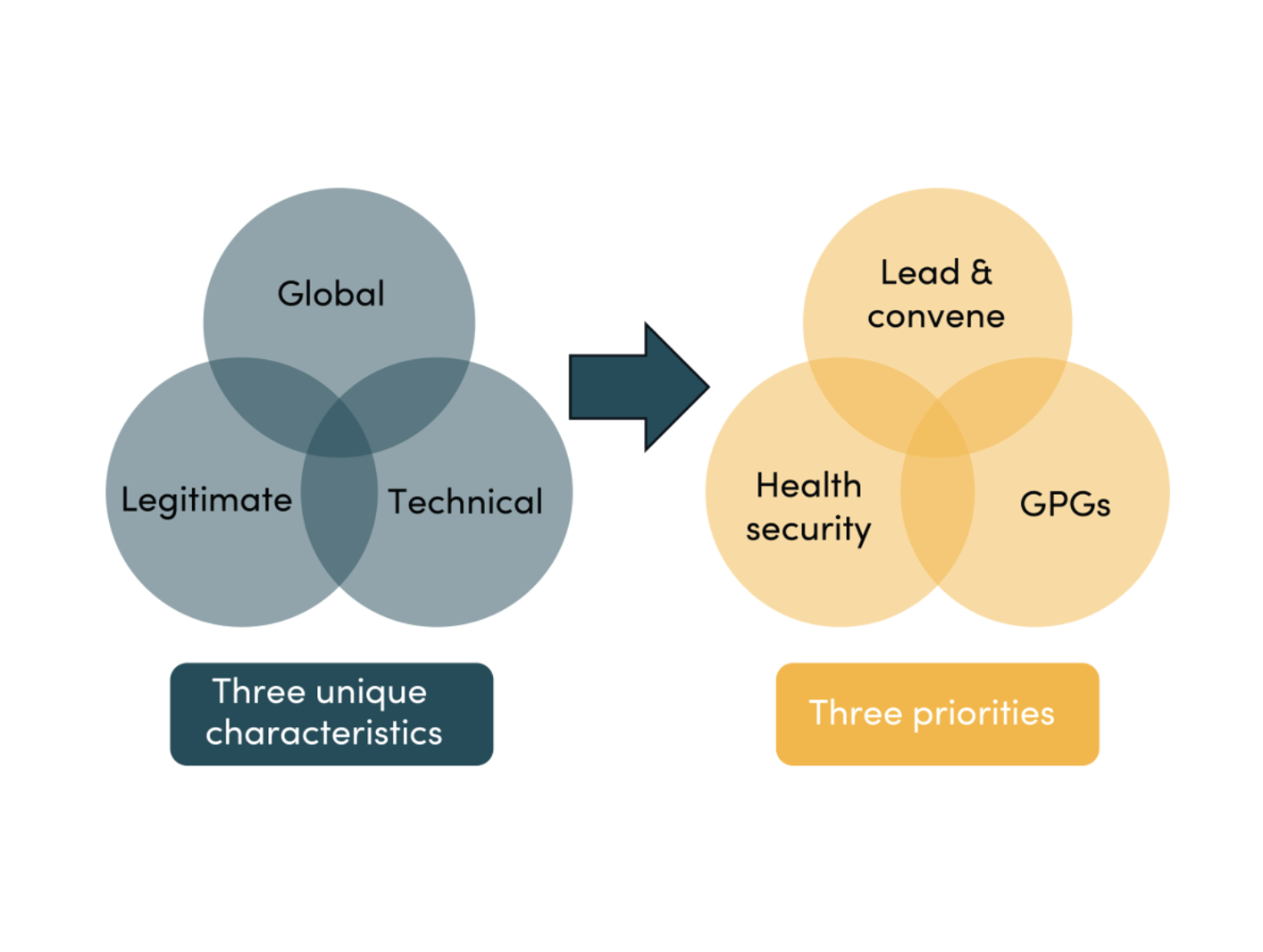
With such limited budget, prioritisation has never been more important. On paper, WHO appears to have gone through a serious and considered approach to re-prioritisation, and has triaged its activities into buckets including “protect and enhance the core” and “scale down and stop.” Indeed, the WHA paper detailing the WHO’s prioritisation and realignment process celebrates that the WHO is focusing on its core mandate. This aligns with a proposal from CGD researchers for a lean WHO for the global good, with greater resources and staffing at HQ, less at country level, and refocusing efforts on the WHO’s comparative advantages: global leadership and convening, global health security, and global public goods.
However, deeds (and financing) matter more than policy statements and director-general cover notes. It’s here that prioritisation efforts seem to have failed. Reported budget cuts are greatest in HQ (16 percent) and less in regions and country offices. By 30 June 2026, the proportion of staffing at HQ is expected to fall 2.5 percent and rise by 1.2 percent in country offices and 1.3 percent in regional offices. Whether this represents a WHO failure or has been pushed on to the WHO by member states is not clear. Either way, the result is the same: the WHO is not focusing on its core mandate.
3) WHO leadership of the global health architecture has been set up to fail
The WHO is launching a review of the global health architecture at the WHA. The resolution proposing this, though, may have just completely undermined it in one sentence:
“The process will propose neither revisions to organizational mandates nor specific mergers or consolidations, which fall within the authority of the relevant governing bodies, and will not address disease- or intervention-specific approaches.”
The implication is the WHO—and more importantly WHA80 in May 2027—is not allowed to recommend a new architecture with new allocations of mandates. Of note, this restriction was not present at executive board EB158 in February nor in the second round of stakeholder consultations on 20 April. Presumably it has been added by some aggressive last-minute lobbying by stakeholders. I always knew a WHA process was optimistic. But I remained hopeful. But now, what is the point? Member states should urgently seek to remove this sentence at WHA.
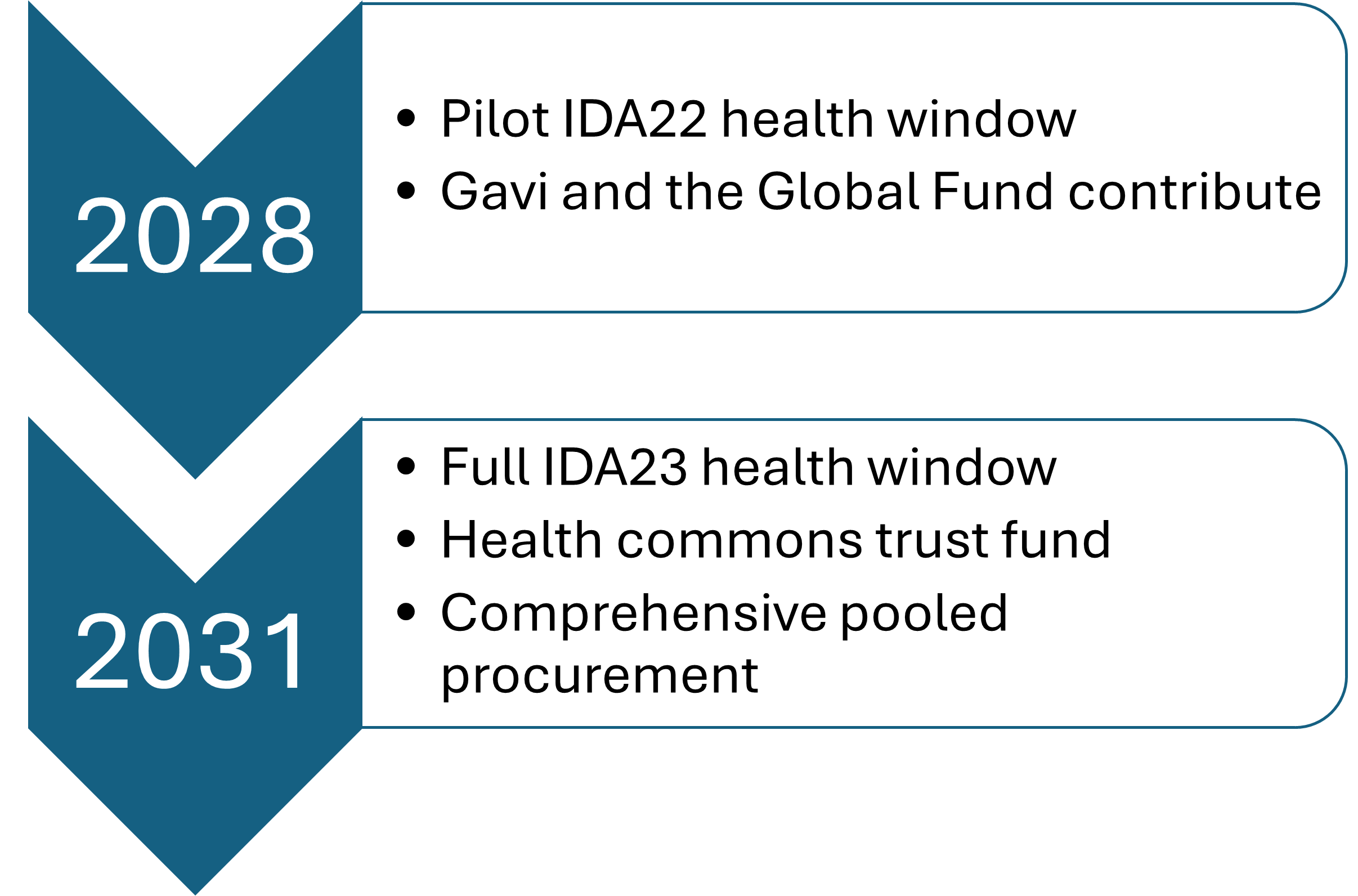
What is critical now then is that a plan b is developed alongside the WHA process. A smaller group of member states, representing the majority of donors and majority of recipients, should meet and discuss a new model for global health financing. The African Union, the UK and the European Union would be a good start.
Conclusion
We need a lean WHO that prioritises the global good, and we need a WHO that can lead. Unfortunately, member states have systematically prevented the WHO leading by further earmarking and restricting resources it has available and undermining its global health architecture reform process. The upcoming director-general election will be a further test for member states—will they allow a visionary director-general to emerge and win? Or will they continue to constrain and undermine the WHO?