In the wake of last week’s peace agreement signing between the Democratic Republic of the Congo (DRC) and Rwanda, the US International Development Finance Corporation (DFC) announced two new letters of interest (LOIs) to support investment in DRC. The first focuses on the mining sector and the second on rehabilitating and upgrading a railroad in southern DRC. While the LOIs are signals rather than formal financing commitments from DFC, they fit into a broader picture that includes two recent developments: DRC and Rwanda’s commitment to a “Regional Economic Integration Framework” and a separate US joint statement with the European Commission reaffirming support for the Lobito Corridor and highlighting the benefits of integration in the Great Lakes region. Taken together, these developments give us the fullest expression yet of the Trump administration’s promised shift toward a relationship with Africa built through trade and investment rather than traditional aid.
Still, in moving from LOIs and shared commitments to the deals and construction needed to advance this approach, the administration could face significant challenges. In DRC, DFC will encounter a mining sector dominated by Chinese state-owned mining companies, significant corruption challenges, and—following the demise of the US Agency for International Development (USAID)—more limited avenues to deploy grant-based support.
Shifting the DFC
Originally launched in 2019 during the first Trump administration, DFC is poised to secure its first reauthorization as soon as this week. Through its public statements and preferred proposal for DFC reauthorization, the Trump administration has indicated a desire to double down on DFC and “go big” by giving it significantly more resources. It advocated for greater flexibility to invest in high-income countries, and has signaled a desire to see DFC invest in domestic mining and processing projects using authority under the Defense Production Authority.
DFC will need to increase its investments in critical minerals, other supply chains, and infrastructure to fulfill the administration’s vision. A review of DFC’s portfolio shows that as of June 30, 2025, the agency has just under $1.6 billion in investments in mining projects in three countries: Brazil, Mozambique, and South Africa. When it comes to infrastructure, much of DFC’s portfolio is committed to energy and power projects, with last year’s loan to the Lobito Atlantic Railroad (LAR) of $553 million an outlier among its deals. DFC also provided financing to the African Finance Corporation to support continent-wide infrastructure development. While it hasn’t shown up in DFC’s public data, and the terms of the financial commitment are not yet clear, in October, the agency announced it was entering a $1.8 billion consortium to support the development of new critical mineral projects.
The recently announced LOIs represent a positive step by the administration to increase DFC’s critical minerals and infrastructure portfolio. According to the material released, the LOI with Gécamines and Mercuria Energy Trading would see DFC make an equity investment in a proposed joint venture that would “improve transparency, competitiveness, and local value capture, while supporting the access of US and allied nations to responsibly sourced materials essential to economic and national security.” The second LOI would potentially provide up to $1 billion to Mota Engil—a Portuguese construction company—to support the rehabilitation, operation, and transfer of the Dilolo-Sakania railway. If this proposed investment goes forward, it would tie into the LAR in Angola and provide a further transport route for minerals mined and processed in Zambia.
Broader challenges
Until DFC’s due diligence is done, the LOIs carry little meaning, and there are several issues that will need to be addressed in that process. The State Department’s most recent investment climate report on DRC notes “significant challenges persist in the enabling environment. Businesses face several factors that increase costs and risks: poor infrastructure, an unpredictable (“predatory”) tax system, and pervasive corruption.” This may explain why US and other Western mining companies have largely sold their former concessions in DRC to Chinese state-owned enterprises and other investors with a higher risk tolerance. A number of DRC’s institutions suffer from corruption and weak capacity. Gécamines, the DRC’s state-owned mining company, is a minority owner in many of the mines owned by China and other investors. The company has acquired a reputation for corruption, with the Congolese Justice Ministry opening a probe in January 2025 into $300 million of tax revenue reportedly stolen between 2012 and 2020.
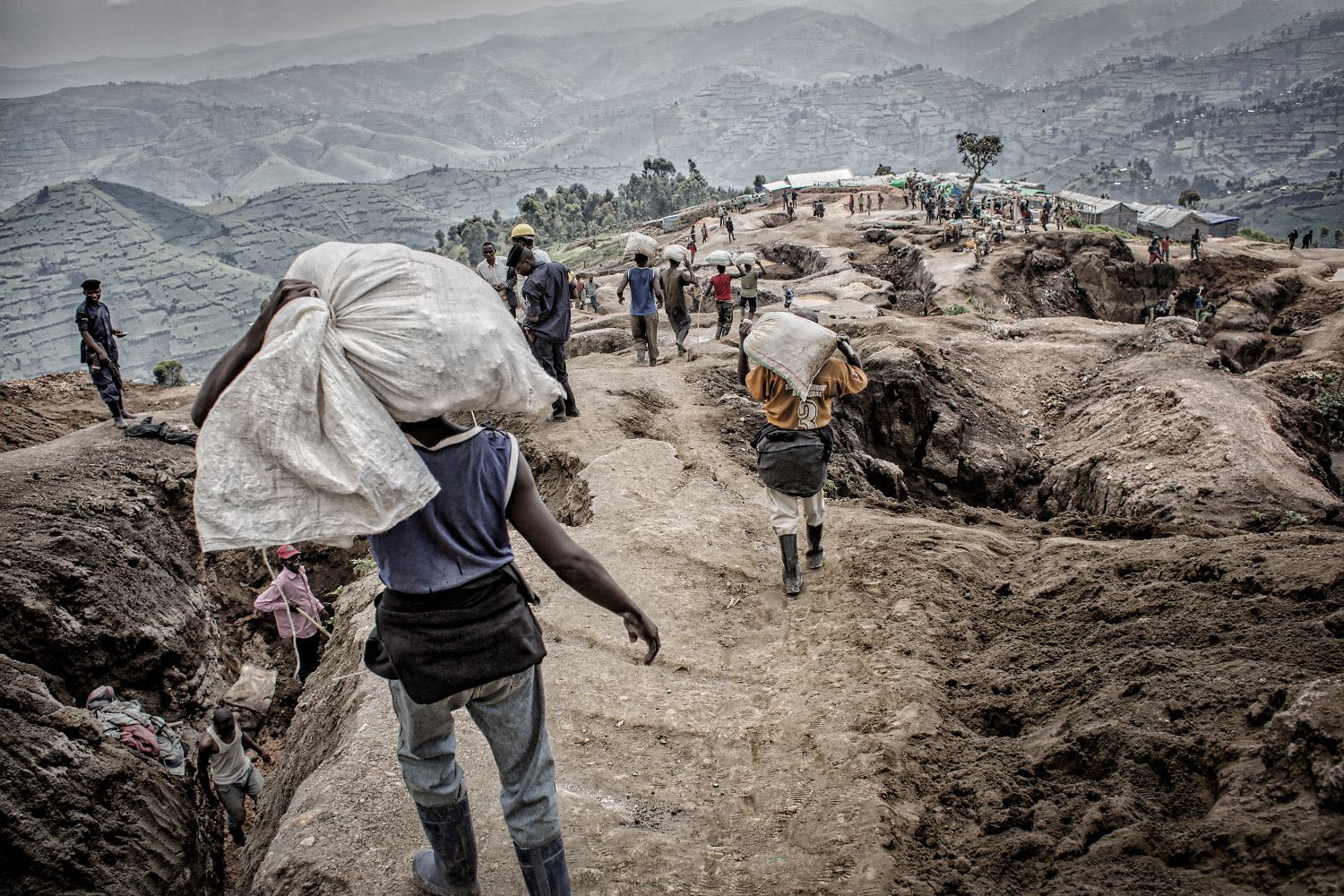
China’s dominant role in DRC’s mining sector could also complicate DFC and the US government’s pursuit of investments in the country. AidData at the College of William and Mary found that between 2008 and 2022, the Chinese government provided $11 billion in loans to three mining sites in southern DRC: Tenke Fungerume, Kinsenda, and Sicomines. Those loans represent 42 percent of China’s total investment portfolio during that period in DRC. Through these investments and others, China now controls 80 percent of DRC’s copper mines and a significant portion of cobalt as well. Alongside these mining investments, China has provided significant support for developing supporting infrastructure, including improvements to the road network in southern DRC. That said, these agreements suggest DRC wants to diversify away from China and hopes to attract Western companies, Arab, and Indian investors. US mining company Rio Tinto launched talks in March 2025 with the government of the DRC to develop a new lithium deposit.
To overcome these factors and offer an alternative to China that demonstrates American values, the Trump administration will need to provide support beyond DFC financing. The US will need to engage in a robust policy dialogue with the government of DRC to identify needed reforms. Technical assistance aimed at improving the investment and business climate in DRC will be a vital complement. In dismantling USAID earlier this year, the administration lost many of the programs and projects that could support investment and business climate reforms. For example, USAID had been working on standing up a new program that would seek to address many of the barriers that dissuaded Western mining companies from investing in the southern DRC. The State Department has some ability to work in these areas, but it will need the resources, expertise, and mechanisms to program money to tackle regulatory reforms. These efforts are likewise needed to support the continued development of the Lobito Corridor.
Lobito alive and well?
All this activity is in the context of the Lobito Corridor, an ambitious effort that began during the Biden administration. The Lobito Corridor (or Trans-Africa Corridor) was the flagship of the Biden administration’s Partnership for Global Infrastructure and Investment, a G7 effort to provide a credible alternative to China’s infrastructure finance. The Biden administration announced support for the corridor in May 2023, which came to include rehabilitating the existing LAR in Angola; developing a greenfield railroad running from the LAR through northern Zambia; and supporting investments in agriculture, digital infrastructure, and critical minerals mining and processing. The US worked closely with the European Commission, the African Development Bank, Italy, and other partners to advance progress in the corridor. The Trump administration has repeatedly signaled that it wants Lobito to continue and sees it as aligned with its vision for US engagement in Africa, but last week’s announcements are the firmest commitment yet.
That said, the administration will also need to look at how it can continue to develop projects in the corridor that are not just mining or processing and infrastructure. Given regional dynamics, critical minerals are central to why the United States sought to develop the Lobito Corridor. However, the notion of offering a better alternative to Chinese financing meant finding ways to ensure that investment in the LAR would provide secondary economic and social development benefits. This included supplemental support to diversify Angola’s and Zambia’s economies through the development of a more robust agricultural sector using the railroad for improved inputs for crops and as a potential export route. There was also an effort to support investment in digital infrastructure to increase access to reliable internet and investment in new sources of power generation.
In its drive to a more opportunistic approach, the administration should not lose sight of the importance of these other investments. For Angola, DRC, and Zambia, these represent a valuable contribution to their growth that can generate economic and social development benefits—and will help cement the United States as a preferred partner. In parsing the recent announcements around Lobito and DFC’s LOIs, the administration does reference these dynamics and frames it—at least rhetorically—as a win-win opportunity for the United States and its regional partners. The documents also highlight the need for high quality and high standards that respect local partners, a clear contrast with China’s perceived approach. To deliver a better deal, the administration will need to support higher-value investments in mineral processing, manufacturing, and other activities that can spur real economic growth in these countries. Absent that, the US’s regional partners can rightly say that the American approach is no better than the Chinese one.