More from the series

Event
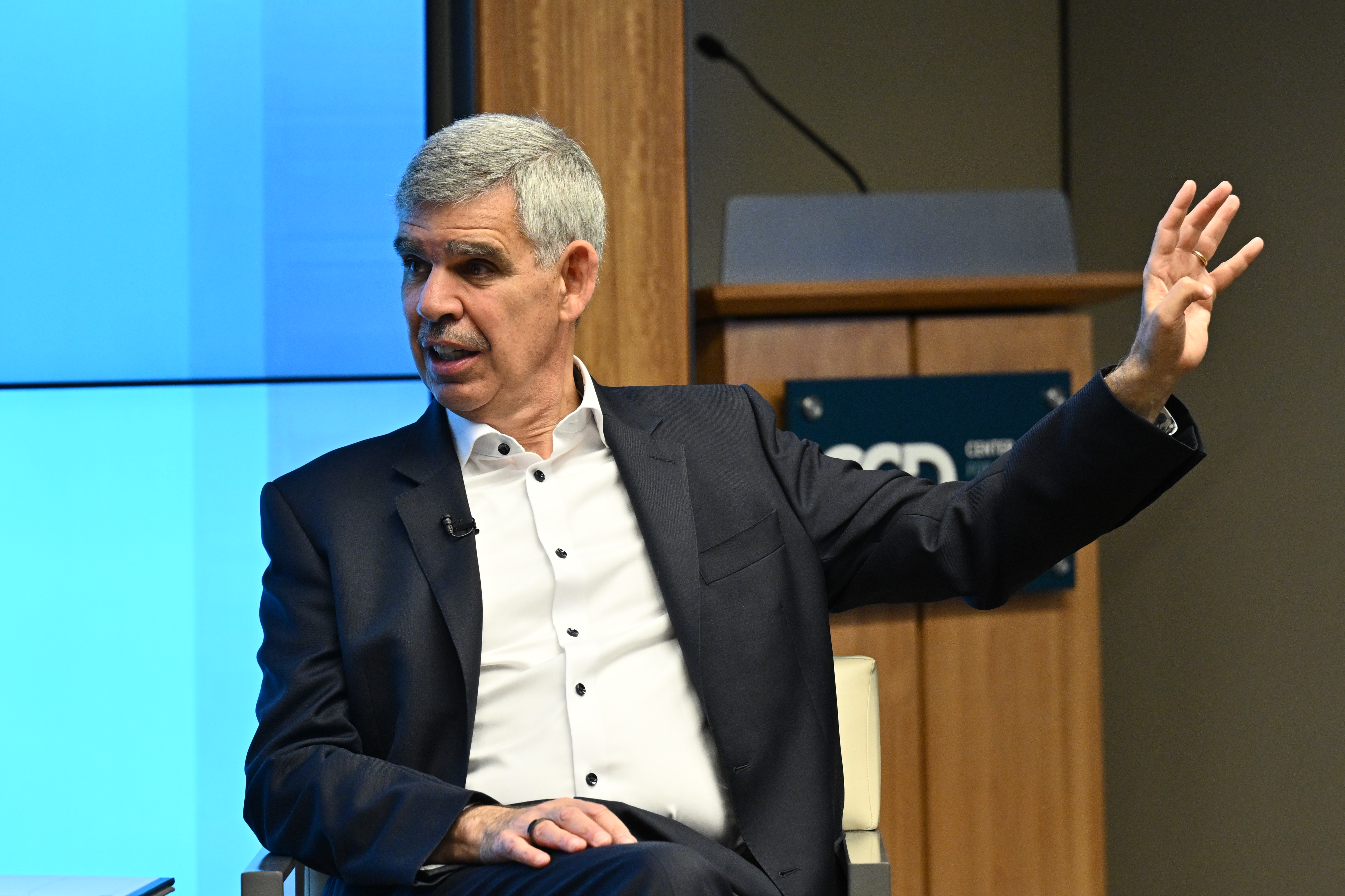
A Fireside Chat with Mohamed A. El-Erian
HYBRID
June 18, 2026 9:30—10:30 AM ET | 2:30—3:30 PM BSTThe Middle East war has triggered a sharp contraction in the oil supply that passes through the Strait of Hormuz, driving up global energy prices and forcing governments across the world to choose how much of that cost to pass on to households. Their responses have diverged markedly. Because energy accounts for a large share of household spending, governments are often reluctant to allow significant price increases for such politically sensitive items.
This reluctance, however, has played out differently depending on fiscal space. Several countries in Asia and sub-Saharan Africa (SSA) have raised domestic prices for petroleum products, reflecting tight budget constraints. By contrast, 19 European countries have reduced taxes on gas and fuel consumption to shield households from rising prices (see also this article). Although these European countries also face elevated public debt, they are less constrained than many in Asia and SSA: they retain access to financial markets to finance additional spending and face fewer immediate concerns about debt sustainability.
Yet the European approach comes with important trade-offs. By lowering taxes, governments have effectively provided untargeted subsidies that disproportionately benefit better-off households, dampen demand adjustment, slow the transition to more sustainable energy sources, and undermine fiscal discipline. This pattern echoes the policy response to Russia's invasion of Ukraine in 2022–23, when European governments capped prices and expanded transfers at an average fiscal cost of about 4 percent of GDP, contributing to a further rise in public debt.
In contrast, most countries in SSA have allowed partial or full increases in domestic fuel prices following the rise in international oil prices. This marks a notable shift from 2022, when many governments across the region suppressed price increases in response to the shock. The current response suggests that policymakers are increasingly aware of the fiscal costs and persistence of such untargeted measures, which are often difficult to reverse once introduced. Still, pass-through remains somewhat uneven. A tracker from the International Energy Agency records several countries that have capped retail fuel prices, increased gas subsidies, or lowered fuel taxes, including Ethiopia, Ghana (temporarily), Kenya, Mozambique, Namibia, and Zambia. Separately, the IMF highlights a small group of countries—Cameroon, Côte d’Ivoire, Rwanda, Senegal, and Togo—that continue to keep pump prices tightly controlled.
The oil shock and fiscal space in SSA
The magnitude of the current oil price shock for SSA is substantial. The fiscal cost of fully offsetting it—through tax cuts or subsidies—would average about 0.8 percent of GDP across SSA, and exceed 1.5 percent of GDP in Benin, Eswatini, Lesotho, Mozambique, and Mauritania, among others (Figure 1).
Limited fiscal space explains why most SSA countries have allowed international oil price increases to pass through. Public debt levels are high, with about a third of SSA countries exceeding debt-to-GDP ratios of 60 percent (Cabo Verde, Central African Republic, Republic of Congo, Gabon, The Gambia, Guinea-Bissau, Kenya, Malawi, Mauritius, Mozambique, Namibia, Rwanda, Senegal, South Africa, Sudan, Togo) and many either in or at high risk of debt distress (Figures 1 and 2).
Interest payments already absorb a significant share of government revenues—15 percent or more in over a third of the region’s countries (Angola, Republic of Congo, Côte d’Ivoire, Gabon, Ghana, Guinea-Bissau, Kenya, Malawi, Mozambique, Namibia, Nigeria, Senegal, Sierra Leone, South Africa, Tanzania, Togo, Uganda, Zambia) (Figure 3).
Policy implications: Support is needed
Allowing energy prices to rise has been economically sound, even if politically difficult. It preserves scarce fiscal space, avoids regressive subsidies, and supports necessary demand adjustment. Encouragingly, the region’s macroeconomic outlook remains relatively resilient, with growth projected by the IMF to exceed 4 percent in 2026—though this outlook would deteriorate if disruptions to oil supply persist.
But this resilience should not obscure underlying constraints. Even with prudent policies, most SSA countries lack the fiscal space needed to finance development and climate transitions from domestic resources alone. According to the IMF’s April 2026 Fiscal Monitor, public spending as a share of GDP will remain largely flat between 2026 and 2031—far short of what is needed to meet development and climate transition goals.
SSA countries have demonstrated policy discipline by allowing fuel prices to adjust despite the social and political risks. This contrasts with the more accommodative responses seen elsewhere and reflects hard budget constraints rather than easier policy choices.
The risk is that such discipline goes unrewarded. Current commitments by the IMF and World Bank to scale up financing are welcome but unlikely to be sufficient relative to the scale of the shock. At the same time, a decline in official development assistance—estimated at 16–28 percent to the region in 2025—has further tightened external financing conditions.
Looking ahead, the challenges could intensify. A prolonged Middle East conflict may push up not only energy prices but also food prices, compounding pressures on vulnerable households and testing the political sustainability of recent reforms. Without additional external support, governments may face renewed pressure to revert to costly and distortionary subsidies.
A stronger and more coordinated international response is therefore essential. This should include increased concessional financing, faster and more effective debt relief, and support for domestic revenue mobilization. Without such measures, countries that pursue sound but difficult reforms risk being penalized—while incentives tilt back toward policies that undermine fiscal sustainability and long-term growth.
Topics
DISCLAIMER & PERMISSIONS
CGD's publications reflect the views of the authors, drawing on prior research and experience in their areas of expertise. CGD is a nonpartisan, independent organization and does not take institutional positions. You may use and disseminate CGD's publications under these conditions.
Thumbnail image by: APchanel/ Adobe Stock