In an executive order issued in March, the Trump administration provided the US International Development Finance Corporation (DFC) authority under the Defense Production Act (DPA) to make investments to “create, maintain, protect, expand, or restore domestic mineral production.” DFC’s CEO was tasked with developing and submitting a report to the National Security Council within 30 days on how the agency would use the DPA to achieve these objectives. Still, it’s worth remembering that DFC doesn’t have a strong track record in facilitating investments in the domestic market. While the United States’ long-term national security requires increased access to critical minerals that are not controlled by Chinese-owned entities, domestic investment from DFC—an agency designed to facilitate private investment in underserved markets across developing regions—is not an answer to this challenge.
The first Trump administration deserves great credit for supporting the push to create DFC in 2018. After initially proposing the elimination of DFC’s predecessor, the Overseas Private Investment Corporation (OPIC), the administration joined a bipartisan push to reform and expand OPIC’s mandate. The resulting Better Utilization of Investments Leading to Development (BUILD) Act of 2018 was a dramatic improvement in the way the US government deploys development finance. The BUILD Act provided DFC with new tools such as equity, authorization to greatly expand its portfolio, and a clear development mandate to support investments in low- and lower-middle income countries.
This isn’t the first time a Trump administration has sought to utilize DFC’s financing instruments domestically. In response to the COVID-19 pandemic in 2020, the Trump administration invoked DPA—an act passed in 1950 to support defense industrial base expansion during the Korean War—to expand investment in the domestic medical production sector. A brand-new agency, DFC was woefully ill-equipped to develop a pipeline of investable projects to create new domestic sources of medical equipment, vaccine precursors, and other materials needed to fight COVID. When seeking investments, the DFC considered Kodak, a 100-year-old company that suggested it could retool its existing photographic chemical production lines to focus on vaccine precursors. After the signing of a letter of intent with DFC, Kodak’s stock jumped dramatically. The CEO and his cousin were later accused of insider trading and the deal ultimately fell through. Despite considering a few deals in the first years of the Biden administration, DFC’s DPA authority expired in 2022 without it closing any domestic deals.
Ultimately, DFC’s domestic experience during COVID showed that it is not built for this type of investment and would require significant changes to be up to the task. DFC has limited experience investing in publicly traded companies and as the Kodak experience showed, such efforts create the potential for market distortion. The COVID era also exposed structural limitations, including a clear lack of a pipeline of investable projects; systems that cannot effectively track domestic investments; and a dearth of investment officers with experience in domestic US markets and sectors. Recent efforts by the Trump administration to reduce staff across government, including at DFC, will only further exacerbate this latter point. Finally, there is a fundamental question as to what value add DFC brings to domestic investing: the United States has the deepest capital markets in the world and does not need the support offered by DFC.
DFC can support US efforts to diversify sources of critical minerals, but it should focus these efforts abroad in the countries and regions in which it already operates. There is a strong national security case for DFC to expand its support for the mining and processing of minerals, given the need for these materials and desire to source them free from People’s Republic of China (PRC) influence. There is evidence that countries are also looking for increased US and Western investment in this sector to reduce PRC dominance. Southern Africa is a good case in point, where PRC mining companies dominate the sector in the Democratic Republic of Congo (DRC), Zambia, and Malawi. In the DRC, 80 percent of mines are owned and operated by PRC mining companies, with much of the offtake going to the PRC for processing. The PRC came to dominate this sector as US and Western mining companies divested ownership over corruption and security concerns in the region; yet, the DRC government recognizes that this is unsustainable and wants to see diversification away from the PRC with an emphasis on not just extraction of minerals but also processing in-country.
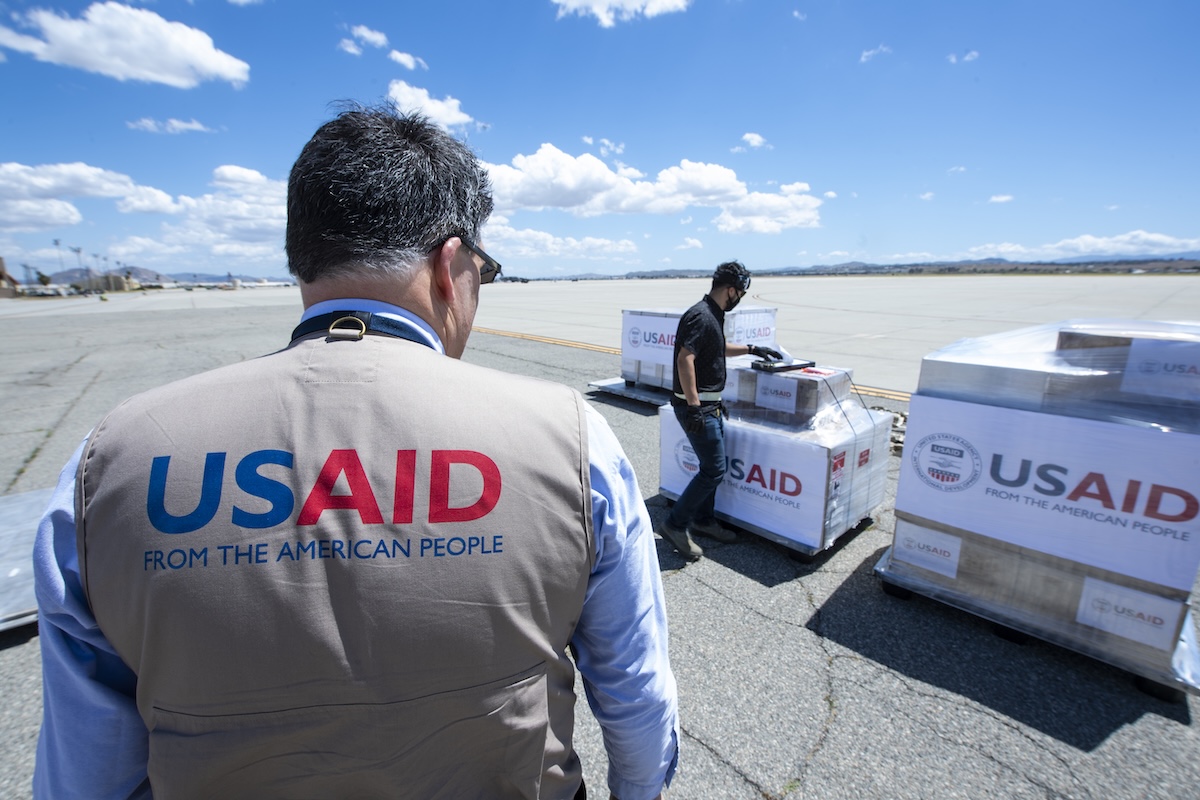
The Biden administration, for its part, recognized these dynamics and sought to increase US investment in these areas through support, for example, for the Lobito economic corridor. Anchored by a DFC loan to support the rehabilitation of the Lobito Atlantic Railroad (LAR), the corridor seeks to reduce the amount of time it takes to transport minerals from southern DRC to markets, build a new rail link to northern Zambia, and enable broader economic development through these investments. The new administration has expressed interest in continuing these kinds of investments, but has undermined its ability to do so by recent decisions to shut down USAID, reduce the US global footprint, and terminate 83 percent of existing grants and contracts, including ones directly related to critical mineral work in southern DRC. Rather than abandon this engagement—risking the future of three reformist presidents in the region who sought closer relations with the United States—the Trump administration should see this as an important component of diversifying access to critical minerals.
Agencies, such as the Commerce Department or the Defense Department’s Office of Strategic Capital, that already operate domestically are better suited to invest in critical minerals projects within US borders, directing them to take up the cause would reduce unproductive mission creep at DFC. Looking to DFC in this case creates a fundamental mismatch between the tool and the objective and it sets the agency up for failure, at a time when it is urgently needed to build markets abroad. DFC can’t be everything to everyone. The lesson from the COVID era is clear: forcing DFC into domestic markets risks mission creep and policy failure.