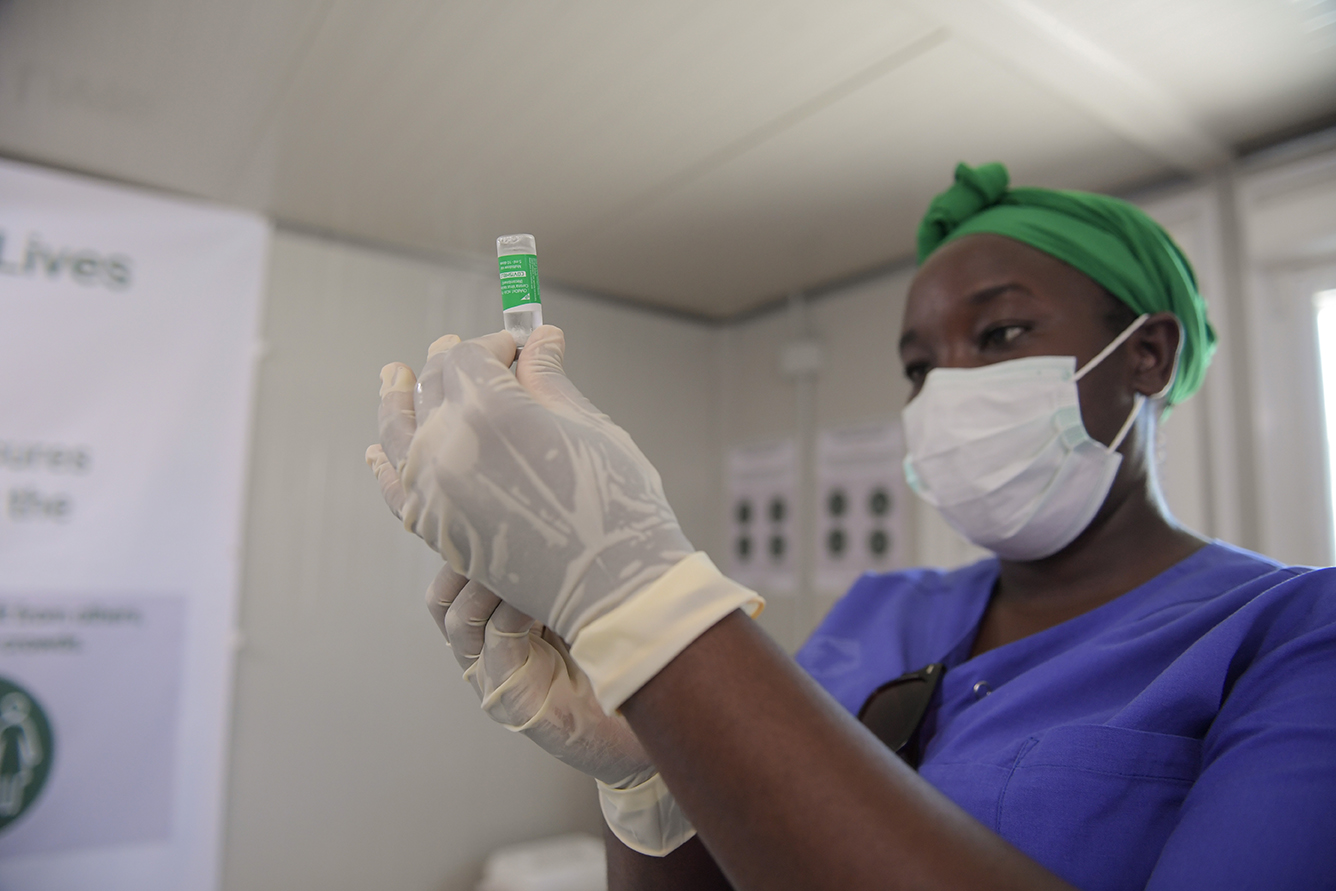
A new paper by David E. Bloom, David Canning & Mark Weston, The Value of Vaccination, published in World Economics (July–September 2005 - registration required)) looks at the economic impact of vaccination over and above the direct health benefits.As discussed here, lower life expectancy reduces investment and growth, because it reduces the incentive to save and to invest in education and other human capital. Good health, especially the expectation that your children will survive, also promotes the demographic transition from large to small families that usually accompanies economic development. Bloom, Canning and Weston survey the impact that vaccination has had in developing countries (especially since the introduction of the Expanded Program on Immunization).
Since World War II, vaccination has had a major impact on global health, as the following list of successes shows:• Smallpox, which had killed two million people per year until the late 1960s, was wiped out by 1979 after a massive worldwide immunization campaign.• The number of polio cases fell from over 300,000 per year in the 1980s to just 2,000 in 2002.6• Two-thirds of developing countries have eradicated neonatal tetanus.• Since the launch of the World Health Organization’s Expanded Program on Immunization (EPI) in 1974, the number of reported measles deaths has dropped from 6 million to less than 1 million per year.• Whooping cough cases have fallen from 3 million per year to less than a quarter of a million.• Diphtheria cases have declined from 80,000 in 1975 to less than 10,000 today.The haemophilus influenzae B (Hib) vaccine has reduced the incidence of Hib meningitis in Europe by 90 per cent in ten years.
Bloom, Canning and Weston look at the reasons why vaccination coverage has faltered in recent years. They attribute this to the difficulties of reaching the most remote populations; logistical and infrastructure problems; political problems (eg war); and finally to changed public perceptions about the safety of vaccination.They discuss what they call the "imperiled innovation" of new vaccines, finding that:
If pharmaceutical companies cannot guarantee a return on their research and development coststhrough to the end of the patent period, the attraction of vaccines for developing countries may weaken further.
The paper gives an interesting account of the challenges facing public-private collaboration.
William Muraskin has detailed the demise of the Children’s Vaccine Initiative (CVI), which was launched by the World Health Organization in 1990 in response to the slowdown in development of new vaccines and poor distribution of existing ones. The CVI’s efforts to bring together public and private sector scientists and organizations to work towards solutions were unsuccessful. As Muraskin explains, there was a “great gulf of distrust, often bordering on contempt,†between public and private sectors. Public sector scientists saw their private sector counterparts as being purely driven by profit, while the latter saw the public sector as a wastefuland untrustworthy partner. The WHO closed down the CVI in 1999. Such experience reinvigorates the question of government’s responsibility for ensuring the timely development and production of vaccines—both for old diseases and new. One alternative is that governments themselves could create greater vaccine development and production capacities. Another option is for governments to offer major financial incentives to pharmaceutical corporations in exchange for guaranteed increases in development efforts and actual construction of vaccine production facilities.
The paper considers the evidence for the cost effectiveness of vaccines per year of life saved:
The available literature on DALYs suggests immunization is a highly cost-effective intervention. The total cost of the EPI vaccine package is less than $1.47 According to GAVI, most vaccination campaigns cost less than $50 per year of healthy life gained. By contrast, treatment for diseases such as hypertension in the US costs between $4,340 and $87,940 for each DALY gained. Jamison et al. estimated that the EPI vaccine program costs $14-20 per year of healthy life gained in low-income countries. Miller and McCann show a similar cost for the Hib vaccine in Africa, and that Hepatitis B immunization in low-income, high-prevalence countries costs just $8–11 per DALY gained.
Finally, Bloom, Canning and Weston take a wider view of the benefits of vaccination, including not only the health benefits but the broader economic benefits.First, they look at the expected increase in productivity from the GAVI vaccination programme:
The total increase in income per year once the vaccinated cohort of children start earning will rise from $410 million in 2005 to $1.34 billion by 2020 (at a cost of $638 million in 2005 and $748 million in 2020). We estimate the internal rate of return to the program by calculating the interest rate that would make the net present value of the flow of future benefits equal the initial costs. The rate of return amounts to 12.4 per cent in 2005, rising to 18 per cent in 2020 as vaccine costs decline.
Then they the look at the effect of immunization on productivity by looking at its impact on test scores that measure the cognitive ability of ten year olds. There is robust evidence that childhood illness can impair cognitive development, and that the latter affects adult productivity and earnings. They find that, taking account of other differencees, immunization was associated with significantly improved scores in IQ, language, and mathematics tests. On this evidence, childhood vaccination appears to have positive and long-term health impacts that translate into increased cognitive ability in ten year olds, which in turn is associated with higher earnings in adulthood.The paper concludes that:
immunization does appear to be an important tool for improving survival and strengthening economies. By boosting cognitive abilities, it improves children’s prospects of success when reaching working age. And it does so in an extremely cost-beneficial way. Immunization provides a large return on a small investment—higher than most other health interventions, and at least as high as non-health development interventions such as education.
The paper is also convered in this week's Economist Magazine ("A drop of pure gold", October 13th).Two other bloggers have already picked this up:- Stumbling and Mumbling by Chris Dillow, who had commented back in September on the likely beneficial impact of IFFIm on Economic growth- Economists View which links to the Economist articleOwen comments: The Bloom and Canning paper is mainly valuable as a survey of existing literature which shows that vaccination is cost-effective by comparison with public health interventions, and with other development interventions more generally. It is important that we augment our cost-effectiveness analysis with cost-benefit analysis which considers the case for greater resources overall on global public health. This study demonstrates that the returns to immunization at least equal the expected returns from other sorts of intervention. The 2002 WHO Commission on the Macroeconomics of Health began this process, but it is not yet firmly understood in the development community that vaccination is a terrific buy, not only because it averts human suffering but also because of the expected impact on economic growth and poverty reduction that result from those improvements in health. My sense is that the estimates in this paper are conservative. For example, the recent paper by Lorentzen, McMillan & Wacziarg finds that all the growth deficit in Africa since 1960 can be explained by higher mortality compared to other regions. This suggests that the economic impact of vaccination might be significantly larger than the estimate in this paper.One important topic for further research would be the broader fiscal impacts of immunization alongside the economic effects. For example, the total cost of immunization may be substantially lower if we take into account the averted health care costs. This too would contribute to the evidence that vaccination is a very cost effective intervention.Overall, I think that Bloom and Canning provides a good summary of the broader issues surrounding the cost effectiveness of immunization as a development intervention. As with all good analysis, their paper also provides a rich research agenda of further evidence that we could usefully provide to make the case more convincingly in the months and years ahead.(Note: if you can't get hold of the paper from World Economics, drop me a line and I will send you a copy.)
DISCLAIMER & PERMISSIONS
CGD's publications reflect the views of the authors, drawing on prior research and experience in their areas of expertise. CGD is a nonpartisan, independent organization and does not take institutional positions. You may use and disseminate CGD's publications under these conditions.