Health taxes on sugar seem to have captured the zeitgeist: Mexico's soda tax, the UK's sugar levy, South Africa's Health Promotion Levy, a sugar tax in the Philippines, and so on. The evidence on these policies suggests real benefits: (1) reduced consumption of sugary drinks, (2) measurable revenue for governments, and, (3) in theory, a nudge toward healthier choices. But the conversation is increasingly moving past sugar with increasing calls for health taxes on so-called ultra-processed foods. Wealthier countries, including Denmark and Hungary, have imposed such taxes and increasingly, low- and middle-income countries (LMICs) like Colombia and Mexico are trying them out. The 2025 Economic Survey of India called for an across-the-board tax on ultra-processed foods.
There is a compelling fiscal case from the health systems cost standpoint. Non-communicable diseases like diabetes, hypertension, cardiovascular disease, and obesity impose financial and health-related spillovers: in addition to their own suffering and potential loss of productivity, a person with type 2 diabetes in an LMIC strains an already stretched health system and may even pass on elevated metabolic risk to their children. Even populations that never directly experience malnutrition can face disproportionately higher cardiovascular risk, likely because of epigenetic responses to ancestral experiences of famine. Which is all to say that the costs of diet-related disease are real, large, and intergenerational. If a tax can reduce them, it is worth taking seriously.
But in my view, this discourse often skips past two critical questions: what exactly are you taxing–“ultra-processed foods” can mean many different things—and what alternatives are available, particularly in low- and middle-income settings? In this blog, I focus on this second question.
Food deserts, near and far
In theory, when you tax ultra-processed foods, consumers respond to the higher prices by looking elsewhere—to healthier options that are not similarly taxed. In practice, these healthier options are not always available to consumers. And when they are, consumers may lack information on both the costs of the “sin foods” and the benefits of “healthy foods.”
This is not just a low-income country problem. The United States has long grappled with "food deserts"—low-income neighborhoods where residents lack reliable access to supermarkets carrying affordable, nutritious food. At least 19 million Americans live in food deserts. These environments have real health consequences.
Part of the policy response in the US has been to fix the supply side—build supermarkets in underserved neighborhoods. Yet the evidence on whether that actually changes what people eat is sobering. Researchers tracked households in Pittsburgh's Hill District before and after a full-service supermarket opened after thirty years' absence. Residents reported eating fewer calories and less sugar—but, intriguingly, the consumption of fruits and vegetables actually declined in both the intervention and the comparison neighborhood. In short, fixing food access is necessary but not sufficient to change diets. The problem is structural in ways that go beyond proximity to a store.
In much of rural South Asia and sub-Saharan Africa, the problem is more acute. A remarkable new survey from rural Bihar and Odisha, conducted by the INFUSION project at the London School of Hygiene and Tropical Medicine and the University of Sheffield, illustrates the extent.
It is perhaps no surprise that researchers documented over 470 ingredients and nearly 670 dishes and recipes in Odisha alone. As an aside, I smiled with recognition. Since high school, I have kept notebooks of recipes filled with dishes from my grandmother, great-aunt, mother, and aunts. Indian culinary tradition and knowledge run deep. The food diversity exists—at least, in principle.
But when the INFUSION study researchers analyzed three rounds of seasonal dietary recall data, they found something stark and distressing: everyday diets for both women and children consisted overwhelmingly of rice, potatoes, biscuits, and packaged snacks—and this holds across seasons, and across households that were spending enough money to, at least hypothetically, meet national dietary guidelines.
The cold chain belongs to the Coca-Cola Company
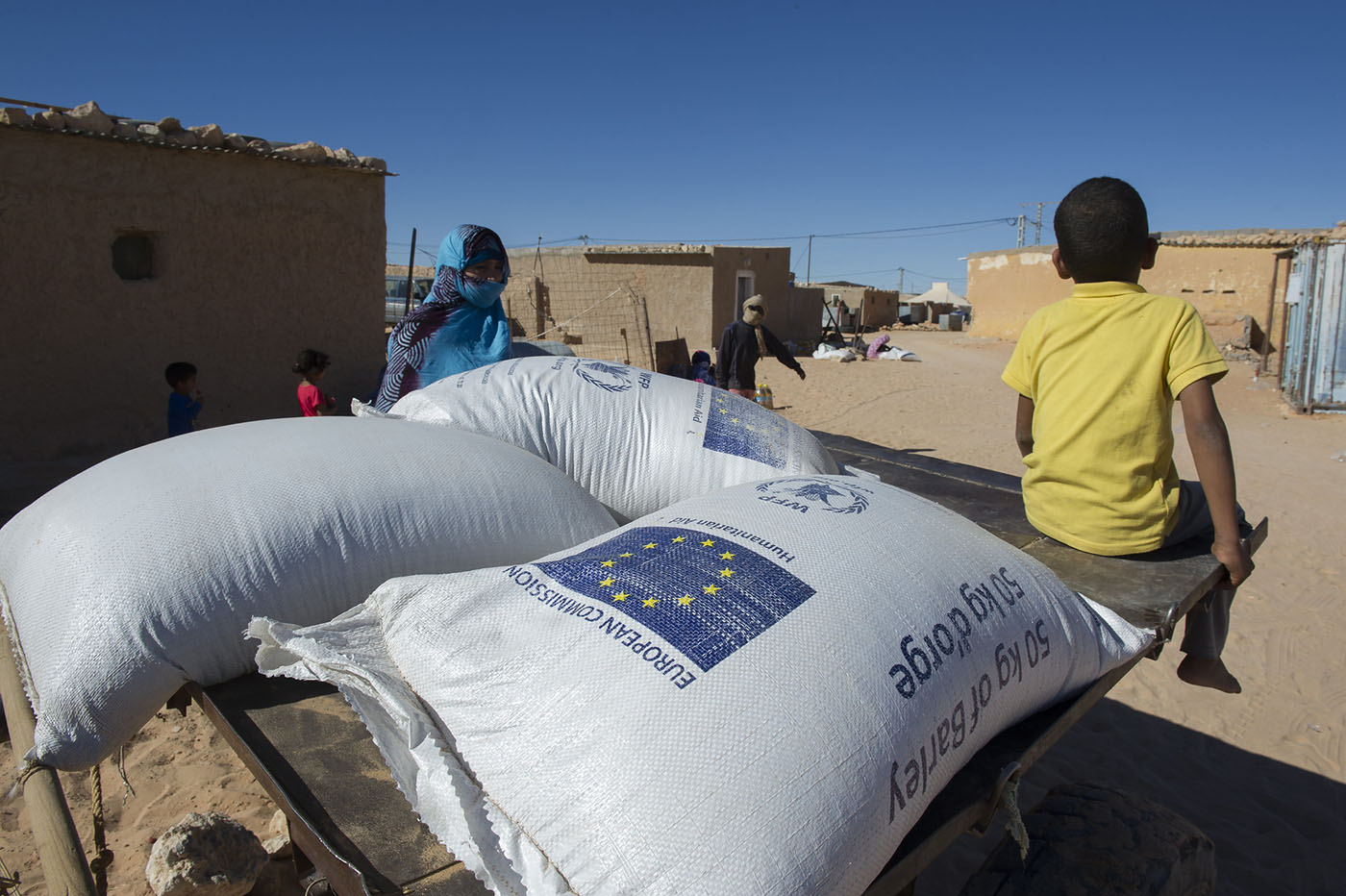
The constraint was the food environment. In the INFUSION study, fresh vegetables and fruits arrive once a week at the local village market—perishable, unreliable, and unavailable for six days out of seven. But biscuits, chips, noodles, and glucose drinks are available year-round at small shops in every village, because the distribution infrastructure for ultra-processed foods is extraordinary. The INFUSION researchers also noted that the only reliable cold storage in many of their study villages is the branded Coca-Cola refrigerator, provided free by the beverage company to ensure its products are always ready to sell. The market has solved the problem of availability—for ultra-processed foods.
This has echoes in work showing that the cost of moving goods from a port of entry to interior locations are four to five times higher in Ethiopia and Nigeria than in the United States. Shelf-stable ultra-processed foods, which tolerate long supply chains and require no refrigeration, absorb those costs far better than eggs, vegetables, or fish ever can. The cold chain problem is a direct consequence of how much more expensive it is to move perishable goods to remote consumers in poor countries.
My own research has shown that when a cash transfer in the Philippines generated a sizable village-level income shock in remote areas, egg prices there rose by up to 25 percent, while the prices of rice, sugar, and packaged goods were unaffected. Eggs are harder to transport than rice and their supply did not respond quickly enough to meet rising demand. The result was a 34 percent increase in stunting among non-beneficiary children in the remote villages—not because of a policy failure in the traditional sense, but because the supply chain for nutritious perishable food simply did not exist in the way the supply chain for shelf-stable staples did.
A bludgeon where you need a scalpel
This brings me to the central problem I see with health taxes as an instrument of nutrition policy LMICs: the food environment is broken and health taxes cannot be sufficiently targeted to fix it.
A national sugar tax is, by definition, blunt. It applies to the Coca-Cola in the Delhi grocery store and the small village shop in rural Bihar in equal measure. But only the urban middle-class consumer who faces this price signal can respond to it—she can reach for a bottle of water, a juice, or a piece of fruit from the well-stocked refrigerated section of her grocery store. The rural consumer in a village where that biscuit packet is one of the only shelf-stable, affordable calories available has no such option. She faces the same tax, with few, if any, of the substitution possibilities.
And how could a government administer a sugar or salt or fat tax only in neighborhoods where healthy substitutes are accessible and exempt those where they are not? Where capacity is limited even to administer much simpler policies, this kind of targeting seems rather unattainable.
Sequencing matters
This makes health taxes in high-burden LMIC contexts potentially regressive not only in the economic sense of taking a larger share of income from the poor, but regressive in nutritional terms, hitting hardest precisely where there is limited capacity to substitute. And those who are least able to respond to the price signal are likely the very populations at greatest risk of the intergenerational nutritional damage I described earlier.
None of this means governments should ignore the health costs of ultra-processed food consumption. But the sequencing has to be right. Governments must first make healthy food as available, affordable, and convenient—this means investing in cold chains, market infrastructure, fortification, and targeted subsidies for nutritious foods in underserved areas. Then, price signals have something to nudge people toward. Tax the bad by all means, but only after you have built the conditions under which the tax can actually work.