You are here

Topics:
Expertise
Property rights, illicit financial flows, sub-Saharan Africa, impact evaluation
Bio
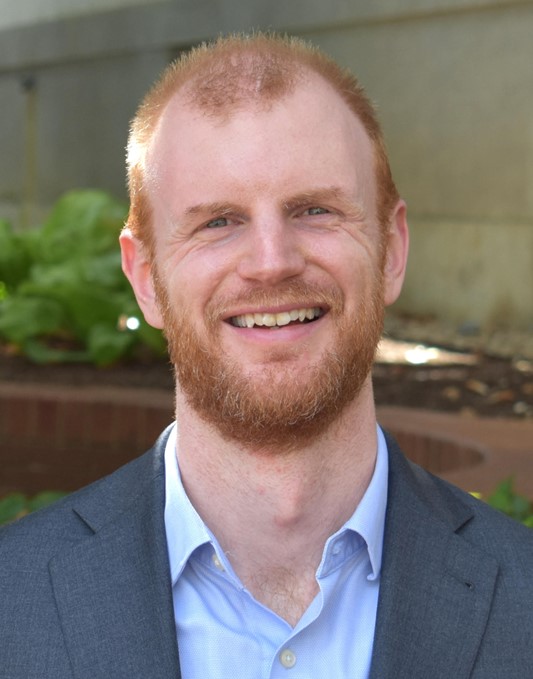
Matt Collin joined CGD Europe in January 2014. His research focused on illicit financial flows (along with Vijaya Ramachandran), the adoption and impact of property rights in developing countries and the role of property rights in large scale land consolidation. His work included investigating the impact of ethnic sorting on formalisation behaviour, the effort of neighbour decisions on land title adoption, and the impact of conditional subsidies on gender equity in land ownership. Matt holds a D.Phil in Economics from the University of Oxford and previously worked at the Centre for the Study of African Economies and as an ODI Fellow in the Ministry of Finance, Malawi. He writes a personal blog on aid and development at aidthoughts.org and is on Twitter as @Aidthoughts.
Media Contact
Eva Grant
egrant@cgdev.org
In the News
More From Matt Collin
Regulatory pressure on international banks to fight money laundering (ML) and terrorist financing (TF) increased substantially in the past decade. We find countries that have been added to a high-risk greylist face up to a 10% decline in the number of cross border payments received from other jurisdictions, but no change in the number sent. We also find that a greylisted country is more likely to see a decline in payments from other countries with weak AML/CFT institutions. We find limited evidence that these effects manifest in cross border trade or other flows. Given that countries that are placed on these lists tend to be poorer on average, these impacts are likely to be more strongly felt in developing countries.
The British public’s shock decision to leave the European Union (EU) has wide-ranging implications, including for remittance flows. In this blog, we explore the plausible consequences of Brexit for those who depend on remittances from the UK.
Cash transfers might be the next big thing in international development. Yet our analysis of new survey data suggests that public support for cash transfers is modest and fragile. Donors—who are poised to leverage a promising new way of delivering aid to do more good for less money—must continue to make the public case for cash transfers, and continue to present the remarkably strong evidence that they are not misspent.
Unless you’ve been living under a rock in the British Virgin Islands, you might have heard of the massive leak of documents from Mossack Fonseca, a Panamanian law firm whose services included helping its clients create shell corporations and store their assets in offshore tax havens. In addition to a torrent of political scandals and crises, the leak has resulted in a renewed rallying cry to reform the international tax system. But aside from the political implications, the Panama Papers have the potential to help us better understand two things: what kinds of countries do these offshore firms do business with and are the tools we use for determining the relative risks of hidden cash any good?
Pages
You may have recently seen articles in one of several media outlets about a new study that purportedly shows that Fairtrade has failed African farmworkers. Does that mean you should stop buying Fairtrade coffee and other products?
Regulatory pressure on international banks to fight money laundering (ML) and terrorist financing (TF) increased substantially in the past decade. We find countries that have been added to a high-risk greylist face up to a 10% decline in the number of cross border payments received from other jurisdictions, but no change in the number sent. We also find that a greylisted country is more likely to see a decline in payments from other countries with weak AML/CFT institutions. We find limited evidence that these effects manifest in cross border trade or other flows. Given that countries that are placed on these lists tend to be poorer on average, these impacts are likely to be more strongly felt in developing countries.
We report on a randomized field experiment using price incentives to address both economic and gender inequality in land tenure formalization.
Money laundering, terrorism financing and sanctions violations by individuals, banks and other financial entities are serious offenses with significant negative consequences for rich and poor countries alike. Governments have taken important steps to address these offenses. Efforts by international organizations, the US, UK and others to combat money laundering and curb illicit financial flows are a necessary step to increase the safety of the financial system and improve security, both domestically and around the world. But the policies that have been put in place to counter financial crimes may also have unintentional and costly consequences, in particular for people in poor countries. Those most affected are likely to include the families of migrant workers, small businesses that need to access working capital or trade finance, and recipients of life-saving aid in active-conflict, post-conflict or post-disaster situations. And sometimes, current policies may be self-defeating to the extent that they reduce the transparency of financial flows.
Proponents of the use of randomized controlled trials (RCTs) in impact evaluation and development research often point out the close link between these trials and their clinical counterparts in the world of medical research.
In a few weeks’ time Australia’s Westpac bank will start closing down the accounts of money transfer organizations used by immigrants to send money home. Westpac is the last major Australian bank still offering services to organizations in the country’s US$25bn remittance sector.
Cash transfers might be the next big thing in international development. Yet our analysis of new survey data suggests that public support for cash transfers is modest and fragile. Donors—who are poised to leverage a promising new way of delivering aid to do more good for less money—must continue to make the public case for cash transfers, and continue to present the remarkably strong evidence that they are not misspent.
Pages
Regulatory pressure on international banks to fight money laundering (ML) and terrorist financing (TF) increased substantially in the past decade. We find countries that have been added to a high-risk greylist face up to a 10% decline in the number of cross border payments received from other jurisdictions, but no change in the number sent. We also find that a greylisted country is more likely to see a decline in payments from other countries with weak AML/CFT institutions. We find limited evidence that these effects manifest in cross border trade or other flows. Given that countries that are placed on these lists tend to be poorer on average, these impacts are likely to be more strongly felt in developing countries.
We report on a randomized field experiment using price incentives to address both economic and gender inequality in land tenure formalization.


Commentary Menu