A New Playbook for a Changing World
Multiple disruptions in the broader global health and development landscape are putting pressure on Gavi’s ability to advance global immunization goals. Gavi needs a new playbook to remain fit for purpose in its next strategic period, 2026–2030, and beyond.
Five Areas for Reform
Below we highlight five areas for reform in Gavi 6.0, drawing on a new body of research by CGD colleagues that dives into specific disruptions on the horizon and proposes policy actions for Gavi’s leadership and board to consider.
The fiscal challenges of the post-COVID-19 era have exposed shortcomings in Gavi’s income-based eligibility model. With Gavi’s current approach, a cohort of 40 lower-income countries could remain eligible for Gavi support well beyond 2030—the end of the Sustainable Development Goals era.
Proposed action: Gavi should revise its approach to eligibility and transition to reflect these realities, guided first and foremost by alignment on the broader purpose of the model and clarity on core principles underpinning Gavi’s longer-term direction.
Read the analysis on countries’ eligibility and transition trajectories and a summary of implications for Gavi.
The global locus of under-vaccination is increasingly shifting towards middle-income countries (MICs), which do not qualify for traditional Gavi support. And coverage rates have eroded in some MICs that have transitioned from Gavi support. Still, Gavi’s support to MICs has been small-scale to date.
Proposed action: Gavi should operationalize broader engagement with MICs, building on its comparative advantage in market shaping. This support could include enabling an expanded cohort of countries to access more affordable vaccine prices and supporting a global coordinating hub to shape a forward-looking immunization innovation agenda.
Read the paper on expanding Gavi’s engagement with MICs and analysis on vaccine coverage rates in former Gavi-eligible MICs.
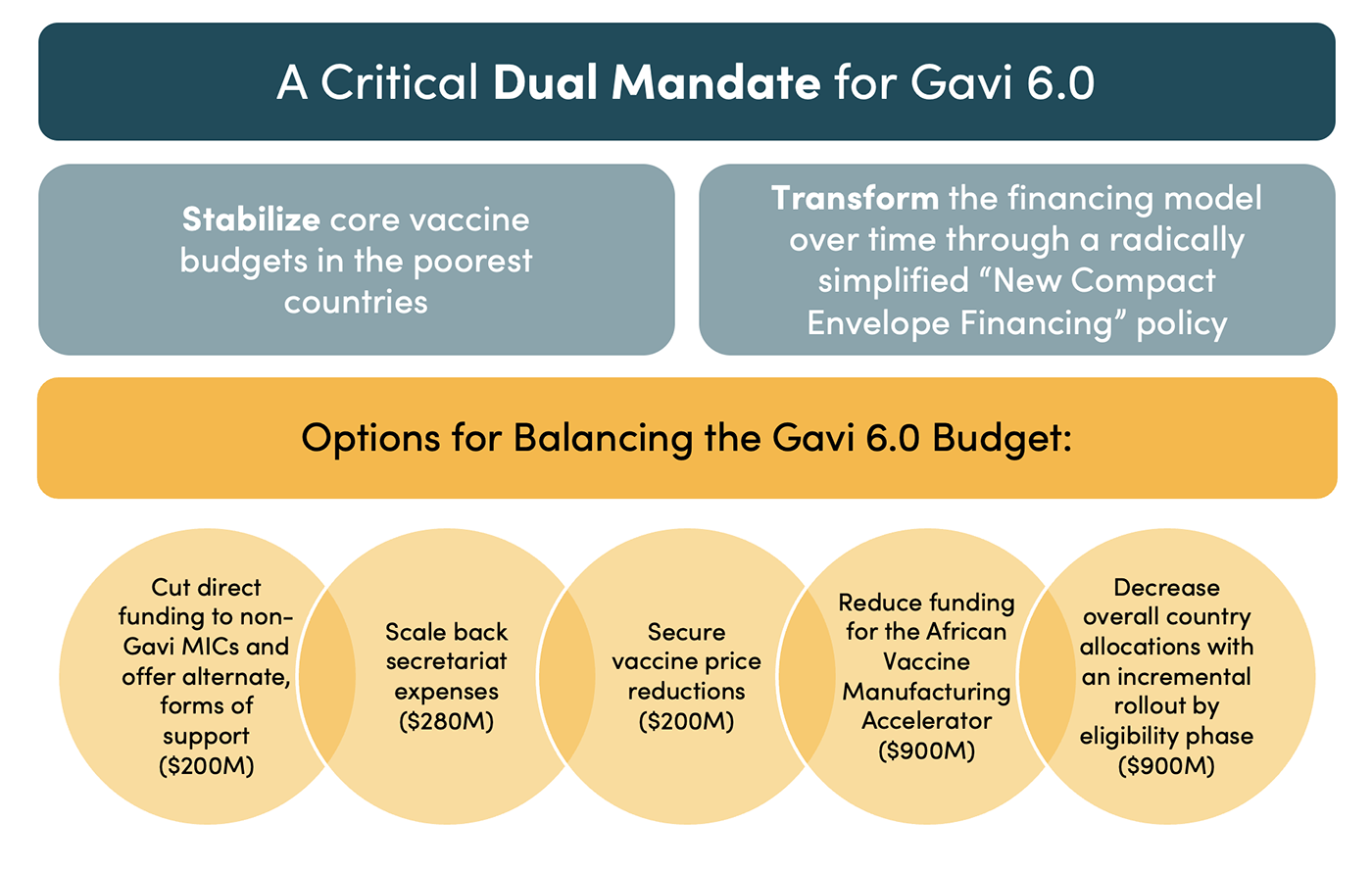
Gavi’s recently approved $1 billion African Vaccine Manufacturing Accelerator (AVMA) offers a pathway to support ongoing efforts to diversify manufacturing, alongside broader efforts to recalibrate the global-regional balance in procurement.
Proposed action: Gavi should explicitly acknowledge the trade-offs between investing in sustainable routine immunization manufacturing and resilient supplies for health emergencies; work closely with partners to create the enabling ecosystem including regulatory arrangements; and set realistic ambitions given the timeframe and budget envelope.
Read commentary on foundational questions and key considerations for AVMA, plus analysis on the role of regulation in advancing African vaccine manufacturing.
Current global health financing challenges alongside growing calls to shift the center of gravity for decision-making and prioritization underscore the need to test new approaches that put countries in the driver’s seat.
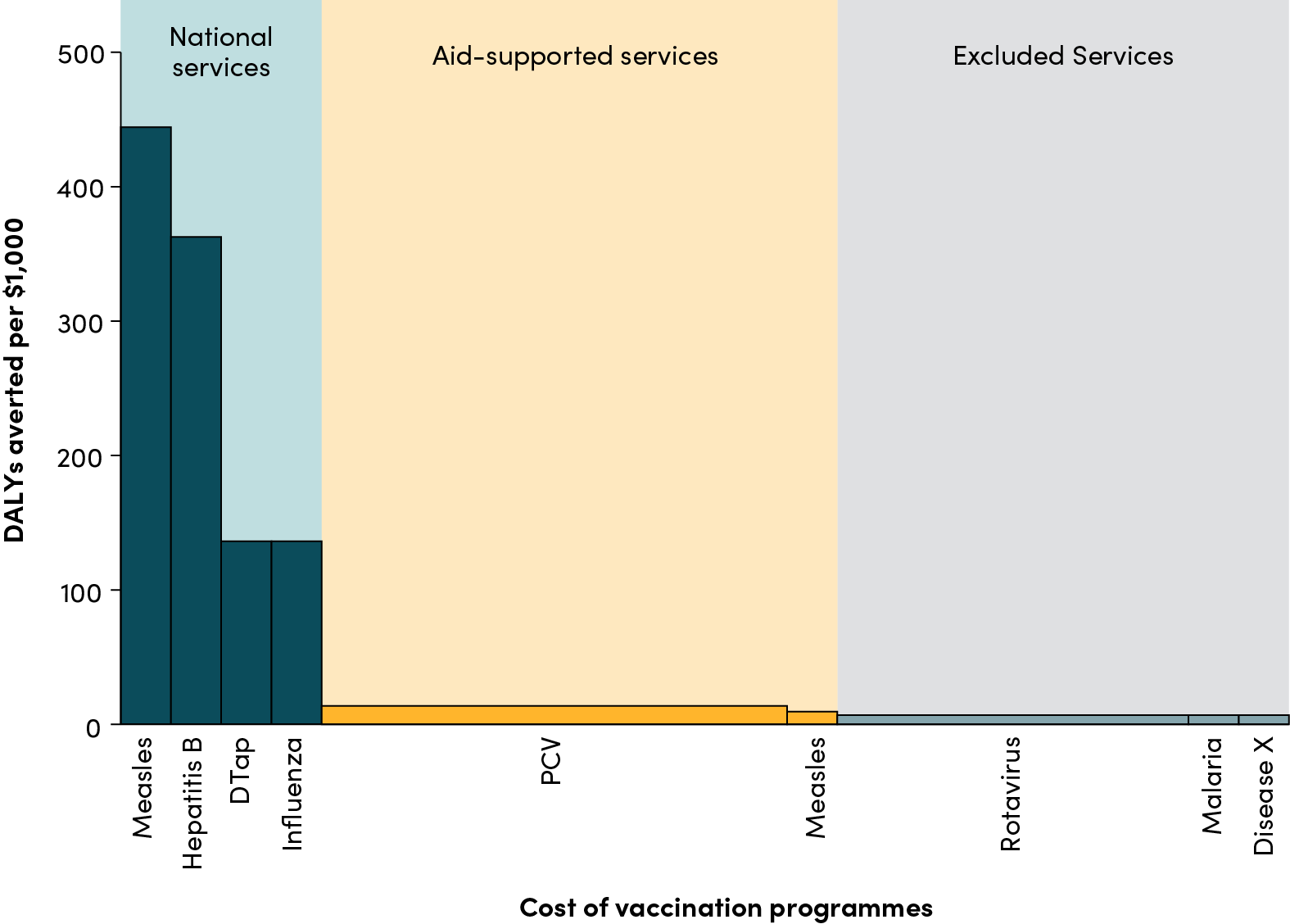
Proposed action: Gavi should pilot a new compact with select partner countries that prioritizes country-led financing of the most cost-effective vaccines, with external aid provided “at the margin.”
Read more on the New Compact approach.
Sustainable immunization programs—for both routine vaccination and outbreak response—require strong health systems. Yet, to date, the impact of Gavi’s investments in these areas has been mixed.
Proposed action: Gavi should leverage its role in scaling new technologies and market shaping to fill critical systems-level gaps to improve immunization—and health service—delivery. In addition, Gavi’s new First Response Fund should be complemented by a more comprehensive approach to financing pandemic preparedness and response.
Read the analysis on Gavi’s role in scaling innovations for immunization and health systems and Gavi’s role in the broader landscape of pandemic financing