Recommended
As we head into a long weekend to observe Indigenous People’s Day in the United States, thoughts about representation and inclusion are at the top of my mind. Earlier this year, I gave a keynote address at the 2023 Promoting Inclusion in Economics Research conference. I’ve written my remarks here as a blog post in case other people find them useful.
Amanda Bayer and Cecilia Rouse wrote a paper on diversity in the economics profession, which noted that out of the 500 doctorate degrees in economics awarded by US institutions to US citizens or permanent residents in 2014, only 11 were received by African American, Hispanic, or Indigenous American women. As an African American woman who earned my doctorate degree in economics from the University of California at Berkeley in 2011, I felt these numbers intensely resonate when I first read them. While stark statistics raise awareness about the limited diversity in the economics profession, they cannot fully convey the depth of the stories beneath. Over time, I’ve come to appreciate the importance of speaking out about my story and encouraging other people to do the same, so that we can collectively learn from our individual experiences.
Earning my PhD was the pinnacle of my academic career and my greatest accomplishment at that point. I wrapped up my job market with a tenure-track position and left graduate school ready for a bright future. Things quickly turned gloomy once I ventured into the world of being an academic economist. I went from feeling confident about my aspirations to questioning my self-worth. I learned three things I would have loved to share with my younger self. I hope sharing them now will make other people’s journeys less turbulent than mine was.
1. Recognize when you’re drowning
There’s a crucial difference between swimming against the tide (facing challenges, leaning into growth opportunities, pushing yourself outside your comfort zone) and drowning (being overwhelmed by feelings of self-doubt, isolation, and misery). It’s imperative to recognize when you slip from swimming against the tide to drowning. And to rally an emergency response when you need it.
I’ve always done things that challenged me. I’m a compulsive overachiever and was a competitive athlete from childhood to college. I enjoy pushing myself intellectually, physically, and professionally. Graduate school had been demanding, but I had never fundamentally questioned my ability to succeed. I had always felt supported and grounded in the belief that I was destined to do great things. This all changed when I left Berkeley.
Drowning manifests itself in different ways in different situations. For me, drowning entailed actively shedding my identity and warping into an unrecognizable version of the person I used to be. I began to shift away from being my “authentic self” and morphed into a contrived caricature of what an “ideal economist” should be. I transitioned from thinking about “what interests me?” to constantly considering “what will other people find interesting?” I stopped asking myself “what’s my instinct?” when I approached new topics and instead immediately resorted to wondering “what’s a testable hypothesis from standard economic theory that I could apply in this context?”
On an intellectual level, I was familiar with the multiple challenges facing women of color in the economics profession. Terms like “stereotype threat”, “imposter syndrome”, and “microaggressions” were all part of my vocabulary and I could cite a few personal examples. Yet, I was privileged to have avoided being debilitated by these challenges before I left graduate school.
2. You deserve to thrive
I spent the next several years drowning, until I finally realized that I deserve to thrive. My mindset profoundly shifted when I heard Beronda Montgomery speak on a panel about Best Practices in Mentoring Underrepresented Minority Women in Economics at the 2018 American Economic Association (AEA) Meetings. She shared a powerful analogy linking effective mentoring and leadership to caring for plants. If someone gives us a plant that is thriving and it suddenly starts to wilt under our care, our initial reaction tends to be an urge to figure out how to revive it. We typically begin by checking if it’s getting the right amount of light, heat, water, and nutrients. We don’t default to assuming there’s something suddenly wrong with the plant, but instead explore whether there’s something wrong with its environment or the care it's receiving. Yet, when well accomplished people who’ve been high achievers enter a new environment and suddenly start wilting, we tend to assume there’s something fundamentally wrong with them.
I’ve learned how to identify and stay away from environments that don’t nurture me. There’s a growing awareness about the deleterious impacts of toxic culture — described as: disrespectful (lack of consideration, courtesy, dignity for others), non-inclusive (inequity, cronyism, nepotism, general culture), unethical (dishonesty, lack of regulatory compliance), cutthroat (backstabbing behavior, ruthless competition), and abusive (bullying, harassment, hostility). Look out for these five attributes and shield yourself from them.
I thrive when I’m around people who invigorate me. Find your people. Commune with, learn from, and grow with them. For me, this has meant participating in initiatives led by a collection of organizations doing amazing work to promote diversity in economics and joining supportive employee resource groups. There are many out there, the ones that have shaped my journey include: the Association for the Advancement of African Women Economists (AAAWE), the AEA’s Committee on the Status of Minority Groups in the Economics Profession (CSMGEP) and Committee on the Status of Women in the Economics Profession (CSWEP), the Diversity Initiative for Tenure in Economics (DITE), and the World Bank’s African Female Professionals Network (AFRFEM) and Single Parent Interest Network (SPIN).
The people I’ve connected with through these networks remain some of my strongest cheerleaders and supporters. I emailed Dania Francis (who was part of my DITE cohort) with a question early one morning as I was preparing these remarks. She responded three minutes later with the answer I’d spent ages searching for on my own. Rhonda Sharpe (who co-founded DITE) continues to mentor me and to be a role model through her work advocating for the disaggregation of data to generate inclusive policy research at Women’s Institute for Science, Equity, and Race (WISER).
Take care of yourself. Sleep, meditate, hydrate, move your body, and nourish it well. Delegate and outsource things that you don’t need to do personally. Invest in yourself by drawing on resources like therapy, coaching, and professional training. Build your personal support system and a personal board of advisors.
3. Stand in your power
Figure out your supreme purpose. As you work towards it, embrace your story and the unique perspective it provides. I come from generations of African feminists – men and women who championed gender equality and created structures to promote it. In my work on gender equality and inclusion, I am channeling my ancestors’ wisdom and letting their genius flow through me.
Standing in your power doesn’t necessarily mean working on things that relate to the most visible parts of your identity. Not all women of African descent need to work on gender equality in Africa. And not only women of African descent should be working on it. Pursue whatever brings you joy and work on things that spark genuine curiosity, allowing you to tap into deeper insight, greater motivation, and ultimately to produce better work.
Use your power to support other people to stand in their power. Now that I’ve come through the clouds and am back in the sunshine, I try to find ways to support others, such as speaking at events hosted by organizations like the Sadie Collective or mentoring scholars and young professionals through the Research in Color Foundation and the Economists for Transformation-AAAWE mentorship programs.
Each of us is a complex combination of identities and experiences. We all have the capacity to contribute a distinctive voice to our field. When we shine light on our stories, we imbue statistics with life, and unleash our genius insight.
**On a related note, the latest episode of CGD podcast features my colleague Eeshani Kandpal speaking with Amie Batson and Francisco Ferreira about elevating women and people of color to leadership positions in international financial institutions. Listen to it here!
DISCLAIMER & PERMISSIONS
CGD's publications reflect the views of the authors, drawing on prior research and experience in their areas of expertise. CGD is a nonpartisan, independent organization and does not take institutional positions. You may use and disseminate CGD's publications under these conditions.
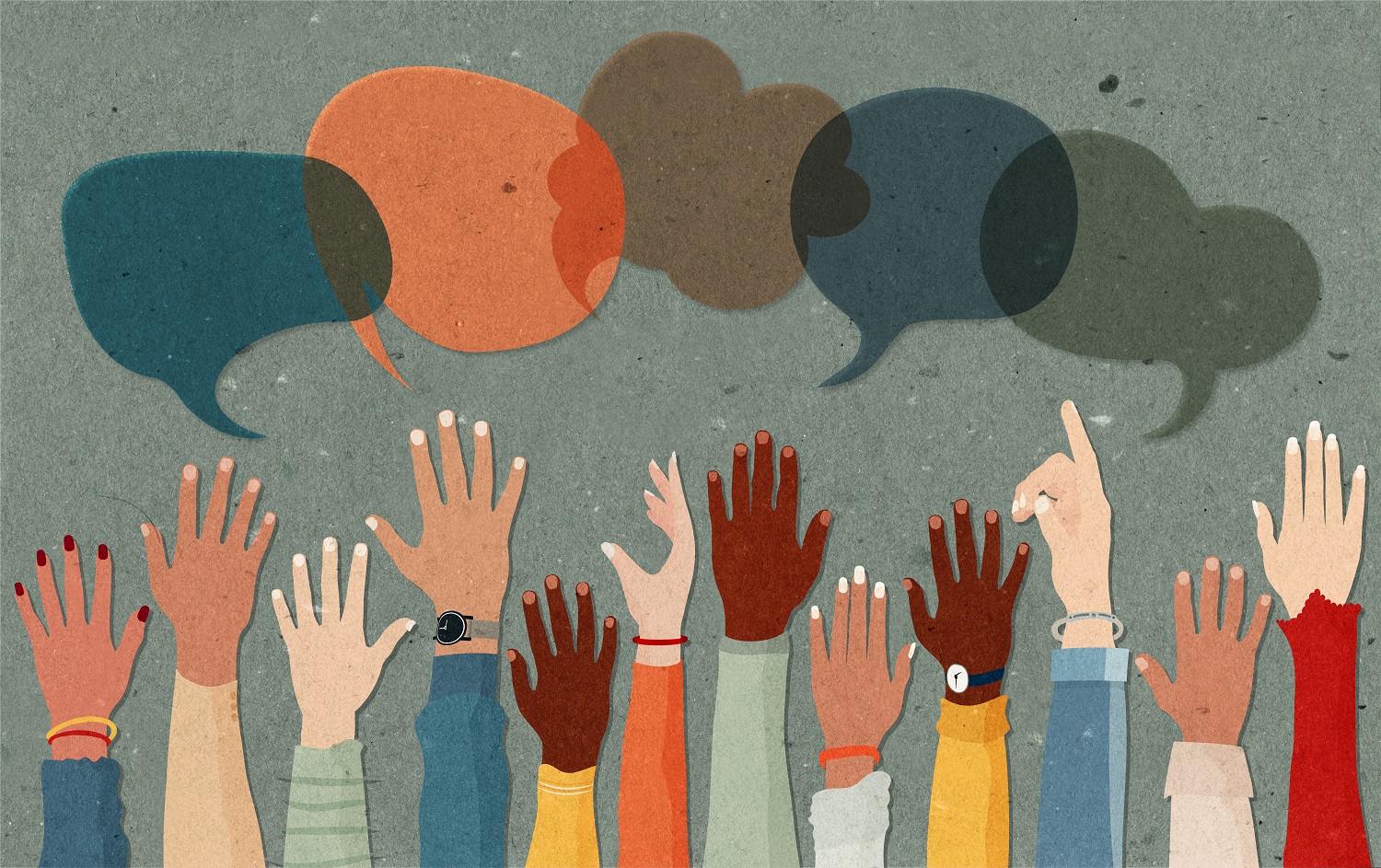
Thumbnail image by: Kanisorn / Adobe Stock