Recommended
Event
1st Annual CGD Women in Leadership Conference
HYBRID
May 21, 2026 8:30—6:30 PM ET | 1:30—11:30 PM BST
WORKING PAPER
Women's Underrepresentation in IFI Leadership

Blog Post
Gender Equality at IFIs: Promote as I Say, Not as I Do?
In a 2023 working paper, we documented how women remained quite underrepresented in senior leadership roles across the international financial institutions (IFIs), despite decades of stated commitments to gender equality. This note revisits and updates that analysis using newly compiled data through 2025, drawing on expanded and revised leadership rosters across major multilateral development banks and international financial institutions. The updated figures show that while women’s representation has improved in some institutions—largely the regional banks—progress remains uneven and fragile, with persistent gaps at the very top of global economic decision-making—and strikingly, some evidence of backsliding at the International Monetary Fund and the World Bank.
Measuring who leads
Our analysis focuses on senior leadership, defined as the most influential positions shaping strategy and resource allocation: presidents, managing directors, vice presidents, and equivalent roles. Over the course of November and December 2025, we gathered publicly available information from industry reports, databases, and the IFIs’ websites, relying on leadership pages, senior employee profiles, and published organizational flow charts. We requested data directly from the IFIs as well and incorporated what was shared with us. We then combined this information with the data gathered as part of our original working paper, using our best judgement when aligning specific managerial levels.
The institutions covered here are the same as in our earlier work: the World Bank, International Monetary Fund (IMF), the Asian Development Bank (ADB), the Inter-American Development Bank (IDB), the European Investment Bank (EIB), and the European Bank for Reconstruction and Development (EBRD). Table 1 describes our sample.[i]
Table 1. Senior leadership criteria and update results by institution
| Institution | Criteria for senior leader | Most recent year senior leaders reported in original dataset | Total number of senior leaders est. for 2025 | Total number women est. for 2025 | Share |
|---|---|---|---|---|---|
| World Bank | Categorized on World Bank website (managing director or higher) | 2023 | 12 | 4 | 33.3% |
| World Bank (expanded) | GJ (vice presidents and equivalents) or higher | 2023 | 47 | 14 | 29.8% |
| IMF | B5 (directors, counsellors, and equivalent) | 2023 | 21 | 5 | 23.8% |
| IDB | Managers, country representatives, or higher | 2023 | 56 | 25 | 44.6% |
| ADB | Vice president or president | 2023 | 7 | 2 | 28.6% |
| EBRD | Reported figures for upper management (RO and HQ) and top management (HQ only) | 2023 | 40 | 17 | 42.5% |
| EIB | Vice president or president | NA | 9 | 4 | 44.4% |
Key findings
Because leadership teams are small—often fewer than 10 people—shares can fluctuate sharply year to year. Still, taken together, the trends are informative. Here’s what we find.
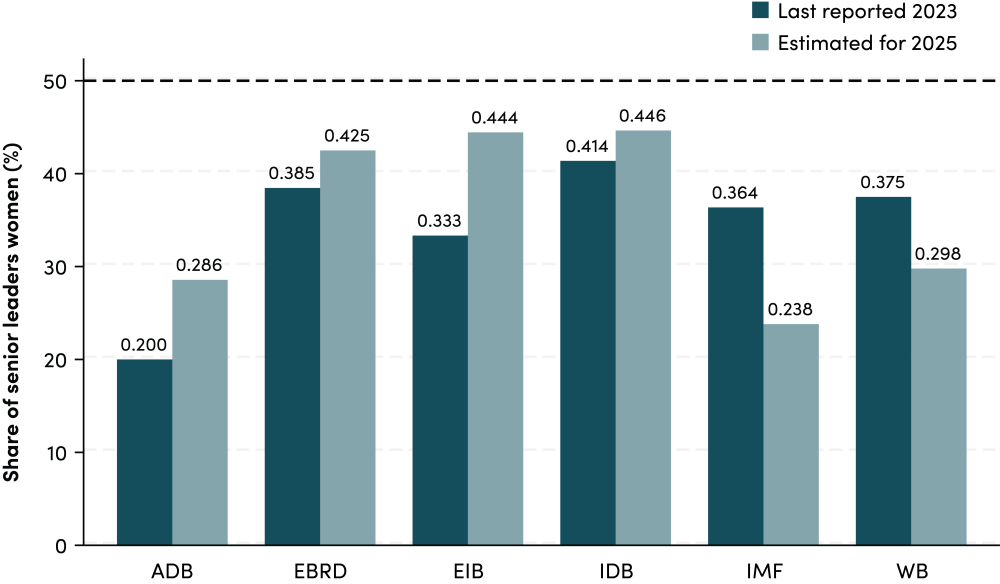
- Not a single IFI at parity: As of December 2025, not one of the IFIs in our sample was at gender parity in its top management cadres. The IMF had the lowest share of women, at 23.8 percent, while the IDB (44.6 percent) and EIB (44.4 percent) came closest. The EBRD (42.5 percent) was the only other IFI with over forty percent women in senior management.
- The WB and IMF versus regional banks: While most IFIs had shown substantial gains from 2000-2023, this update shows that those gains have not been institutionalized at the IMF and the World Bank—both have fallen back meaningfully. By contrast, the regional banks—the ADB, EBRD, EIB, and IDB—continue to show progress.
- Fragile gains: Progress at the top is not locked in by durable norms or appointment practices. The sharp reversals at the IMF and World Bank show that women's representation rises and falls with individual leadership transitions and external pressures. What looks like progress is often just one leader's priorities—and it can vanish just as quickly.
Figure 1. Share of IFI senior leadership positions held by women, updated estimates
The World Bank: Years of progress but recent backsliding
Coding the World Bank’s publicly posted leadership data posed a bit of a challenge. On the one hand, the World Bank’s website lists twelve people under “World Bank Group Leadership”, but it goes on to list several dozen other positions under “Leadership Group.” To be consistent with the other IFIs, we define senior leadership as twelve positions (the President and Managing Directors or equivalent) and 35 Vice Presidents or equivalent, based on the World Bank’s website. In 2023, we had received grade-wise HR data from the WB and were able to report on various definitions of senior leadership, as described in Table 1. However, this head’s update relies on our scraping the World Bank’s website and is more limited in nature.
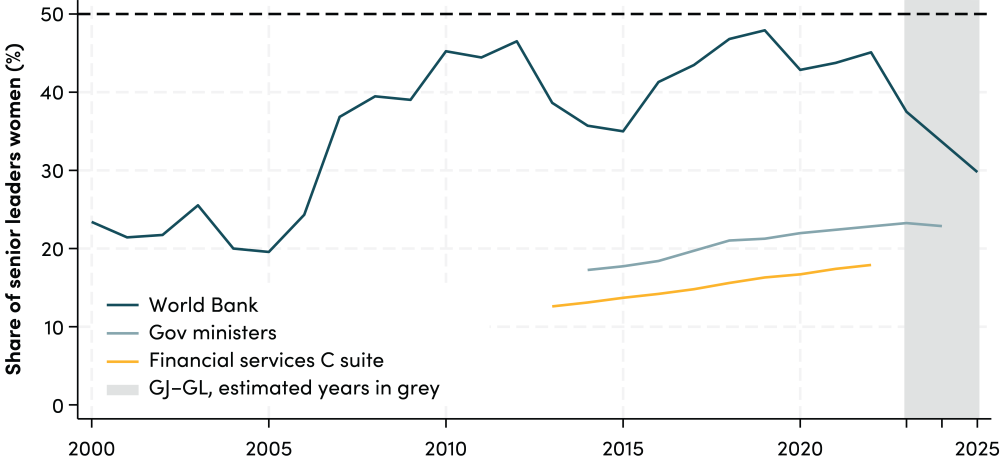
As Figure 2 below shows, under this definition, the share of senior leadership positions held by women rose steadily from roughly 20 percent in the early 2000s to the mid-40s by the early 2010s, reaching a first peak in the early 2010s and then a second peak just below parity in the late 2010s. This period marked the strongest sustained gains in women’s representation at the top of the institution. Since then, however, progress has proven fragile. Women’s share has declined sharply from 2023 to 2025 – from 37.5 percent to 29.8 percent in 2025.
Figure 2. Share of World Bank senior leadership, World Bank vs. global comparators
Part of the bottleneck may stem from the “waterfall” that we documented in earlier CGD research (Figure 3 from the paper, reproduced below) from parity in early technocratic grades down to only about 30-40 percent representation in management and leadership. This waterfall is not unique to the WB: institutions are increasingly able to promote women into senior roles, but far fewer make it into the very top tier where ultimate authority resides. And this discrepancy is important: managers and directors may influence implementation, but it is the presidents and vice presidents who shape institutional priorities, budget allocations, and responses to crises.
Figure 3. Share of World Bank employees, women
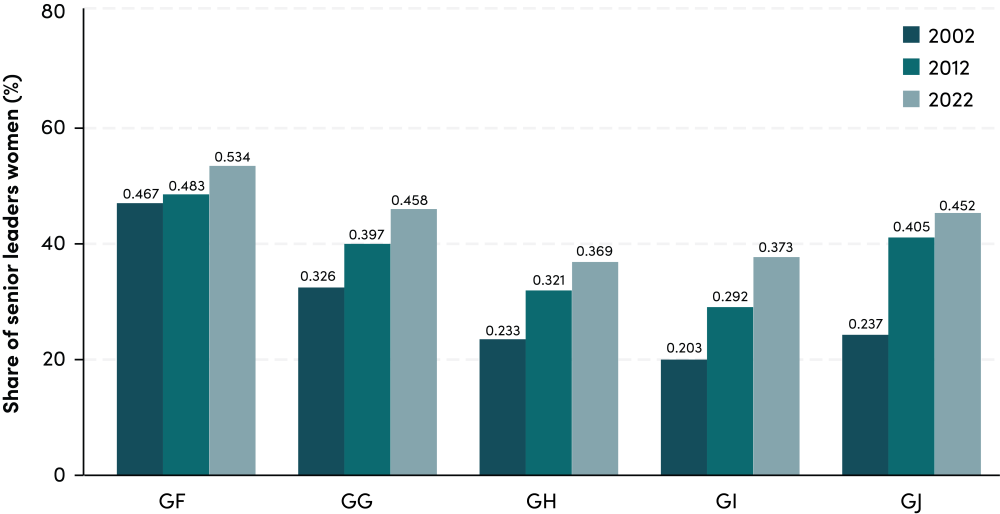
Source: Kandpal, Webster, and Kenny (2023). “Missing Figures” CGD.
The IMF: Sharp downturn
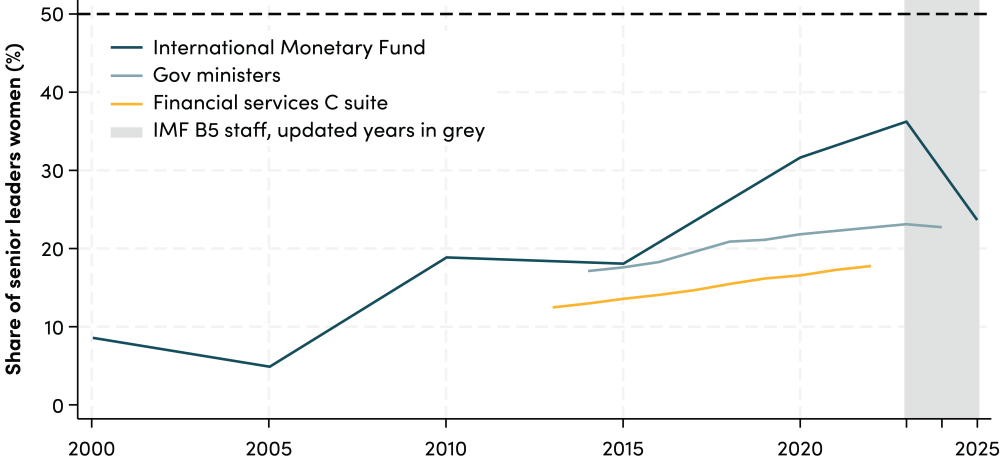
The IMF's numbers show that, at 23.8 percent women in senior leadership as of December 2025, it has the lowest share of any institution in our sample— and the historical trend shows that despite periodic improvements, women's representation at the top of the Fund has consistently been low. This matters disproportionately because of the IMF's reach. The Fund's surveillance, program design, and Article IV consultations shape fiscal space, social spending, and macroeconomic adjustment across the globe—decisions with well-documented gendered consequences. The IMF has itself acknowledged this: its 2022 gender mainstreaming strategy explicitly recognizes that macroeconomic adjustment can disproportionately burden women, and that fiscal and monetary policies must be designed with gender outcomes in mind. Yet, the people making those calls remain overwhelmingly male.
Figure 4. Representation in senior leadership, IMF vs. global comparators
Signs of progress at regional development banks
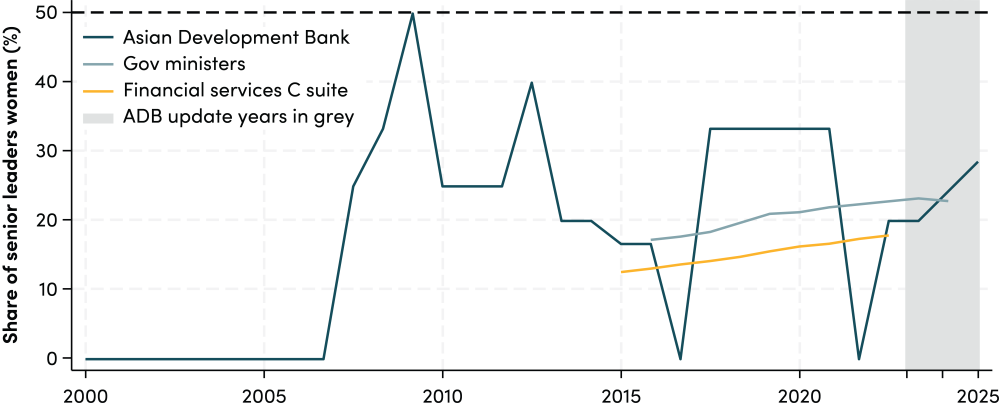
The ADB shows some recent growth to just shy of 30 percent, albeit from a low recent baseline–and far from a period at parity in the early 2000s.
Figure 5. Representation in senior leadership, ADB vs. global comparators
The IDB, EBRD, and EIB are the only three institutions with women’s representation in senior leadership topping 40 percent at this point. At all three, the share has increased over time– not quite linearly, but certainly in a sustained manner. The picture looks even more encouraging when comparators are included, although parity remains elusive everywhere.
Figure 6. Representation in senior leadership, IDB vs. global comparators
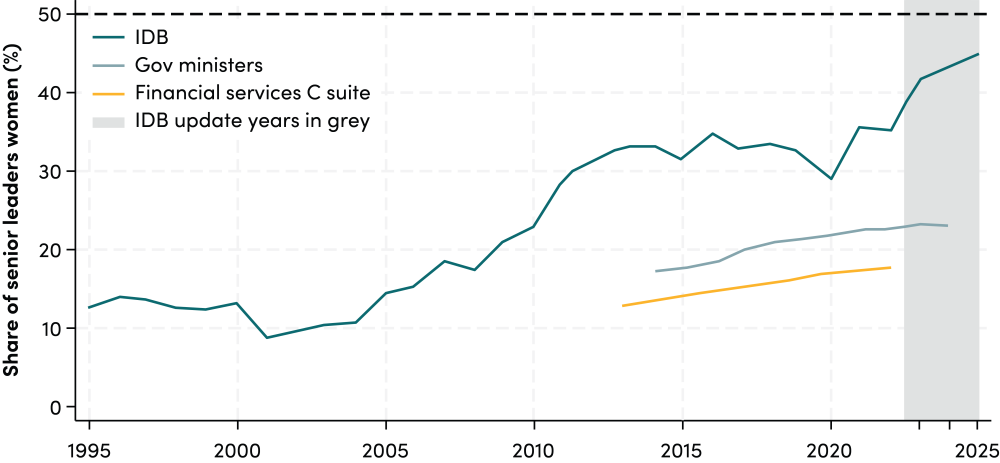
Figure 7. Representation in senior leadership, EBRD vs. global comparators
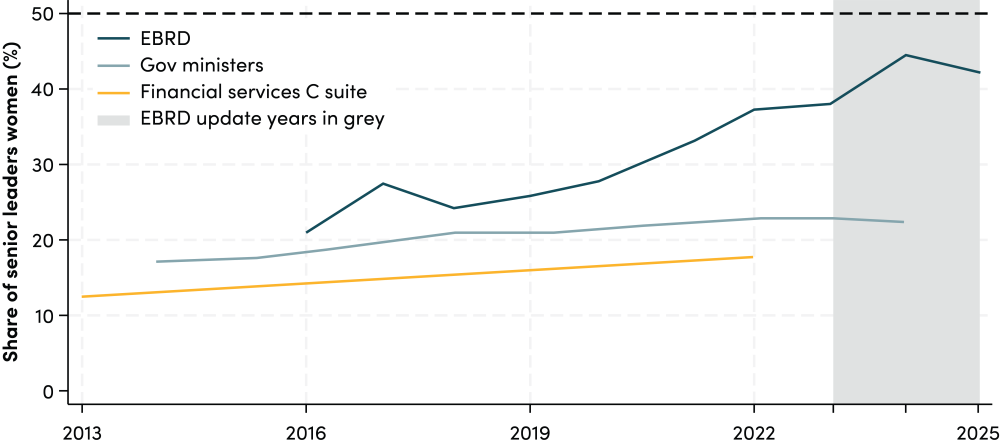
Figure 8. Representation in senior leadership, EIB vs. global comparators
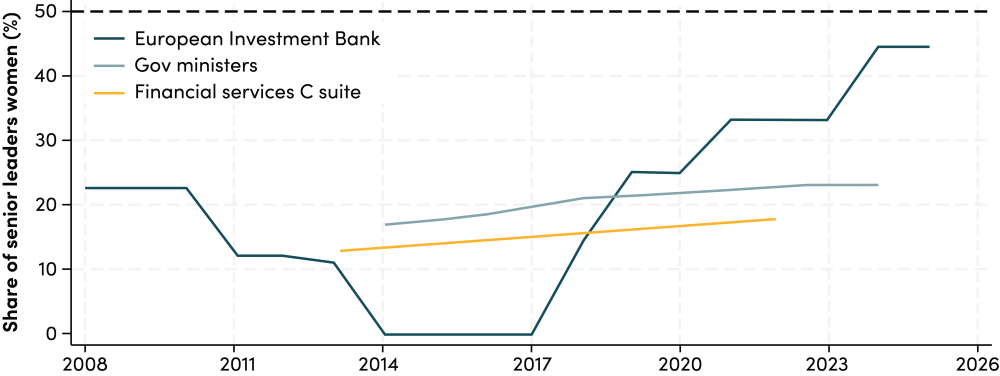
Note: Figure 8 did not appear in the original working paper.
Why gender parity in senior IFI leadership matters
We began with a data problem: women remain underrepresented at the top of every major IFI, and progress has been uneven, fragile, and in some cases reversed. But the stakes of this finding extend far beyond institutional aesthetics or organizational fairness. Rigorous empirical research shows that who holds senior leadership in IFIs is a consequential lever for advancing women's economic and political leadership–and for IFI effectiveness–in borrowing countries.
For instance, a study using data on thousands of World Bank task team leaders combined with the Bank's project-level Gender Mainstreaming Index finds that deeper implementation of gender mainstreaming–integrating gender across project design, activities, and monitoring, rather than checking a box to clear the approval threshold–is significantly more likely when women staff supervise projects, hold positions of authority, and are more represented as coworkers. The mechanism is institutional: the Bank's entrenched "approval culture" means that staff identities and values crucially determine day-to-day implementation decisions, and more than 90 percent of bank staff see project approval as very or extremely important for their career success, making it decisive whether those in authority treat gender as a genuine priority or a compliance exercise. When the World Bank’s share of women in leadership falls from near-parity to 30 percent, as it has in recent years, that is not an internal HR problem. It is a disconcerting sign that the quality of gender integration across hundreds of lending operations in dozens of countries is likely declining with it.
The IFI-specific finding sits within a well-established literature on what female leadership actually changes. Recent cross-national work confirms the pattern across a range of countries: women's representation in legislatures and cabinet positions correlates with greater legal rights and protections for women affecting their economic participation, with numerous qualitative and quantitative studies providing evidence that female officials substantively represent women's interests.
So, the gender gap in leadership that we document here is not just a problem inside these institutions. It is a problem that propagates outward, at scale.
And last but not the least, the IFIs routinely advise borrowing countries on governance, inclusion, and institutional reform. Persistent gender gaps at the top undermine credibility when these same institutions advocate for equality elsewhere.
What would real progress look like?
The data suggest three lessons for IFIs serious about change.
First, pipelines are necessary but not sufficient. Our earlier research has shown that qualified women are present in equal numbers in the entry technical grades. The barrier lies at the very top.
Second, appointments matter more than commitments. These data show how quickly gender balance can shift dramatically with external pressures and institutional leadership transitions. Embedding gender criteria into selection processes—not just internal promotions—would reduce backsliding.
Third, transparency is not a “nice to have.” For publicly-financed institutions, transparency is mission-critical. The shareholders and governors of these institutions must demand such transparency and accountability. We cannot allow these institutions to sweep such stagnation or backsliding under the rug.
The data we present are a progress report. They show improvement in some institutions, backsliding in others, and not one institution at parity. But they are also a map of leverage–of the places where closing a gap inside a Washington or Brussels headquarters produces cascading changes in the offices of finance ministers, in the aspirations of girls, and in the lives of women thousands of miles away.
With thanks to Charles Kenny for comments.
[i] To compare across institutions, for the World Bank we only retained Vice Presidents and equivalent up among all the positions listed on the World Bank's leadership page. We used our best assessment of whether a title reflected these grades and dropped those we believe did not. We emailed the World Bank's HR department this list and asked for verification of our coding. We did not hear back. We also requested access to more granular data that would allow us to compare grade composition but similarly did not hear back.
Topics
CITATION
Kandpal, Eeshani, and Brian Webster. 2026. Still Missing at the Top: Women and Senior Leadership in the International Financial Institutions. Center for Global Development.DISCLAIMER & PERMISSIONS
CGD's publications reflect the views of the authors, drawing on prior research and experience in their areas of expertise. CGD is a nonpartisan, independent organization and does not take institutional positions. You may use and disseminate CGD's publications under these conditions.
Thumbnail image by: Tolani Alli / World Bank