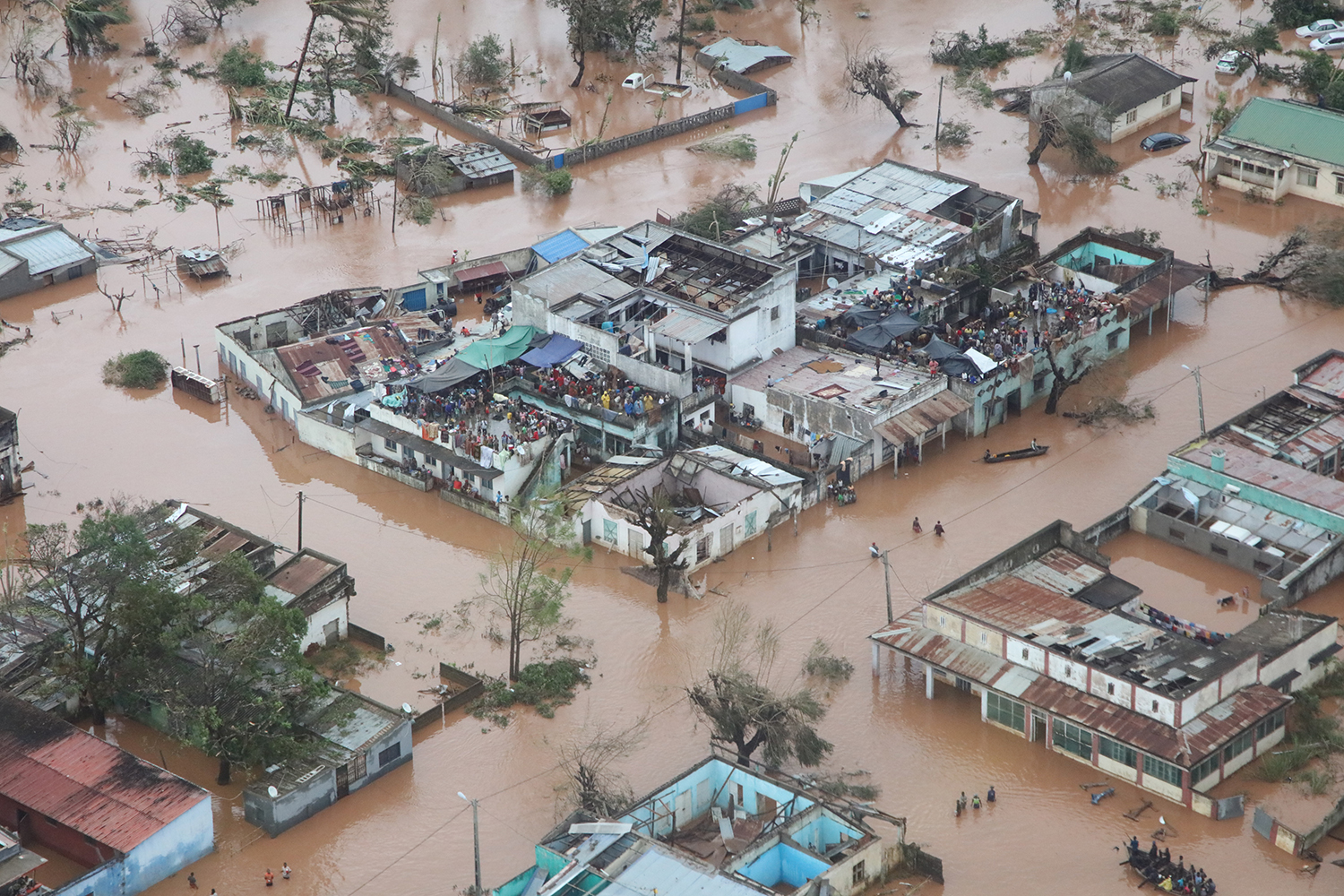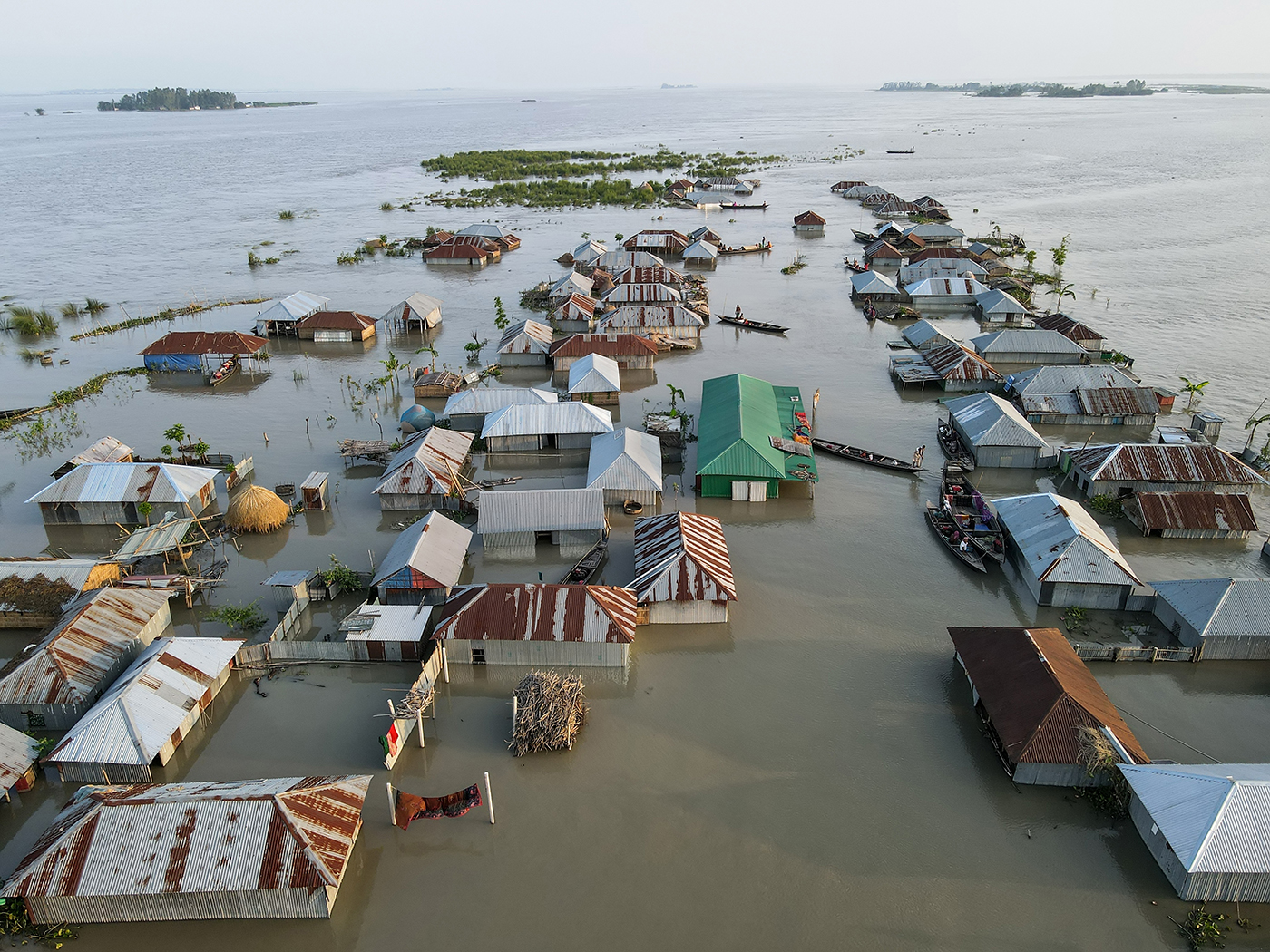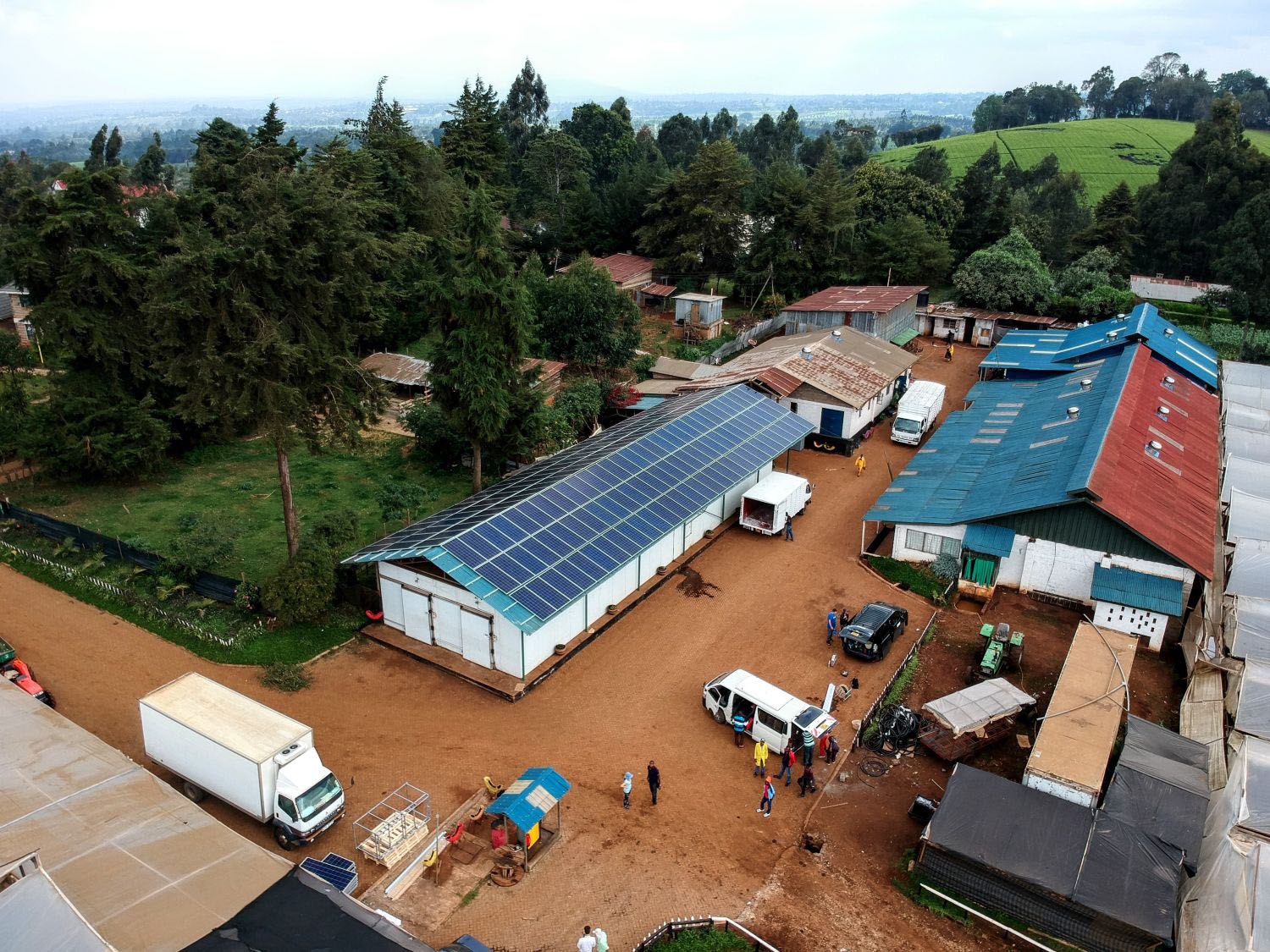

There is no disputing the fact that developing countries will require a massive infusion of financing to fund investments in climate adaptation and the transition to clean energy. Much of this financing will inevitably flow through the public sector, especially in low-income (LICs) and lower-middle-income countries (LMICs), where governments play a central role in driving infrastructure and energy investment.
But this raises an important question: are public sectors in these countries ready to manage such a surge in financing and public investment? Many face well-documented weaknesses in public investment management systems (see here and here), which could limit their ability to use new funds effectively.
In this blog post, we explore the challenges these countries may encounter in absorbing large-scale climate finance, given the current state of their public investment management systems. The takeaway is clear: as the international community works to mobilize resources for the green transition, equal attention must be given to strengthening the systems that will manage and deliver those investments.
The Baku to Belem Roadmap to 1.3T
Just how much money are we talking about? At COP29, countries agreed on a new collective quantified goal (NCQG) for climate finance of $300 billion a year. While there is no single agreed definition of climate finance, it is broadly understood to include funding that either reduces or avoids emissions (mitigation) or lowers the vulnerability of communities and infrastructure to the effects of climate change (adaptation). The NCQG is to be provided or mobilized by developed countries annually by 2035. While the $300 billion falls far short of the $1.3 trillion that experts estimate is needed to meet global climate goals, the final agreement included an ambition to scale financing towards that higher figure.
The “Baku to Belém Roadmap to 1.3T”—a proposal outlining how to close this funding gap—was prepared by the COP presidencies of Azerbaijan and Brazil and has been released at COP30. It calls for scaling up concessional funds, mobilizing private finance, reforming the international financial architecture, and using new and innovative sources to reach $1.3 trillion by 2035.
Absorption challenges
To illustrate the absorption challenge, we estimate the additional inflows that LICs and LMICs could expect if annual climate finance reached $1.3 trillion by 2035. We allocate this total across countries based on their relative size and mitigation and adaptation needs. Although current climate finance is tilted toward mitigation, we assume an even split between mitigation and adaptation ($650 billion each), in line with the Paris Agreement’s call for balanced support and the roadmap’s recommendation to strengthen adaptation finance.
To understand the scale of these potential inflows, we express them relative to projected GDP in 2035. We project each country’s GDP to 2035 by taking its average annual growth rate from the IMF’s 2025–2030 World Economic Outlook (WEO) forecasts and extending that rate forward to 2035.
Our allocation assumptions are as follows:
- Adaptation finance: each country’s share is based on its population, adjusted for relative climate vulnerability using ND-GAIN scores. This approach raises allocations for countries expected to face greater effects—and greater fiscal costs—from climate change (and vice versa).
- Mitigation finance: each country’s share is determined by its contribution to global greenhouse gas (GHG) emissions, reflecting the relative size of the challenge in reducing emissions.
Our results suggest that the projected climate financing will be large relative to projected GDP and current levels of public investment in these countries. Historically, public investment in LICs and LMICs has ranged between 5 and 7 percent of GDP (see here).
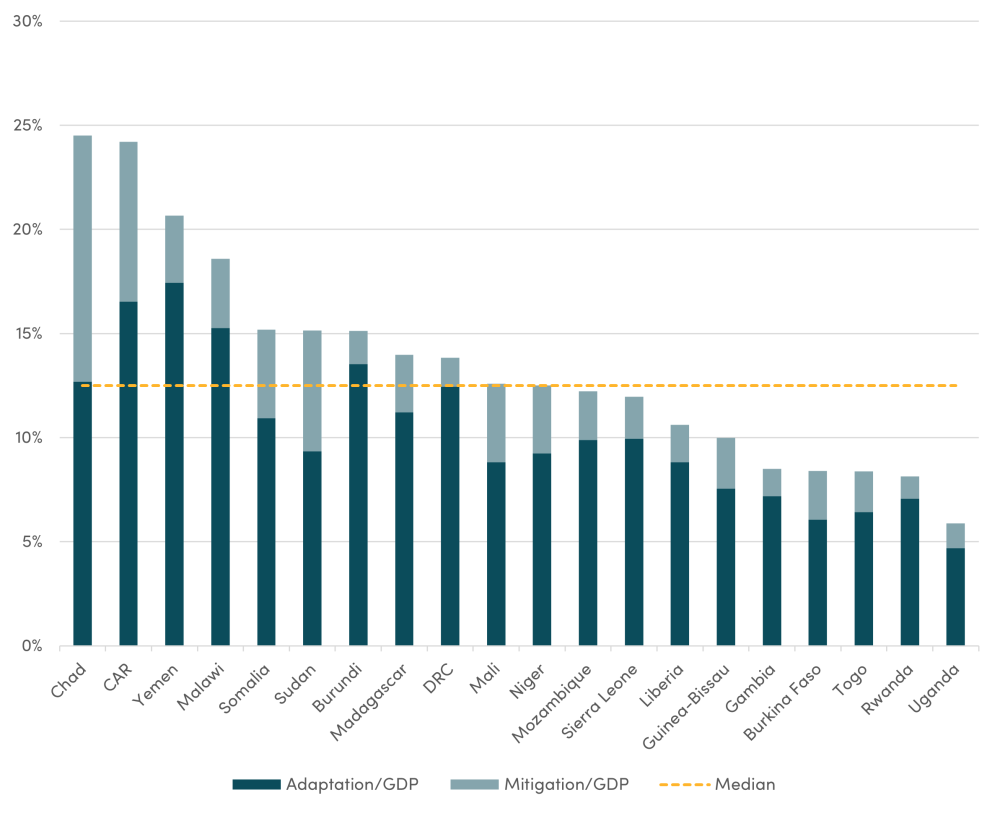
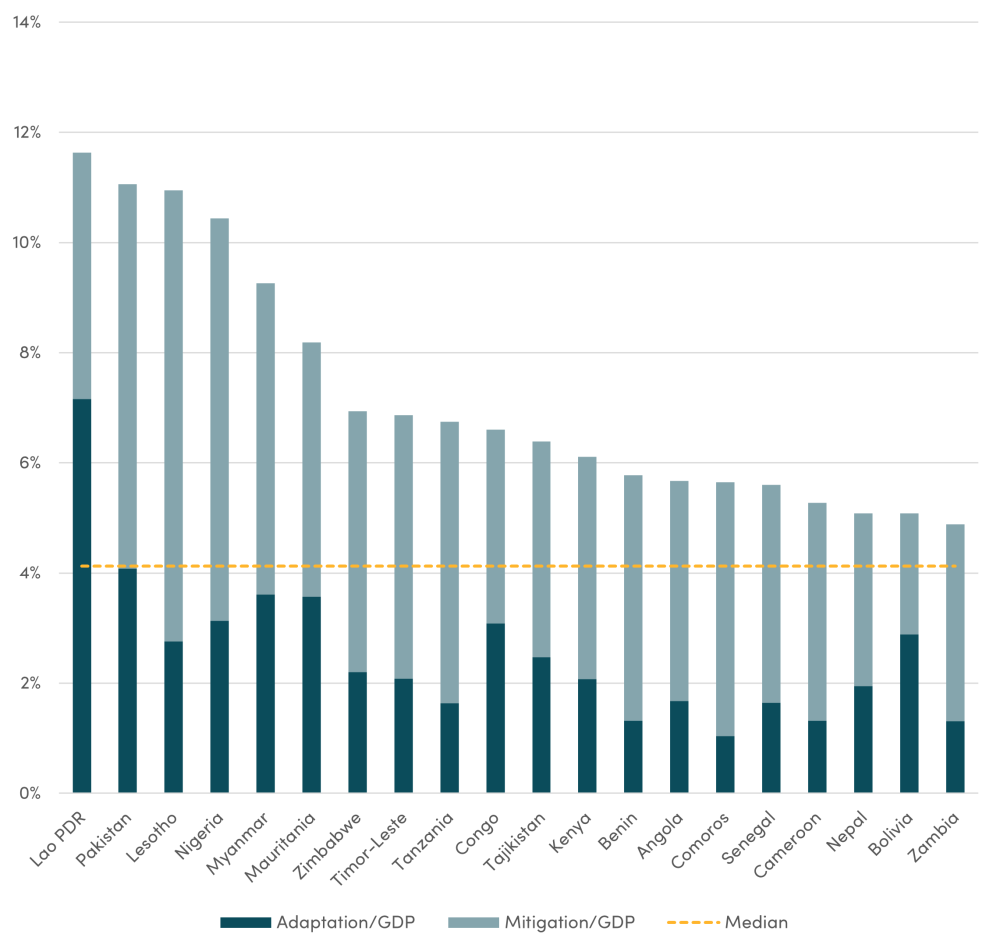
Figure 1 highlights that in LICs, financing will be particularly large relative to GDP (median of 12.5 percent of GDP), with most of the financing allocated for adaptation efforts. While the levels are high for some LMICs, the median is much lower (4.1 percent of GDP), with most of the financing directed to mitigation (Figure 2). The LMIC figure appears potentially feasible to absorb, depending on how much the private sector can be leveraged to provide the mitigation effort through investment in clean energy.
Figure 1. Estimated climate finance/GDP, LICs, 2035
Source: Authors’ estimates. GDP from IMF WEO, climate vulnerability from ND-GAIN, GHG emissions from EDGAR.
Notes: Figure includes all LICs (by FY26 World Bank income classification) for which data exists (20).
Figure 2. Estimated climate finance/GDP, selected LMICs, 2035
Source: Authors’ estimates. GDP from IMF WEO, climate vulnerability from ND-GAIN, GHG emissions from EDGAR.
Notes: Figure includes the 20 LMICs that would receive the highest level of climate financing to GDP. Median reflects the whole sample (48).
Paying attention to strengthening public investment management systems
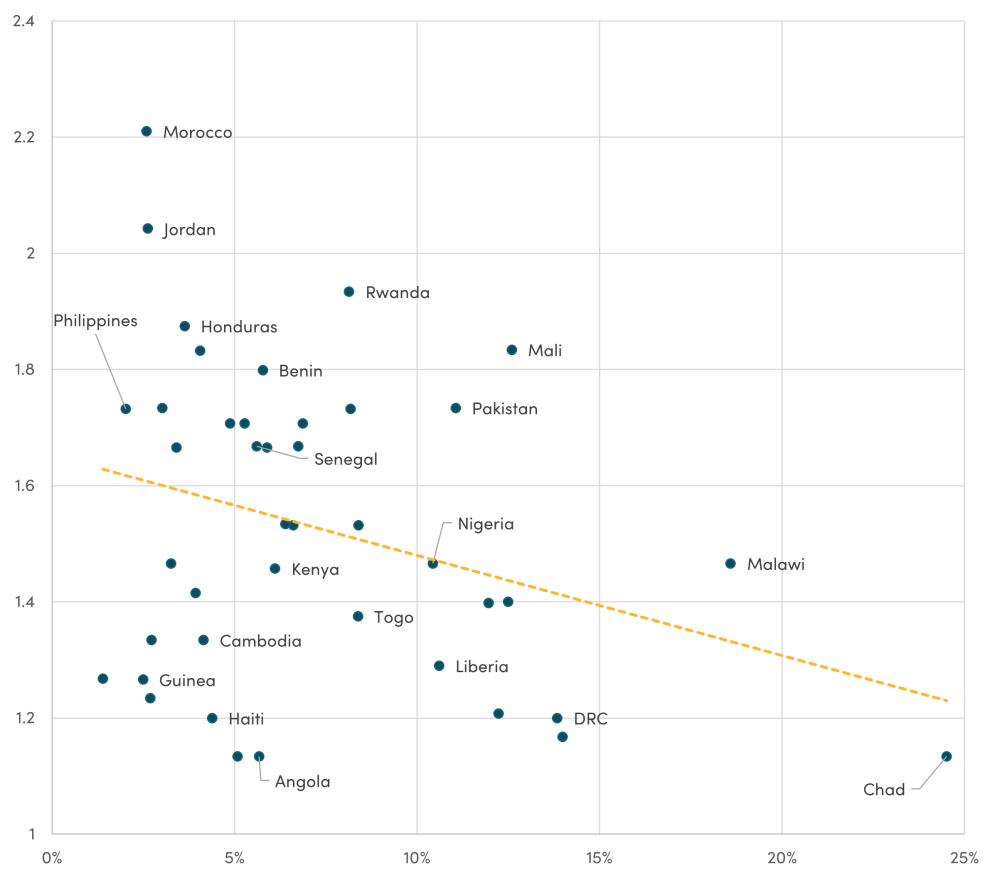
While this financing will take time to materialize, it is crucial that countries begin to accelerate improvements in public investment management (PFM). Effective PFM systems ensure that every dollar of climate finance is spent efficiently, transparently, and where it will have the greatest impact. The IMF’s assessment of the effectiveness of PFM systems—rated as low, medium, or high—indicates that these systems remain weak in many cases (Figure 3).
Although some LMICs—such as Honduras, Morocco, and the Philippines—demonstrate relatively effective use of public investment resources, the same cannot be said for LICs such as the Democratic Republic of Congo (DRC), Liberia, and Mali—where climate finance could exceed 10 percent of GDP if scaled to the levels proposed. Nigeria and Pakistan, while classified as LMICs, face similar institutional weaknesses to those observed in many LICs.
Figure 3. Public investment management score vs. estimated climate finance/GDP, LICs & LMICs
Source: Authors’ estimates, IMF Fiscal Monitor.
Notes: Figure includes all LICs and LMICs for which data exists (42). Public management effectiveness score refers to the average score across 15 categories. Scores range from 1 (low) to 3 (high).
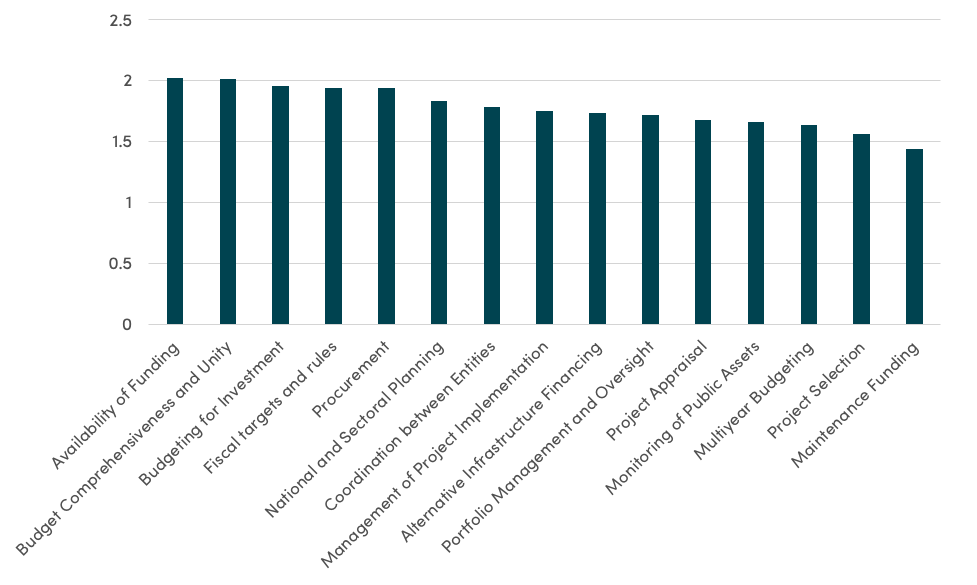
What areas of public investment management are in need of strengthening? Figure 4 shows average effectiveness across 15 indicators for low-income developing countries (LIDCs), an IMF income grouping that includes all LICs and some LMICs (roughly half). It highlights that project appraisal and project selection, crucial for effective use of new public investment resources, urgently need strengthening.
Figure 4. Average PIMA effectiveness, LIDCs
Source: Fiscal Affairs Department, IMF.
Notes: figure includes an average of 33 PIMA effectiveness assessments conducted for low-income developing countries (LIDCs). LIDCs have a per capita income threshold of $2,700, between LICs ($1,135) and LMICs ($4,495).
This analysis underscores that as the international community mobilizes additional climate finance, parallel efforts are needed to strengthen public investment management systems in both LICs and LMICs. By proactively improving these systems now, countries can ensure that they are prepared to effectively absorb and deploy the large-scale climate financing, turning global ambition into tangible resilience and mitigation outcomes.
Topics
DISCLAIMER & PERMISSIONS
CGD's publications reflect the views of the authors, drawing on prior research and experience in their areas of expertise. CGD is a nonpartisan, independent organization and does not take institutional positions. You may use and disseminate CGD's publications under these conditions.
Thumbnail image by: Sebastian/ Adobe Stock