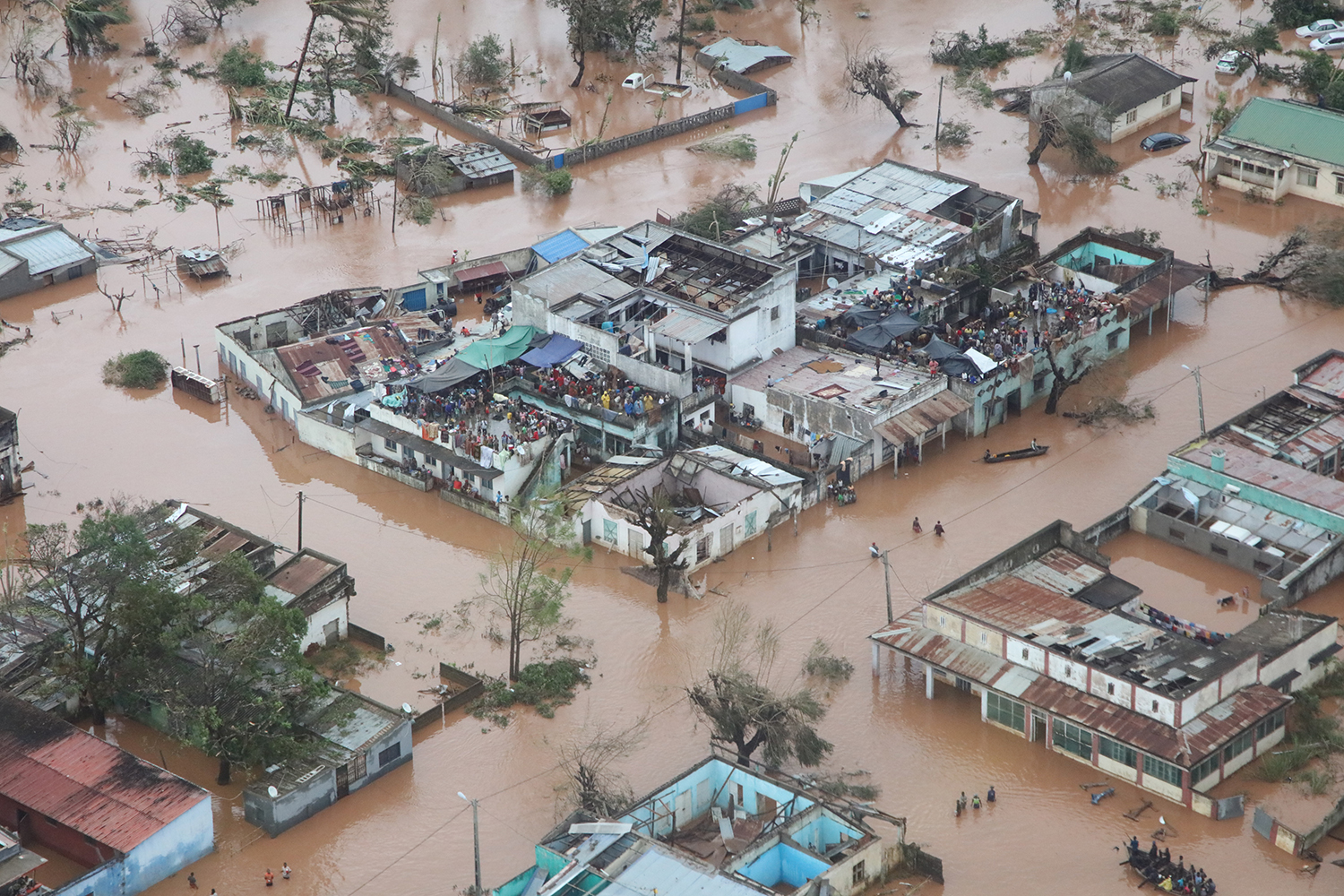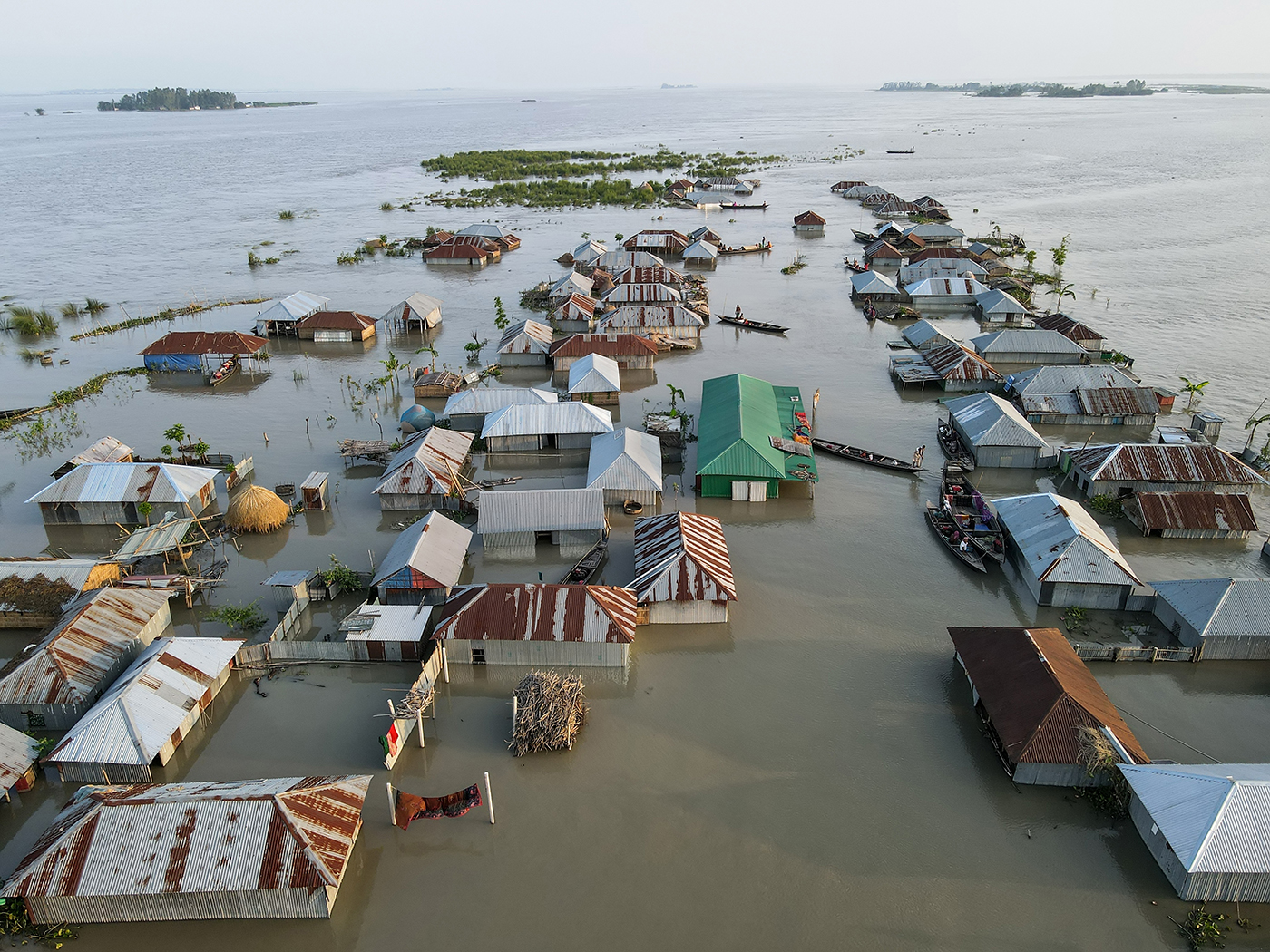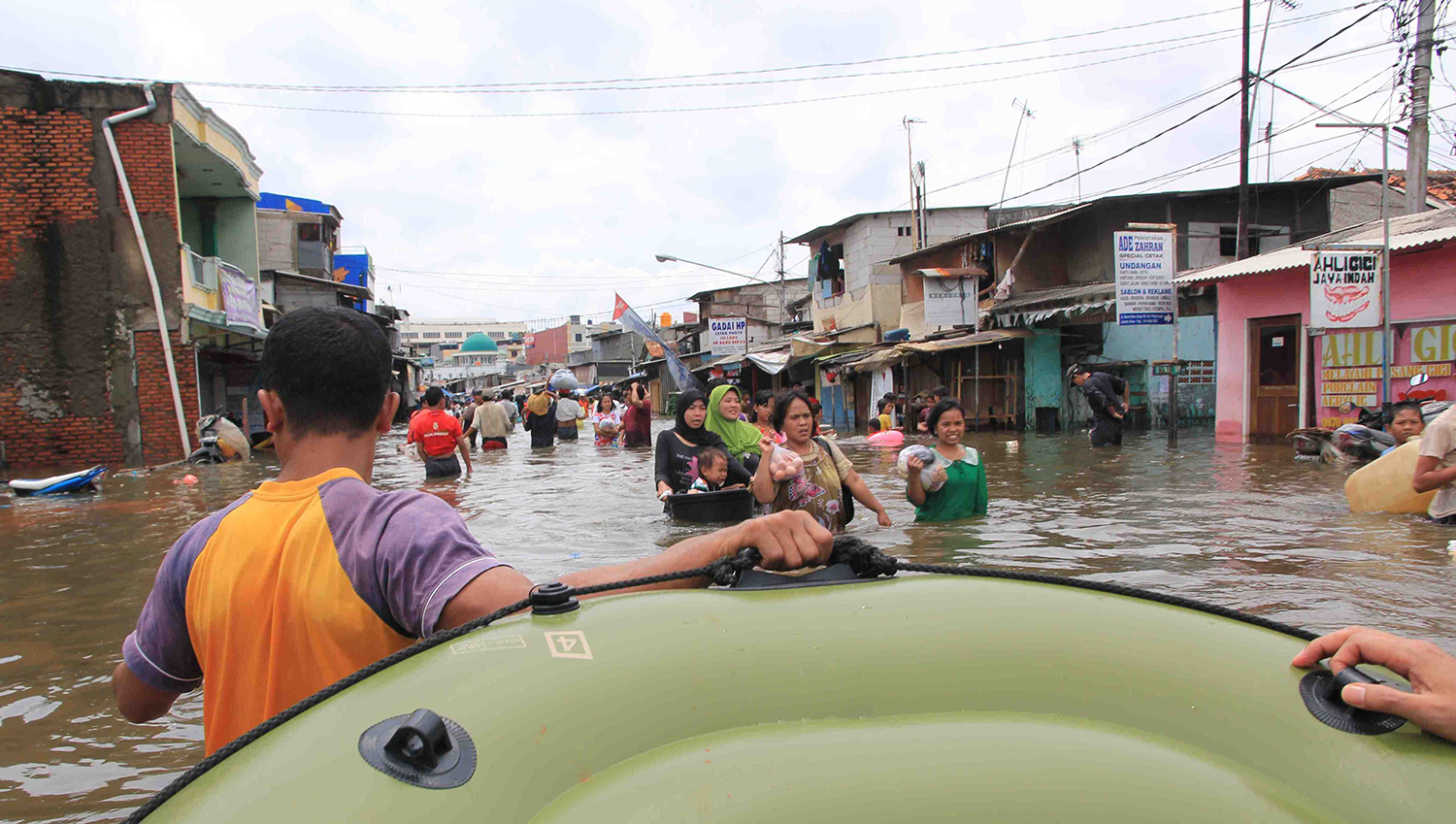
All else equal, adaptation finance should mostly be spent in the countries that are most vulnerable to climate change. Determining vulnerability isn’t easy; many indices attempt to measure it, and they don’t always agree (some measures show negative correlations). However, a consistent finding emerges from these various attempts: Africa is by far the most vulnerable region to the impacts of climate change. Adaptation finance should therefore be weighted heavily towards Africa.
This is broadly the case for EU adaptation finance, which is considerably higher (per person) on the continent. However, within Africa and more generally, there is no correlation between the per person adaptation finance allocated by the EU and countries’ vulnerability, regardless of which measure is used. With the green transition high on the agenda at the upcoming AU-EU summit—and given the close correlation between adaptation finance and ODA spending—the EU should ensure that its pivot towards more aid in its neighbourhood doesn’t jeopardize its commitment to help the most at-risk countries adapt to climate change.
There's little consistency between vulnerability indices
Climate vulnerability indices are an important input into development finance policymaking. Effective allocation of scarce adaptation finance depends on understanding where the need is greatest. There have been numerous attempts to measure countries’ vulnerability, but they show limited agreement. In a new paper, my colleague explores the correlations between four of the most prominent indices, and finds that correlations between them range from 0.7 (between ND-GAIN and INFORM CC) and minus 0.4 (WRI and MVI). The disagreement at the individual country level is huge: the ranking of some countries differs by 100 places or more between indices. The Philippines is the most at-risk country according to the WRI index but doesn’t make the top 100 most at-risk countries according to the MVI index. Similarly, Chad is the most at-risk country according to ND-GAIN, and in the top five according to INFORM and MVI, but only the 95th most vulnerable according WRI.
Africa is consistently more vulnerable than average across indices
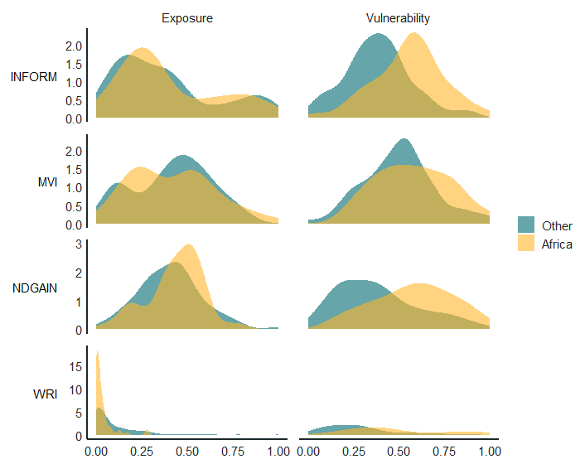
Despite this disagreement, one common theme is that Africa (and sub-Saharan Africa in particular) is the most vulnerable region. Of the four indices examined in the paper, three show Africa as being substantially more vulnerable. (The remaining index, WRI, is substantially weighted towards countries with larger populations, with India, Indonesia, and the Philippines the three most at-risk countries.)
Most indices are composed of some measure of exposure (presence of people in places that could be adversely affected) and vulnerability (the predisposition of those people to be adversely affected). On the former, African countries are no more exposed than other regions on average: the exposure components of the above indices have similar distributions for Africa as other regions (Figure 1). It is on the vulnerability components that substantial differences emerge.
Figure 1. Distribution on normalized indices, Africa and other regions
Is Africa’s higher vulnerability reflected in EU adaptation finance allocation?
This additional vulnerability—as captured by each of the different indices—should lead to greater amounts of adaptation finance received per person on the continent. Encouragingly, this has been the case with EU adaptation finance. Between 2016 and 2023, average commitments (excluding cross-cutting projects that also have a mitigation component) averaged around $0.80 per person across ODA-eligible countries. But within the African continent, this figure was $2 per person, compared to $0.47 elsewhere. This is true for both member states, and EU institutions (Table 1).
Table 1. Climate vulnerability and adaptation finance per capita
| Africa | Other | |
|---|---|---|
| Average overall vulnerability across indices | 0.477 | 0.415 |
| Average across vulnerability element | 0.556 | 0.415 |
| Adaptation finance per person | ||
| EU total | 1.99 | 0.47 |
| - EU member state | 1.38 | 0.35 |
| - EU institutions | 0.60 | 0.13 |
Notes: Adaptation finance excludes cross-cutting climate finance, and weights significant and principal adaptation finance equally when it is measured by the Rio markers. The average across indices refers to the average across min-max normalised indices (with NDGAIN inverted).
Source: OECD CRDF, INFORM, NDGAIN, WRI, MVI
However, while the EU’s adaptation finance is skewed towards the most vulnerable region, looking across all countries (within and outside Africa) there is little correlation between the amount of adaptation finance the EU provides per person, and a country’s vulnerability. For three out of four of the indices, there is a slight negative correlation. This is partly driven by countries with small populations such as Tuvalu or the Marshall Islands, where even one small adaptation project can lead to very high amounts per person. But the lack of correlation holds even excluding countries with populations under 5 million.
Figure 2. EU adaptation finance against country vulnerability, 2016-2023
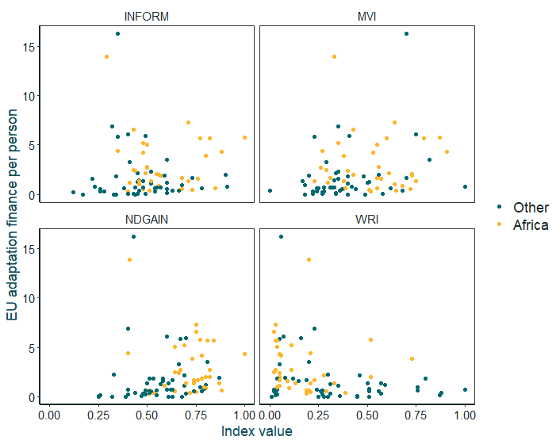
Notes: Adaptation finance excludes cross-cutting climate finance, and weights significant and principal adaptation finance equally when it is measure by the Rio markers. Countries with average populations below 5 million have been excluded.
Source: OECD CRDF, INFORM, NDGAIN, WRI, MVI
The fact that the indices disagree on which countries are more vulnerable could make it hard to use them to inform allocation. But even where all indices agree on the relative vulnerability between two countries, EU adaptation finance does not seem to be guided by need. Tunisia receives 10 times more adaptation finance per person than Sudan, despite every index suggesting that Sudan is substantially more at risk. Similarly, there are four countries that every index suggest are less vulnerable than Equatorial Guinea (Bhutan, Kazakhstan, Kyrgyzstan, and Uzbekistan), but each receives more adaptation finance per person.
There might be some economies of scale that mean we shouldn’t expect adaptation finance to scale with population. Perhaps some finance is for training officials in disaster risk management who are designing countrywide policies, or perhaps some infrastructure costs can be spread out over more people (a trite example: a seawall doesn’t become less effective with more people behind it). Such cases might be expected to weaken the correlation between vulnerability and adaptation finance received per person. But they are unlikely to account for the complete lack of (or indeed, negative) correlation. Surprisingly, the correlation between EU adaptation finance and vulnerability indices is much stronger when not adjusting for population, despite documentation for the indices suggesting that they focus on the share, or average rates of vulnerability, not total numbers of vulnerable people.
The EU should focus adaptation finance on the most vulnerable
The EU and some of its members have been clear about its intention to pivot towards self-interest in its aid allocations, which both risks reducing the effectiveness of that aid, and damaging the positive sentiment that the EU enjoys among African citizens. Given that adaptation finance allocations tend to be highly correlated with aid (given the overlap in their objectives) there is a risk that this could pull adaptation finance even further away from the countries where it is most needed. ODA might have always been influenced by politics and donor self-interest, but adaptation finance is addressing a very specific goal and should be less influenced by considerations beyond limiting the potential damage of climate change.
In allocating adaptation finance, the EU should place a lot more emphasis on measures of vulnerability and ensure that more vulnerable people receive more finance. While these measures are imperfect, the EU could at least start with areas of agreement: countries or regions (such as Africa) that are consistently found to be more vulnerable. Aligning adaptation finance with need could lend EU negotiators a lot more credibility at next week’s summit.
Topics
DISCLAIMER & PERMISSIONS
CGD's publications reflect the views of the authors, drawing on prior research and experience in their areas of expertise. CGD is a nonpartisan, independent organization and does not take institutional positions. You may use and disseminate CGD's publications under these conditions.
Thumbnail image by: Ruby Mangunsong / World Bank