Recommended

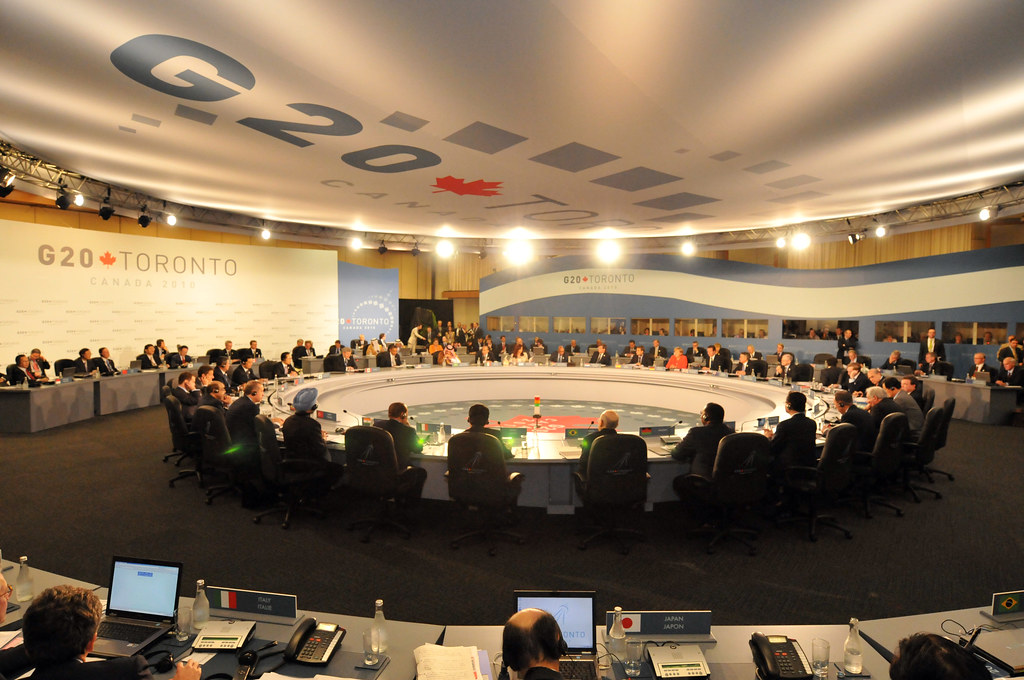
From the outset, the US government made its thematic priorities for its 2026 G20 Presidency both very clear and narrow: deregulation, energy abundance, and innovative technology. This “back to basics” approach represented a departure from that of recent Global South hosts, who championed shared challenges such as equality, poverty reduction, labor protections, and climate justice. This year’s slimmed-down G20 has also narrowed space for civil society and government representatives alike, as the US government has not recognized most G20 engagement groups—generally composed of civil society and academia—except the Business20. Despite this shift, many external groups have remained engaged; Labor20 issued a public statement outlining its priorities, and others, such as Women20 (W20), are hosting summits to ensure continued dialogue. Additionally, advocates not specifically focused on gender are elevating issues that are critical to sustainable development and equitable growth, such as the care economy (for example, Urban20 and Youth20).
The G20 has increasingly recognized and prioritized the care economy in recent years—beginning with the Brisbane goal set in 2014 to reduce the gender gap in labor force participation by 25 percent by 2025, a metric inextricably linked to unpaid care. Because more than half of the G20 countries did not meet the goal by the initial deadline, the G20 extended it to 2030 during the 2025 South Africa G20, adding a target to reduce the gender pay gap by 15 percent by 2035. Groups such as the W20 have championed bolder targets such as the Johannesburg goals, which incorporate the reduction and redistribution of unpaid care as a key structural labor market issue.
To drive continued progress toward these commitments, the W20’s Care Economy Working Group (co-chaired by one of the blog post authors, Kelsey Harris) examined where the G20 currently stands on the care economy; this blog further explores those findings and visualizes the results.
Applying the Global Roadmap for Action on the Care Economy to the G20
This year, the W20 compiled existing data and used the framework in the Global Roadmap for Action on the Care Economy (GRAC) to benchmark G20 progress and identify areas where increased attention or resources could be prioritized. This blog post zooms in specifically on the investment and policy indicators laid out in the GRAC, consolidating the GRAC’s policy indicators across five care areas—childcare, long-term care (LTC), family leave, labor, and infrastructure (for example, water, sanitation, and hygiene)—to generate a G20 care policy and investment snapshot. While this snapshot may not include every care-related indicator, it offers a multidimensional picture of how G20 countries are faring on the disparate elements that together comprise inclusive, high-quality, and sustainable care systems.
Before presenting the findings, it is important to note that data in some contexts are sparse or outdated. The absence of data may be skewing our analysis; for example, in countries where comprehensive expenditure data are not available, it may well be that care spending is extremely low or nonexistent (consistent with what we know about pre-primary education spending in these countries). Alternatively, these countries may spend more on care but aren’t reporting it. Analyzing what data are being reported helps us understand progress, direct evidence-based engagement and resources toward areas where gaps are present, and spotlight best practices across the G20 countries. Better disaggregated data and systematic reporting—a key recommendation from the GRAC and the W20—would enable better analysis and support accountability going forward.
Care investments: where does the G20 stand?
Strong national investments in care support effective and inclusive care systems, and the W20 recommends increasing these investments to 10 percent of national income by 2030. Countries do not centrally track total care investment, but it can be estimated from a composite of different types of care expenditures, including childcare and long-term care (health and social, which includes disability support).
The resulting compilation of care investments shows that G20 countries still have a long way to go to reach the 10 percent target, with reported investment levels ranging from 0.06 to 3.66 percent of GDP. Data are unavailable for many countries, which reflects the concerns noted above. This is particularly the case for long-term care, which ranges from 0.3 to 2.7 percent of GDP across the 10 G20 countries that share expenditure data for this component of the care economy, four of which also track and report social long-term care. Additionally, in some G20 countries where childcare spending data are unavailable, pre-primary education expenditure is used as a proxy, which excludes children under age three. Some data are also outdated; for example, Brazil's pre-primary education expenditure data are from 2011.
Figure 1. Childcare and long-term care investments among the G20
Care policies: where does the G20 stand?
Mapping out key care policies across the G20 reveals clear progress on issues such as developing childcare quality standards, implementing paid leave for fathers, creating long-term care policies and strategies, and accessing electricity. This exercise also highlights important remaining policy gaps in achieving comprehensive care systems in the G20: 15 of 19 countries have childcare policy gaps (the period between the end of parental leave and the start of free pre-primary education), 10 of 19 countries lack paid or unpaid long-term care leave, 10 of 19 countries lack social protection benefits for many people with severe disabilities, and most G20 countries have not ratified key labor conventions.
A review of the total policy score allows for comparisons across countries, though these should be interpreted cautiously given data gaps. Italy and Germany rank high on the policy front, each meeting 20 of the 23 care-related policy indicators. India and Indonesia demonstrate a comparatively weaker commitment to care policies, scoring 5/23 and 3.5/23, respectively. The countries in between span a range of geographies and income levels, but income level does not necessarily imply stronger care systems, with some low- and middle-income countries demonstrating higher composite policy scores (Brazil with 16/23) than their high-income peers (US with 10/23).
Figure 2. G20 care policy snapshots for childcare, long-term care, family leave, labor, and infrastructure
What does this mean for the G20’s care strategy?
Comprehensive care and support systems benefit women, families, and economies, and the benefits are well-documented. For example, global investments in universal childcare and long-term care could create 299 million jobs and increase women’s employment rates by more than 10 percent. The analysis shows that all G20 countries have room to improve and further realize the proven gains in economic growth and gender equality.
G20 countries take diverse approaches to care, with some stronger on policy and some stronger on investments. High levels of investment do not always correspond to a strong policy score, and vice versa. Plotting the policy scores and the financing levels against the G20 medians (0.89 percent of GDP and 14/23 policy indicators) reveals four country clusters taking different approaches to care systems: those that lead on both policy and investments (for example, France and Germany), those that lead more on policies (like Brazil), those that lead on investments (such as South Korea), and those at the early stages of developing both policies and investments (for example, Indonesia and India).
These patterns and comparisons raise interesting questions that can guide future research and policy engagement. Will South Korea’s higher investment eventually translate to greater policy adoption and more transformative care systems? Will Brazil’s policy adoption influence higher investment? And do these indicators correlate with other measures of development progress? While we hope that the answers to these questions will become clearer over time, the clusters suggest no single path to a comprehensive care system. Countries are starting from different places, and their populations have different needs, so what they most need to prioritize—whether stronger policies, more investment, or both—likely differs.
Figure 3. Investment and policy, side by side
What should G20 countries do next?
Progress reporting is an important accountability tool for policymakers and those working to advance the care economy. However, these data are only as good as what gets measured, which varies widely across the G20. More and better data are a critical step in propelling this progress. External stakeholders, including the G20 engagement groups, must also continue to spotlight these metrics and remaining data gaps. The recently released report, 2026 W20 Guidebook for Policymakers (including the chapter on the care economy) and the W20’s concise brief of care recommendations are resources for policymakers, researchers, and advocates to help advance progress.
Commitments such as the Brisbane goal and the commitment by leaders in South Africa in 2025 to significantly increase investment and social protection in the care economy can continue to drive progress and accountability on care across the G20. Moving these commitments into outcomes will require more concentrated effort going forward. The UK is set to chair the G20 in 2027, and given the current Prime Minister’s attention to social care and the government’s own commitment to placing women and girls at the heart of its foreign policy, it has an opportunity to use its 2027 presidency to reenergize this issue and move the G20 from commitment-making to policy action.
Acknowledgments: This analysis was developed based on the foundational research from the Global Roadmap for Action on the Care Economy (co-created by CGD, The Asia Foundation, CIPPEC, the International Center for Research on Women, and Women Deliver) and further developed in the G20 context by the W20’s 2026 Care Economy Working Group. The authors express their sincere gratitude to Ana Moreno, Aapta Garg, and Rebecca Rewald for their thoughtful comments on an earlier draft of this blog post, which greatly strengthened the final piece.
Topics
DISCLAIMER & PERMISSIONS
CGD's publications reflect the views of the authors, drawing on prior research and experience in their areas of expertise. CGD is a nonpartisan, independent organization and does not take institutional positions. You may use and disseminate CGD's publications under these conditions.
Thumbnail image by: Media Lens King/ Adobe Stock