The EU's Financial Instrument for Development

EU development assistance and other policy expenditures are determined every seven years in framework budget reviews called the Multiannual Financial Framework (MFF). This is equivalent to a national government undergoing a spending review for all areas of public expenditure. All aspects of the EU budget are up for negotiation, including how much, what for and the spending rules. The blog series follows this process over the last three years with a specific focus on the EU’s development portfolio, providing a critical analysis of the challenges at each stage of the negotiations.

More from the Series

Blog Post

The EU’s Answer to Migration Is to Triple Funding for Border Management. Will This Do the Job?

June 15, 2018
Earlier this week, the European Commission published its proposals on migration and border security for the next EU budget (2021–2027). Financial support for migration, asylum, and border management is to almost triple, from €13 billion to €34.9 billion. What might this mean for the EU and future mi...
Blog Post

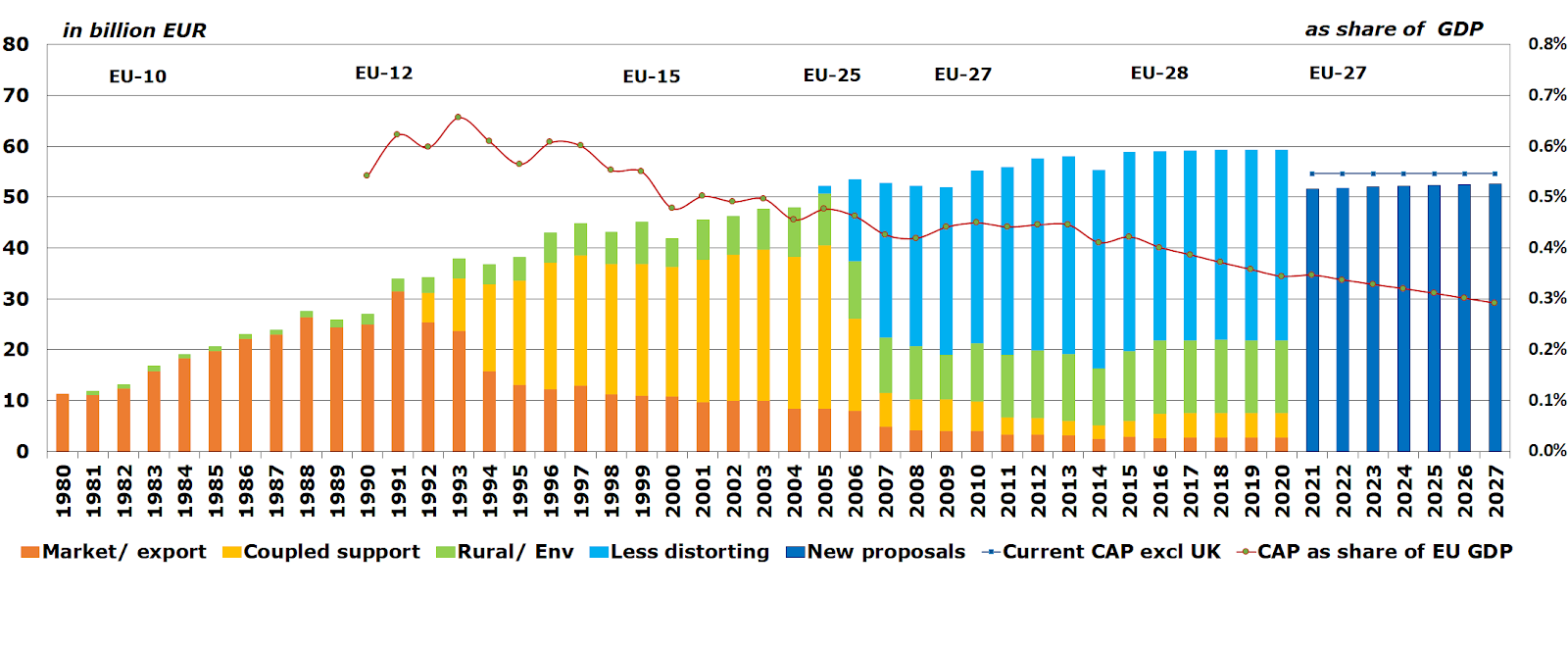
What the EU Budget Means for Developing Countries: Agriculture and Development

May 30, 2018
Three weeks ago, the European Commission published its initial proposal for the EU’s budget from 2021 to 2027. The headlines? Overall spending would rise despite the loss of the UK, and development spending and ‘external action’ could see increases. But both agriculture and regional spending would b...
Blog Post

Development Cooperation Has Emerged a Winner in the EU’s 2021-2027 Budget Proposal, but the Odds Are Stacked against It

May 04, 2018
The long-awaited European Commission Communication on the Multiannual Financial Framework (MFF) 2021-2027—the EU’s long-term budget—has been unveiled, and so begins the EU’s big battle over money and priorities. Brace yourselves for a long arduous struggle that will expose divisions in the...