Rachel Glennerster: Welcome to the CGD Podcast. I'm Rachel Glennerster, president of the Center for Global Development. We have just wrapped up the 2025 Development Leaders Conference in Hamburg, which brought together leaders from development agencies from around the world to discuss the new realities of global cooperation during a very difficult time with rising geopolitical tensions, economic uncertainty, and declining aid budgets.
Today, I'm going to discuss some of the themes that emerged with two of the attendees. Dirk Meyer, director general of BMZ, which is the Federal Ministry of Economic Cooperation and Development in Germany, who co-hosted the conference with CGD, and Elizabeth Sidiropoulos, chief executive of the South African Institute for International Affairs. Elizabeth was one of the presenters. Thank you, Elizabeth and Dirk, for joining and for being part of the conference.
A large number of topics were discussed at the conference. We're not going to have time to go through all of them, so I wanted to hone in on climate for this podcast partly because this is an area obviously, of extreme importance as the world busts through various of the limits that we had signed on to try and prevent reaching higher temperatures, but we're already heading towards them and even hitting the 1.5 degree ceiling that we were hoping to stop at. Partly because it's also an area of increasing controversy in the world about how much we should be spending to address climate.
In November last year, countries gathered in Baku, Azerbaijan, for the COP29 Climate Conference and committed themselves to new global target for developed countries to collectively provide $300 billion a year in climate to the world's poorest countries by the year 2035. However, since then, we have seen a lot of cuts to aid budgets around the world. We've seen some of the projects that were hoped for in Baku cut. Raising questions about the commitment to that number and the ability of the world to reach it. On the one hand, we've been making all these promises. On the other hand, we've been cutting some of the budgets that are meant to help achieve them in a time of difficult prioritization.
Let me turn first to you, Dirk, and ask if you think it's still realistic that we can meet these ambitious climate targets for transferring funding to developing countries. If so, how it's possible.
Dirk Meyer: Thank you very much. I think, first of all, I would say yes, we still should continue. It's a question of survival and assuring quality of life globally. The question of 1.5 degrees is still the question of the first part of the 21st century. I also think that Baku made a very good move forward, because with the new NCQG, it became quite clear that public money only will never be able to finance the big gaps that we have, and bringing in private sector and bringing in, with even more effort, the MDBs, became part of this NCQG.
Even having the situation that the US dropped out of the Paris, which we expected, we still see a huge amount of countries, especially on the Global South, that have a pure interest in mitigation and, of course, adaptation. In that, also when I look at the German figures, we see that it is more or less 50/50 when it comes to adaptation and mitigation in our contribution, which shows that this aspect is not a question of any kind of Western ideology being imposed on developing countries, but it's a pure interest also informing future economies that build on sustainable foundations, and in that, of course, clear committed to the climate goals.
I'm not optimistic, because it's getting a bit more harder than even before, but over the long period of climate policy in combination with development, there is a lot of space to move forward and there are still a lot of partners worldwide that are going into that direction.
Rachel: Thanks, Dirk. Elizabeth, if I can turn to you. In the conference, you said if we were sitting in Africa with a group of African ministers, they would have been less focused on climate than we were having in our conference in Hamburg. Could you explain why you think that that would have been different if we'd been in that very different context? Also, whether you feel there's a tradeoff here between richer countries focusing on providing resources for climate versus maybe some of the other things that they could be providing resources for.
Elizabeth Sidiropoulos: With regard to that statement, it's not to say that African countries don't believe climate change and the need to mitigate, in case of my own country, South Africa, the need to mitigate, but also to adapt to the changes that we're all experiencing, natural disasters and so on, is absolutely essential. It sometimes is seen as not necessarily a tradeoff, but it becomes the overarching prism through which the discussion is held. Clearly, in the African context, and indeed in many other parts of the developing world, it is also about how we transform our economies.
Not just to respond to climate change, but also actually to deal with the fundamental challenge that African countries in particular and LDCs face, which is that you need to build up your productive capacities, you need to get more people into jobs and employment, you need to reduce the extent of informality in African economies, because by doing that, you're also in effect helping to mitigate vulnerabilities. To reduce vulnerabilities that are brought on by climate and by many other challenges. Not least, of course, also if you talk about health and pandemics and so on, with the ability to be healthier when you actually have sources of income that are regular and that you can rely on.
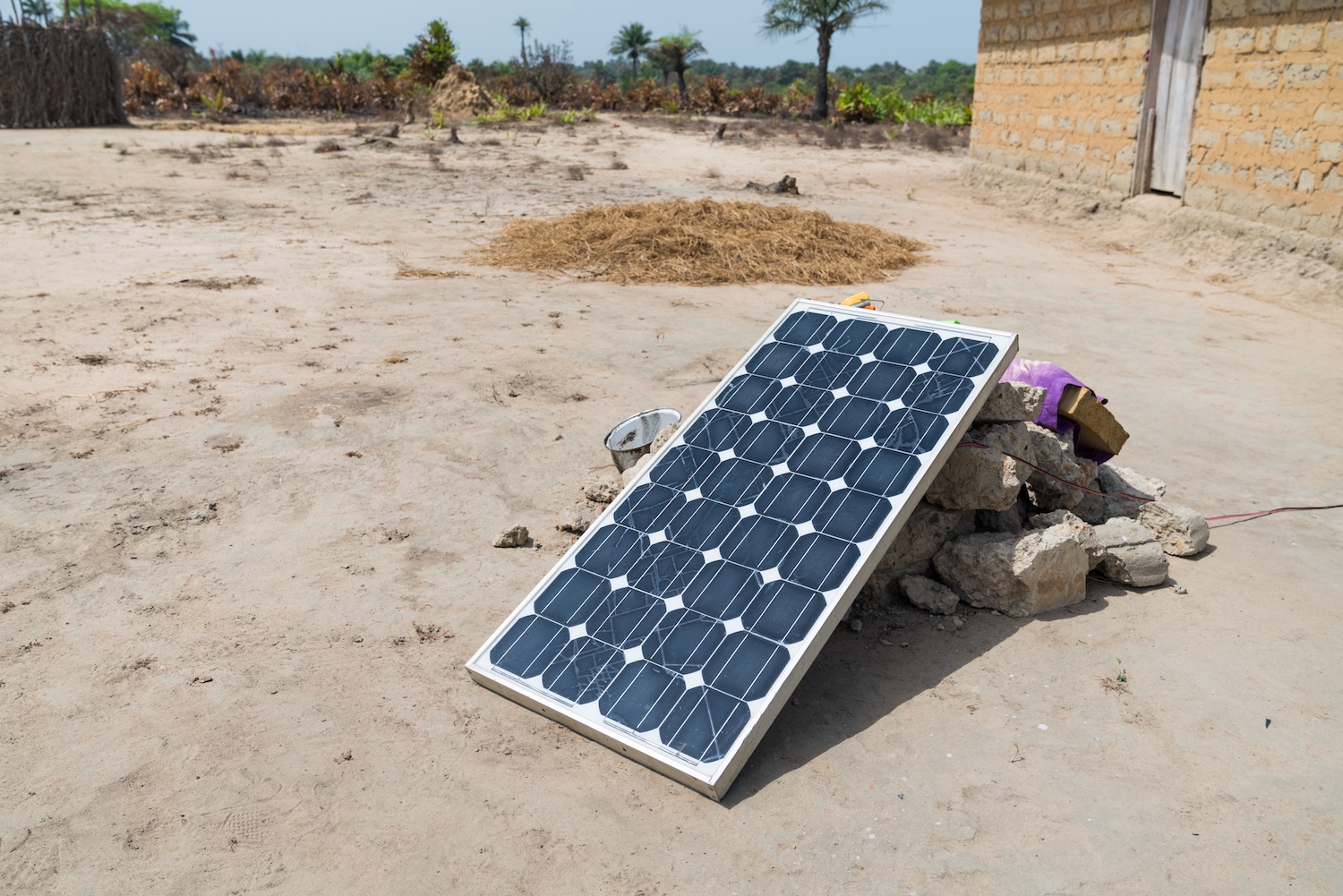
I think it's about really balancing that conversation. It's not about tradeoffs, but really recognizing, and that must be both part of the narrative and part of the way in which we are engaging, that we have to do certain things because climate change is existential for all of us. It's the planetary boundaries. There's nowhere to go. Not yet anyway. Not to Mars. We all need to be committed to that, but African countries are saying there are a couple of things here. First, we really need to build up our economies. We've got over 600 million people, if we're talking about energy, who still don't have sufficient or any access to energy. That's going to have to grow.
Now, it can, of course, grow through renewables as well, but not just through renewables. The challenge here, and this was also something that I think we touched on in the discussion in Hamburg, was of course, you have a number of countries that have found new deposits of gas and oil and whatever, and they're saying, "Well, now we're not in a position to utilize these, or our ability to sell these on may be potentially more challenging, and at a moment when international development cooperation is also reducing." That's part in terms of how we can build up our economies, transform them, et cetera, et cetera.
Clearly, there are also responsibilities on the side of African governments in terms of good governance and accountability and so on, but the global landscape sometimes seems to veer more in one direction and leave behind a little bit of the conversation that is so fundamental to what's important for Africa's development.
Rachel: Picking up a little bit on that, a lot of countries really need to develop, and we should not be arguing that they shouldn't develop because in doing so, they would emit greenhouse gases. I think one big question that was discussed in Hamburg was whether we should be, as outsiders funding mitigation in low-income countries, because they produce very little carbon, and they need to, as you say, Elizabeth, increase their growth. It's pretty impossible to do all of your growth with only renewables. You probably need some kind of mix.
Dirk, I don't know if you want to pick up on that challenge of – which as I say, was quite controversial in the discussions but is something that CGD has been pushing for a long time – is that we should mainly be doing mitigation in middle-income countries, and we should not be expecting small low-income countries who are hardly producing any carbon emissions to do mitigation plans, because it's really just not where the focus should be.
I think Ian, in the presentation, from CGD, pointed out that most of the carbon reduction for mitigation projects comes from just two countries, India and China. What did you think about the discussion about whether we should be focusing on mitigation efforts in middle-income countries, Dirk?
Dirk: Actually, I would combine my answer with a question of effectiveness. I think the Leaders Conference really showed that this is one of the top points in our agenda as a clear ratio for any kind of taxpayers' money that we spend, but also for our own societies, where we have to advocate even more for ODA than probably ever before. In that, I think that the discussion is very clear. It's very reasonable to say, "Let's focus." Like we started, for instance, with the JETPs on countries like Indonesia and in South Africa. Actually, to see also how bravely the government of South Africa took that topic and moved it forward politically that showed that it was very much dedicated to that topic.
Concentrate then when it comes, for instance, to agriculture, on mitigation projects, or when it comes to growing cities, to combine adaptation and mitigation as business models that allow to combine it also on the ground. It's the right discussion at the right time, and it is even more than the question of climate. It leads over to many other questions. How to effectively spend those shrinking budgets in ODA to the topics where there really brings effect that we need.
Rachel: I couldn't agree more about the importance of effectiveness and making sure we spend our limited resources effectively. I think one of the things that came up in the discussion was just how little evidence we have on the cost-effectiveness of the money that we're currently spending. A lot of the multilateral agencies that donors provide funding to do not say how much carbon they have reduced by different projects and what the costs are, so it's impossible to do.
Dirk: Yes, and because we see that, it was so easy for the governments to put their first hits on the sector of development policy, and made it so difficult for us to argue and put the right arguments into the debate. It is a necessity also, for any kind of recalibration of development policy, because only if we achieve progress in this aspect, we will gain ground for more support for the taxpayers' money to development policy.
Rachel: Not to plug my own work, but I have a piece with Seema Jayachandran showing that some of the most cost-effective mitigation opportunities are in low and middle-income countries, or particularly middle-income countries. Elizabeth, if I can turn to you, you've thought a lot about adaptation. I wondered if you wanted to follow up on this point of effectiveness, and how we spend limited budgets particularly effectively.
Elizabeth: When we talk about adaptation, it's not something that necessarily costs as much, or is easy to see the results of, which is why it's much easier to put money into mitigation than into adaptation. Adaptation also tends to be often at local levels, in communities and so on. In the case of South Africa, I think the JETP, the Just Energy Transition Partnership and the platform that that has created is critical. We're a big emitter. We know that. We have a lot of coal. We have a lot of challenges in our electricity supply at the moment, but we've also been ramping up renewables.
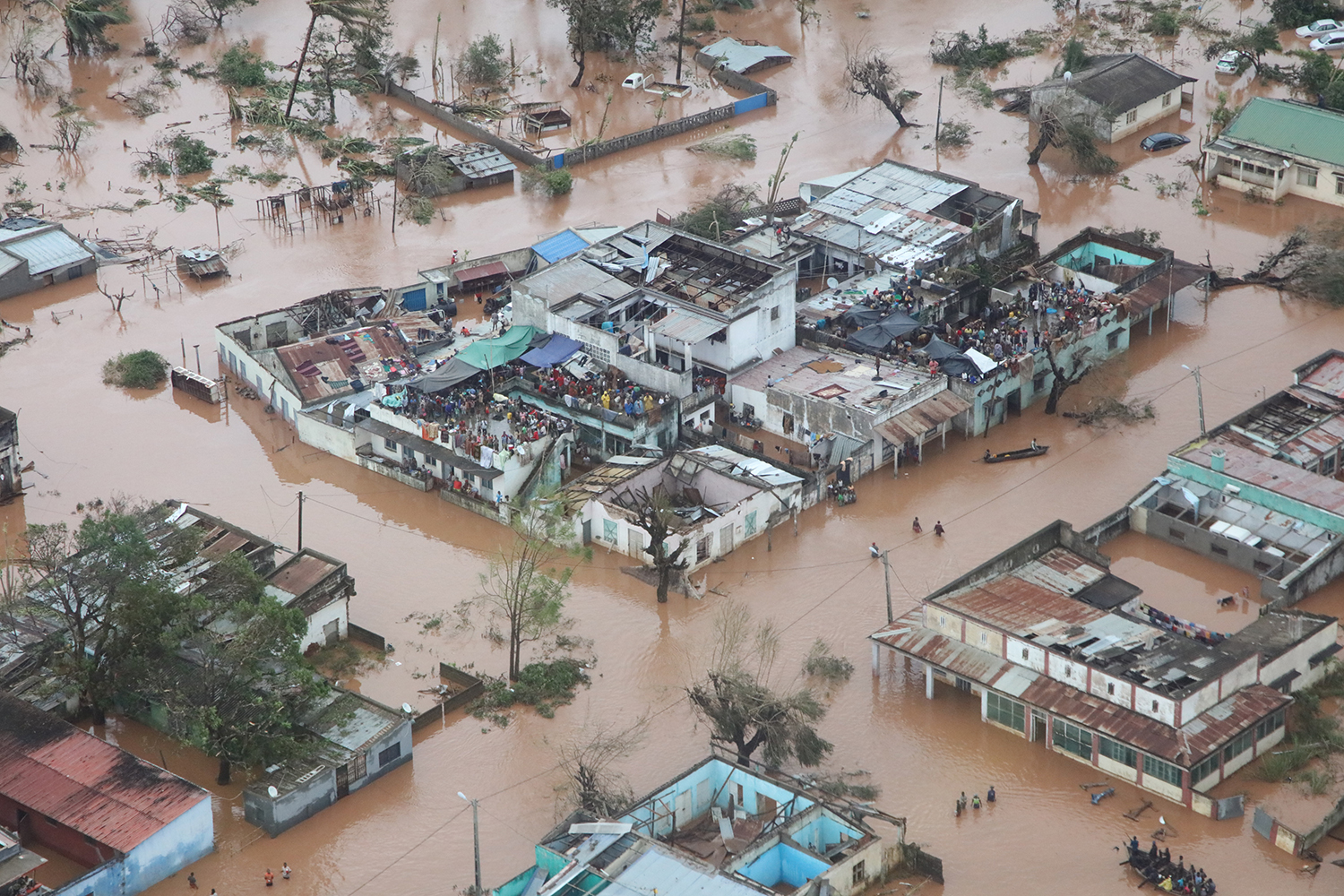
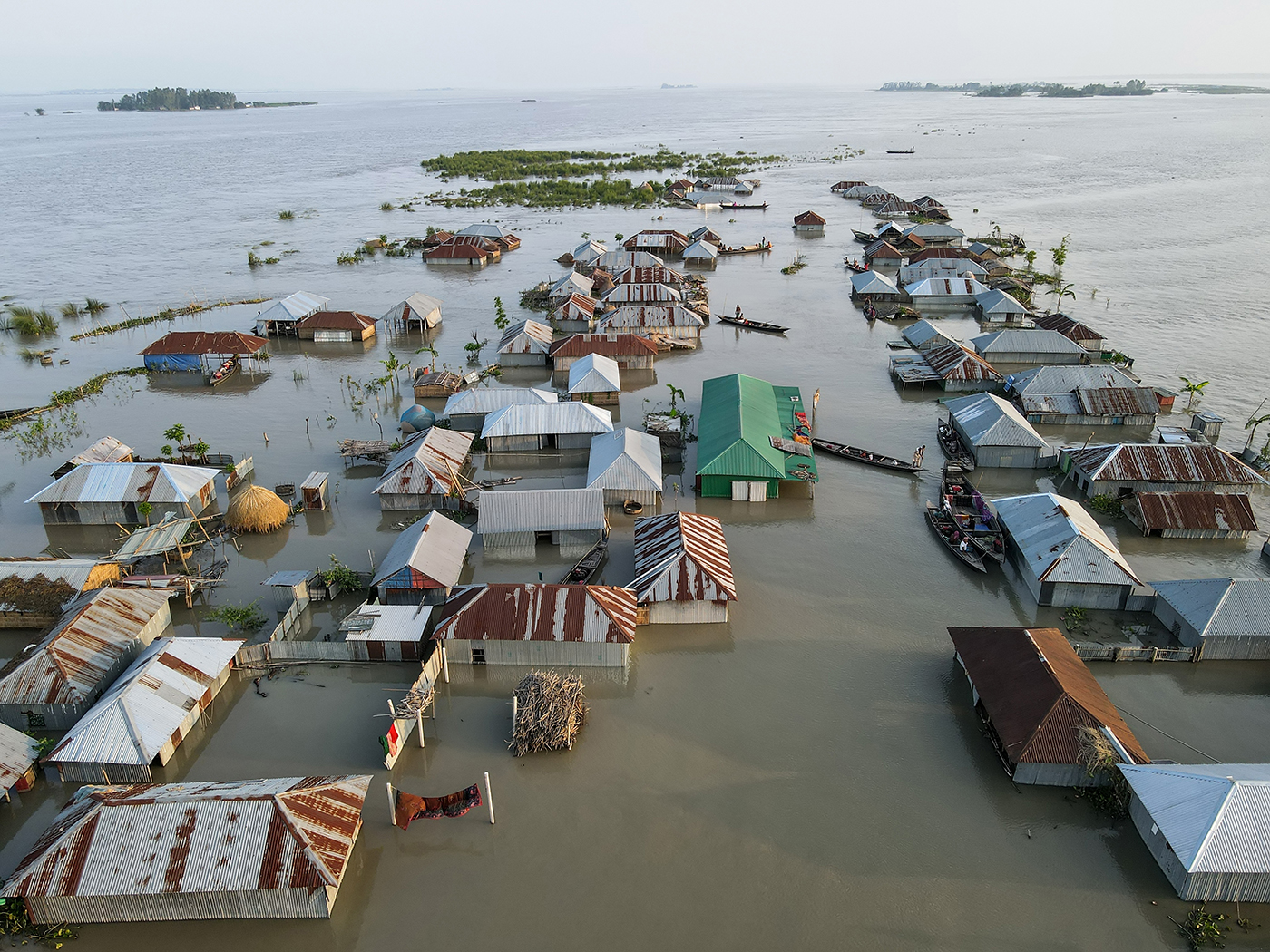
In other parts of the continent, in many LDCs, that's not the case. Year after year, with increasing frequency, we have seen these countries being affected by natural disasters. I think some studies have shown that up to 9% of their budgets end up being diverted, actually, to respond and to deal with these challenges of climate change. They have a significant impact also on GDP growth and economies that are really small anyway, so any impact of between three and five percentage points is significant. Adaptation has to climb up the priority list. We don't need as much as we would need for mitigation.
What are the estimates? That we need about 220, 230 billion annually. It is possible, in an environment of smaller budgets, to make sure that we preserve those allocations. The second one, of course, really relates more broadly to climate finance, which is we tend to get caught up on the amounts, and that's important. The new target of 300 billion is very important. We mustn't lose sight of it. People have made that commitment. We must keep them to that commitment. At the same time, we'll also need to look at the quality of the finance that is happening. Whether it's happening in adaptation or in mitigation.
That's been one of the things that also was fairly high in the discussions when South Africa was negotiating the JETP with, among others, Germany, UK, the EU, and so on. That you have to have a good balance between grants and a degree of concessionality in terms of loans, because otherwise, we were trying to deal with one problem and creating or deepening another problem. The issue of debt. South Africa's own debt has been climbing over the last few years, but a lot of the debt is locally denominated currency. It doesn't have the impact that it has had in countries like Zambia, or Chad, or Kenya, et cetera, because a lot of those debts are in dollars.
If you're now borrowing, and I'm one of those people who subscribes to the strategic importance of being able to borrow, to go to capital markets, or to go to the MDBs, et cetera, for the right kinds of investments rather than current expenditure, and these would be such. You also don't want to do that and have to deal with the adverse consequences of that, which many countries are having to deal with at the moment. At a point when an already very tight fiscal space has become even tighter.
Those countries are having to make the tradeoffs and the decisions between whether they pay their debt service, which they tend to always do, by the way, and whether they're able to allocate more money to social protection, or say, social protection in order to protect those communities that have been affected by natural disasters year in and year out, if you think of the eastern coast of Southern Africa, or indeed to be able to undertake projects to increase climate resilience and so on and so forth.
Some of the work we've done, my colleagues in our economics team have produced an index a couple of years ago that actually looked at the extent to which countries that were more vulnerable to climate change were actually attracting or not, the requisite finance. The relationship was inverse. The more vulnerable you were, the less you were getting. This speaks, again, to the effectiveness issue, and using evidence, and CGD is up there at the top in terms of producing a lot of that, but using really, that evidence to feed into how development agencies make the decisions around, say, who they finance in terms of building up climate resilience and so on.
Relatedly, of course, particularly when it comes to adaptation, one of the Paris Aid Effectiveness Principles, going back to 2005, if any of us can remember so far back, is about local ownership. It is about really engaging with, because adaptation is so important at a local level, is really about looking at local adaptation lessons and initiatives, because they become then very context-specific and actually are able to address the problem in a way that is effective and impactful.
Rachel: It's just thinking about the way in which local communities have so much more information. That's one of the reasons that one of the most effective adaptation approaches is to provide funding in advance of crisis. If you know a hurricane is about to arrive, or you know a drought is building up, getting money to local people ahead of the crisis is so much more cost-effective than trying to deal with it afterwards, because they have better information about how to respond, how to get the cows out of the low lying areas or whatever it is, than trying to fly in things afterwards.
Unfortunately, it turns out that we haven't been very good at prioritizing this prevention side of adaptation, but there's a lot of evidence that it's much more cost-effective precisely because of that local knowledge. Dirk, I wanted to turn to you and just getting onto these specifics of, what are good projects? What are some of the things that we can do, because it can all seem very overwhelming and difficult, but what are some of the things that you're proud of, that you think are particularly effective amongst the things that Germany has been doing in the climate space? Either mitigation or adaptation.
Dirk: When it comes to the, especially to the question of prevention, I would say that everything around the ecosystem of the Loss and Damage Fund that we promoted, very much we tried – In years before, we actually were able to bring the loss and damage, through the COP, brought on our table the big insurance companies. We had very, very good talks with the SIDS, especially, to try to find out how we build management, the systems, how we build up local competence to be able to manage coming up hurricanes, natural catastrophes, and combining it now, over the last two years, with any kind of adaptive social protection measurements.
So that we are able to be prepared, on the one hand, and really bringing the money immediately to the most vulnerable groups so that the resilience is really growing up, and we have enough money in the pot that is able to organize these kind of structures. That's why we are very much trying to organize the loss and damage as a core around this ecosystem of preparedness for crisis.
In that, actually, I would also see the long experience we make, especially to the Sahel on adaptive social protective measurements, and we could see that a lot of them worked even during the COVID crisis. I think that are two examples where I would say we were clever enough to invest the money in future concepts and make people ready to deal with the catastrophes.
Rachel: Just for listeners who might not be aware, adaptive social protection is when you do some preparation in advance to know where everyone is, and often using phone numbers, you set up your system so that when a crisis hits, a drought or COVID or something, you can send money directly, often to communities that are being hit, and you can target it carefully because maybe roads have been blocked, or it takes much longer to get it out if you only respond afterwards.
Dirk: Yes. For a country like Germany, it shows that we listened to the situation in the partner countries and not trying to impose our system, and really have the flexibility to adjust the systems wherever you are.
Rachel: Fantastic. I'm going to end by asking you for one key takeaway from the conference, or the thing that struck you most that you hadn't thought about before, or made you sit up.
Elizabeth: There were a number of really interesting perspectives, but perhaps the most important one is that we are living in a post consensus world, and it's an interregnum. I don't know where we are going to end up, but all of the accepted assumptions and the way you thought the world was going to be for a long time, at least until-- I thought it was going to be until I retired. They're all being thrown up into there and being upended.
The challenge there is, we don't have time to stop and reflect. We still have to keep flying the Boeing or the Airbus, [chuckles] while at the same time trying to work out how the rules must change and how we do things in order to be able to respond to this world where there is very little consensus. Well, the consensus that may have existed a few years ago is no longer there.
Rachel: Yes. Very true. Dirk, what was one of your takeaways?
Dirk: In one point, I would say I'm very boring now, because I can only echo what Elizabeth's just said. Really, to see in our discussions that we all, from our thinking, we do know that we are living in a post consensus in a very disruptive world. That we always have, in discussions, the slight tendency to fall into small technical debates and lose ground for the big picture, because we feel safe when we talk about the technical details. Maybe that's a bit of an extension to what Elizabeth said in reflecting also our own discussions. I'm not finger pointing. It's myself even falling into this trap as well.
This demand for really learning to raise again the basic questions, and the question of effectiveness is one of the basic questions. Having a euro or a dollar, and what can I do most of that to reach my aims? The second point that Elizabeth just mentioned is also so true. We have to learn to think much more agile, because we don't have time. There is no break that gives us the time under pressure to find solutions. We have to find solutions and try to check in an agile manner whether the hypothesis of yesterday is still right or not. It demands a lot of us and it shows that we have to adjust our own instruments and our own way of acting, and we don't have time for that.
We have to do it very quickly and check where we are when we look at it. Maybe the third point in that really is then when we listened to the ones who attended the Mo Ibrahim conference more or less parallel to the HSC. How different the views on this disruptive crisis from partner countries sometimes are. That also helps us to rethink all the time in this agile manner and in a variety of geographies. We have to act what the right question could be and helps us in our search for the right answers.
Rachel: We definitely live in challenging times and in times when we need to be very agile. Thank you, Dirk, for co-hosting the conference, and both of you, for participating in this podcast. Let me end by just saying that a lot of the analysis that was presented at the conference, and which participants were responding to, is available on the CGD website, CGDev.org. Information, for example, on how funding is split between middle-income countries and low-income countries. There's some work there on effectiveness.
Elizabeth's organization is also a great place to go, the South African Institute for International Affairs, to find more analysis on these questions. Then I mentioned a paper in Foreign Affairs that I did with Seema Jayachandran. We will link to that on our website, too. Thank you both for joining, and I look forward to continued conversations.
Topics
DISCLAIMER & PERMISSIONS
CGD's publications reflect the views of the authors, drawing on prior research and experience in their areas of expertise. CGD is a nonpartisan, independent organization and does not take institutional positions. You may use and disseminate CGD's publications under these conditions.