Recommended
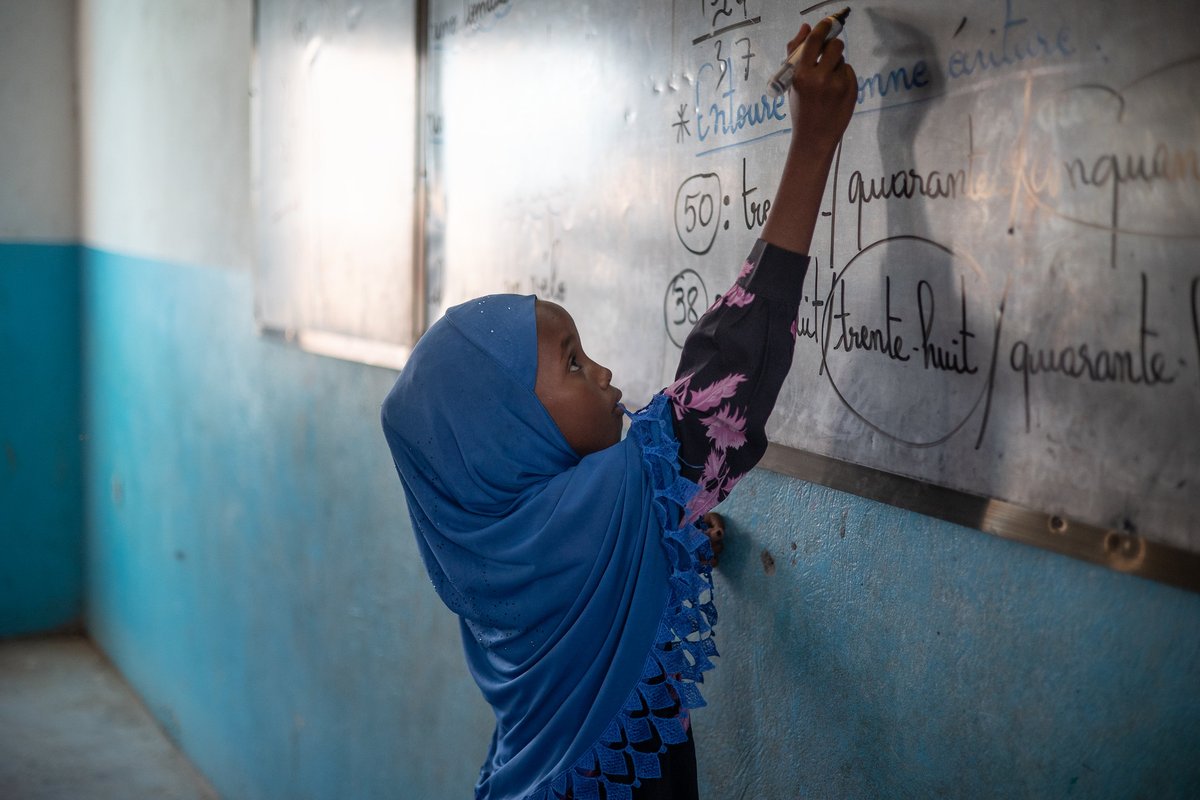
Violence in and around schools affects more than 100 million children around the world. This is a child protection problem: children suffer lifelong harms from experiencing violence. It is also an education problem: one of those many harms is that their education is adversely affected, and schools have a duty to protect children in their care. To understand and tackle the problem, governments, civil society, and researchers globally have implemented a range of interventions and policies. Over the last year, we’ve reviewed more than 100 studies from countries around the world and at all income levels on how to prevent and respond to school-related violence. We share our two big takeaways below. If you want more of what we learned, we published a systematic review today.
Before we get to the results, here’s what we did. We searched databases across the medical sciences, education, and economics to identify evaluations of policies, laws, and interventions related to school-based violence. That includes bullying, emotional and corporal punishment from teachers, and sexual violence from peers or from teachers. In the end, we found 48 evaluated interventions with stronger causal inference claims (our main sample), plus an additional 81 evaluated interventions with small samples or weaker causal claims (our exploratory sample). This definitely isn’t everything people are doing to combat school violence: it’s the subset of interventions for which we found some quantitative evidence on whether the programs worked or not.
First, there are interventions that have been tested and that have reduced violence against children in schools.
Violence takes many forms, and cultural norms around violence vary enormously, so eliminating violence will never be one-size-fits-all. But the fact that various interventions have shown substantive impacts demonstrates that this is a problem with a solution. To be concrete, here are four examples of interventions with meaningful impacts. First, the Good School Toolkit in Uganda reduced multiple forms of violence, including physical violence from teachers to students, by 42 percent. Second, the “It’s Time to Act” program in Mozambique reduced girl students’ experience of violence from teachers by 67 percent. Third, a large-scale implementation of the KiVa antibullying program in the Netherlands reduced kids being bullied by about a quarter. The program was also effective in Finland. Fourth, the Right to Play program in Pakistan reduced victimization by peers by about 17 percent for boys and about 30 percent for girls.
These are just examples; we could go on! But they demonstrate that it is possible to reduce violence in schools. Three of those four programs—the Good School Toolkit, KiVa, and Right to Play—use what is called a whole school approach, seeking to target different actors with different activities to change a system rather than just one element. In our analysis, interventions that tackle multiple violence risk factors tend to be more successful. This makes intuitive sense: changing norms about whether violence is acceptable, for example, is likely to be more effective if there is a robust system in place to respond to reports of violence. It’s also true that a program that worked in one place won’t necessarily work in another. The KiVa program, which was effective in Finland and the Netherlands, had mixed impacts in Chile.
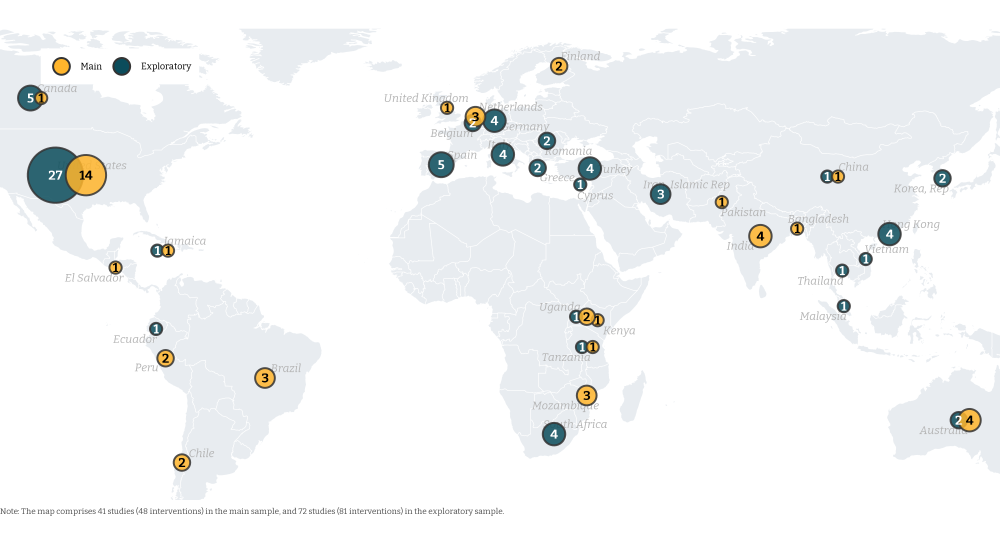
To make it easier for you to find evidence most relevant to the context you’re working in, we developed a tool where you can search for evidence by country (along with country comparisons), type of violence, the level of education, and more (Figure 1).
Figure 1. Evidence map for what we know and don’t know to reduce school-related violence
Second, there is still much to learn. So if you’re working to reduce violence in schools, evaluate and document what you’re learning.
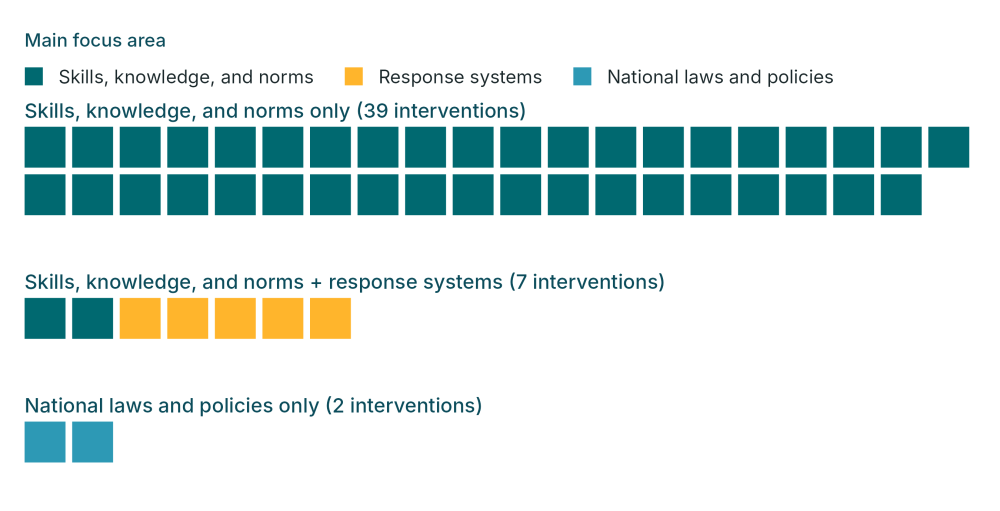
There are lots of ways to tackle violence in schools. Three categories of action include (a) passing laws and policies; (b) changing skills, knowledge, and norms; and (c) strengthening response systems. What we found is that the vast majority of evaluations focus on changing skills, knowledge, and norms, with far fewer strengthening response systems and even fewer looking at laws and policies (Figure 2). (We’ve seen in previous work that bans on corporal punishment, just one form of violence in schools, are insufficient.)
Figure 2. Most evaluated interventions focus on changing knowledge and norms
There are other ways in which we have much to learn. Most of the evidence we find—and especially most of the most credibly causally identified evidence—is from high-income countries (Figure 3). Mozambique and Uganda are the only low-income countries in our main sample. We also find a real dearth of evidence on costs across programs, which is all too common in evaluation studies, so it’s hard to identify the most cost-effective ways to reduce violence. Few studies report how they kept children safe while carrying out the evaluations. Many evaluations are at relatively small scale (although not all). Most evidence is gathered within a short timeframe: two-thirds of studies only measured impacts within the first two years. These are all areas for future study, even as education systems move forward with preventing violence.
Figure 3. Most of the evidence is from high-income countries
Act now while we continue to learn what works
Violence against children is a problem anywhere it happens. When it happens in schools, it means that children are less likely to get the skills they need to thrive throughout their lives. We find clear evidence that education systems can reduce violence. But there are—at the same time—massive gaps in what we know. Act now, but make sure to act in ways that allow us to keep learning along the way.
Topics
DISCLAIMER & PERMISSIONS
CGD's publications reflect the views of the authors, drawing on prior research and experience in their areas of expertise. CGD is a nonpartisan, independent organization and does not take institutional positions. You may use and disseminate CGD's publications under these conditions.
Thumbnail image by: Neil/ Adobe Stock