Recommended
The AI boom could see anywhere from $37 billion to $100 billion in annual philanthropic spending over the next few years. The question is, how can this money be spent effectively? A new blog series from CGD makes the case for highly cost-effective areas that philanthropists may want to consider funding. This third blog in the series makes the case for using new philanthropy to improve maternal and newborn health.
A woman dies from complications of pregnancy or childbirth every two minutes. A newborn dies roughly every fourteen seconds. That is 260,000 maternal deaths and 2.3 million newborn deaths a year. There are an additional two million stillbirths a year. Most of these deaths are preventable.
Many interventions that can prevent these deaths already have a strong evidence base and can be delivered cost-effectively at scale, yet remain underfunded. A December 2025 report from the global health nonprofit PATH estimated that donor aid for maternal, newborn, and child health in the highest burden countries fell by 49 percent in 2025 alone, from $1.66 billion to about $850 million. Even before those cuts, funding fell far short of what was needed.
Funding proven interventions at scale could save hundreds of thousands of lives. Beyond that, some of the leading causes of maternal and newborn death still lack effective tools, creating equally compelling opportunities for innovation.
There is no shortage of opportunities for philanthropy to improve maternal and newborn health. Philanthropy can both scale interventions that already save lives and accelerate innovations that could save many more. The examples below illustrate the breadth and depth of potential opportunities available across both domains.
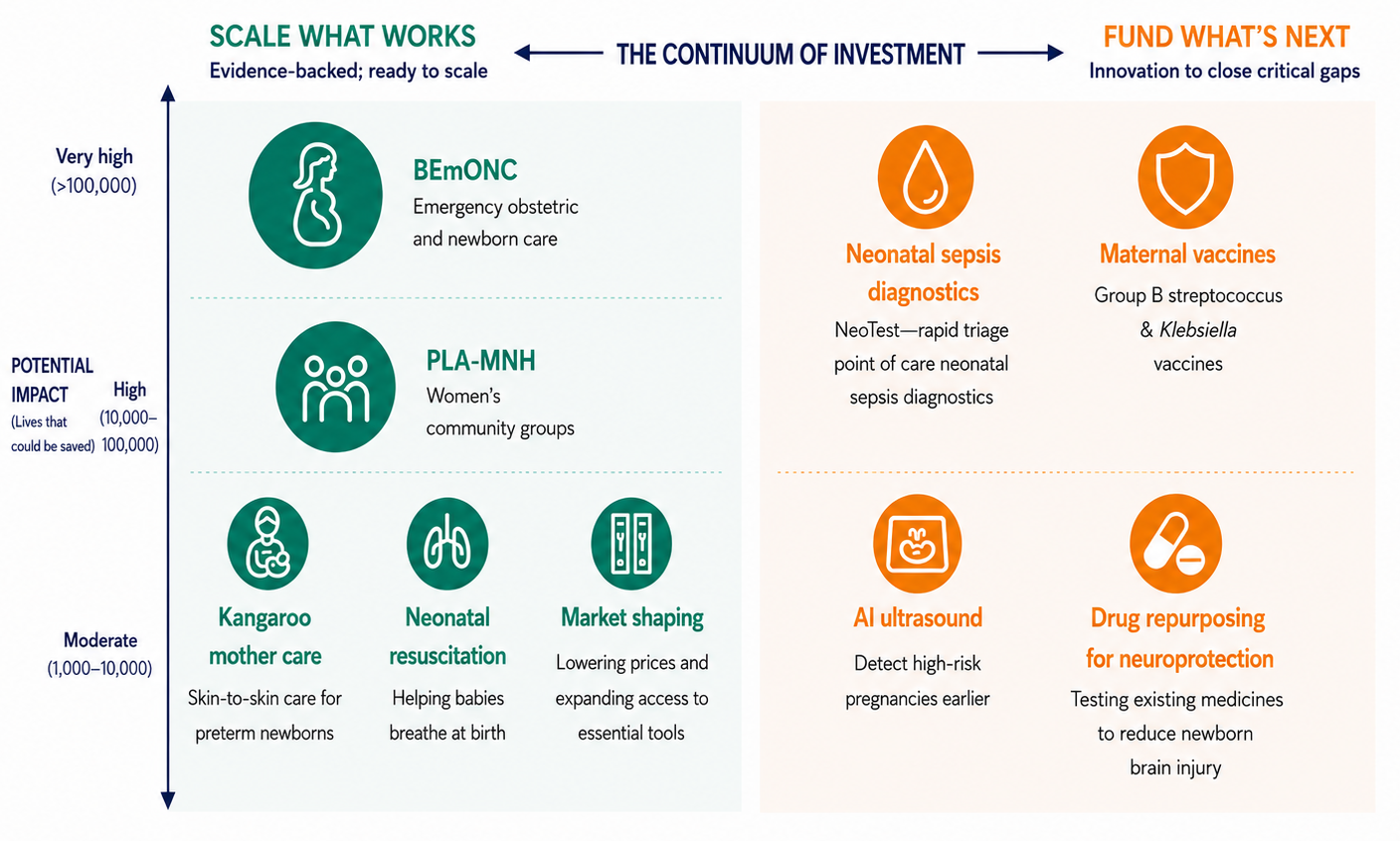
Figure 1. Maternal and newborn survival needs both scale and innovation
Philanthropy can save hundreds of thousands of lives by scaling what works today and accelerating innovations that address critical gaps.
Scale what works
Basic Emergency Obstetric and Newborn Care (BEmONC) is the package of skills, medicines, and equipment needed to manage the common conditions that kill mothers and newborns during childbirth, from postpartum haemorrhage and eclampsia to babies who fail to breathe at birth. Modelled at a package level, taking BEmONC coverage from 68 percent to 90 percent across the 55 highest-burden countries would cost $2.9 billion to $3.2 billion a year and generate an estimated $87 in social and economic value for every $1 spent. This is equivalent to $1,500 to save a life, making it amongst the most cost-effective interventions in global health, and above the bar of organisations like GiveWell.
Several organisations already support BEmONC implementation through provider training and strengthening supply chains. Jhpiego has trained providers across more than a dozen countries over the past two decades, mostly through USAID contracts that just lost most of their funding. PRONTO International delivers low-cost simulation training that allows teams to practise these emergencies before facing them in real life, and has reached over 11,000 providers across 17 countries. Both could significantly scale their work with additional funding.
Participatory Learning and Action – Maternal and Neonatal Health (PLA-MNH) involves running group workshops for women of reproductive age to teach and encourage them to seek care at centres that can offer BEmONC when needed, and to undertake prevention practices they can do themselves. It reduces neonatal mortality by 33 percent and maternal mortality by 49 percent. To my knowledge, there are currently few well-established organisations delivering PLA-MNH at scale, but existing community health organisations could plausibly do so if additional funding became available.
Additionally, some individual components of BEmONC may be exceptionally cost-effective in their own right, such as kangaroo mother care and neonatal resuscitation.
Kangaroo mother care (KMC), which is continuous skin-to-skin contact between a caregiver and a low-birth-weight newborn, breastfeeding support, and monitoring the small newborn for danger signs cuts neonatal mortality by roughly a third. Despite strong evidence, KMC remains underused because it is inconsistently taught and supported within health facilities. Supporting its implementation is very cost-effective—up to 26x, more effective than cash transfers. Two organisations incubated by evidence-led NGO incubator Ambitious Impact exist to support KMC delivery in health facilities. Ansh runs KMC programmes in government hospitals in Rajasthan, India, and First Embrace does the same in Kano, northern Nigeria.
Neonatal resuscitation, helping a baby establish breathing in the first minutes of life if they are struggling, is estimated to save a newborn life for less than $1000. Numerous charities cost-effectively support training and/or equipment for neonatal resuscitation, including Save the Children’s Helping Babies Breathe programme, Neonatologists for Africa, Oxygen Access Project, and SHARE Africa.
Additionally, market shaping can help bring down the price of highly effective diagnostics, medicines, and vaccines to save mother and newborn lives. For instance, MedAccess created a volume guarantee for dual HIV/syphilis tests: a financial agreement that commits to buy enough of the test to make mass production worthwhile, resulting in the cost of HIV/syphilis tests going down to $0.84 and reaching over 31 million pregnant women. This in turn has averted an estimated 90,000 stillbirths due to congenital syphilis. Unitaid has adopted a similar approach to postpartum haemorrhage through its AMPLI-PPHI initiative, supporting the introduction of heat-stable carbetocin, tranexamic acid, and misoprostol.
Fund what’s next
Scaling existing tools will save many lives, but some of the biggest causes of maternal and newborn death still lack adequate solutions.
Rapid triage diagnostics for neonatal sepsis is a clear case. Neonatal sepsis, a bloodstream infection that can kill within hours, claims an estimated 400,000 to 700,000 newborn lives each year. The only diagnostic is a blood culture that takes 48 hours to come back and is used in just 5 percent of cases, so clinicians are left guessing whether neonates have sepsis from vague and non-specific signs such as poor feeding. We estimate that 12 percent of these deaths are preventable with earlier and accurate diagnosis. A joint CGD-MSA working group, chaired by Lord Jim O'Neill, and comprising a world-leading group of experts, spent two years designing NeoTest, a proposed $60 million fund that would pay manufacturers to bring a rapid, cheap, point-of-care test to market. The fund is modelled to avert roughly 110,000 newborn deaths over 15 years at a cost of $1,270 per newborn life saved.
Maternal vaccines targeting two major causes of neonatal sepsis, Klebsiella pneumoniae and Group B Streptococcus, also represent a potentially transformative opportunity. Both work by vaccinating mothers during pregnancy, allowing protective antibodies to pass to the baby before birth. Group B Streptococcus is already in a Phase III trial, expected to complete in 2028. An advance market commitment, which subsidises future purchases of successful vaccines, could accelerate development and deployment. The approach was used for pneumococcal vaccines, accelerating rollout by five years, and could save thousands of newborn lives if applied for Klebsiella or Group B Streptococcus vaccines.
A few other gaps are also potentially promising. AI-powered ultrasound probes, small enough to plug into a phone, could let a midwife with no radiology training flag a high-risk pregnancy in settings without access to ultrasound machines; the Gates Foundation is already supporting some work in this area. Another promising area is repurposing existing drugs for neonatal neuroprotection following birth asphyxia, which causes nearly 300,000 newborn deaths each year and leaves many surviving newborns with lifelong neurodevelopmental disabilities. Candidates including erythropoietin, allopurinol, magnesium sulfate, sildenafil, caffeine and more are under investigation, but weak commercial incentives for generic drugs may leave promising candidates underinvestigated.
Conclusion
These examples are not intended as a ranked list of the highest-impact opportunities. Rather, they illustrate both the strength of today’s evidence base and the breadth of promising innovations in development. While I have not attempted to quantify the total funding gap across maternal and newborn health, the opportunities highlighted here alone represent several billion dollars of highly cost-effective investment that funding today could meaningfully reduce.
The challenge is not a shortage of opportunities, but in part, deciding where to deploy capital across a broad and fragmented field. Maternal and newborn health does not encompass one disease or one intervention- it spans medicines, diagnostics, workforce, delivery systems and financing. That complexity has made it harder for philanthropy to identify the highest-impact opportunities, leaving no single organisation responsible for systematically evaluating the field (or parts of it). Echoing recent calls, we'd encourage people and organizations to lead ambitious, thesis-driven funds focused on high priority areas within the space, such as congenital syphilis, or vaccines for neonatal sepsis. Moreover, funding should be accompanied by broader and much-needed reform of the architecture of how maternal and newborn health services are financed and delivered.
Maternal and newborn deaths have fallen nearly 40 percent since 2000. The challenge now is to match proven solutions and emerging innovations with the ambition and resources required to reach every mother and newborn.
Topics
DISCLAIMER & PERMISSIONS
CGD's publications reflect the views of the authors, drawing on prior research and experience in their areas of expertise. CGD is a nonpartisan, independent organization and does not take institutional positions. You may use and disseminate CGD's publications under these conditions.
Thumbnail image by: Adobe Stock Images