


How We Measure Commitment to Development
CDI Structure
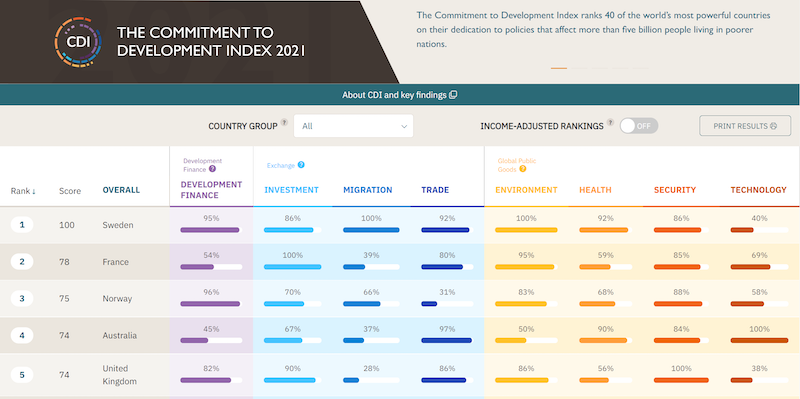
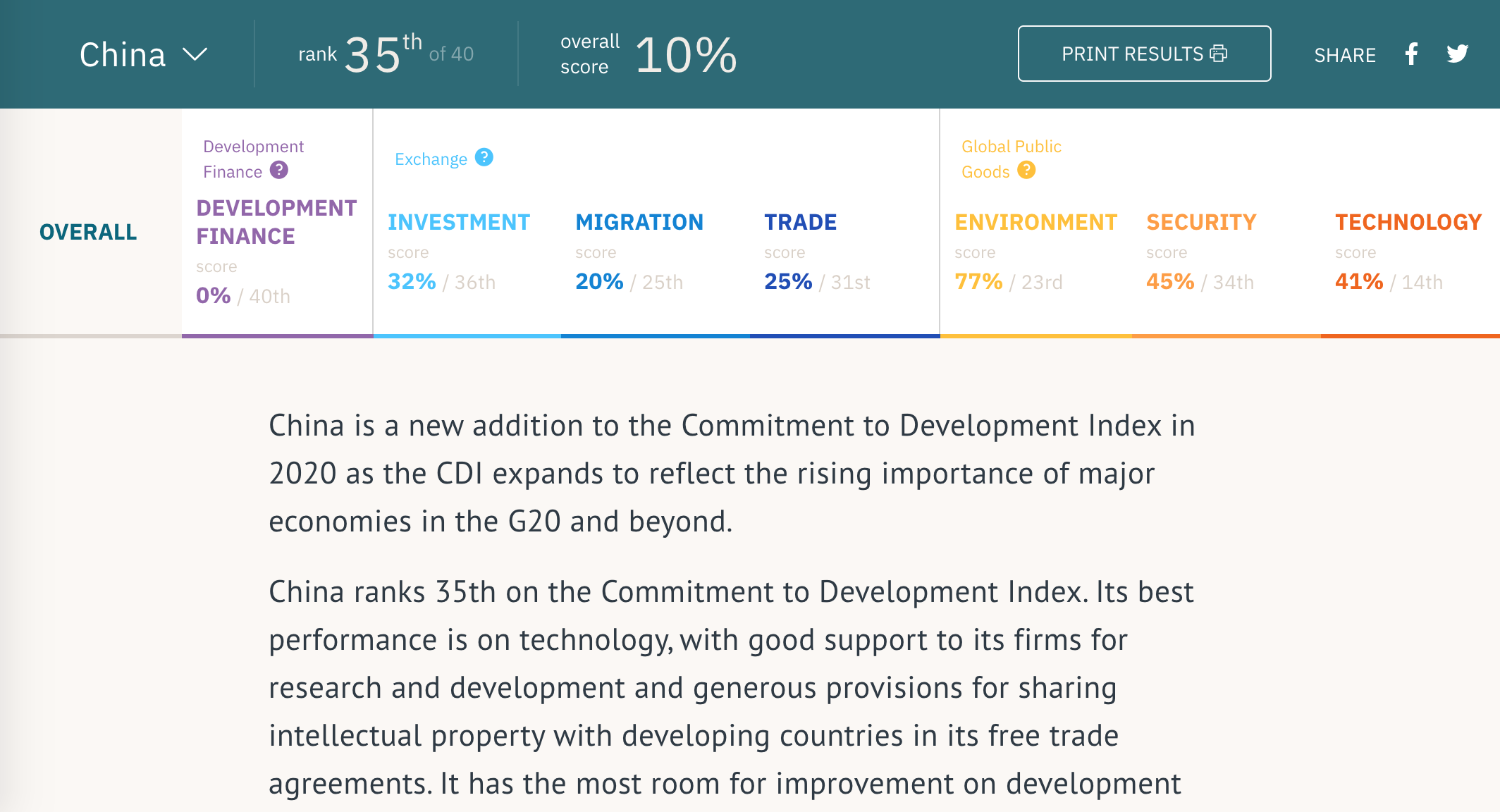
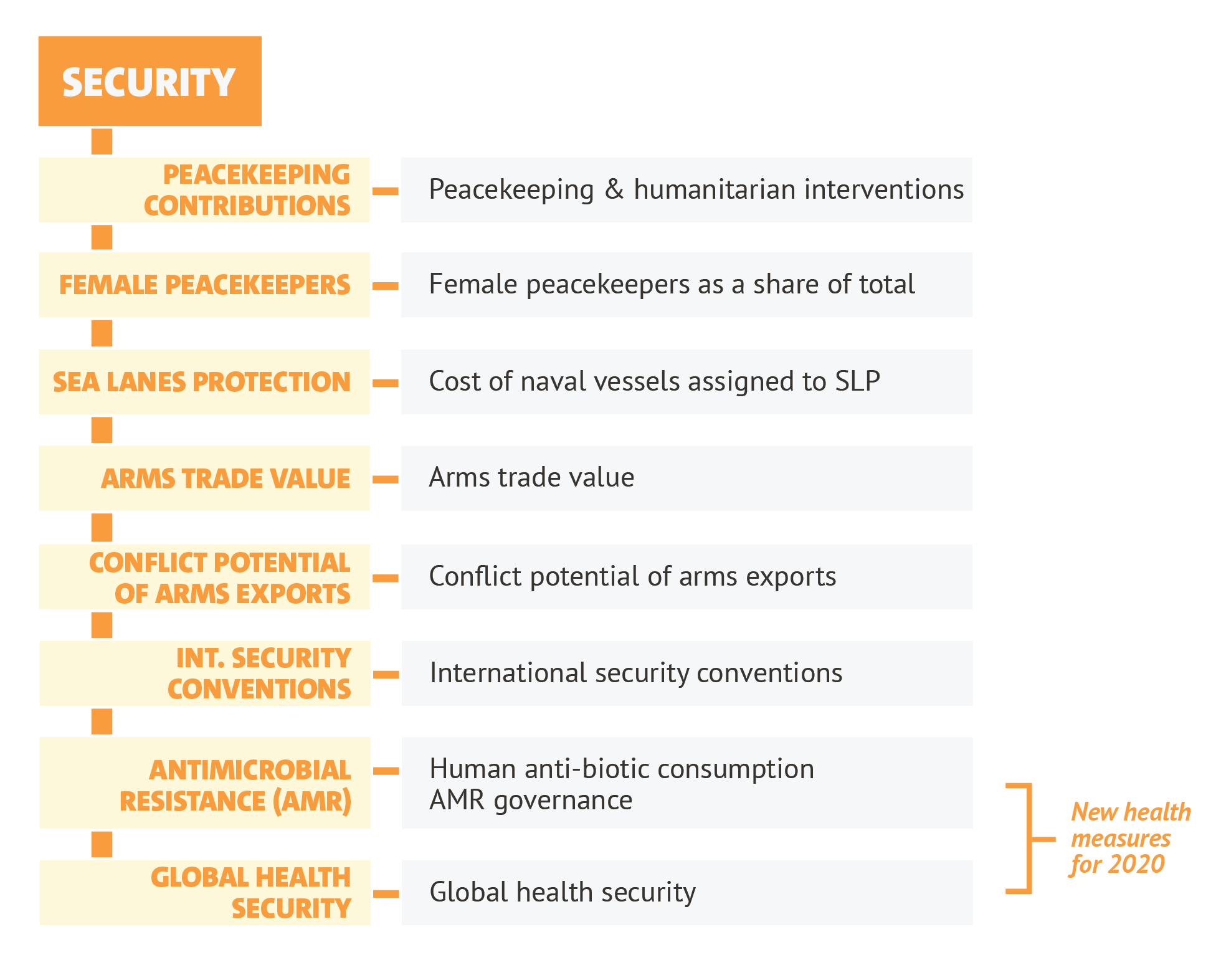
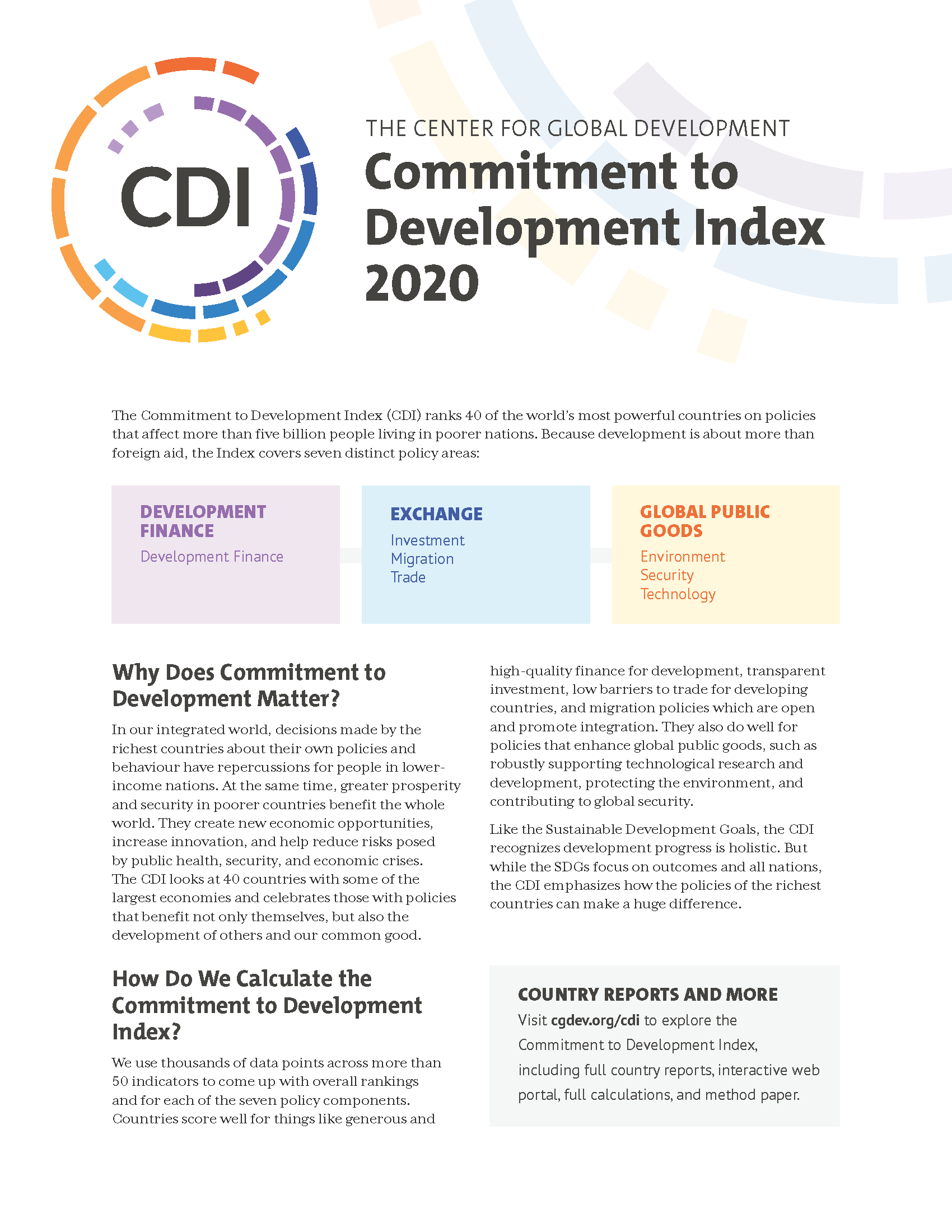
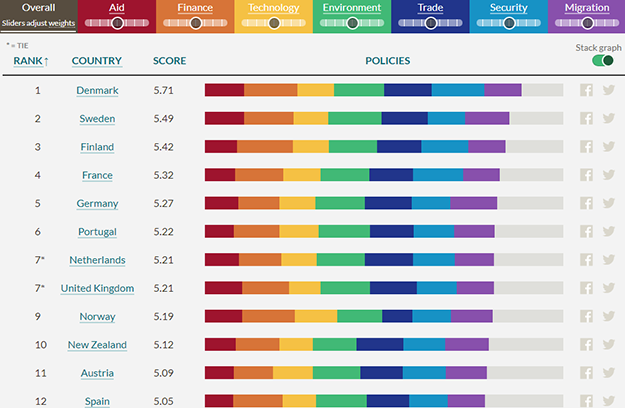
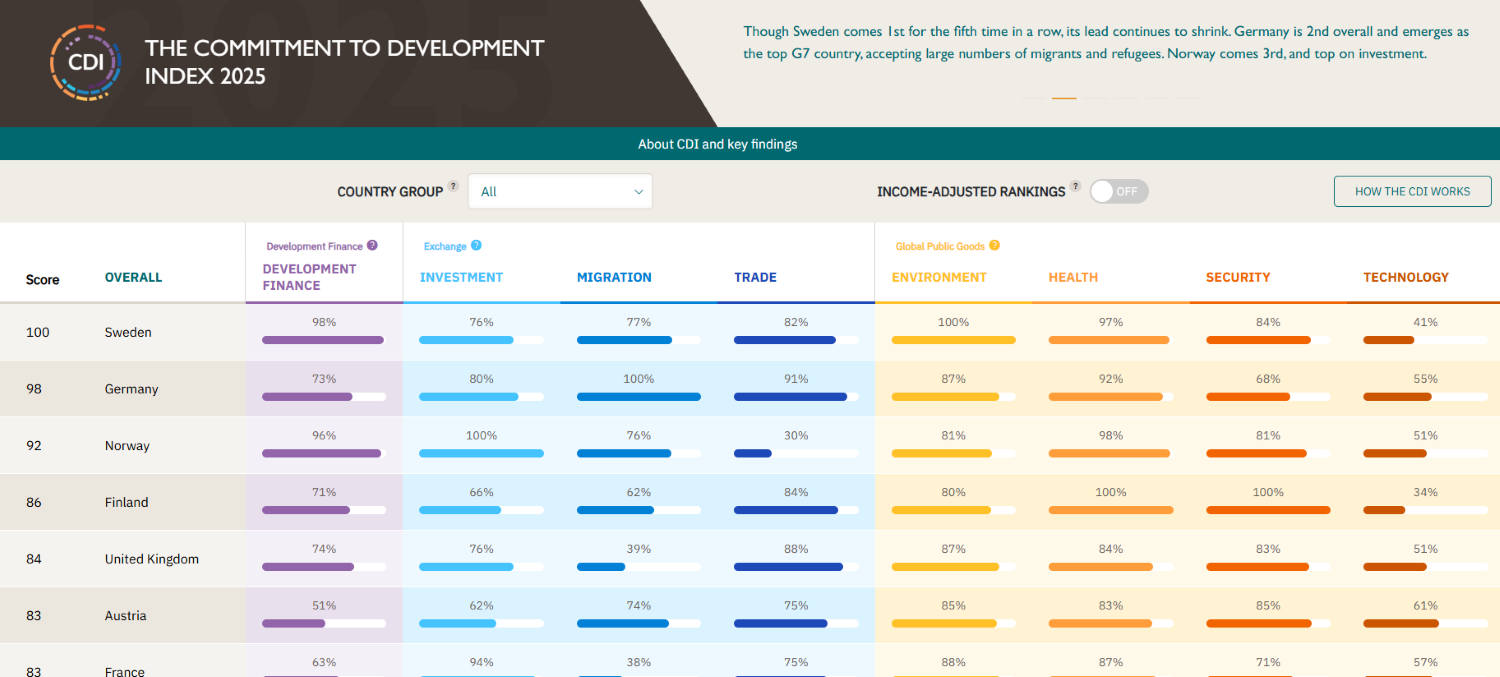
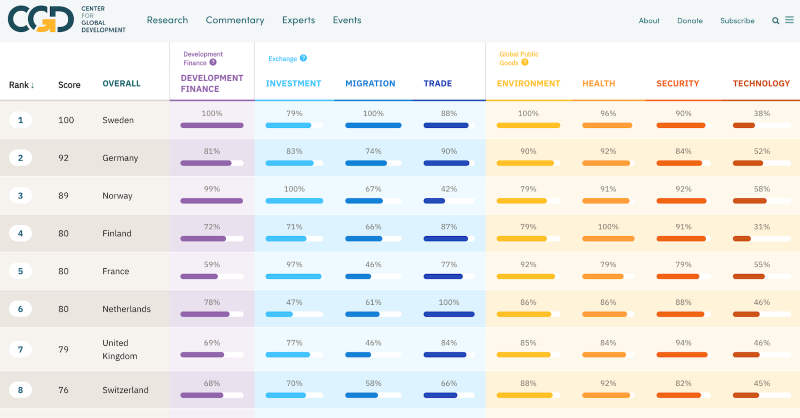
Because development depends on much more than just how foreign aid budgets are spent, the CDI covers eight distinct policy areas: development finance, investment, migration, trade, environment, health, security, and technology. We assess countries across more than 40 indicators to come up with rankings for each of the eight policy components, as well as each country’s overall commitment to development. Countries score well for things like generous and high-quality finance for development, transparent investment, low barriers to trade for developing countries, and migration policies which are open and promote integration. Policies that enhance global public goods—such as fostering global health through disease prevention, supporting technological research, protecting biodiversity and the climate, and contributing to global security—also contribute to high scores.
CDI Aim and Impact
The CDI’s main aim is to start a discussion — both within and across governments — about how policies in the areas measured affect development, and to draw attention to what policymakers can do to improve their policies through measuring, scoring, and comparing policy effort relative to country size. The CDI aims to draw attention especially to policies “beyond aid” which have spillovers for the world’s poorest. The purpose of the ranking is to encourage a “race to the top” on development, including on non-finance policy areas.
Past editions of the CDI have been successful in getting governments to think more broadly about policy coherence and development:
- Officials in several governments – including Australia, Canada, Denmark, Finland, France, Germany, Japan, the Netherlands, New Zealand, Norway, Spain, Sweden, the UK, and the US – confirmed that they track the CDI as a performance measure , and many have drawn on the CDI as an official performance metric for development policy.
- The CDI is used internationally in OECD Development Assistance Committee peer reviews.
- The CDI has regularly had significant media reach, drawing attention to countries development policies and commitment.
Read about our previous editions in our impact report.