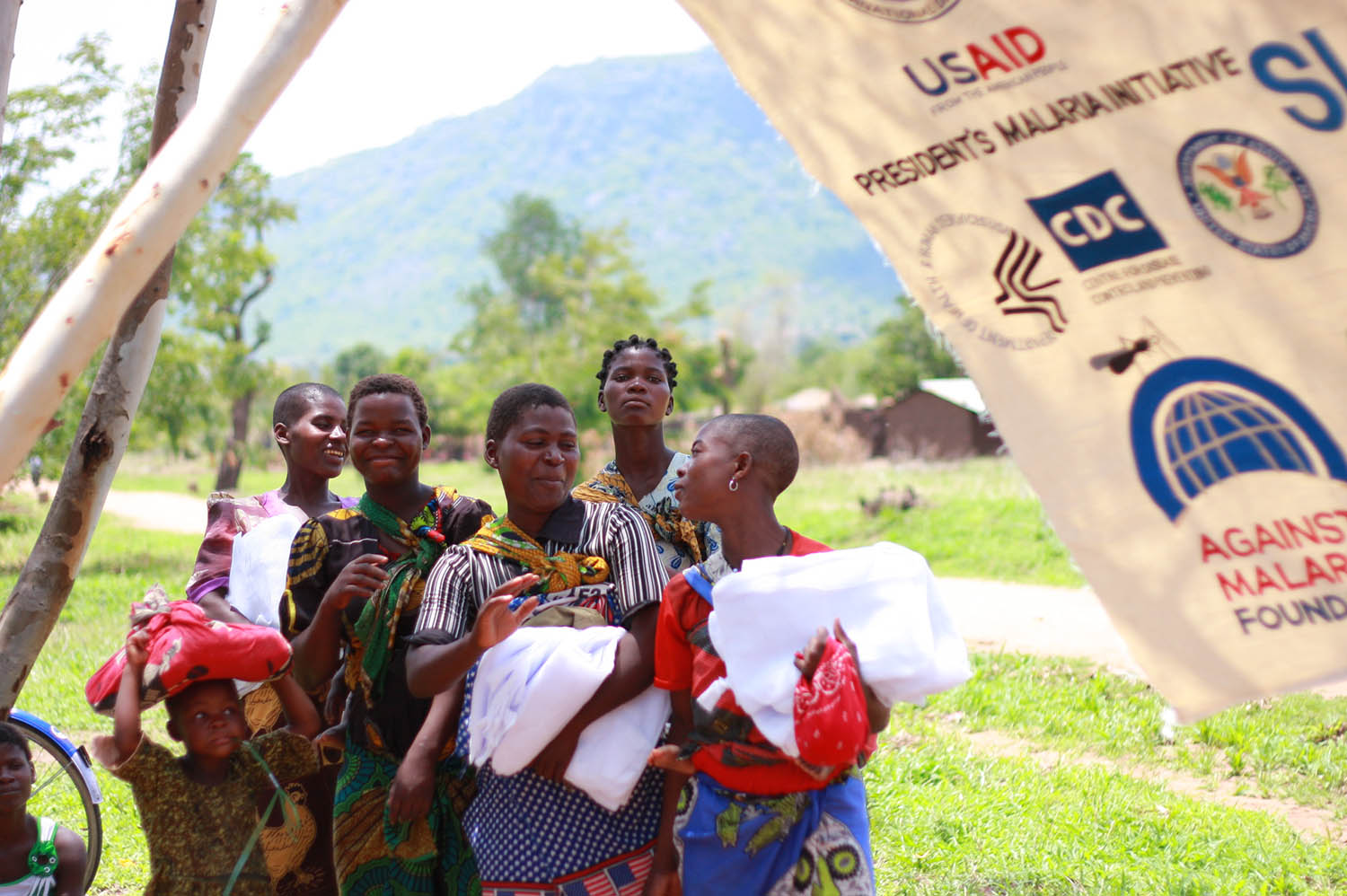
In the wake of the dismantling of USAID (alongside other US foreign assistance agencies), and as many other donor countries slash their foreign aid budgets—a rare opportunity emerges: not to abandon development, but to rethink it.
Those shaping aid policy have long sought to anchor it in the principle of cost-effectiveness: to measure impact rigorously, and fund what works. But as the dust settles, the sector reorients toward a future shaped more by philanthropists than governments, and we find ourselves much more resource-constrained, some voices will no doubt call for even stricter measurement and more proof before any disbursement.
I sympathize with the desire to be more strategic with limited resources. But please, let’s not all conclude that we need to do more of the same with less money by simply funding the interventions with the highest measurable impact per dollar, and calling it a day. That framing may be neat, but it’s not sufficient. It narrows our ambition at precisely the moment when ambition is most needed.
Causal inference brought discipline and rigor to development. In particular, randomized control trials (RCTs) have become the most straightforward way to identify what works across several measurable outcomes. The evidence these experiments provide has improved millions of lives, no doubt about it. Further, these experiments have allowed us totrack the costs of development interventions.
But the dominance of these tools has come at a price: it feels like we have prioritized what’s easiest to measure.
Moreover, many of these interventions might underestimate their true costs. As I tell my students in my course Translating Evidence into Policy, the “C” in RCT stands for controlled for a reason. These experiments are often implemented by highly capable organizations under ideal conditions—the kind of professionalism and intensity that governments would struggle to replicate at scale.
But even so, cost-effectiveness is a ratio, and not a vision. It is a useful framework for comparing interventions within a given outcome—like which program best reduces child mortality at lower costs. But it doesn’t help us choose which outcomes or sectors to pursue in the first place. That requires judgment and vision. Here, we must rise to the moment, and recognize that economic growth and productivity deserve to be central goals, not incidental ones.
In a metaphorical sense, we need to focus on interventions that are healing, not palliative. Too often, aid efforts relieve symptoms without addressing root causes. For instance, distributing textbooks can improve immediate test scores, but it does not necessarily translate into better jobs if firms face much more serious constraints than finding workers with better grades. But healing measures, contrary to palliative care, means creating the conditions for sustained growth: boosting productivity, helping firms scale, expanding exports, enabling structural transformation, and attracting investment. These are harder to measure—but far more transformative.
It turns out, though, that our evidence is somewhat limited when it comes to these more transformative interventions. I used AI tools to scan the full AEA RCT Registry, covering all registered trials over the past decade. While the registry contains over 10,000 entries, I focused specifically on a subset of just about 3,000 trials that are marked as completed (many ongoing or in-development trials withhold key details, such as the country of implementation, to avoid compromising implementation before the intervention concludes). Of those, I focused on experiments conducted in low- and lower-middle-income countries.
I then analyzed the primary outcomes listed for these trials to assess how many focus directly on productivity or economic growth. Using keyword filters such as “employment,” “income,” “profits,” “investment,” and “productivity,” I identified trials that explicitly aimed to measure economic performance as a central goal. The result?
Only about a third of the completed development RCTs over the past decade evaluate outcomes that are directly tied to growth.
The remaining two-thirds overwhelmingly focus on humanitarian or behavioral goals: reducing poverty, improving health and nutrition, increasing school participation or learning, changing norms and behaviors, or expanding civic engagement. These are valuable objectives—but they are not always the levers that drive long-run economic transformation.
A new paradigm for foreign aid requires a judgment call: for each sector we aim to improve, is the intervention’s impact large enough to matter for economic growth, regardless of its cost-effectiveness ratio? The challenge is that economic growth depends on broad-based productivity gains, driven by macroeconomic dynamics that are hard to observe at the household level, and nearly impossible to randomize. Take schooling, for instance: increasing years of education or improving test scores may be cost-effective on paper—but if there are no firms ready to productively employ those better-trained students, the gains end at the classroom door.
Under current constraints—shrinking budgets, institutional retrenchment, and rising pressure on philanthropists—we are forced to make wise choices, making fewer but bolder bets on programs with the potential to reshape economies: investing in export capacity, supporting firm technology adoption or innovation, building enabling infrastructure or other public goods, or creating conditions to attract private capital. By their nature, these interventions rarely appear at the top of cost-effectiveness rankings, and often don’t appear in those rankings at all.
These strategies carry more uncertainty, which is precisely why, currently, they’re underfunded. Like innovation investments in any domain, they come with risk but also with potentially massive returns. We need more portfolio thinking in foreign aid: not every bet will succeed, but the upside of one success can justify the rest. Philanthropists, unburdened by the political constituencies that constrain governments, could in theory take these bolder risks. Perhaps it’s those constituencies that have historically pushed public aid toward politically safe, visible humanitarian interventions—like health or education. But in this new era, that need not be the case. Philanthropy has the freedom to aim higher, focusing less on what’s easily measured and more on what could be truly transformational. Open Philanthropy’s new focus on economic growth signals a growing recognition that the biggest wins may lie in this line of thinking.
So yes, those who design foreign aid programs should still care about cost. But in a world where the funding model is changing and the global growth gap is widening, we must be as ambitious and take risks as we are cost-conscious. That means putting forward a vision that places productivity and economic growth back at the center of the foreign aid conversation—not as incidental spillovers from small interventions that work—but as goals in their own right.