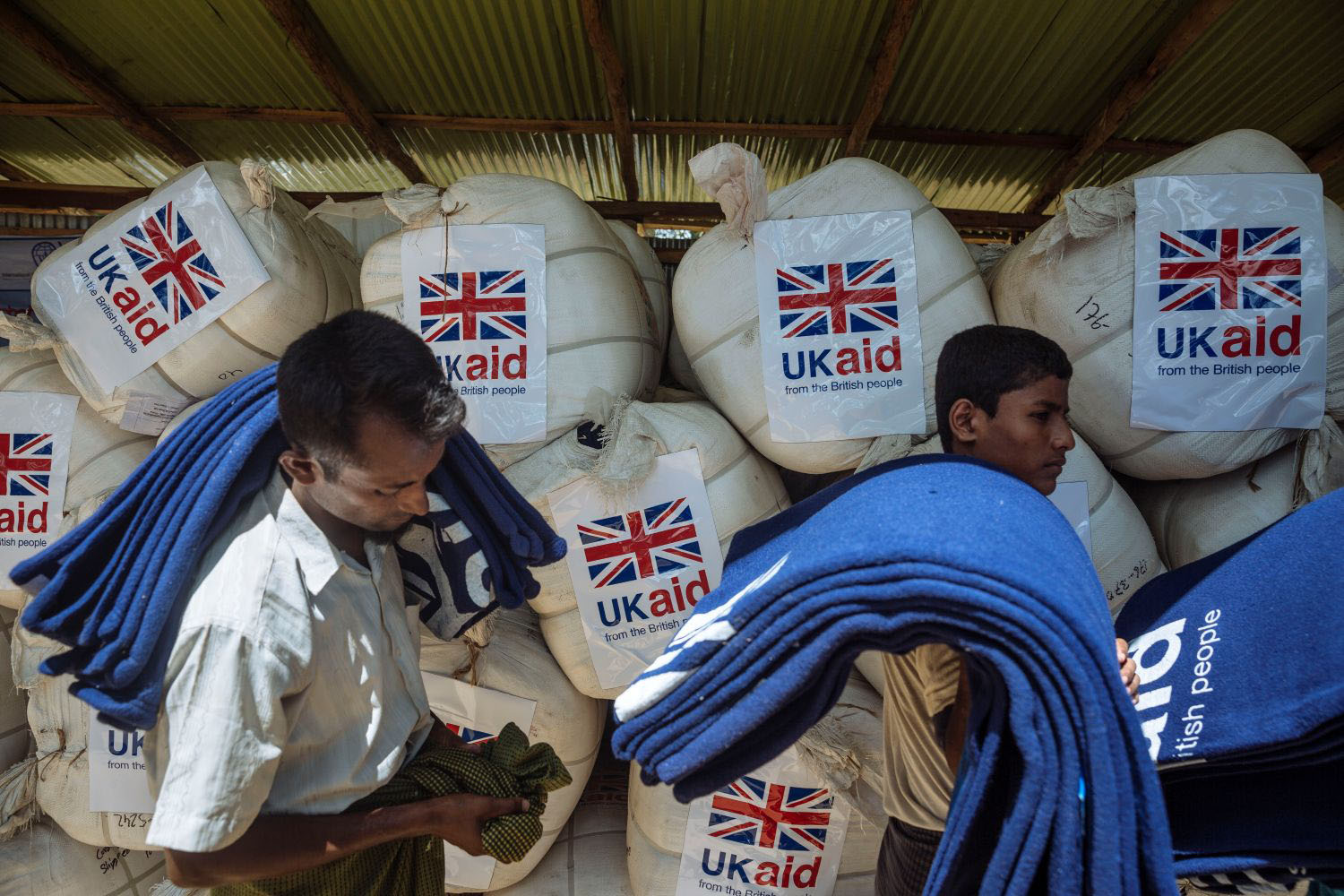
Aid budgets are under pressure, and public support for spending money abroad is weakening. Part of the problem is the erosion of clarity around the purpose of aid: when people don’t know what aid is for, it becomes impossible to defend.
Drawing on a year-long consultation with senior development officials and with independent experts from across the global North and South, we have developed a clearer case for aid—focusing on official development assistance (ODA), a small but distinct part of development finance, defined by its purpose. It sets out why governments invest public money abroad, what aid should be used for, and how it can deliver the greatest impact.
What is ODA?
ODA is public finance provided to promote the economic development and welfare of developing countries. It is defined by its development purpose and concessional character. To qualify as ODA, funding must be directed to countries on the OECD Development Assistance Committee (DAC) list of eligible recipients, which is based on income thresholds.
Key messages
1. International development has never been only about serving the national interest—and reducing it to that is a mistake.
Governments invest public money internationally for three reasons: (1) to express solidarity with people facing hardship, (2) to address global challenges such as pandemics and climate change, and (3) to build partnerships that benefit both sides. An aid budget justified purely on national interest is the first thing cut when governments face pressure to spend more at home. That argument is a trap.
2. ODA cannot be the answer to every global problem— and pretending that it can is damaging.
In recent years, ODA has been stretched to cover everything from providing support after an earthquake to stopping migration and to addressing climate change. These are all serious challenges that require public funding on favourable terms. But they are not the same as development aid and treating them as if they are creates confusion and ultimately weakens the case for both. Such financing should be identified and tracked separately from ODA.
ODA works best when it stays focused on investing in economic development and poverty reduction in countries where domestic resources are insufficient and other sources of finance fall short.
3. Aid has the greatest impact where it is needed most.
The case for aid is strongest in the world’s poorest and most fragile countries, where private investment won’t reach and domestic revenues can’t fill the gap. In these situations, aid demonstrably improves the quality of life for the poorest. Aid can also support countries to build stronger, more self-sufficient economies but only where this is in support of national commitment and leadership.
4. Not every problem requires a grant. Not every country needs the same approach.
Getting the right tool to the right place matters as much as the money itself. Sometimes bilateral partnerships work best. Sometimes working through multilateral institutions is more effective. What matters is choosing the right instrument—grant or loan, direct or multilateral—for the country and the challenge.
5. Public support for aid depends on humility and transparency—at home and abroad.
Over-promising destroys credibility. Being straight about what it can and can’t do is the most effective way to build lasting political support for aid.
The bottom line
Governments will continue to invest public money abroad. But in an era of fiscal pressure, the purpose of that investment must be clear, and how it is deployed must be more disciplined.
Being clear about what aid is for—and what it is not—is the best way to defend it.
Ahmed, Masood, Mikaela Gavas, and Sara Casadevall Bellés. 2026. A Clearer Case for Aid. Center for Global Development.
DISCLAIMER & PERMISSIONS
CGD's publications reflect the views of the authors, drawing on prior research and experience in their areas of expertise. CGD is a nonpartisan, independent organization and does not take institutional positions. You may use and disseminate CGD's publications under these conditions.