The World Bank’s Annual Bank Conference on Development Economics (ABCDE) 2025 took place July 22-25, co-hosted by the World Bank, CGD, and the Lee Kuan Yew School of the National University of Singapore. This year’s theme, “Development in the Age of Populism,” sparked discussions on topics ranging from trade and geopolitics to poverty reduction and investments in education and health. My colleague, David Evans, wrote a typically lucid and comprehensive big-picture overview of the program—read his excellent blog.
I focus here on what we learned—and didn’t—about populism and poverty in low- and middle-income countries (LMICs).
What populism means depends on when and where you look
First and foremost, what is populism? In his keynote speech, the World Bank’s chief economist, Indermit Singh Gill, cast it as “not always a bad thing,” “support for the concerns of ordinary people,” “an antidote to elitism,” and a force that “moderates globalism,” which has run amok. This definition is consistent with Cas Mudde’s 2004 framing of populism as a struggle between the “pure people” and a “corrupt elite” that still dominates popular discourse. I want to address both supposed traits: the anti-elitist and the pro-common folk.
Does anti-elitism define populism? The scholarship is nuanced. Two leading scholars of democracy, Patrick Heller and Christophe Jaffrelot, highlight the elite voter base and pro-rich tendencies of India’s right-wing populist government. Heller further contrasts populism in India and Brazil with the West, arguing that the class base in these LMICs is the English-speaking, educated middle class. Their democratic support, he claims, is “fickle” and tied to self-interest. (The popular US narrative, that populism is rooted in working-class resentment, has also been questioned .)
In contrast, Shruti Rajagopalan, a senior research fellow at the Mercatus Center and well-regarded India scholar, argues that backlash against the English-speaking, upper-caste elite who had long “run India” brought the Indian populists to power. Consistent is the initial goal of the 2016 Indian demonetization experiment: to remove illicit cash holdings among wealthy entrepreneurs, thereby increasing national tax revenue. But Rajagopalan (and others) find that it failed to curb tax evasion and instead disrupted the informal sector, hurting the poor and possibly contributing to declining female labor participation.
I would argue that this blind spot—ignoring informal economies—itself reflects elite-driven policymaking.
Identity politics is the thread connecting the dots
Electoral data confirm the middle class’s early role in populism in Brazil and India. In India, though, the ruling coalition has expanded its support among the poor, even as its policies remain skewed toward the rich or neglect the poor, as demonetization did.
Why would the poor vote against their interests? Heller and Jaffrelot point to identity politics and exclusion. The anti-elite rhetoric is a bit of a distraction. Populism, some elites would have us believe, is anti-elite—but really, it is often some elites leveraging economic anxiety and cultural cleavages to come to power, and then doubling down on those cleavages to consolidate it.
Reconciling these strands is Laura Schechter’s ABCDE summary of the key traits of this populist wave: voters driven by clientelist benefits, biased or partial information, identity and emotion over material interests, and politicians disincentivized to serve the public good.
Gill’s second claim was that populism supports ordinary people. This was challenged in a plenary by my former colleague, Justin Sandefur, who asked: if poverty is declining in India, why is populism rising? The economic angst and ethnic cleavages that fuel populism can co-exist with strong economic growth (as Vijayendra Rao has shown in Malaysia). But Justin is correct that if populism were pro-poor, its ascendance should yield poverty decline—something development economists would welcome. Gill didn’t really offer a response, but what do the data say?
The landscape
Before we get to what populism has done to poverty, let’s study the landscape before this wave of LMIC populism started cresting in the 2010s. At ABCDE, Tom Vogl presented findings from a compelling new paper in which he and co-authors characterize the poverty reductions in China, India, Indonesia, Mexico, and South Africa between 1990 and 2015. (Yes, only five countries, but five that accounted for over 40 percent of the world’s population in this period.) Most poverty reduction occurred within generations: individuals saw consumption and income growth during their lifetimes, rather than across generations.
Vogl also found that safety nets played an essential, though limited, role: they protected people from falling into poverty more than they helped them escape it. Notably, these safety nets responded countercyclically—transfers increased as poverty rose—suggesting that they were used as intended, for social protection. (Rema Hanna, whose work on safety nets needs no introduction, provided a masterclass on safety nets. It is a must-watch.)
The effects of populism on poverty and human capital
The evidence suggests populism is often a form of elite capture, not a grassroots pro-poor movement. Vogl illustrated this with his work on the Mexican Progresa conditional cash transfer program. In 2019, the left-wing populist government rolled back Progresa, significantly reducing support to families with children in poor areas. Vogl showed that this increased school dropout among boys, who joined low-skill, low-earnings-potential industries like construction.
Growing evidence broadly suggests that populism can harm the poor. For instance, an analysis of the effects of populist leaders around the world from 1900 to 2020 shows that populism is associated with a large decline in national per capita income. Notably, the World Bank’s own research has repeatedly (and pointedly) shown that poverty decline in India has hit quite a roadblock in the past decade or so— coinciding with the rise of right-wing populism there.
Importantly, populism transcends ideology. In contrast to older work by Acemoglu, Egorov, and Sonin, Schechter and Vogl noted that populism does not only exist on one side of the political spectrum; politicians of all stripes can exhibit so-called populist tendencies. Such divergence among researchers shows that as populism has expanded, so has the scholarship on it.
India: Dreams of economic growth contrast with a reality of pervasive child malnutrition.
India loomed large at ABCDE 2025. Arvind Panagariya, now the chairman of the sixteenth Indian Finance Commission, presented a path for India to become a high-income country by 2047 (in line with a Modi campaign slogan). Panagariya laid out the assumptions by which he calculates that a 7.8 percent annual growth rate would lead Indian per-capita GDP to cross the World Bank’s current threshold, USD 13,000, for high-income countries by 2047. Whether the World Bank’s threshold will shift by then was not discussed, but the goal is ambitious—given India’s current per capita GDP of around USD 2,480—and achieving it would be a remarkable feat.
But, I struggle to reconcile this single-minded focus on growth rates with the data we saw, for instance, in a presentation by Kathy Baylis. She documented that fully 35 percent of all Indian children are still chronically malnourished. Can a country grow rapidly when over a third of its future engines of growth are malnourished? And what does growth mean if it doesn’t reach the young?
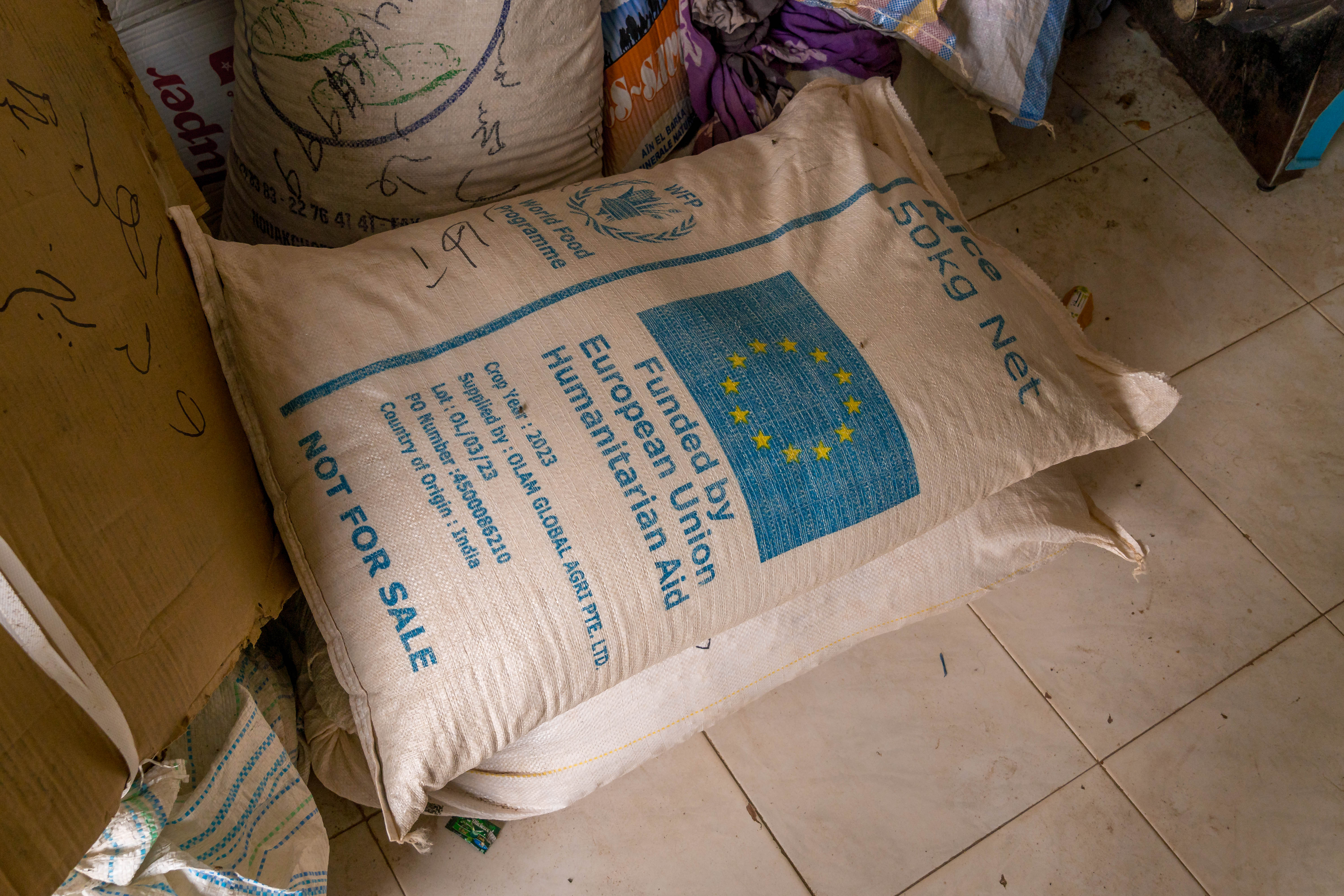
Baylis also showed that the Indian Public Distribution System (PDS), which provides greatly subsidized food rations to much of the Indian population, has measurably reduced child malnutrition while also raising local wages and lowering food prices. PDS’s impact on local wages is consistent with another great paper on another great instrument of Indian antipoverty policy, the National Rural Employment Guarantee Scheme (NREGS), a public works program that provides backstop income in the lean season. Almost 90 percent of the income gains from NREGS came from its effect on local wages, not through direct gains to program participants. Together, PDS and NREGS have played an important antipoverty role in the Indian growth story thus far. Nonetheless, both have seen declining budget shares of late—suggesting that populist policies have not favored the poor and in keeping with Heller and Jaffrelot on populism not being pro-poor.
What hope for the future?
I struggle not to be all gloom and doom, but my former boss, Shanta Devarajan, served a timely reminder that even as we talk about this wave of populism as a relatively new thing— and new things can be particularly anxiety-inducing—the challenges it reflects to public service delivery are far from new. And we can use lessons from those previous experiences to deal with these new(ish) challenges. He contrasted Gabon and Senegal to show this. Despite Gabon’s oil wealth, Senegal has higher childhood immunization rates—likely because its revenues come from taxes rather than resource rents, leading to greater accountability.
Well, most populist governments raise public revenue primarily through taxation, so perhaps what we need is to raise awareness and engagement with government decision-making. How do we do that? Schechter emphasized the power of information campaigns—such as via radio—to align policymaking with public interest. Of course, a populist will never fund information campaigns to run herself out of office—so local governments must lead where they can.
The multilaterals must insist on data, social protection, human development, and more
But local governments can’t do this alone. Accountability starts with data—and populist regimes often suppress it. The World Bank has long cast itself as a “knowledge bank”; of all remaining actors in development, it cannot abdicate its responsibility to bring the best data and research to bear in its dialogue with country governments—even (especially) those that want to walk away.
And as LMIC growth stagnates and poverty reduction slows or stops, the multilaterals, including the World Bank, must push for more—not less—social protection because the research is clear: safety nets prevent people from falling into poverty.
Equally, they must push for sustainable investments in human capital as a driver of economic growth. Encouragingly, Mamta Murthi, the World Bank’s vice president for human development, discussed how to make the case for such investments to ministers of finance.
I see no easy escape from the deepening populist retrenchment around the world. But let’s not forget that development is measured not by how fast an economy grows, but rather by the improvements to the quality of life of its poor. Investments in safety nets, schooling, and health level the playing field. They— not anti-elitist rhetoric—are the real answer to the concerns of ordinary people.
I am grateful to Charles Kenny, Vijayendra Rao, and Justin Sandefur for feedback and discussions.