Recommended


Debt relief was meant to be a game changer. When the Highly Indebted Poor Countries (HIPC) Initiative and the Multilateral Debt Relief Initiative (MDRI) were launched in 1996 and 2006, respectively, the goal was simple: reduce unsustainable debt burdens so that low-income countries could redirect resources to health, education, and poverty reduction.
But did it work out that way? Not quite. Our earlier analysis found that the anticipated boost in social spending never really materialized. Health spending stayed flat as a share of GDP, and the combined budget share for health and education didn’t rise—even though overall public spending did. Growth picked up after debt relief, but from 2011 onward it slowed, and between 2012 and 2020 the average debt-to-GDP ratio doubled.
So where did the freed-up resources go? In this blog post, we dig into one possible answer: whether countries ramped up public investment during this period—and, crucially, whether that investment translated into higher growth.
Public investment in HIPC/MDRI countries
So, what happened after debt relief? Figure 1 gives us a clue. The median public investment did go up. Between 2000 and 2008, it hovered between 5 and 6 percent of GDP. In the years that followed, it rose to between 6 and 7 percent of GDP. This was a welcome development as many of these countries urgently needed infrastructure to lay the foundation for stronger growth and, ultimately, poverty reduction.
Figure 1. Median public investment and GDP growth, HIPC/MDRI countries
% of GDP
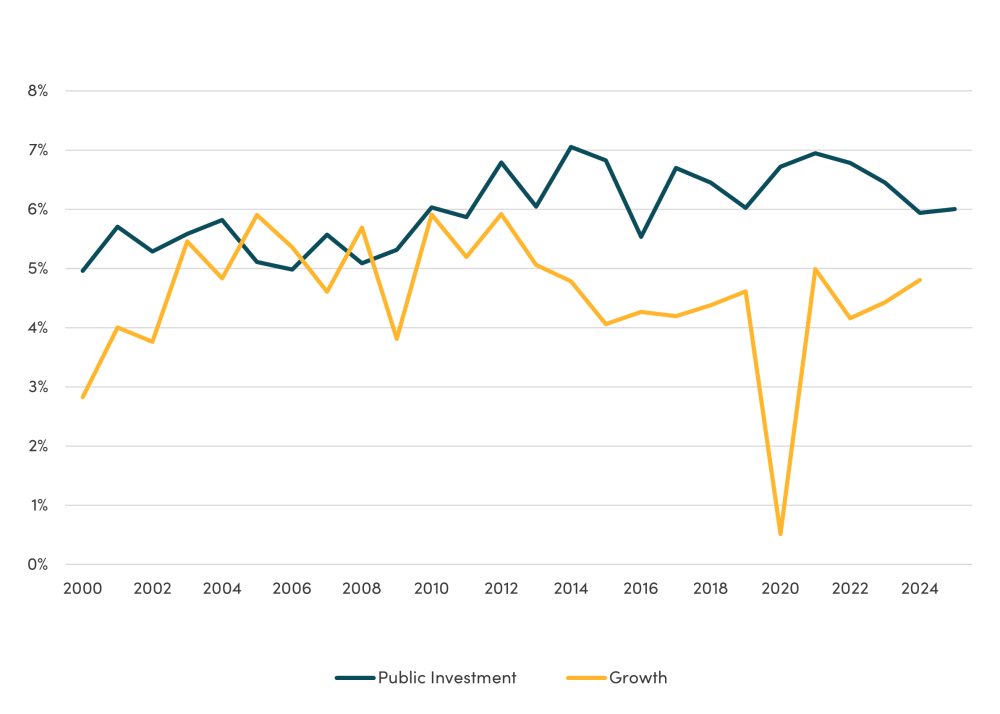
Source: IMF WEO, World Bank. Public investment calculated as general government expenditure minus general government expense using IMF definitions.
Of course, growth depends on many factors, but public investment is one important piece of the puzzle. As Figure 2 illustrates, higher public investment is correlated with stronger growth in HIPC/MDRI countries during 2000–2019. Most countries are clustered around 5–10 percent of GDP in public investment, and a 1 increase in public investment is associated with 0.58 percent higher growth. However, the strength of this relationship depends critically on the efficiency with which public investment is undertaken.
Figure 2. Growth vs. public investment, HIPC/MDRI countries
Median value 2000-2019, % of GDP
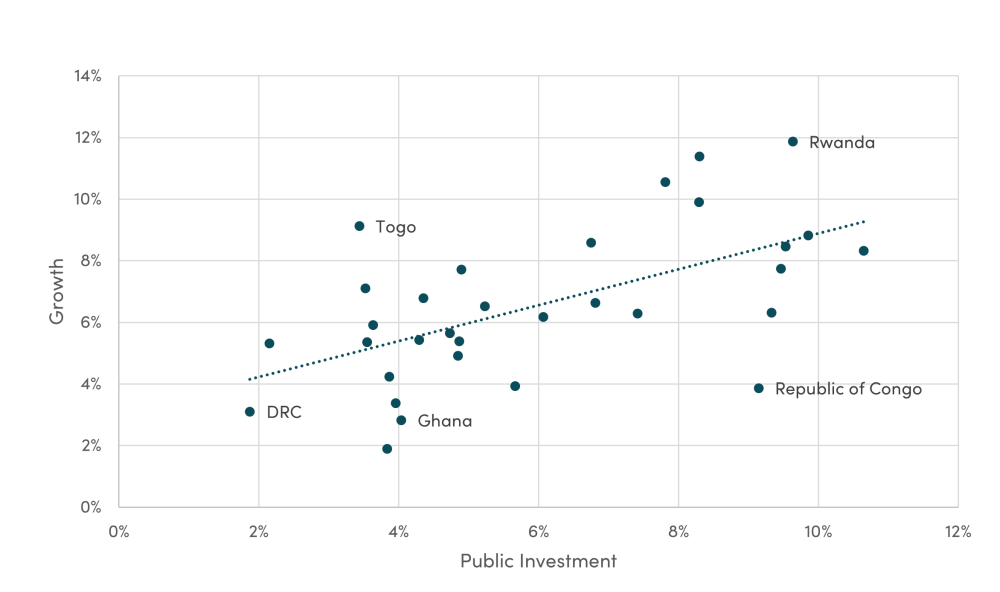
Source: IMF WEO, World Bank. Afghanistan and São Tomé and Principe are excluded as statistical oultiers and Somalia is excluded due to data availability.
Quality of public investment
One way to gauge the quality of public investment is through Public Expenditure and Financial Accountability (PEFA) assessments, which have been conducted in over 155 countries. These assessments provide a comprehensive evaluation of a country’s public financial management (PFM) system. In several cases, countries have undergone multiple assessments over time, generating scores that help track the efficiency of public investment.
From PEFA’s 31 indicators—scored from A (excellent) to D (below basic)—we identified 11 that capture key aspects of the public investment cycle in HIPC/MDRI countries. Our selection includes three indicators related to budget preparation and allocation, three to budget reliability and execution, three to financial management and reporting, and two to external scrutiny and audit.
Figure 3 shows a positive relationship between PEFA scores—which measure various aspects of public investment efficiency—and growth in HIPC/MDRI countries. Indeed, countries that have higher PEFA scores generate higher growth rates from public investment.
Figure 3. Growth vs. PEFA public investment score, HIPC/MDRI Countries
Median growth rate 2000-2019 and avg. PEFA
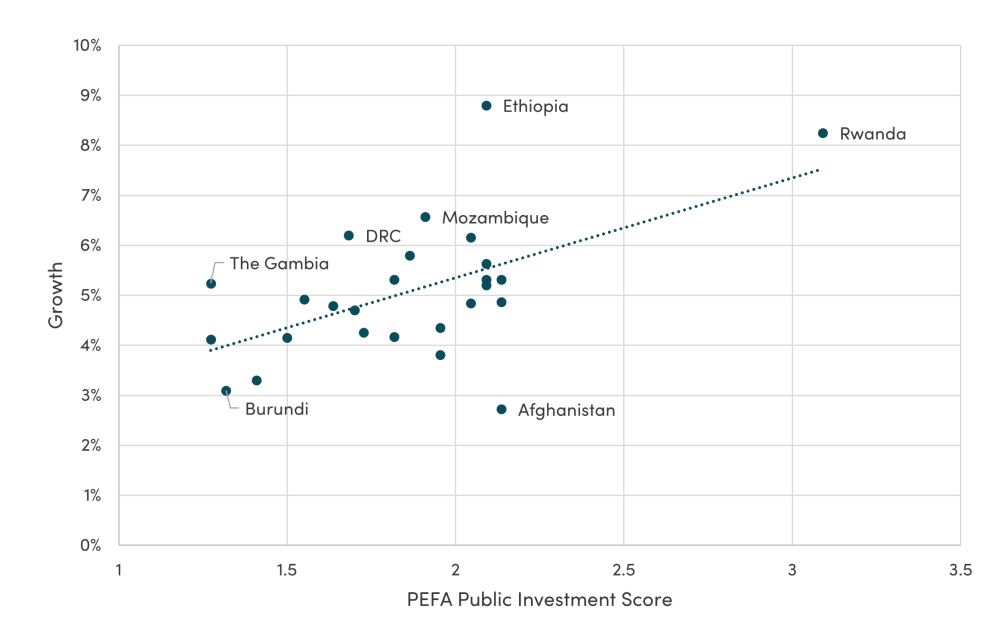
Source: IMF PEFA, World Bank. The 11 PEFA indicators used here are: public investment management, macroeconomic and fiscal forecasting, medium-term perspective in expenditure budgeting, expenditure composition out-turn compared to original approved budget, predictability of in-year resource allocation, expenditure arrears, procurement management, financial data integrity, in-year budget reports, external audit, and legislative scrutiny of audit reports.
Where do public investment weaknesses lie?
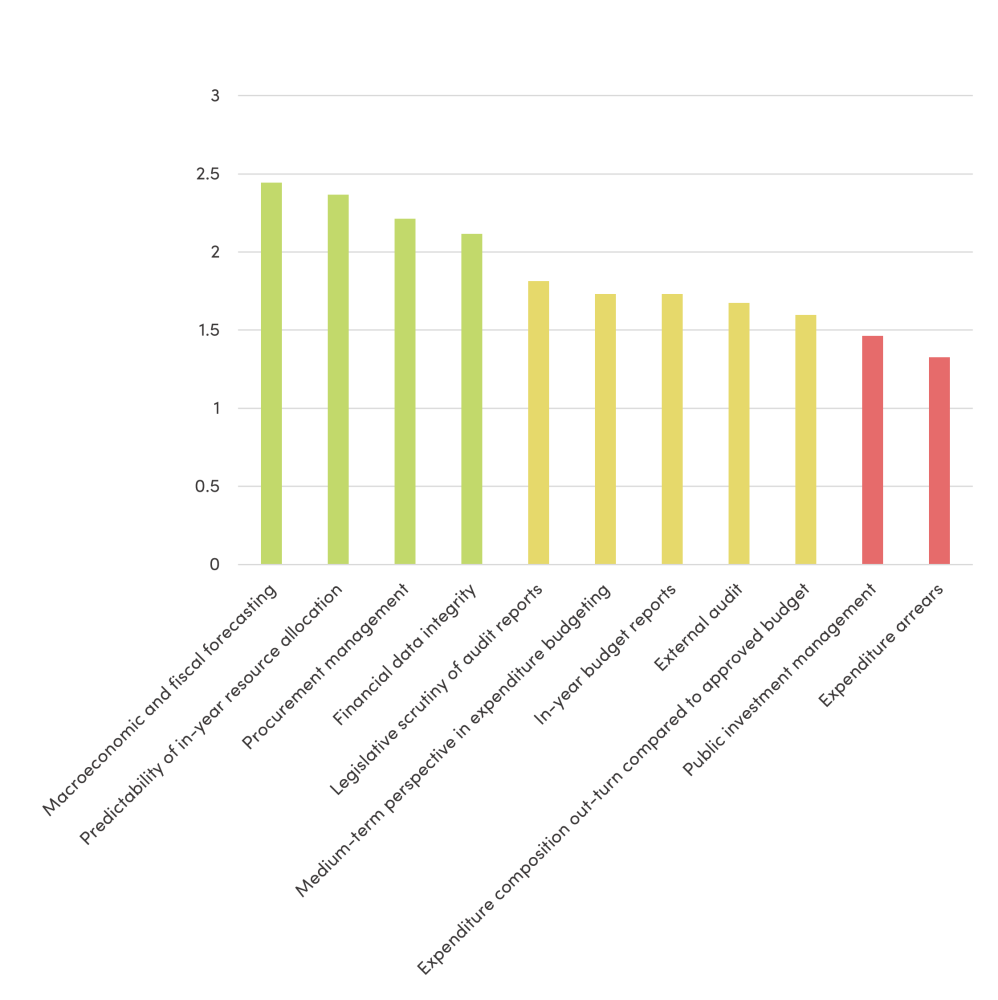
Figure 4. Average PEFA for public investment indicators, HIPC/MDRI countries
Source: PEFA
Figure 4 shows that public investment management scores are the second lowest among these countries. This indicator covers key dimensions such as project selection, costing, and monitoring. When combined with weak performance on expenditure arrears, the productivity of public investment is further undermined. Expenditure arrears—arising when governments fail to honor contractual commitments in construction and other areas—reflect weaknesses in budgeting practices.
The IMF has developed a diagnostic tool focused specifically on public investment management processes (Public Investment Management Assessment, or PIMA). A recent IMF study found that five PIMA institutions are systematically and strongly correlated with estimates of public investment efficiency in low-income developing countries and should therefore be high priorities in reform efforts: project management, project appraisal, procurement, availability of funding, and project selection. These findings are consistent with those captured in PEFA indicators.
The bottom line: HIPC/MDRI countries with more efficient management of public investment did better in utilizing debt relief and reaping the benefits of public investment. While international financial institutions have provided substantial support to strengthen public expenditure management, including critical aspects of public investment management, significant weaknesses remain. Improvements in this area will likely remain elusive unless member governments themselves commit to deep and sustained reforms.
Topics
DISCLAIMER & PERMISSIONS
CGD's publications reflect the views of the authors, drawing on prior research and experience in their areas of expertise. CGD is a nonpartisan, independent organization and does not take institutional positions. You may use and disseminate CGD's publications under these conditions.
Thumbnail image by: fivepointsix/ Adobe Stock