Recommended
Project

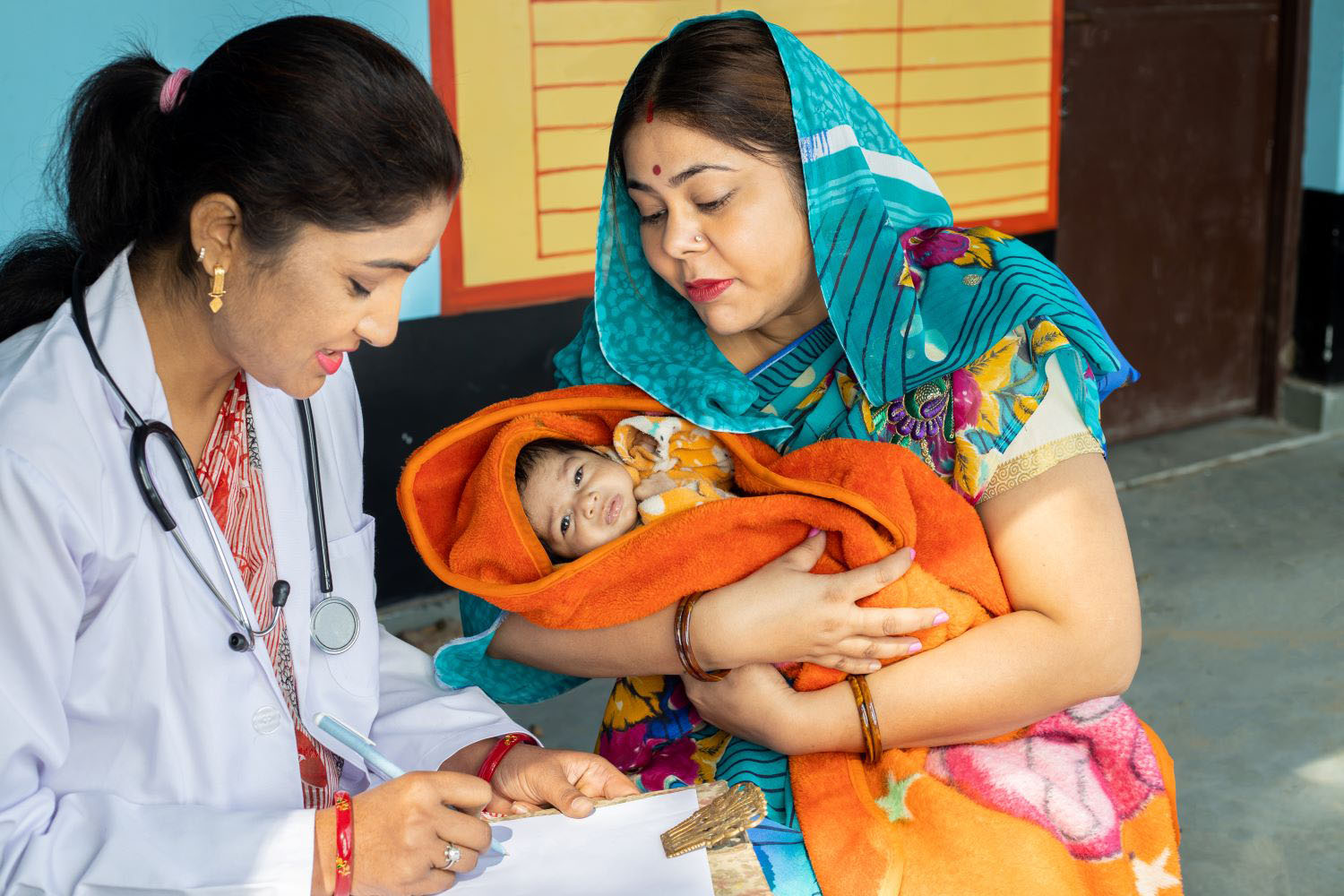
Neonatal sepsis kills one newborn every 45 seconds, in part because no rapid diagnostic exists to tell clinicians whether a baby has sepsis or not. Doctors must make life-or-death treatment decisions based on risk factors or nonspecific and easy-to-miss signs like poor feeding or slightly fast breathing. The result: babies with sepsis are missed and die, and other babies without sepsis are given antibiotics they don't need.
In early 2025, the Center for Global Development and the Market Shaping Accelerator launched a working group chaired by Lord Jim O'Neill and comprising world-leading experts in neonatal care, diagnostics, economics, market shaping, and global health. Together, we have designed a $60 million funding facility to accelerate the development and deployment of a rapid triage diagnostic for neonatal sepsis in low- and middle-income countries (LMICs).
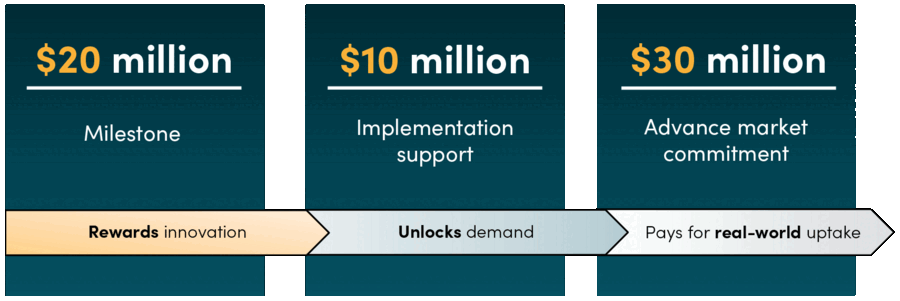
Rather than paying researchers upfront, NeoTest pays innovators only when a working product is successfully developed and reaches patients. It deploys capital across three components:
- A $20 million milestone payment that rewards the first firms to bring a qualifying test to market;
- A $10 million implementation support fund that builds the country-level infrastructure needed for adoption;
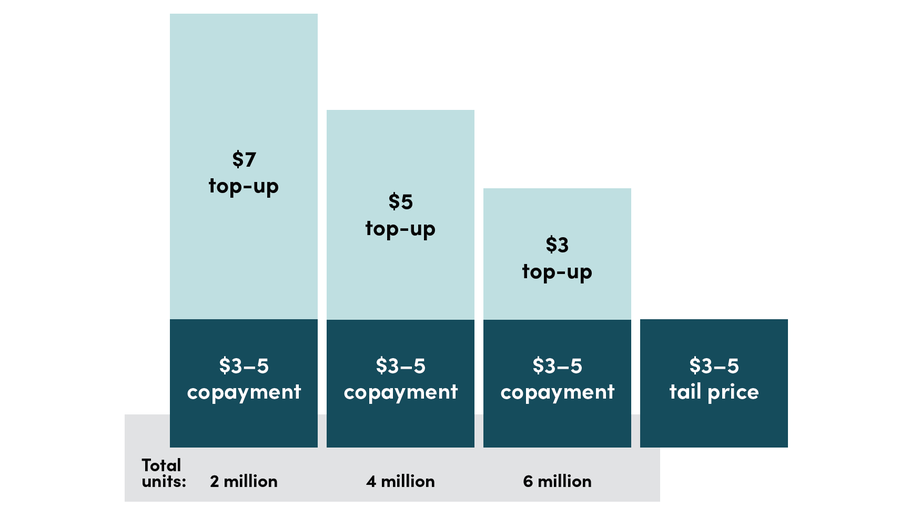
- A $30 million advance market commitment (AMC) that pays a per-test top-up on qualifying tests used.
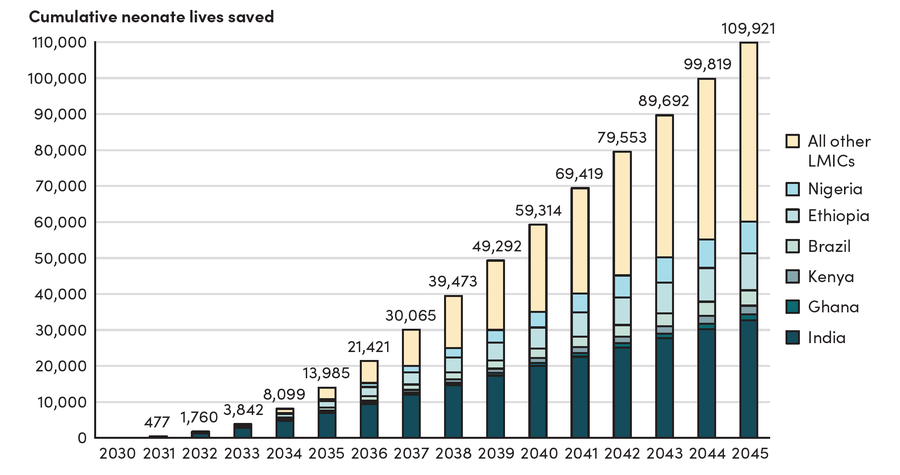
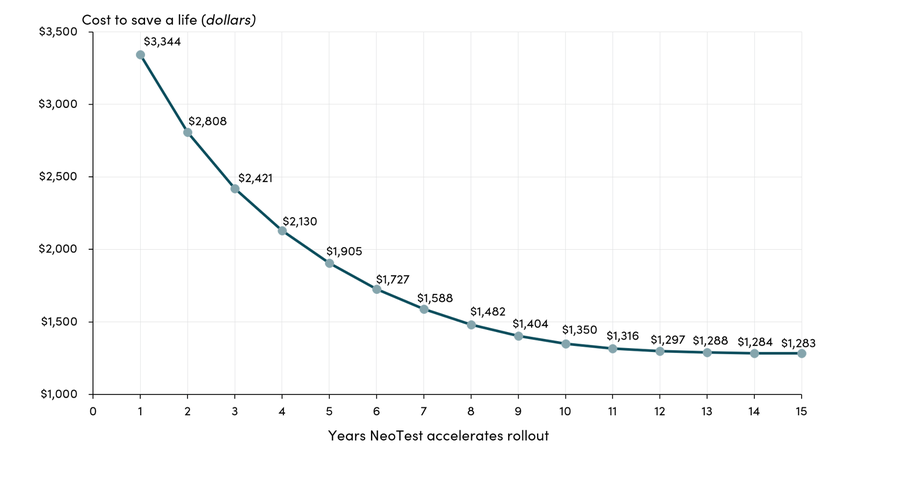
With $60 million in funding, we estimate the facility would save over one hundred thousand newborn lives over a decade at a cost per newborn life of $1,271. This places it amongst the most cost-effective global health interventions.
To accompany the release of the NeoTest working group’s report, which describes the facility's design in greater detail, we answer some frequently asked questions about NeoTest below.
Frequently asked questions
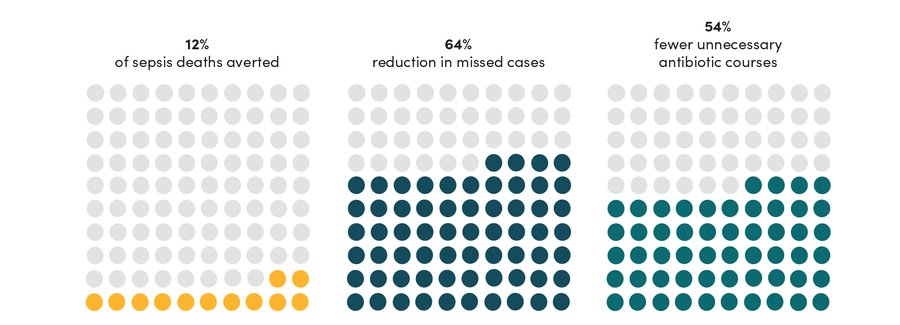
Our analysis shows that a test meeting our specifications would catch nearly two-thirds of sepsis cases that are currently being missed, and cut unnecessary antibiotic use in newborns by more than half. As a result, deaths from sepsis would fall by 12 percent.
Scaled up across low- and middle-income countries over 15 years, we estimate the diagnostic would save about 110,000 newborn lives.
See Section 3: The value of a rapid triage diagnostic of the full report for more detail.
A nurse pricks a newborn's heel and applies a small drop of blood to a test, which may be a compact tabletop instrument or reader. Within 30 minutes, the nurse gets a clear positive or negative result. The test is designed to be robust and work in low-resource settings without reliable electricity, and cost $3–$5 per test performed. Whilst it would likely be a ‘heel prick’ blood test, the test could also be saliva-based, or a wearable ‘band’ on a baby’s wrist or forehead that captures vitals data.
Our specification is closely aligned with the WHO's own Target Product Profile for this diagnostic (published in 2025); WHO also participated in our working group. The test would be used for babies in the 'grey zone'—not obviously critically ill, but not clearly well either—which constitute roughly a quarter to a third of all newborns in LMICs.
See Section 2: The product of the full report for more detail.
NeoTest deploys $60 million across three components, each targeting a different barrier to innovation. A $20 million milestone prize rewards the first firms to bring a qualifying test to regulatory approval: $5 million to the first firm, with the remaining $15 million split equally among all firms that qualify within a 12-month window. This structure rewards pioneering without creating a winner-takes-all dynamic.
A $10 million implementation fund supports countries in building the adoption infrastructure that new diagnostics need—from updating treatment guidelines to navigating regulatory approval and procurement processes.
The centrepiece is a $30 million advance market commitment (AMC)—a binding commitment to pay a per-test subsidy for tests that are procured. NeoTest's AMC pays $7 per test for the first two million qualifying tests, $5 for the next two million, and $3 for the last two million, on top of the price countries would ordinarily pay. The subsidy steps down as volume builds, frontloading the payment when commercialization costs are highest.
See Section 6: The NeoTest facility of the full report for more detail.
Not without intervention. We spoke to over 40 companies and experts working in this space. Many said they could develop this test but wouldn’t without a clear demand signal—the binding constraint cited was not scientific but economic. Getting a diagnostic out of the lab and through to regulatory approval costs $15–$23 million (on average) and takes six to seven years. In LMICs, governments can only afford to pay $3–$5 per test—barely covering production costs, let alone the profit margin needed to recoup and sustain R&D. This price also does not capture the wider benefits to society of reduced antimicrobial resistance (AMR) and improved long-term child health. Combined with weak intellectual property protection for many rapid diagnostics and fragmented, uncertain public-sector demand, this pushes companies toward richer and more predictable markets. Neonatal sepsis, which kills almost exclusively in LMICs, gets left behind.
See Section 5: Market challenges of the full report for more detail.
Public funding for innovation typically operates through two channels: “push” funding, which pays for inputs (e.g., research grants) and pushes ideas out of the lab, and “pull” funding, which pays for outputs (e.g., prizes and advance market commitments) and pulls them all the way to market. The latter—the focus of the NeoTest fund—incentivizes innovation by creating demand for a specific product, which draws private investment toward it.
Push (or grant funding) has two core limitations. First, funders have to pick winning technologies upfront—but as described above, no approach or firm is currently ahead in neonatal sepsis diagnostics, making this a difficult and poor bet. Second, incentives focus on meeting the grant payment’s criteria. If those criteria do not align with what real-world clinical use requires, developers may create a test that underperforms or is simply not useful.
Pull funding addresses these concerns. By rewarding any firm that meets the specification, NeoTest avoids picking winners and lets competition determine which technology succeeds. Moreover, because the AMC pays per test used in LMICs, companies only get paid when a working product reaches patients. This shifts risk from funders to innovators. Competition among firms to capture the subsidy also incentivizes firms to reduce costs and increase quality, helping establish a self-sustaining market that can persist after the subsidy ends.
That said, grant funding is critical for the earliest stages of R&D—push and pull are complementary, not alternatives. We are partnering with CARB-X, the world's leading push funder for AMR diagnostics. CARB-X has already obligated $10 million in grants and milestone payments for neonatal sepsis diagnostic R&D, and its 2026 funding call specifically targets tests aligned with the NeoTest specification. CARB-X de-risks the science; NeoTest creates the demand signal that makes it worth taking a product all the way to market.
See Section 6 and Appendix H: Mechanism design rationale of the full report for more detail.
We've built country engagement into the facility's design from the start. NeoTest has conducted consultations in several priority countries—including India, Nigeria, Kenya, Ghana, Ethiopia, and Brazil—with clinicians, health officials, and procurement bodies. Across these settings, we tested the use case for the diagnostic, refined the target product specifications, and validated demand. Key institutions shaping global neonatal health standards—including the Indian Council for Medical Research, FIND, NEST360, and the WHO—participated directly in the working group.
The diagnostic directly advances countries' goals to reduce newborn mortality to single digits per 1000 births and facilitates national action plans on AMR.
See Section 7: Country engagement of the full report for more detail.
In 2024, the Market Shaping Accelerator ran an open innovation challenge, receiving over 180 proposals from around the world. The question: where is the need for a new product enormous, but the commercial incentive insufficient to attract private investment? Rapid diagnostics for neonatal sepsis emerged as a clear answer. Dr. Akhil Bansal's proposal for a pull-funding mechanism to tackle neonatal sepsis was one of three finalists. What followed was 18 months of development—with a 20-person working group of global experts—to turn that idea into a fully specified funding facility.
AMR—the growing problem of bacteria that no longer respond to drugs—is fuelled by antibiotic overuse. Because doctors can't tell whether a baby is infected, they not only miss many cases of sepsis, but they also prescribe antibiotics to many infants who don't have sepsis. A rapid diagnostic would cut unnecessary antibiotic use in newborns by more than half, reducing the prescribing that drives resistance. This matters beyond newborn care units: resistance that emerges in hospital wards spreads into communities and across borders. Globally, bacterial AMR is estimated to cause more than 1.25 million deaths annually and is associated with several million more.
See Section 3: The value of a rapid triage diagnostic of the full report for more detail.
The test is most likely to work by measuring the body's immune response to infection, which could be detected through combinations of proteins, genetic signals, changes in how blood cells look and behave, or vital signs data tracked continuously over time. AI can and is helping in three ways: (1) biomarker discovery—identifying which genes, proteins or cellular movements best predict sepsis; (2) algorithm integration—combining multiple signals into a more accurate result than humans can; and (3) wearable monitoring—continuously tracking vital signs like heart rate and using AI to flag early infection risk. NeoTest is technology-neutral: because payment is tied to procurement and is firm-agnostic, it rewards whichever approach actually works in real-world clinical settings.
See Section 4: Technological feasibility of the full report for more detail.
We believe so. Developers frequently told us that in order to pursue neonatal sepsis over more certain and commercially attractive markets, they needed a clear demand signal that a market would materialize if they successfully developed a diagnostic.
To provide this demand signal, the NeoTest fund is structured and sized around the expected costs and timelines of diagnostic R&D and commercialization, the probability of success at each stage of development, and the specific market barriers preventing private investment for this test. All of this information was discussed and evaluated by our working group of world-leading experts to arrive at a final design.
We think without this demand signal, it is very unlikely that a qualifying diagnostic would be developed or reach LMICs at scale within the next decade.
However, even if NeoTest accelerated market entry by only a few years, the return would still be enormous. Even a three-year acceleration in rollout would result in a cost per newborn life saved of $2,421, an extraordinarily cost-effective intervention.
Every year of delay costs thousands of newborn lives.
It stays with, or returns to, funders. Because NeoTest is a binding, contingent commitment, funders only need to release their money once a test is successfully invented and used. In the interim, committed funds can stay with the funder or be held in escrow within the NeoTest facility.
This gives developers a credible demand signal while protecting funders from paying for failure. It also means that every dollar paid into the milestone directly corresponds to paying for a regulatory-approved test, and every dollar paid into the AMC directly corresponds to a test that has reached a newborn.
Neonatal sepsis is responsible for 400,000–700,000 deaths each year, the second leading cause of newborn mortality. While deaths from other newborn conditions have fallen significantly over recent decades, sepsis has proved far harder to curtail without better diagnostics.
The need has long been there. Two things have changed—focused global health attention, and rapid scientific progress.
On the former, the WHO published its Target Product Profile for a neonatal sepsis diagnostic in 2025; CARB-X’s 2026 funding call is specifically targeting a rapid triage test that is aligned with the TPP used by NeoTest; and over 20 world-leading experts have aligned behind the design set out in this report.
The science, too, has reached a point where a diagnostic is likely feasible, particularly in the age of AI. Multiple technological pathways are now plausible and developers spread across three continents have the capability to work on this.
The missing piece is a credible demand signal. That is what NeoTest provides.
Topics
DISCLAIMER & PERMISSIONS
CGD's publications reflect the views of the authors, drawing on prior research and experience in their areas of expertise. CGD is a nonpartisan, independent organization and does not take institutional positions. You may use and disseminate CGD's publications under these conditions.