Recommended
Event
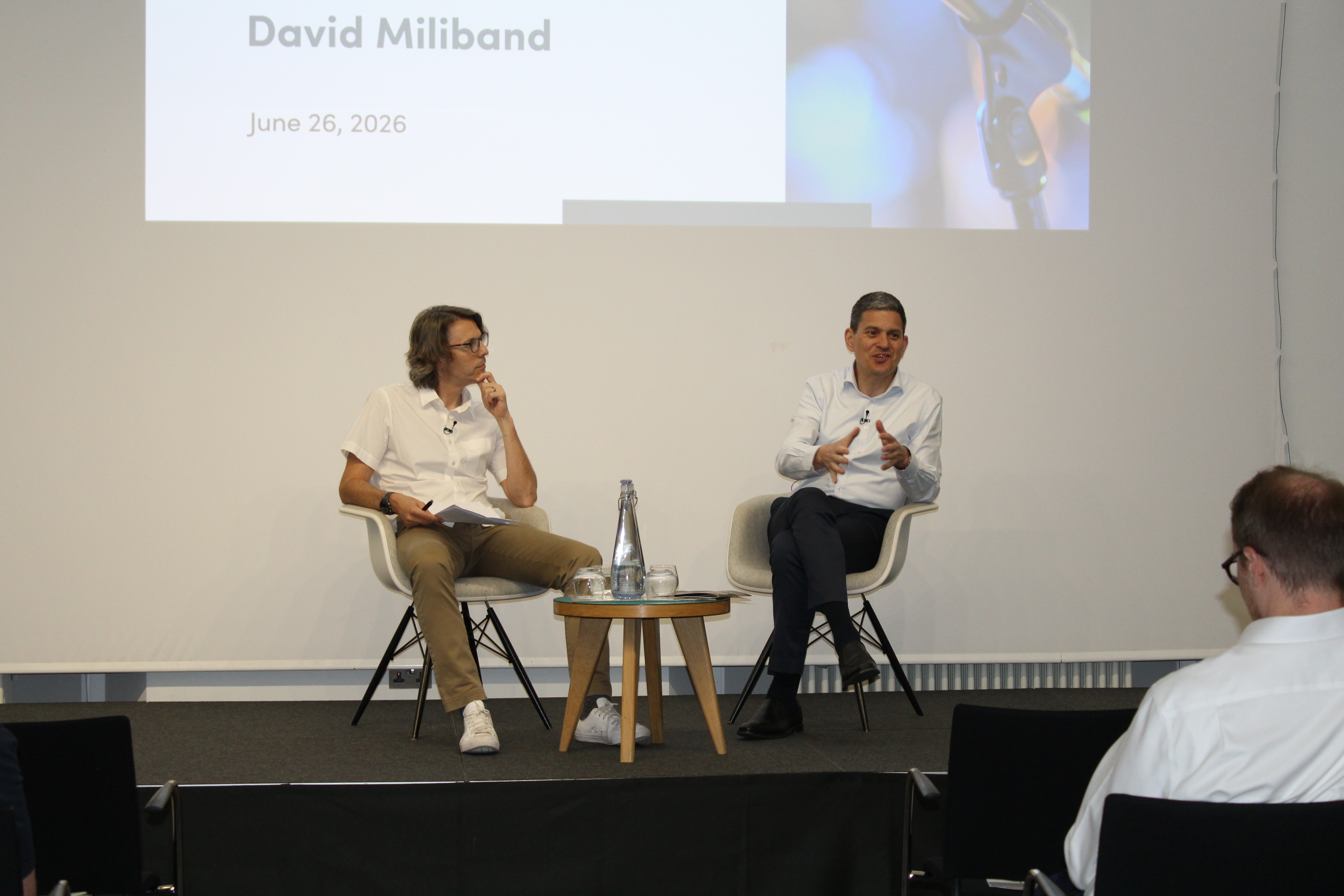
A Fireside Chat with David Miliband
HYBRID
June 26, 2026 10:30—11:30 AM BST | 5:30—6:30 AM EDT
On Tuesday, June 30, 2026, CGD's Ian Mitchell was invited to appear before the UK's International Development Select Committee to present evidence on the subject of “The UK’s International Climate Finance.”
Summary
Defeating climate change will depend primarily on other countries actions. Climate finance is the only area of development finance with an agreed international target and finance is a key pillar of the deal with developing countries for them to accelerate their emissions reductions. It is not an exaggeration to say that the quantity and clarity of climate finance is fundamental to whether efforts on tackling climate change are successful. The quantity, transparency and quality of the UK’s climate finance are central to these efforts both in terms of its direct impact but also in terms of the example set by others.
Unfortunately, the UK has taken a major backward step both on magnitude and the clarity on its climate finance. Cuts to Official Development Assistance (ODA) mean successive Governments have undermined their own climate target. As the Government makes further cuts, climate considerations are already fully integrated in UK development spend and so ‘mainstreaming’ is not an option in increasing climate effort. The Government must to decide on whether cuts fall on climate, education, health or growth.
Despite this, there remain opportunities for the UK to improve its climate finance and to encourage others. In particular, we recommend the UK should:
- Primarily fund climate finance through the multilateral development banks given their ability to mobilise, work with recipient Governments at scale and to use loans where possible. The UK can focus its bilateral grant finance on adaptation as recipients have repeated called for – we propose 70% of bilateral grant finance should be on adaptation.
- Improve transparency on climate finance in its statistical and results reports; and also encourage others do to so.
- Lead on driving up impact in climate finance. It can publish its climate best-buys (or ‘best investments’), link projects, impacts and costs in its annual results publication and lead other providers in driving up their impact based on shared evidence of what works
- Set its new climate finance target with clarity and honesty and push the OECD partners and MDBs to do the same so that countries can plan and be clear about the financing provision and gaps.
- Beyond ODA; it can re-focus other finance on climate (esp mitigation) goals. This can include guarantees, export finance and should also channel a portion of revenue from the Carbon Border Adjustment Mechanism back to the countries that are paying it
What impacts will the reduction of Official Development Assistance (ODA) have on the UK’s ability to deliver its ICF commitments?
The Government cannot pretend that a 40 per cent cut to its ODA will not have consequences for its climate finance. It is clearly inconsistent with a new global climate finance goal that triples the level of ambition to $300bn per year by 2035 and will mean that other countries are much less likely to take climate action. The change in methodology announced in October 2023 has already badly undermined the UK’s commitment.
On a practical level, following this methodology change (which estimates suggest added more than half a billion pounds to UK ICF in 2024-25) the UK will meet its 5-year climate finance target of £11.6bn which concludes in 2025-26. But without this methodology change, which includes counting a share of MDB financing and automatically including 30% of humanitarian spend in certain countries, the UK would not have met the ICF3 target. While counting a share of MDB contributions is justifiable in principle (had it been included in the baseline), the latter change seems arbitrary, especially since humanitarian projects were already assessed for their ICF contribution (with officials usually finding a lower share appropriate).
As the delivery of the prior commitment was backloaded, this has resulted in the UK spending around
£3bn per year on climate finance in 2024-25 (around 30% of its non-refugee Official Development Assistance, ODA. If the climate finance took a proportional cut (of 27% in cash terms), this would reduce that number to £2.2bn – or £11bn over a 5 year period.
In practice, the Government has protected its multilateral development bank commitments at IDA and the ADB, and these have a relatively high share of climate so the reduction could potentially be smaller. On the other hand, the Development Minister has suggested partner countries “want the respect of partnership and the freedom to make decisions that good development enables” and it may follow that countries agree more or less climate finance than is currently provided bilaterally. The spending review reduced the ODA budget for Energy Security and Net Zero from over £600m in 25-26 to an annual average of £256m over the spending review (a 56% cut) suggesting the Government intends to reduce bilateral efforts.
Past reductions in the ODA budget have already had a large impact on the UK’s ability to deliver its ICF commitments, causing it to change method and undermine trust in its provision. The Government must at least be honest about its efforts to rebuild trust with other counties at COP. In practice, this means being clear about the grant-equivalent ODA resources going to climate finance (see question 2); and separately what the UK is doing to mobilise wider sources of climate finance (question 7). This would reduce the incentives to achieve any target by increasing the share provided to better off countries on ever less concessional terms and also be a valuable example to other providers of finance.
How transparent is the UK Government about its ICF commitments
The UK is ahead of many other countries in terms of ICF transparency but could improve across a number of dimensions.
The UK should add an additional column to the Statistics on International Development dataset denoting which project components count towards ICF. While FCDO provides data through IATI on which part of projects count as ICF, along with extensive project documentation (such as business cases and logframes), reporting from other departments is highly incomplete. In any case, IATI is a challenging dataset to use for many stakeholders, and the UK’s own platform Devtracker does not allow for easy aggregation of ICF projects, limiting its use. Including an ICF column in SIDS would make it much easier to understand which projects contribute to ICF (without the lag of UNFCCC data).
The UK should outline which projects contribute to which KPIs in the ICF results publication, in the same manner as the World Bank scorecard. The UK should also be commended for producing a regular ICF results page that estimates the impact that ICF has had across a range of KPIs. However, the claims made in this publication are difficult to scrutinize because there is no information on which projects contributed to each KPI. This prevents readers from learning which projects are driving the results, how cost-effectively impact is achieved, or checking the robustness of the methodology. The Government should publish online the project-specific data that underpins the annual ICF results publication, and include information on ICF spend in each UK financial year (as recommended here)
The UK should be clearer in its statistics which ICF projects create assets for the UK and which are pure expenditure. The UK provides aid in a variety of formats, that have very different implications for its fiscal metrics. Providing capital to the MDBs, or BII, or groups such as PIDG create assets and therefore do not contribute to the UK’s debt figures, and in principle are recoupable at a later date. This is very different from (for example) cash transfers, or other types of direct expenditure. Lumping these different types of transactions together is unhelpful for public perceptions: there may be greater appetite for ICF that creates (or at least does not lose) value for the UK relatively to direct transfers.
The Government should publish annual details of all of its climate-relevant finance. Given the growing importance of transparency on international climate finance and the increasing focus on non-ODA instruments, the UK should publish an annual report setting out its full portfolio.
How effectively are FCDO, DESNZ, DSIT and Defra coordinating their efforts to deliver the UK’s ICF commitment and maximise value for money? Is there sufficient cross-departmental monitoring and evaluation being conducted to measure programme impact on low-income and climate-vulnerable countries?
There is a major challenge in the impact and effectiveness of climate finance globally. Our research has identified six troubling trends in effectiveness relative to wider development assistance. The UK is better than most in its interest in impact; and it could play a valuable role championing this agenda among the major providers to drive up the effectiveness and impact of all finance.
We recently reviewed the UK’s annual climate finance results publication. This is likely the most impressive of all the major providers in showcasing impact and results. However, this document remains more of a communications document rather than a serious attempt to assess and inform value for money. We argue that i) it must include the costs alongside the benefits, ii) that it should incorporate ‘what works’ and ‘best buys’; and iii) that results should be subject to external review.
FCDO’s reorganization may pose risks to its approach to VfM. FCDO has substantial monitoring in place to ensure the effectiveness of aid programming (including ICF). Historically, business cases for new projects (whether ICF or not) were subject to scrutiny by a quality assurance unit and they would challenge and encourage the use of high impact approaches. It is not clear following FCDO’s re-organisation whether this commitment still exists and it would be great to hear from Ministers on the subject.
Is the UK using the right and most effective financial instruments to deliver ICF? And what opportunities and risks do alternative funding instruments, such as private or blended finance, pose for the UK’s ICF?
Within ODA, the likely most effective approach to climate finance is likely to support the multilateral development banks. These are able to use lending and grants as appropriate, mobilise a multiple of capital inflows, work with recipient Governments, and are able to offer finance on a scale to achieve industrial impacts. Our recent work on the World Bank’s climate portfolio shows that even where it funds mitigation – for a global benefit – it prioritises recipient benefits.
Given domestic fiscal constraints, and the COP goal to ‘mobilise’ climate finance; the UK can and should focus its energies on using instruments outside of ODA, particularly in relation to mitigation. It already has a target for its export finance to target clean growth of £10bn by 2029.
Expanding non-ODA instruments: While the UK has in the past prided itself on the high share of ICF to come from grants, this is no longer feasible given the reduced size of the ODA budget. There are also principled reasons for shifting away from grants in the case of mitigation finance. Most mitigation projects have the potential to produce a revenue stream which make grants an inefficient mode of funding, and in any case mitigation needs in the low and middle income countries far exceed what could be funded by grants alone.
- Use partial guarantees to encourage private investment: There is evidence that the high cost of capital in L/MICs comes not just from higher levels of risk, but also cultural and practical barriers to investing in frontier markets that get reflected in higher risk premium. From the point of view of agencies (such as DFIs) that are experienced in managing these barriers this implies that the risk is overpriced, and therefore there is an ‘arbitrage’ opportunity in using guarantees for private investment. Making them partial guarantees helps to promote some level of knowledge transfer to participating actors.
- Capitalising insurance/re-insurance instruments. Currently, contributions to organisations such as African Risk Capacity are counted as grants in ODA statistics. But these could be structured so as to either minimize or eliminate their impact on ODA, such as providing capital in the form of loans rather than equity (so that their grant equivalent is counted if sufficiently concessional, rather than face value).
- Better use of reserve funds. Researchers have suggested ways of using the UK’s Exchange Equalisation Account in a fiscally neutral way to increase concessional lending to the MDBs, including IDA. Given the high climate coefficient on IDA contributions, this would have a large, direct contributions to UK’s ICF commitments.
- Carbon Border Adjustment Mechanism (CBAM) revenue – the EU’s CBAM had a highly detrimental impact on its reputation at COP. While this is an important policy to incentivize climate action; CGD’s analysis shows that nearly all poor countries lack the capacity to avoid it and that many of those countries are the poorest and most vulnerable to climate. The UK should allocate a portion of CBAM revenues back to help the poorest countries deal with climate.
Our colleague Samantha Attridge has suggested tax relief on climate investments: CGD have demonstrated that targeted tax incentives could be an efficient way to mobilise substantial private finance at little cost (with mobilization ratios of at least 8:1). The UK could specify that investments that contribute towards Nationally Determined Contribution (NDC) priorities of partner countries would be subject to partial tax relief.
How should the UK’s ICF be spread between, mitigation, adaptation and loss and damage spend to respond to climate change most efficiently?
Most non-ODA instruments would be better suited to mitigation, given that mitigation projects are more likely to generate a return. Therefore, the exact balance between mitigation and adaptation should depend on the mix of financial instruments that the UK uses. Grants and concessional finance should primarily be reserved for adaptation, rather than mitigation and so the Government should significantly expand the use of non-ODA instruments to fund mitigation projects, freeing up ODA resources to shift substantially towards adaptation.
In order to maintain a focus on the needs and priorities of the poorest countries, the UK should specify a high minimum share – we suggest 70% - for adaptation within climate ODA. This would fit with the UK’s expertise and grant instruments and would attract significant credit from developing countries who have repeatedly emphasised this as a priority. It should also pair that with a commitment that adaptation be increasingly targeted at those countries most vulnerable to climate change.
CITATION
Mitchell, Ian. 2026. Ian Mitchell Testifies on the UK’s International Climate Finance (IDC). Center for Global Development.DISCLAIMER & PERMISSIONS
CGD's publications reflect the views of the authors, drawing on prior research and experience in their areas of expertise. CGD is a nonpartisan, independent organization and does not take institutional positions. You may use and disseminate CGD's publications under these conditions.