Recommended
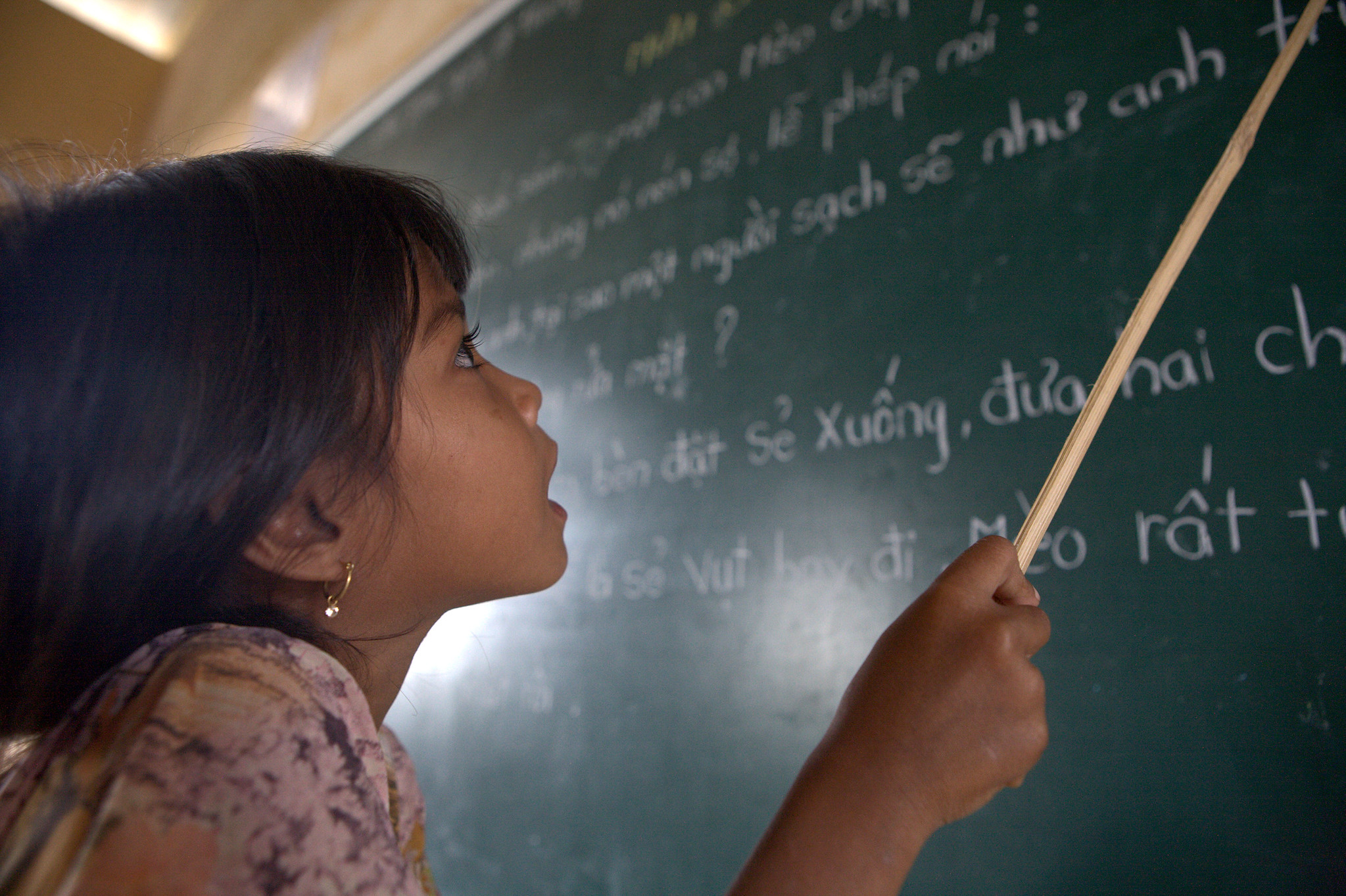

People who spend more time in school have greater awareness of climate change. This was shown in a global observational study in 2015. And it’s not just a correlation—a recent causal study uses a natural experiment (changes to compulsory schooling laws)—to show that people who leave school a year later are four percentage points more likely to vote for a Green party, as well as being more worried about climate change and more likely to try and reduce their own energy usage.
So we know that how long people spend in school impacts attitudes to climate change. But how else can education play a role in tackling the climate crisis? What about what’s on the curriculum? One of the (many) UN Sustainable Development Goals is to ensure that “all learners acquire knowledge and skills needed to promote sustainable development”. To monitor progress on this goal, the UN asks countries to report on whether sustainable development is included in education policies and curricula. A questionnaire is sent to every country in the world asking “Is global citizenship education and education for sustainable development included as part of the formal curriculum?”.
This approach is problematic: self-reporting may suffer from social desirability bias, there is only a vague definition of what qualifies as “education for sustainable development”, and a lack of verification or assessment of effective implementation.
An alternative, bottom-up approach was recently published by the MECCE project at the University of Saskatchewan in Canada. They pore through actual curriculum documents and look for actual evidence of any mention of sustainable development—specifically a set of keywords related to the environment, sustainability, and climate change (for similar analysis on gender see our report here).
To perhaps little surprise, when we compare survey responses by governments on whether sustainability is in their curriculum, with actual counts of mentions of sustainability from curriculum documents, there is essentially no correlation (Figure 1).
Figure 1: Policymaker survey answers on climate-related curriculum content have no correlation with actual curriculum content

As well as being bottom-up and based on actual documents, the MECCE approach also covers more countries, with data for 72 countries, compared with 59 from the UIS survey of government officials that is currently being used for monitoring SDG 4.7. Few countries (less than four out of ten, as per the MECCE review) have set up the monitoring systems required by the SDG 4 Steering Committee to establish benchmarks and report progress against these goals, hamstringing efforts to capture how climate change is being introduced in schools.
What works in climate education?
We still have a limited understanding of how climate change education could support adaptation or mitigation efforts. Climate change education might support learners to cope with stress, fear and anxiety related to the climate, foster a sense of collective agency and hope, and support behavioural change that results in reduced emissions. But it matters what counts as “climate change curriculum.” The last such review found that only around half of national curriculum frameworks in 100 reviewed countries reference climate change at all, and even then, there was little depth to the subject.
Moreover, curricula are just one part of the solution. Effective climate change education requires teacher training, addressing misconceptions among students and parents, and making lessons applicable to local contexts.
The MECCE project found that while around half the countries reviewed include climate change in their education sector plan or strategy, fewer than a third include explicit financing for climate change education. Only a third of countries had any climate change component in teacher training plans. Most teachers think it is important to teach children about climate change, but only 40 percent feel confident to do so. Two-thirds of teachers are unable to explain the local impacts of climate change.
While it’s good news that just spending more time in school seems to change behaviour on climate, the disconnect between reported and actual curriculum content on sustainability reveals a gap in our understanding of climate education.
As the world grapples with an escalating climate crisis, merely ticking boxes on UN questionnaires isn't enough. Real progress demands a hard look at what's actually being taught in classrooms. And more than counting words on a curriculum, we need evidence on the impact of climate change curricula on action. And we need to encourage countries to take climate change education more seriously across planning, training, and implementation.
Topics
DISCLAIMER & PERMISSIONS
CGD's publications reflect the views of the authors, drawing on prior research and experience in their areas of expertise. CGD is a nonpartisan, independent organization and does not take institutional positions. You may use and disseminate CGD's publications under these conditions.
Thumbnail image by: DFID / Pippa Ranger