Recommended
Blog Post
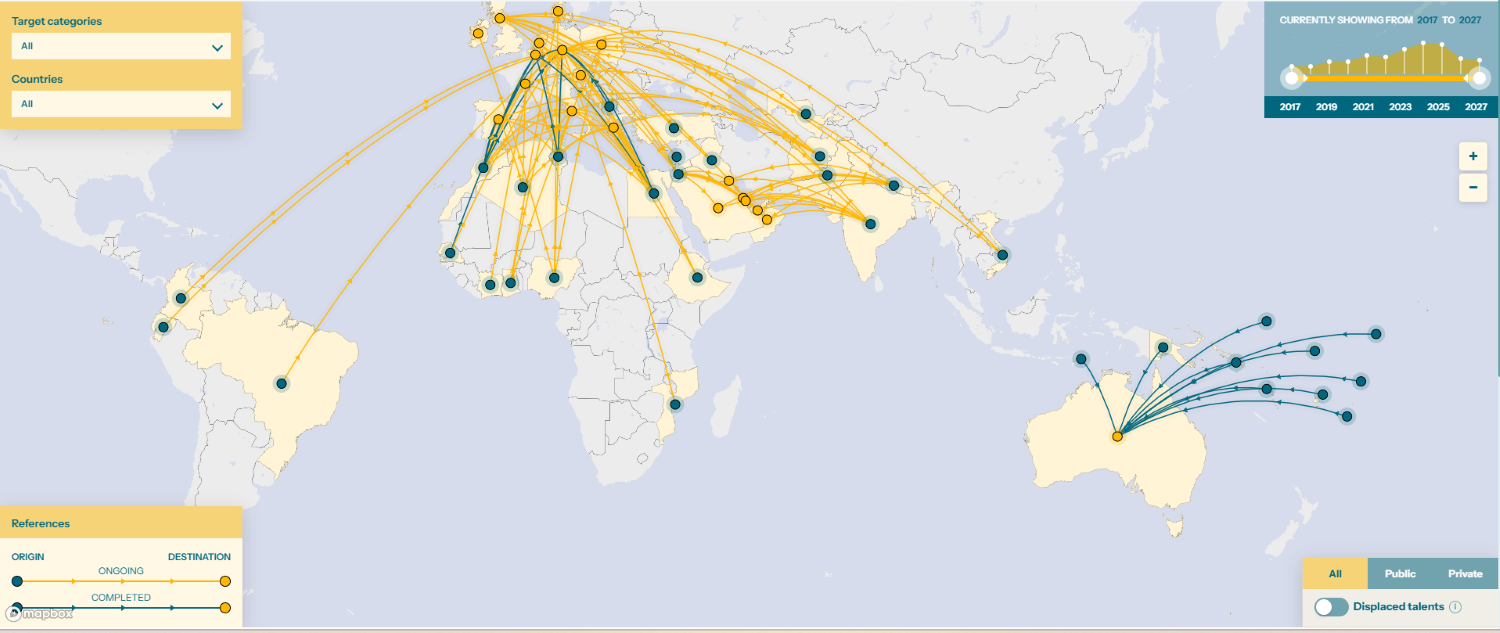
A Global Map of Green Skilled Migration Projects
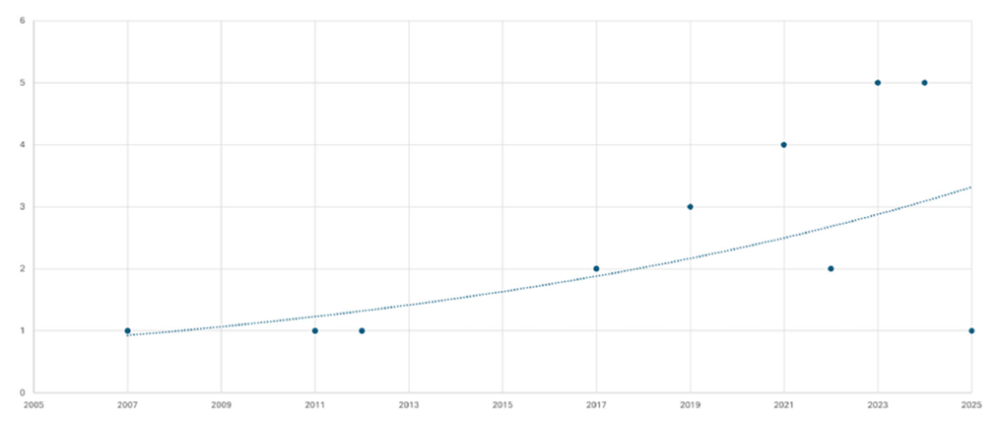
There are critical worker shortages across the green skills spectrum—electricians, construction workers, heat pump installers—which are stalling project delivery, and slowing countries’ progress towards net zero. To meet these shortages, many countries (and a growing number of private employers) are turning to skilled labour mobility (Figure 1). We at CGD, have been particularly interested in how training and migration policies can be used to support the green transition in both countries of origin and destination. For this, we are focusing on projects that pair an element of training (in either the country of origin, or destination) with migration for skilled work.
Figure 1. Projects linking green skills training and migration are increasing year on year
Source: Warren, 2025
We conducted deep dives into six projects that have paired green skills training with legal labour mobility, to extract lessons on what has worked and why to be applied to future projects (Figure 2). For these deep dives, we conducted a literature review of open-source and project documentation; carried out stakeholder interviews with project implementers, funders, partner governments, employers, and project participants; and sense-checked our analysis with key players in the sector.
Figure 2. Project sample
Key lessons
We identify five key lessons for project implementers, donors, and partners to consider:
- Scale employer contributions (both in-kind and financial) in each phase of the project.
- Develop business cases to engage new countries—of both origin and destination.
- Undertake holistic skills mapping to support skills development for all labour markets (including for reintegration) and regularly update them in consultation with industry.
- Increase capacity and support for industry associations, and directly partner with them.
- Conduct better monitoring and impact evaluation, particularly during phase one, to track the impact of the project on trainees, employers, and wider economic growth.
Broader findings:
Politics matter: labour mobility projects are increasingly bound to broader migration management and foreign policy
A positive working relationship between partner country institutions is key to the successful delivery of labour mobility projects. Most projects in our sample developed from prior working relationships between countries, for instance, via pilots in other sectors, or connections with actors from previous projects.
All of the projects in our sample used existing mobility pathways to move workers, and were subject to existing challenges in the migration system as a result. Governance issues—such as visa processing times and costs—remain a major challenge in the execution and scaling of such projects.
Ultimately, geopolitical considerations are shaping which countries are chosen for labour mobility projects. For example, Bangladesh, Morocco, Egypt, Tunisia, and Nigeria have been put forward for EU Talent Partnerships, but only if they cooperate on returns and readmission of their own nationals.
For publicly funded projects, engaging the private sector is a challenge, but there are a number of emerging private sector-led projects
All projects highlighted industry associations as important partners, allowing projects to access employers in countries of destination, most often small- and medium-sized enterprises (SMEs) facing shortages in green skilled sectors.
Bauverbände NRW is a unique example of a German construction industry association leading a labour mobility project for the benefit of its members. They have facilitated the recruitment of Ethiopian skilled labour, providing part of the human and financial resources necessary through staff time paid for via broader member contributions. Due to the direct connection with, and demand from, its members it has seen early success in the matching and placement of apprentices.
Financing remains an ongoing challenge; increasing migrant payments has emerged as a potential avenue
Across our sample, we also saw measured steps to increase migrant payments alongside employer engagement. The Australia Pacific Training Coalition (APTC) has some candidates pay subsidised fees. For one private sector project in our sample, candidates pay for the training and employers reimburse once the migrant worker has been placed in an apprenticeship, quality of work assessed, and commitment established.
This is controversial; international organisations cite concerns about any pre-financing by migrants. However, there are exceptions to this guideline, if the costs are “in the interest of the workers concerned…” Exploring these exceptions might be able to provide flexibility to both migrant workers and employers in developing sustainable models of financing.
Skills mapping is key to understand skills needs and ensure mutual benefit
Donors and governments need to invest in technical and vocational education and training (TVET) and data management to support better analysis of domestic and international skills needs. Industry associations can play an important role if better involved and engaged in this process, supporting skills assessments and ensuring that they are aligned to domestic needs. This will be of particular importance for green skills, as technology continues to advance and the market grows.
As many migrants wish to return to their countries of origin, the entire skills dividend should be built into the design of the project: what skills can support the employer (both local, and abroad), the worker, and the country of origin, and how can these skills be developed to ensure that all benefit from skills transfer when workers return.
Trust in quality critical for building partnerships with employers...
Across the project sample, the willingness of employers to hire has been built over time through visits, quality training, and using industry associations as intermediaries. With trust built, we see that companies return to the projects for further placements.
….. and a project “scaling” can include supporting foundational investments
Our research has found that the majority of labour mobility projects do scale, “morph” into a new form, or inform the design of subsequent larger pathways. Many projects were designed to improve the capacity of labour mobility infrastructure and migration governance to enable the movement of future workers free of a rigid project structure.
Many projects in our sample have created this enabling infrastructure, which is already seeing results at scale. They noted that by establishing the “plumbing” now, later projects and pathways will benefit from the systems, infrastructure, and regulatory processes set up which are crucial to scale.
If governments and donors are serious about expanding the global stock of green-skilled workers, they will need to move beyond isolated pilots and invest in the systems that make mobility work at scale: governance, employer partnerships, skills mapping, and sustainable financing models. The projects examined here show that this is possible. The next step is to embed these approaches into mainstream programme design so that green skills partnerships can move from defined, time-bound initiatives to durable, scalable pathways.
Topics
DISCLAIMER & PERMISSIONS
CGD's publications reflect the views of the authors, drawing on prior research and experience in their areas of expertise. CGD is a nonpartisan, independent organization and does not take institutional positions. You may use and disseminate CGD's publications under these conditions.
Thumbnail image by: DFID/ Flickr