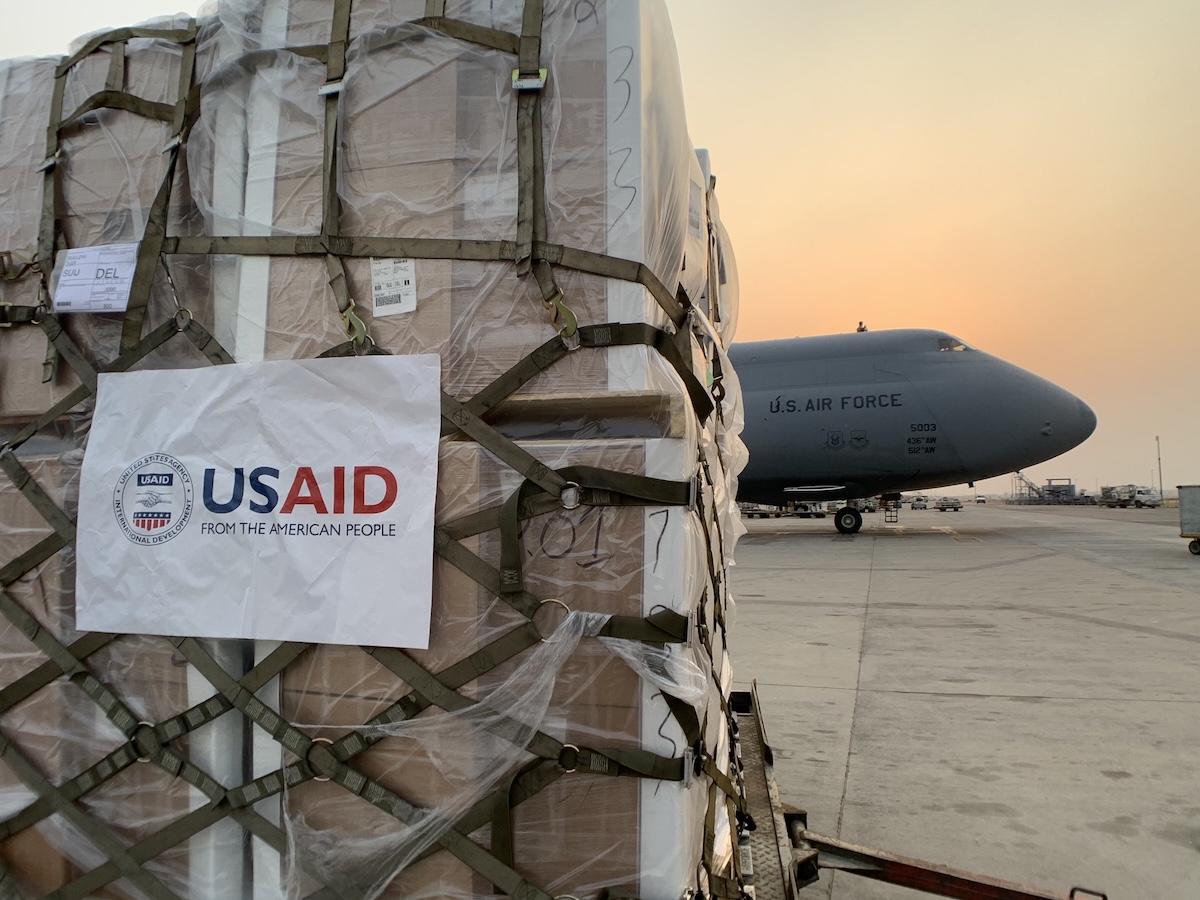
The dismantling of US foreign aid programs contributed to death and hardship that will take years to fully understand and quantify. The actions follow calls to reform the aid system that have persisted through several administrations, with large aid bureaucracies being slow to adapt. As policymakers look to the future, it is important to distinguish between “foreign aid” and “development.” While there are synergies between them—and the term “development assistance” as applied to aid suggests that they are synonymous—the overlap is far from complete. Clarifying the distinction between foreign aid and development policy is important for crafting the future of each.
Foreign aid is a tool of economic statecraft used to advance the foreign policy goals of the government, including international development. International development is a policy goal that can be advanced by multiple foreign policy tools, including foreign aid. Yet development has not been the only—and often not even the primary—policy objective of aid. And aid is not the only—or even the most important—vehicle by which to achieve development.
Five purposes of foreign aid
In announcing changes to US foreign aid policy, Secretary of State Marco Rubio stated that aid funding would be subjected to three questions: “Does it make America safer? Does it make America stronger? Does it make America more prosperous?” This approach is not new: President Harry Truman justified the first modern aid program to developing countries in 1949 with the argument that poverty in other countries “is a handicap and a threat both to them and to more prosperous areas.” This has been a common theme for all administrations: aid is a tool to serve American interests abroad. The purposes of aid can be overlapping, complementary, or competing; sometimes they advance development goals, and sometimes they act counter to development goals. They can roughly be broken down into five categories.
Fulfill the will of the people
I would add to Secretary Rubio’s list that one purpose of US aid has been to fulfill the will of voters. Large majorities across the political spectrum support aid for humanitarian purposes. A Pew Research survey in March 2025—while the current cuts to foreign aid were underway—found that 83 percent of Americans, including 77 percent of Republicans, support aid for “providing medicine and medical supplies,” and strong majorities of both parties support aid to provide food and clothing. Majorities of Americans (although slightly less than 50 percent of Republicans) support aid for economic development and strengthening democracy. The vast majority of aid is spent on these programs that the public strongly supports.
Provide public goods
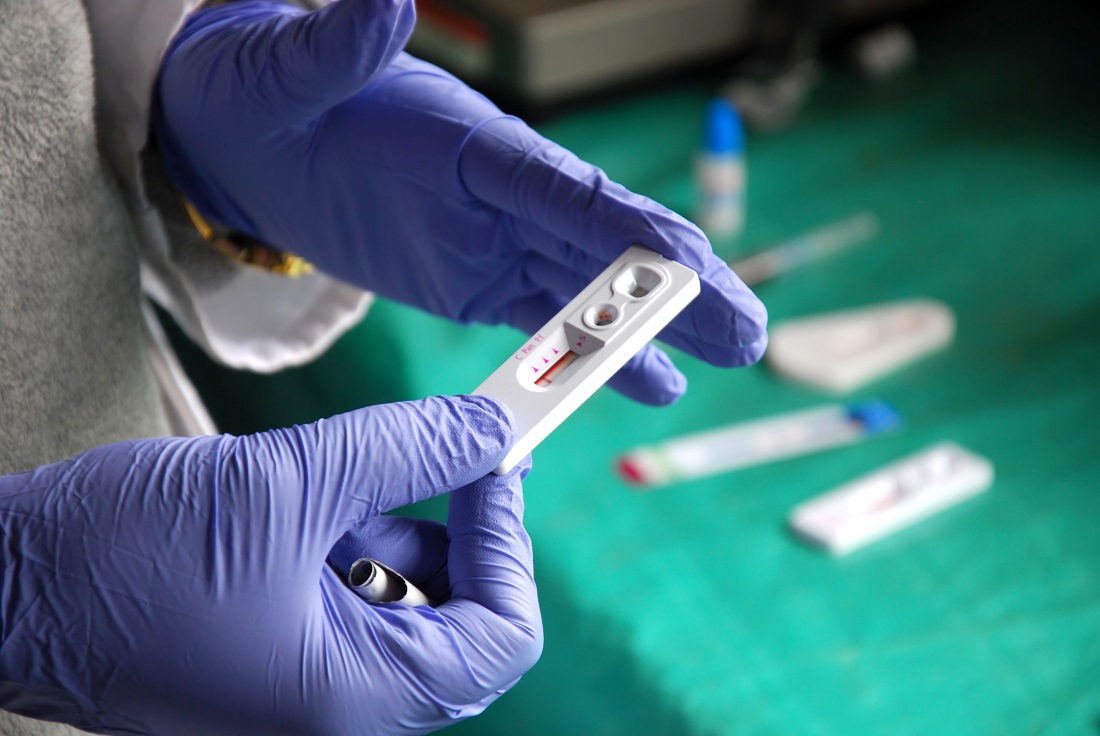
Providing transnational public goods in developing countries is beneficial to donors as they are underprovided and their benefits carry across borders. Decreasing the spread of communicable diseases through the use of vaccines or HIV/AIDS medicines is an example. For instance, aid played a pivotal role in decreasing polio incidence by 99 percent and globally eradicating two strains of the virus, while PEPFAR has been instrumental in decreasing the spread of HIV/AIDS. Mitigating climate change is another public good that can benefit from aid, as is enhancing global food supply through aid to improve agricultural output or support sustainable fishing practices. Given the nature of public goods, international institutions can help donors coordinate and decrease free riding, although the current set of international development institutions is also in need of reform.
Pursue development strategically
Politicians from both parties have argued that development abroad increases the security and economic well-being of the United States. Former and current aid recipients, like Korea and Mexico, have become important trading partners and allies. Policymakers have argued that development may decrease the demand for migration (although this is contested), and my research with David Leblang shows that many donors send aid disproportionately to migrant-sending states. In other research, I show that donors pursue targeted development: helping recipients whose development has the strongest positive impacts on the donor state. For example, multiple US administrations have supported the Caribbean Basin Security Initiative with development assistance (in addition to military assistance), seeking to improve regional security close to home through aid-financed projects targeting justice sector reforms and programs for youth at risk of recruitment to criminal organizations.
Increase US soft power
The first post-World War II use of foreign aid, the Marshall Plan, was an exercise in US soft power. It was meant to help Europe rebuild following the war and to create a bond between recipient nations and the US as communist parties were gaining support in Western Europe. These aid goals were soon carried over into policy toward developing countries, with economist Milton Friedman noting in 1958 that “foreign economic aid is widely recognized as a weapon in the ideological war in which the United States is now engaged.”
In the post-Cold War period, supporters of PEPFAR have pointed to diplomatic benefits with African nations, and research shows that health aid increases favorability ratings of the US in recipients. Aid does not automatically create goodwill: there is some evidence that US aid may outperform Chinese aid in this regard, and that goodwill may be limited when beneficiaries on the ground are unaware of donor identity. This suggests that aid can be a tool of soft power, but only under the right conditions. There is significant agreement that the abrupt halting and disruption of US foreign aid in 2025 dealt a massive blow to US soft power.
Exercise hard power to pursue goals
One of the least discussed purposes of foreign aid in the development community is its role as a tool of diplomatic hard power. Aid can serve as a positive sanction, and aid withdrawal as a negative sanction, in pursuing broader foreign policy goals. A classic example is the inclusion of US aid to Egypt and Israel as part of the Camp David Accords; the years following saw these two countries become the largest recipients of US aid, with large flows of development aid accompanying the promised military aid. In 1983, the United States signed a pact with the regime of Ferdinand Marcos in the Philippines, agreeing to pay $900 million—including $475 million in economic aid—in exchange for the continued use of two major US military bases in the country. The US viewed Cold War aid as a tool to fight Soviet influence in developing countries, with development often an afterthought (at most); funding to Vietnam, Central America, Zaire (now the Democratic Republic of the Congo), Indonesia, and others was part of this geopolitical struggle.
The coupling of security and economic assistance did not disappear after the Cold War: as tensions have escalated in the South China Sea, the US and the Philippines announced the creation of the Enhanced Defense Cooperation Agreement in 2014 and a major expansion in 2023, giving the US access to nine military sites in the Philippines in exchange for significant aid to modernize the installations. This close relationship led to the 2025 announcement of more than $300 million in aid for health, energy, and other programs in the Philippines, when most US recipients were seeing massive cuts to their programs. Other efforts have included (mostly unsuccessfully) holding out the carrot of aid to stop the North Korean nuclear program and using foreign aid under Plan Colombia in an effort (with questionable efficacy) to decrease cocaine production and violence.
Once aid is given, it creates a situation of power, where the threat to remove aid can be an effective stick to help achieve US goals. Withdrawal or the threat of withdrawal has been used throughout aid’s history: as a punishment when a country turned communist in the Cold War; as a means to steer recipient foreign policy or whip votes in the United Nations to support the US; as a show of disapproval for internal policies or human rights abuses; and as a sanction following a coup (codified in US law under Section 7008).
Aid is not the only development tool facing difficulty
In his 2002 speech in Monterrey, Mexico, President George W. Bush noted that “The work of development is much broader than development aid. The vast majority of financing for development comes not from aid, but from trade and domestic capital and foreign investment.” He called for greater access to markets for developing countries, which have, for the most part, not materialized and have even moved in the opposite direction: The expiration of the African Growth and Opportunity Act on September 30 ended duty-free access to the US market for many African goods.
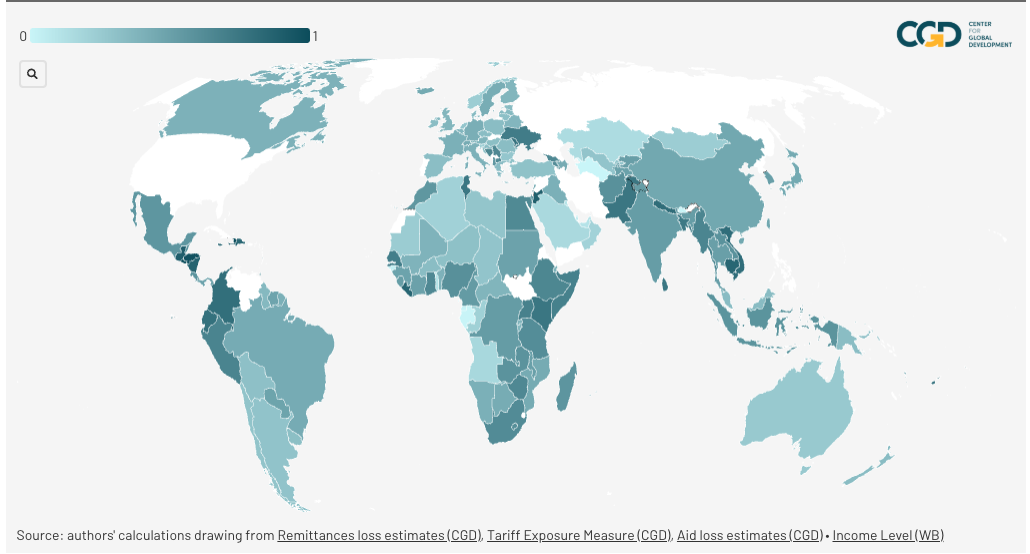
Private capital flows into developing countries (excluding China) for the period 2020-2022 fell by 32 percent from their peak, and net flows have reversed in recent years, with a $300 billion withdrawal of finance from developing countries across 2022 and 2023. Remittances to developing countries—money sent by migrants to their home countries—total more than foreign direct investment and foreign aid combined; over the past decade, remittances grew by 57 percent while foreign direct investment fell 41 percent. Experts predict that the US tax on remittances passed in 2025 will decrease this revenue flow, and fewer migrants in the US as a result of current US policies could result in lower remittances in the future.
While the development community works to understand the implications of massive changes in US foreign aid policy, it is important to remember that other financial tools for development—including those that were stagnant or decreasing before the election of Donald Trump—may be even more important for the future growth of low- and middle-income countries. Decreasing obstacles to market access, increasing access to capital, and augmenting the benefits of migration and remittances are also important means of promoting sustainable development.