The UK is materially ending its direct support for 10 countries in Africa. In one of the poorest and least-supported, Malawi—a country of around 22 million people—the UK has provided financial support totalling around £1.6 billion in today’s money since 2009. So, what has that support achieved?
We asked Graham Symons to collate the government’s published results to answer that question. Here, I summarise some key results and lessons, and consider them against the new government’s focus on values and security.
What was achieved?
The clearest gains were in health. Even under conservative assumptions, thousands of maternal and child deaths were averted—at least equivalent to saving every baby born in Glasgow last year. More than 3 million people received essential health services, while programmes helped prevent more than 2 million unintended pregnancies. It also plausibly estimated that UK support prevented 525,000 unsafe abortions. To put that scale into a UK context, that’s more than one unsafe abortion prevented for every girl born in the UK in a year.
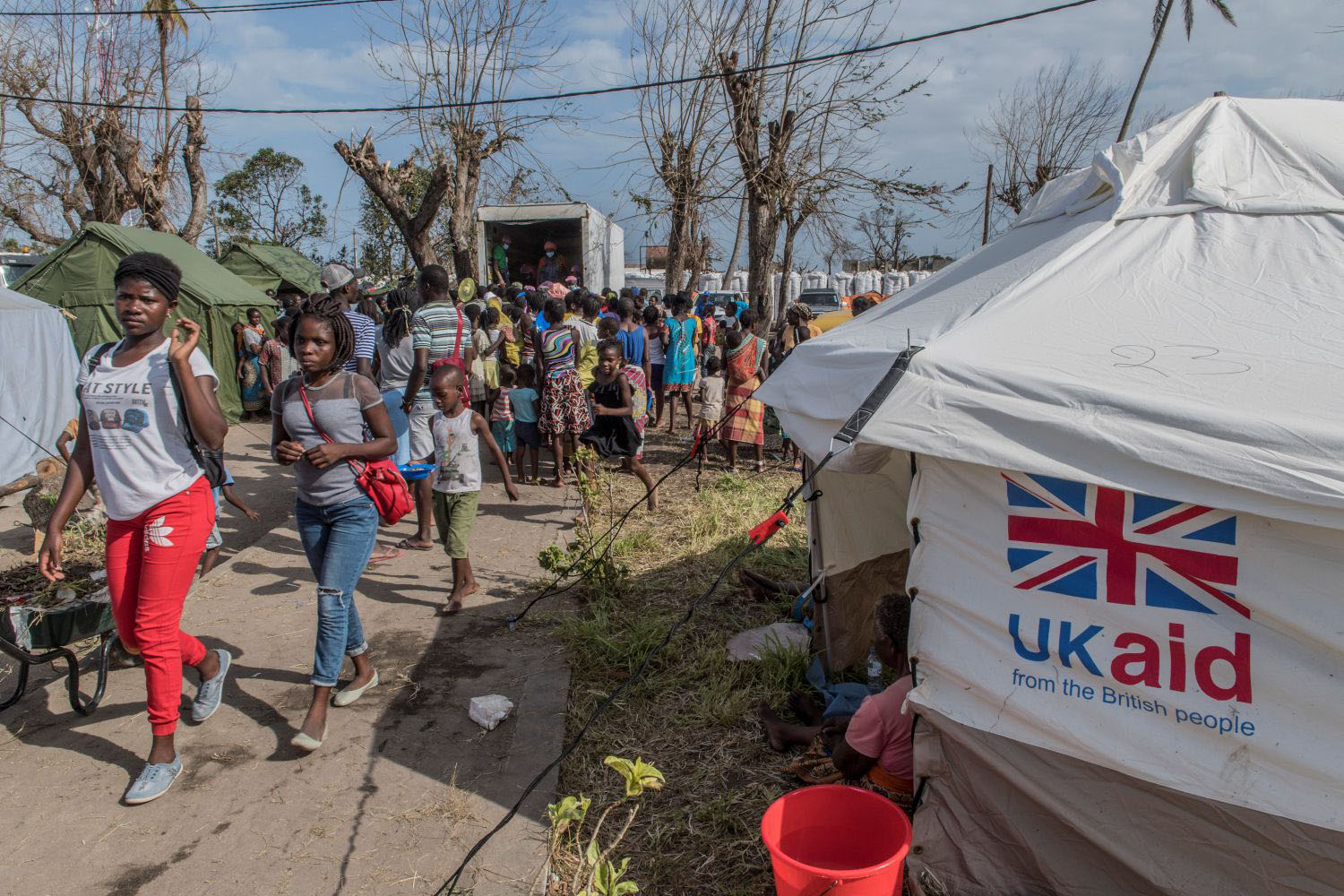
Humanitarian programmes helped more than 3.5 million people—similar to the combined populations of Birmingham, Glasgow, Leeds, Edinburgh and Liverpool—alongside major improvements in access to clean water, sanitation and hygiene.
There were important gains elsewhere too. More than 400,000 children, mostly girls, gained access to a decent education, while more than 3 million children benefited from a new mathematics curriculum.
Hundreds of thousands of people were helped to cope with the effects of climate change, including through early warning systems, cash transfers and more resilient housing; while other programmes improved access to public services and security and justice.
Many of those results will continue to be felt. Thousands of Malawians are still living the lives saved, feeling relief from the justice they received, and using the reading and writing skills UK aid paid for.
Shouldn’t we have seen more economic progress?
Malawi remains an extremely poor country. While the average Malawian now lives an incredible 20 years longer than in 2000, Malawi’s growth has been limited by weak investment conditions, fiscal constraints and governance problems. It was beyond the scope of the report to assess whether the UK could or should have done more to enable stronger economic growth. But supporting economic transformation from outside of a country is not easy and the UK’s programming generally targeted people rather than government or growth. It is in any case unrealistic to expect under £4.30 of aid per person each year over seventeen years to have transformed Malawi’s fortunes. To achieve economic transformation would require a broader set of policies beyond aid and my colleague Charles Kenny has argued convincingly that the G20 (which the UK chairs next year) could make a collective commitment to a goal of no low-income countries by 2040 through tackling a range of issues including trade, debt and regulation.
What is clear is that (as with much of the UK’s international assistance over the past two decades) that aid directly improved peoples’ lives, rather than support the recipient government. Towards that objective, UK taxpayers still made an enormous difference and pulling the plug on UK support now can be expected to have a damaging impact
Where next on UK support for Malawi?
The UK government has decided to cut its direct support to Malawi from around £50m per year in 2024-25 to just £5m by 2028-29 alongside steep cuts from the US. The FCDO has managed to find 26 times this amount—£130m per year—for three UK overseas territories and we’ve urged it to re-prioritise five of the poorest, least supported countries.
The newly appointed Minister of State for International Development, Kirsty McNeill has emphasised putting values at the heart of what the UK does, and stated that UK finance will tackle five security challenges. No-where are these challenges as acute as in these countries—where the UK also has real expertise, an understanding of how to make progress in the political context and live geopolitical competition for influence and resources. Reallocating resources towards these countries would turn words into action and mark a clear departure from the previous government’s approach.
The results may also be particularly pertinent for Scotland. Malawi has been its main development partner and ministers could consider stepping up funding to sustain one or more of the most impactful UK projects—perhaps those tackling child and maternal health, district health systems or reproductive healthcare—which are coming to an end.
A final point is that this exercise has illustrated the value of a review of what long-term support to a country has achieved. As the UK embarks on a new phase in its development partnerships, we urge it to conduct this kind of exercise, or preferably a fuller evaluation, in each partner country. This would both mark the achievements of both partners over the past quarter century and provide lessons to the UK and its partners on effective policy going forward.