Recommended
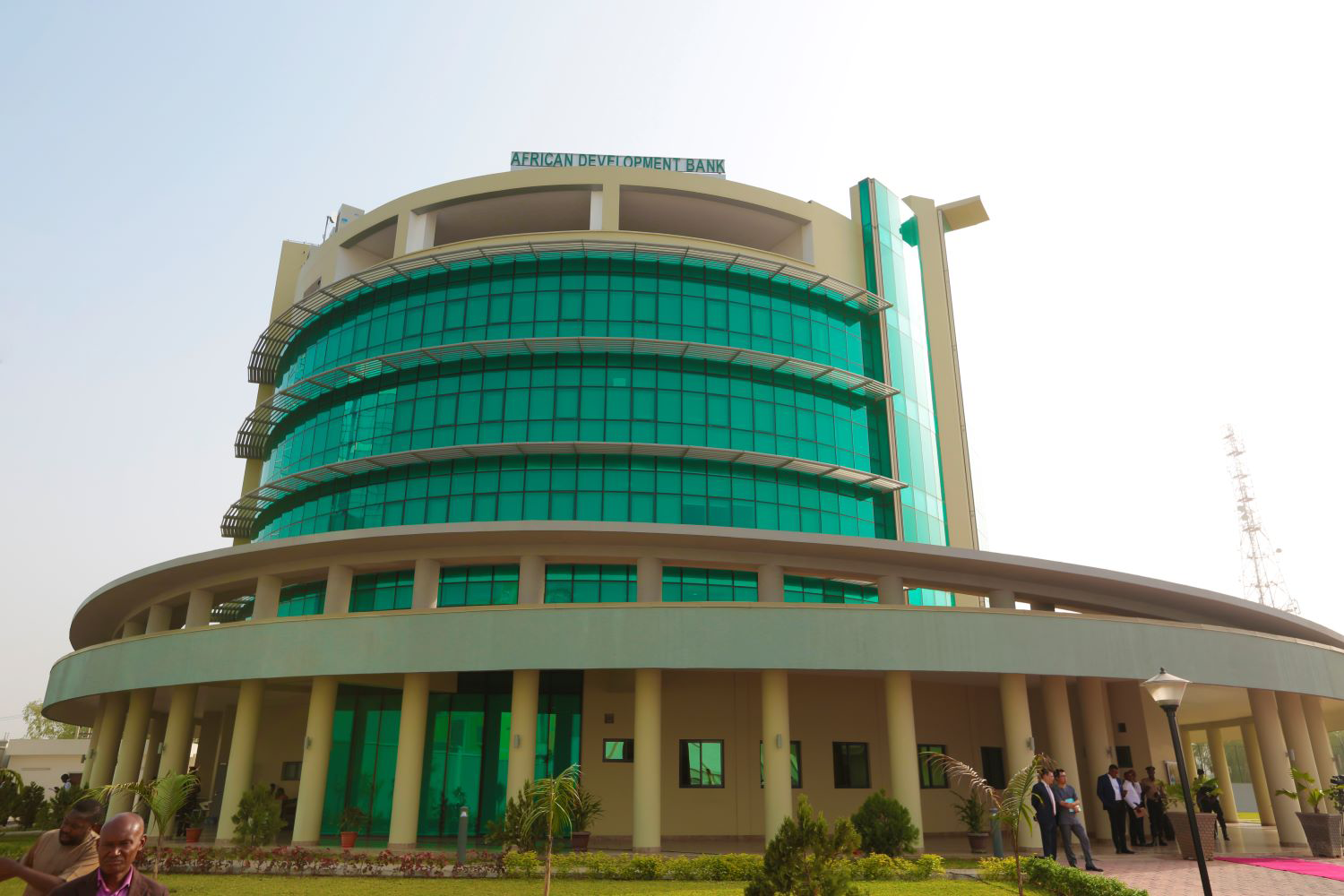


The African Development Fund (ADF), the arm of the African Development Bank (AfDB) that provides grants and highly concessional loans to 37 poor and fragile states across sub-Saharan Africa, is in the midst of its 17th replenishment negotiations.
In this note, we take a closer look at the proposed results framework for ADF-17, a vital tool for building knowledge, assessing outcomes, and making the case to donors for funding—an especially heavy lift in 2025. The ADF is already starting from a position of strength: a CGD analysis of seven multilateral development bank (MDB) corporate scorecards, which report aggregate results, found that the AfDB does a better job than its six peer institutions, especially on setting targets, reporting outcomes, disaggregating by sex, and making baseline comparisons.
During last year’s replenishment negotiations for International Development Association (IDA), the concessional arm of the World Bank, shareholders agreed to reform its results measurement system (RMS)—reviewed here—with the aim of strengthening accountability and focus. IDA’s new RMS offers useful insights and lessons for the ADF’s results tracking system, which has similar shortcomings to IDA’s old framework—notably a lack of internal alignment, which limits stakeholders’ ability to understand how ADF investments are contributing to results on the ground.
This could be remedied if the ADF agreed to (1) consistently provide baseline indicators against which to measure ADF results; (2) select results indicators that better mirror spending priorities; and (3) reduce targets to better align aspirations with available resources. We hope that stakeholders will press for these changes during the ADF negotiation process.
How the African Development Bank manages for results
The latest AfDB Results Management Framework (RMF) was adopted in 2024 to monitor and report on the institution’s ten-year strategy and its five core objectives: light and power Africa, feed Africa, industrialize Africa, integrate Africa, and improve quality of life. It tracks results using four sets of indicators:
- Level 1: baseline data on poverty and development in member countries (e.g., percent of a population with access to water, energy, or the internet).
- Level 2: outcome data of AfDB programming (e.g., millions of additional people with access to water, energy or the internet because of AfDB financing).
- Level 3: operational performance (e.g., timing from project approval to disbursement, percentage of projects achieving development results).
- Level 4: institutional performance and financial capacity (e.g., private capital mobilized, share of total financing used for guarantees).
In addition, the ADF sets financing targets in key sectors. These are referred to as policy commitments but take the form of numerical country targets. For example, ADF management is proposing to finance 14 projects to support sustainable and off-grid energy systems and seven projects to support energy efficiency. There are comparable commitments related to smallholder farming, water and sanitation, domestic resource mobilization, debt management, climate, natural resources, and the private sector. These are designed to support uptake across ADF offerings, especially for new issue areas (e.g., pandemic preparedness or natural resource management).
The African Development Bank’s hard loan window for middle-income borrowers does not establish such targets; instead, investments are entirely demand driven.
Rationale for reform
In this note, we focus on investment outcome indicators (e.g., levels 1 and 2) because they offer the best insights into ADF’s on-the-ground results. The ADF provides these indicators at the aggregate level (e.g., they include data from all 37 ADF countries) and reports them to stakeholders during the middle and end of replenishment cycles.
In theory, level 1 baseline indicators should align with level 2 outcome indicators to show links between ADF outcomes and key measures of development (e.g., in infrastructure, agriculture or human capital). For example, a baseline indicator showing the population with access to water and sanitation should be aligned with an outcome indicator showing the number of people with improved access to these services because of ADF investment.
But the current approach is somewhat different.
In the ADF-16 Delivery and Results Report, the ADF compared 2023 data in multiple sectors (energy access, transport, agriculture, regional integration, health, water and sanitation, governance, debt management, and capacity building) against 2019. This is useful for context purposes because it gives shareholders a sense of how development indicators are trending. For example, the report shows that energy access improved in ADF countries during that period, but food insecurity and malnutrition worsened.
What can be harder to discern under the current system is how the ADF itself has contributed to these sectors because the baseline and outcome indicators often correlate poorly with each other. In one case, ADF’s support for regional integration is measured by miles of cross-border roads and transmission lines constructed, but there is no baseline indicator of the total number of cross-border roads and lines in ADF countries before these investments were made. Instead, the baseline indicators are trade, visa openness, and the regional integration index (see Table 1). An independent evaluation of the AfDB’s results framework also noted that the causal links between levels 1 and 2 could be strengthened.
There is also a disconnect between the indicators and ADF spending levels. ADF investments are governed by two broad pillars: (1) Sustainable, Climate Resilient and Quality Infrastructure; and (2) Governance, Capacity Building and Sustainable Debt Management. Nearly 83 percent of ADF-16 investments are projected to be in four sectors covered by pillar 1: power, urban development and transportation, water and sanitation, and agriculture. The remaining 17 percent of spending is allocated for pillar 2, which includes human capital, finance, communications, capacity building, and policy-based lending. (See Figures 1 and 2.)
Finally, the number of targets is high compared to peers. Monitoring, collecting, and analyzing data is a costly, resource-intensive exercise. IDA’s new scorecard has only 22 results indicators against an envelope of $100 billion, the same number that ADF is proposing for an envelope less than a tenth the size.
ADF’s proposed results tracking system: Our take
The ADF is proposing to adopt 22 results indicators for ADF-17 (see Table 1), down slightly from 24 in ADF-16. Of these, 13 would be under pillar 1 and nine under pillar 2. Here are our top-level observations:
- None of the proposed indicators relate to Urban Development and Transport, the ADF’s biggest area of operations (e.g., 28.5 percent under ADF-16).
- None of the proposed indicators include climate adaptation, a major focus area for the ADF. Instead, there is a proposed results indicator for climate, which is the ADF commitment amount—an input, not an outcome.
- We were surprised by the number of jobs-related indicators for women, youth, and private sector, as many of these are likely to be transitory (e.g., construction-related) and comparatively small. (In its 2024 Delivery and Results Report, the ADF estimates that projects approved in 2023 will generate 700,000 direct and indirect jobs.) The proposed breakdown by women, youth, and private sector could be misleading, as each category would likely double-count new jobs already accounted for in the other two categories. The ADF-16 approach, which is to provide a narrative, is more informative.
- The ADF proposes to count the number of countries that had improvements in World Bank Country Policy and Institutional Assessment (CPIA) scores, macro-environment, business environment, and/or natural resource management. Given how difficult it would be to attribute AFD engagement to these improvements, it is not clear what insights these indicators would provide. Moreover, reporting that 1-2 countries have improved is not a meaningful indicator as it says nothing about the degree of change.
- Indicators on support for enterprises led by women and youth and in fragile states are also a puzzling addition. This is not a major area for the ADF and including youth at all is odd because the focus for them should be education, skills development, and jobs more broadly, not a narrow focus on entrepreneurship.
Finally, we support continued efforts by the ADF to disaggregate key indicators by sex, but it is unclear whether the ADF has addressed gender data quality issues identified by the independent evaluation report. This includes using the proportion of the female population to estimate the number of female beneficiaries when sex-disaggregated project-level results data are not available, a method that relies on the flawed assumption that the project benefits the same percentage of women as their share in the total population.
In the following section, we list the proposed level 1 (baseline) and level 2 (outcome) indicators for ADF-17 and provide commentary indicating where we see gaps and misalignments. This is followed by a suggested alternative.
An alternative framework: Our proposal
Below, we provide an alternative framework for ADF-17 stakeholders to consider. In our version, we:
- Reduced the number of outcome indicators to 14, of which all but two would fall under pillar 1.
- Improved alignment between spending priorities and outcome indicators.
- Closely aligned baseline and outcome indicators.
- Deleted the youth, gender, and private sector indicators (i.e., jobs and enterprises), which we do not think are good reflections of ADF engagement. Instead, we suggest that the ADF continue with the current, narrative approach on those issues.
- Proposed several stand-alone regional context indicators to provide broader development context.
Finally, we have included a third column: ADF’s proposed policy commitments (e.g., financing targets), which incorporates management’s proposals for ADF-17. Not all outcome indicators are matched with funding commitments, which is fine. These are typically used to incentivize spending in new issue areas or sectors prioritized by donors. But because a key ADF principle is that governments drive resource allocation decisions, it is also important that there is ample flexibility for governments to make their own choices.
ADF negotiations: An ideal time for reform
A strong, credible results tracking system is a vital tool for development institutions that depend on donor generosity to function, something the chaotic, unceremonious withdrawal of US funding has put in sharp relief. It should surprise no one if donors put a brighter spotlight on impact and results as they seek to allocate a diminishing supply of funds among many worthy entities.
The ADF already gets high marks for transparency and reporting on results, but the current system is flawed in ways that muddy or diminish the narrative around its impact on the ground. Moreover, it is important to match resources with ambition, and in the event of a relatively constrained resource envelope (a likely outcome, unfortunately), a narrower set of indicators makes sense.
Fortunately, there are easy fixes, and the current negotiation period is the ideal time to adopt them.
Topics
CITATION
Mathiasen, Karen, and Nico Martínez. 2025. Tracking Results at the African Development Fund: A Modest Proposal . Center for Global Development.DISCLAIMER & PERMISSIONS
CGD's publications reflect the views of the authors, drawing on prior research and experience in their areas of expertise. CGD is a nonpartisan, independent organization and does not take institutional positions. You may use and disseminate CGD's publications under these conditions.
Thumbnail image by: A'Melody Lee / World Bank